RobotEra Q5 vs Tron 2 at a glance
Tron 2 is the more affordable option at $7,000–$10,000, while RobotEra Q5 costs $75,000–$95,000. RobotEra Q5 has more degrees of freedom (44 against 26 for Tron 2), which allows finer movement. Tron 2 is quicker, with a top speed of 2–3 m/s versus 1.5 m/s for RobotEra Q5.
Which one fits your use?
Based on the uses each robot is built and marketed for. Open a use to see the specs that matter for it.
| Comparing for… | RobotEra Q5 | Tron 2 |
|---|---|---|
| Suited | Suited | |
| Suited | Suited | |
| Suited | Suited | |
| Suited | Suited | |
| Not listed | Suited |
- Pick Tron 2 for hazardous or high-risk work.
- Both suit warehouse and logistics work, factory and manufacturing work, research labs and education and training, so compare the specs for that use.
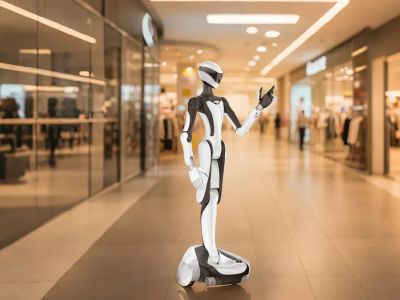
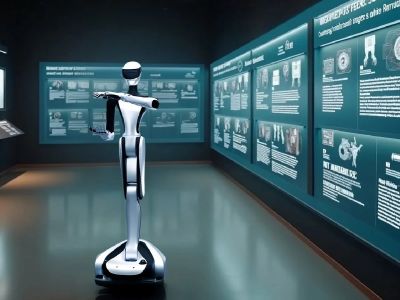
The Q5 by Robot Era is a wheeled humanoid robot positioned for service industry applications, including elder care, retail, and hospitality. It features a 165 cm height, 70 kg weight, and 44 degrees of freedom with a slim waist design for human-like movements in confined spaces. Key differentiators include LiDAR navigation, 7-axis arms capable of lifting 10 kg, and proprietary ERA-42 AI for teleoperation and learning.
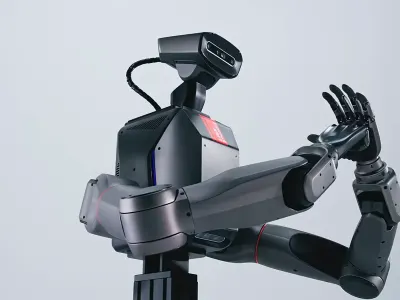
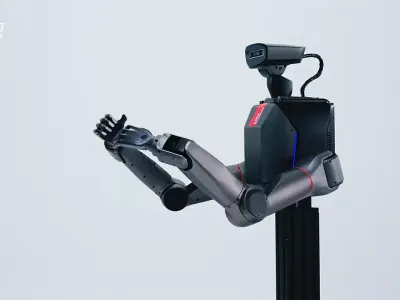
The Tron 2 by LimX Dynamics targets research and home tasks with a modular build whose height and weight depend on the configuration. It offers dual mobility with 5 km/h walking and up to 18 km/h wheeled speed, suitable for terrain navigation and industrial payloads. Differentiators include RGBD cameras at multiple points and a lower price range of $7,000-$10,000.
Detailed Analysis
RobotEra Q5
Design & Build Quality
Q5 measures 165 x 50 x 52 cm and weighs 70 kg with 44 degrees of freedom, including 11-DoF hands and a slim waist for human-like twisting and manipulation up to 10 kg per arm. LimX does not publish a single size or weight for Tron 2, since both depend on the configuration. Both share humanoid proportions but Q5 emphasizes bionic arms while Tron 2 prioritizes compactness.
Tron 2
Mobility & Navigation
Q5 achieves 1.5 m/s speed using indoor SLAM, visual SLAM, and LiDAR mapping for confined spaces and obstacle avoidance. Tron 2 walks at 2-3 m/s and reaches 3-5 m/s on its wheeled legs, supporting visual SLAM and indoor SLAM for terrain navigation. Tron 2's wheeled mode enables faster transit while Q5 focuses on precise service maneuvers.
RobotEra Q5
Sensors & Perception
Q5 includes RGB cameras, stereo cameras, LiDAR, ultrasonic sensors, IMU, gyroscope, force sensors, and temperature sensors for comprehensive environmental awareness. Tron 2 features RGBD cameras at head, waist, and wrists, plus IMU, gyroscope, force sensors, and temperature sensors. Q5's LiDAR addition enhances mapping compared to Tron 2's vision-focused setup.
Tron 2
AI Capabilities
Both support teleoperation, autonomous control, and learned behaviors, with Q5 using proprietary ERA-42 for full-body motion learning from human data. Tron 2 employs LimX's own AI framework, aiding VLA research and mobile manipulation. Shared ROS2 and Python compatibility enable similar development paths.
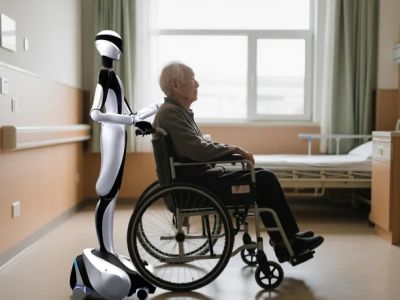
RobotEra Q5
Battery & Power Efficiency
Q5 has a 70 kg frame suited to extended service use. Tron 2 runs on a swappable 46.8 V battery that charges from 20% to 80% in about 30 minutes, in both walking and wheeled modes. Both deliver long-term operation suitable for continuous deployment.
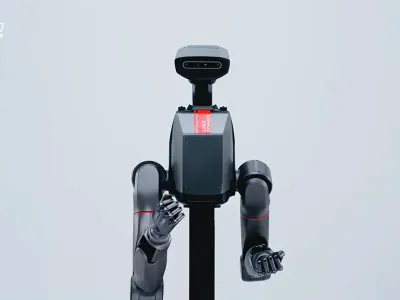
Tron 2
Use-Case Suitability
Q5 suits elder care, child interaction, retail service, research, logistics, and hospitality with dexterous handling in tight spaces. Tron 2 targets VLA research, mobile manipulation, home tasks like cooking and cleaning, industrial payloads, and terrain navigation. Q5 leans toward human interaction while Tron 2 emphasizes versatile mobility.

RobotEra Q5
Pricing & Value
Q5 is priced at $75,000-$95,000, reflecting its heavier build, advanced arms, and service-oriented features. Tron 2 costs $7,000-$10,000, offering affordability for research and home applications with high-speed options. Price difference aligns with weight, payload, and specialization variances.
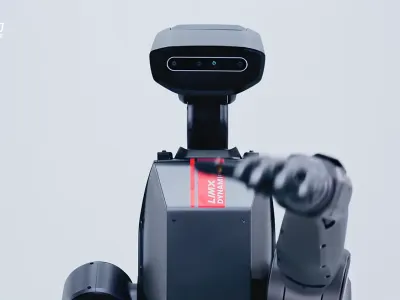
Tron 2
Safety Features
Both robots include force limiting, collision detection, emergency stop, and collaborative mode for safe human interaction. Q5's LiDAR aids precise avoidance in confined areas, while Tron 2's multi-camera setup supports dynamic environments. Identical core safety measures ensure operational reliability.
Capabilities & Operational Tasks
Head-to-head comparison of what RobotEra Q5 and Tron 2 can do, their applications, and capabilities.
What Can RobotEra Q5 & Tron 2 Do?
167 tasks listed for both, 2 only for RobotEra Q5, 7 only for Tron 2.
Technical Specifications
RobotEra Q5 and Tron 2 differ on 31 of the 54 specifications listed for both.
Functional Utility & Use Cases
4 Comparative Metrics
Manipulation & Load Capacity
4 Comparative Metrics
Kinematic Architecture & Dexterity
4 Comparative Metrics
Related Comparisons
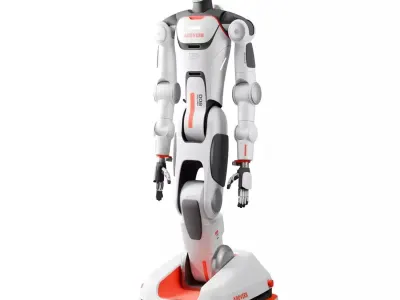
RobotEra Q5 vs ELIXIS W
Compare Q5 by Robot Era and ELIXIS W by Addverb Technologies. Detailed analysis of sensors, navigation, battery, and price.
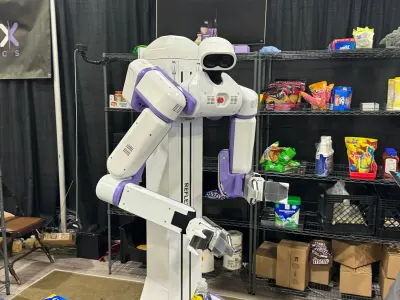
RobotEra Q5 vs Reflex Humanoid
Which robot wins? Q5 vs Reflex Humanoid compared across sensors, navigation, battery, speed, and price.
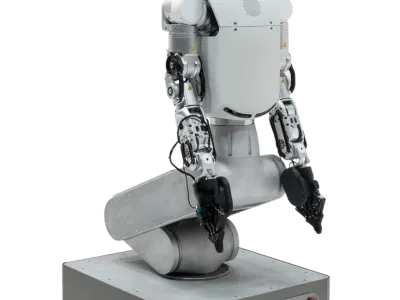
RobotEra Q5 vs HMND 01 Alpha Wheeled
Q5 or HMND 01 Alpha Wheeled? Compare specs, speed, sensors, navigation, and battery for service vs industrial performance.
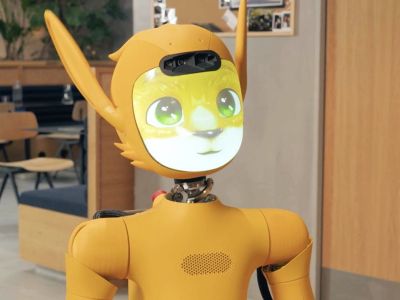
Mirokaï vs RobotEra Q5
Which robot wins? Mirokaï vs Q5 compared across sensors, navigation, speed, battery, and price for service robotics applications.
Verdicts reflect our research and opinion. Confirm specifications with the manufacturer before buying.