EngineAI SE01 vs NEO Home Robot at a glance
NEO Home Robot is quicker, with a top speed of 6.2 m/s versus 2 m/s for EngineAI SE01. NEO Home Robot has more degrees of freedom (75 against 32 for EngineAI SE01), which allows finer movement. NEO Home Robot lasts longer on a charge, about 4 hours against 2 hours for EngineAI SE01. NEO Home Robot is lighter at 30 kg, compared with 55 kg for EngineAI SE01.
Which one fits your use?
Based on the uses each robot is built and marketed for. Open a use to see the specs that matter for it.
| Comparing for… | EngineAI SE01 | NEO Home Robot |
|---|---|---|
| Suited | Not listed | |
| Suited | Not listed | |
| Suited | Suited | |
| Suited | Suited | |
| Not listed | Suited | |
| Not listed | Suited | |
| Not listed | Suited |
- Pick EngineAI SE01 for warehouse and logistics work and factory and manufacturing work.
- Pick NEO Home Robot for home help and elder care, hospitality, retail and public-facing roles and healthcare settings.
- Both suit research labs and education and training, so compare the specs for that use.
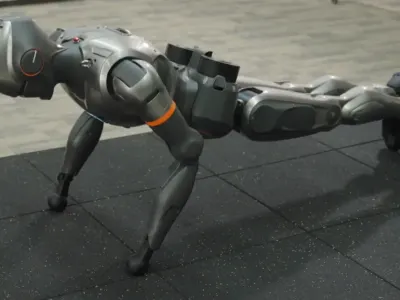
EngineAI's SE01 is a 170 cm, 55 kg humanoid known for its natural, straight-knee walking gait. It carries a 360° LiDAR and an Intel RealSense depth camera for 3D perception, handles up to 15 kg across both arms and has 32 degrees of freedom. Its ROS-compatible SDK and swappable battery make it a popular platform for industrial pilots and research labs.
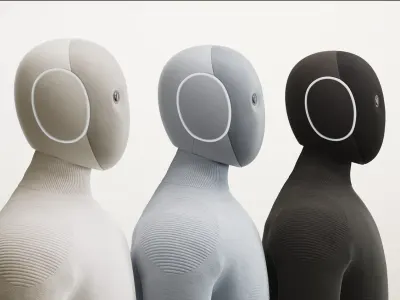
1X's NEO Home Robot is a 167.6 cm, 29.94 kg humanoid built for the home. It carries up to 25 kg, lifts up to 70 kg and runs for about four hours on an 842 Wh battery, with soft covers and compliant joints to keep people safe. NEO costs $20,000 or $499 a month and focuses on chores, fetching items and remote-assisted help.
Detailed Analysis

EngineAI SE01
Design & Build Quality
SE01 uses an aerospace-grade aluminum frame with composite covers and weighs 55 kg. NEO weighs 29.94 kg and wraps compliant, tendon-driven joints in soft-touch covers. NEO is lighter and safer to stand next to, while SE01 is built as a rugged industrial and research platform.

NEO Home Robot
Mobility & Navigation
SE01 walks at about 2 m/s with a human-like straight-knee gait and navigates with LiDAR and depth-camera SLAM. NEO walks at 1.4 m/s, can run at up to 6.2 m/s and navigates with visual SLAM fused with depth. SE01 has the stronger mapping hardware, while NEO has the higher top speed.

EngineAI SE01
Payload & Strength
SE01 handles up to 15 kg across both arms for parts transport and machine tending. NEO carries up to 25 kg, lifts up to 70 kg and manages 8 kg per arm. On published figures NEO is the stronger lifter despite weighing far less.
NEO Home Robot
Sensors & Perception
SE01 combines stereo RGB cameras, an Intel RealSense D435 depth camera, a 360° LiDAR and joint force sensors. NEO uses dual 8.85 MP stereo fisheye cameras, four beamforming microphones and force sensing in its joints and hands. SE01 offers richer 3D sensing, while NEO adds better audio for conversation.

EngineAI SE01
AI & Software
SE01 runs EngineAI's Engine Sense stack on Linux with a ROS-compatible API, which makes it easy for developers to customize. NEO runs a proprietary real-time OS with its own AI models and a Python/C++ SDK, and adds teleoperation-backed autonomy for new tasks. SE01 is better for open research, NEO for guided household autonomy.

NEO Home Robot
Battery & Power Efficiency
SE01 runs for about two hours on a quick-swap 546 Wh pack, so a spare battery keeps it working. NEO runs for about four hours on its 842 Wh battery and charges fully in two hours. NEO lasts longer per charge, while SE01 recovers faster with a battery swap.
EngineAI SE01
Use-Case Suitability
SE01 suits industrial parts transport, machine tending, collaborative handling and humanoid research. NEO suits household chores, object retrieval, elder assistance and telepresence. Pick SE01 for a lab or factory pilot and NEO for help at home.

NEO Home Robot
Safety & Price
SE01 offers an emergency stop, power interlocks and collision avoidance and costs about $20,000 to $30,000. NEO adds soft covers and passive joint compliance on top of obstacle detection and an emergency stop, at $20,000 or $499 a month. NEO is the safer and more affordable choice for homes.
Capabilities & Operational Tasks
Head-to-head comparison of what EngineAI SE01 and NEO Home Robot can do, their applications, and capabilities.
What Can EngineAI SE01 & NEO Home Robot Do?
138 tasks listed for both, 1 only for EngineAI SE01, 4 only for NEO Home Robot.
Technical Specifications
EngineAI SE01 and NEO Home Robot differ on 38 of the 53 specifications listed for both.
Functional Utility & Use Cases
4 Comparative Metrics
Manipulation & Load Capacity
4 Comparative Metrics
Kinematic Architecture & Dexterity
4 Comparative Metrics
Frequently Asked Questions
Which is better for research, SE01 or NEO Home Robot?
SE01. Its ROS-compatible SDK, 360° LiDAR and RealSense depth camera make it easier to customize for research. NEO is designed mainly as a home assistant.
Which robot can carry more weight?
NEO carries up to 25 kg and lifts up to 70 kg. SE01 handles up to 15 kg across both arms.
How long does each robot run on a charge?
NEO runs for about four hours. SE01 runs for about two hours but uses a quick-swap battery.
How much do SE01 and NEO Home Robot cost?
SE01 costs about $20,000 to $30,000. NEO costs $20,000 or $499 per month.
How do their sensors differ?
SE01 uses a 360° LiDAR, a RealSense depth camera and stereo cameras. NEO uses dual stereo fisheye cameras and four beamforming microphones.
Related Comparisons

NEO Home Robot vs ELIXIS
NEO Home Robot or ELIXIS? See which humanoid robot performs better for manufacturing, logistics, and research.

NEO Home Robot vs 4NE-1 Mini
1X NEO Home Robot vs NEURA 4NE-1 Mini: size, payload, battery, AI, price and which humanoid suits household help or classrooms and labs.

Optimus vs EngineAI SE01
Head-to-head: Optimus vs SE01. Explore differences in sensors, battery, navigation, speed, and AI capabilities.

NEO Home Robot vs T800
1X NEO Home Robot vs EngineAI T800: size, strength, battery, sensors, safety and price for home help versus heavy-duty industrial work.
Verdicts reflect our research and opinion. Confirm specifications with the manufacturer before buying.