Star1 vs RobotEra Q5 at a glance
Star1 is quicker, with a top speed of 3.6 m/s versus 1.5 m/s for RobotEra Q5. Star1 lasts longer on a charge, about 7 hours against 4 hours for RobotEra Q5. Star1 is the more affordable option at $50,000, while RobotEra Q5 costs $75,000–$95,000. Star1 has more degrees of freedom (55 against 44 for RobotEra Q5), which allows finer movement.
| Key specs | Star1 | RobotEra Q5 |
|---|---|---|
| Price | $50,000 (stronger) | $75,000–$95,000 |
| Height | — | 165 cm |
| Weight | 65 kg | 70 kg |
| Top speed | 3.6 m/s (stronger) | 1.5 m/s |
| Runtime | 7 hours (stronger) | 4 hours |
| Degrees of freedom | 55 (stronger) | 44 |
| Payload | 20 kg (stronger) | 10 kg |
| Availability | — | Order via sales quote |
Last updated:
Which one fits your use?
Based on the uses each robot is built and marketed for. Open a use to see the specs that matter for it.
| Comparing for… | Star1 | RobotEra Q5 |
|---|---|---|
| Suited | Suited | |
| Suited | Suited | |
| Suited | Suited | |
| Suited | Suited | |
| Suited | Not marketed | |
| Suited | Not marketed | |
| Suited | Not marketed |
- Only Star1 is marketed for home help and elder care, hospitality, retail and public-facing roles and hazardous or high-risk work.
- Both suit warehouse and logistics work, factory and manufacturing work, research labs and education and training, so compare the specs for that use.
The Star1 by Robot Era positions as a high-performance humanoid robot targeted at industrial applications such as 3C assembly, automotive logistics, inspection, customer service, and warehousing. Its dimensions of 171 x 55 x 50 cm and 65 kg weight support agile navigation via LiDAR, SLAM, and visual odometry.
The Q5 by Robot Era serves the service-oriented market, including elder care, child interaction, retail service, research labs, logistics, and hospitality. It stands out with a compact form at 165 x 50 x 52 cm and 70 kg, incorporating temperature sensors and collaborative safety modes for human-centric tasks. Navigation relies on indoor SLAM, visual SLAM, and LiDAR mapping, paired with teleoperation and learned behaviors for adaptive service roles.
Detailed Analysis
Design & Build Quality
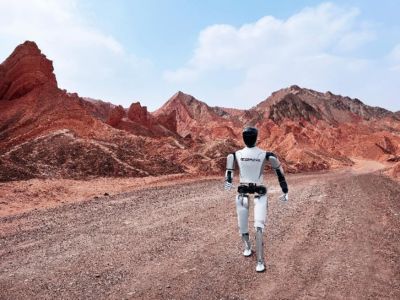
Star1
Star1 measures 171 x 55 x 50 cm and weighs 65 kg, providing a taller, lighter frame suited for industrial reach and mobility. Q5 at 165 x 50 x 52 cm and 70 kg offers a more compact build for tight service spaces. Both maintain humanoid proportions from Robot Era, but Star1's slimmer profile aids high-speed dynamics while Q5 emphasizes human-like posture for interaction. Star1's body is made from aluminum frame and soft skin elements. RobotEra Q5 has 44 degrees of freedom, carries 10 kg per arm and can deadlift 10 kg.
Mobility & Navigation

RobotEra Q5
Star1 achieves a 3.6 m/s running speed with LiDAR, SLAM, and visual odometry for versatile terrain navigation. Q5 operates at 1.5 m/s using indoor SLAM, visual SLAM, and LiDAR mapping optimized for confined areas. Star1 suits dynamic industrial paths, whereas Q5 prioritizes precise maneuvering in service environments like retail or homes. Star1's mobility type is legged. RobotEra Q5's mobility type is wheeled. Star1 has 55 degrees of freedom, carries 20 kg per arm and can deadlift 25 kg. Star1 weighs 65 kg. RobotEra Q5 stands 165 cm tall and weighs 70 kg.
Sensors & Perception

Star1
Star1 includes RGB cameras, depth cameras, stereo cameras, tactile sensors, IMU, gyroscope, and force sensors for comprehensive environmental grasp. Q5 features RGB cameras, stereo cameras, LiDAR, ultrasonic sensors, IMU, gyroscope, force sensors, and temperature sensors tailored to human proximity tasks. Star1 excels in depth perception for assembly, while Q5 adds ultrasonics and temperature for care applications. Star1 runs for 7 hours per charge and recharges in 3 hours. RobotEra Q5 runs for more than 4 hours per charge and recharges in 4 hours. Star1's safety features include emergency stop, obstacle detection and collision avoidance. RobotEra Q5's safety features include force limiting, collision detection, emergency stop and collaborative mode.
AI Capabilities
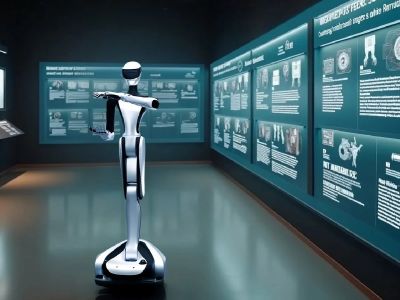
RobotEra Q5
Star1 employs AI automation and remote control for industrial precision tasks like assembly and inspection. Q5 supports teleoperation, autonomous modes, and learned behaviors, enabling adaptive service interactions. Both leverage Robot Era's AI foundations, but Star1 focuses on automation efficiency and Q5 on behavioral learning for human-robot collaboration. RobotEra Q5 is listed as semi-autonomous. Star1's control method is listed as AI automation, remote control. Star1 runs linux-based, ROS compatible, proprietary SDK. RobotEra Q5 runs ROS2, proprietary OS, Python, C++, APIs. Star1's sensors include RGB cameras, depth cameras, stereo cameras and tactile sensors. RobotEra Q5's sensors include RGB cameras, stereo cameras, 360° LiDAR and force sensors.
Battery & Power Efficiency

Star1
Q5 offers 4 years, adequate for service shifts in hospitality or care settings. The extra year on Star1 aligns with its higher speed and warehousing demands. Star1's listed uses include parcel carrying, factory patrol and physical manipulation. RobotEra Q5's listed uses include customer greeting, guided tours, healthcare assistance and object delivery. Star1 reaches 3.6 m/s. RobotEra Q5 reaches 1.5 m/s. RobotEra Q5 navigates with indoor SLAM, visual SLAM and LiDAR mapping. RobotEra Q5's control method is listed as teleoperation, autonomous, learned behaviors.
Use-Case Suitability
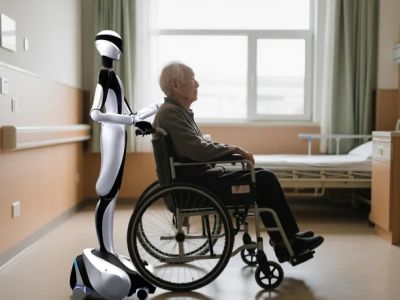
RobotEra Q5
Star1 targets high-speed bipedal running, parcel carrying, factory patrol and physical manipulation, with 55 degrees of freedom and a 20 kg dual-arm payload. Q5 fits customer greeting, guided tours, healthcare assistance, object delivery and research demos, with 44 degrees of freedom and 10 kg per arm on a wheeled base. Star1 optimises for speed and production efficiency, running at up to 3.6 m/s, while Q5 suits interpersonal service roles at up to 1.5 m/s.
Software Ecosystem
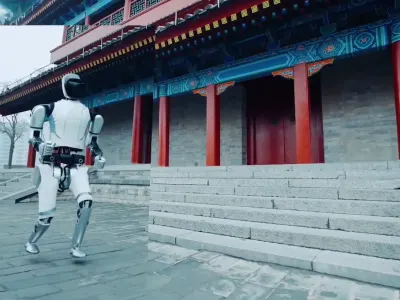
Star1
Star1 runs Linux-based software that is ROS compatible, with a proprietary SDK for integration, and it learns through reinforcement learning, motion learning and task programming. Q5 uses ROS2 on a proprietary OS, with Python, C++ and APIs for service development, and it learns from human motion data. Star1 is listed as fully autonomous with end-to-end reinforcement-learning locomotion, and Q5 as semi-autonomous. Star1's SDK suits automation pipelines, while Q5's multi-language APIs suit research and custom behaviours.
Safety Features

RobotEra Q5
Star1 has an emergency stop, obstacle detection and collision avoidance, and it is splash resistant for indoor and semi-outdoor use from 0 to 40 °C. Q5 has force limiting, collision detection, an emergency stop and a collaborative mode for safe human proximity, with a 360° LiDAR. Q5's force limiting enhances service safety, while Star1 runs at up to 3.6 m/s, so its navigation-focused protections matter most away from people.
Pricing & Value
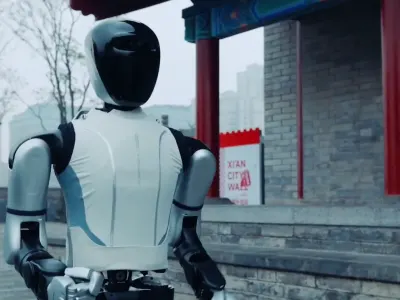
Star1
Star1 is listed at $50,000, a low price given its 3.6 m/s running speed, 7-hour runtime and 55 degrees of freedom. Q5 costs $75,000 to $95,000, more than Star1, with a focus on service applications and 10 kg per arm. Star1 weighs 65 kg against Q5's 70 kg. The gap lets buyers choose between speed and endurance with Star1 and collaboration-focused service with Q5. Star1 is the better value for industrial patrol and parcel work.
Capabilities & Operational Tasks
Head-to-head comparison of what Star1 and RobotEra Q5 can do, their applications, and capabilities.
What Can Star1 & RobotEra Q5 Do?
168 tasks listed for both, 7 only for Star1, 1 only for RobotEra Q5.
Tap a circle area to filter the lists
Only Star1
Not listed for the other robot
Shared by both
Listed for Star1 and RobotEra Q5
Only RobotEra Q5
Not listed for the other robot
Technical Specifications
Star1 and RobotEra Q5 differ on 32 of the 34 specifications listed for both.
Manipulation & Load Capacity
3 Comparative Metrics
Kinematic Architecture & Dexterity
3 Comparative Metrics
Energy & Power Management
7 Comparative Metrics
Frequently Asked Questions
Which costs less, Star1 or RobotEra Q5?
Star1 costs less at $50,000, against $75,000–$95,000 for RobotEra Q5.
Which uses is each robot marketed for, Star1 or RobotEra Q5?
Only Star1 is marketed for home help and elder care, hospitality, retail and public-facing roles and hazardous or high-risk work. Both suit warehouse and logistics work, factory and manufacturing work, research labs and education and training, so compare the specs for that use.
How much does Star1 cost?
Star1 is listed at $50,000.
How much does RobotEra Q5 cost?
RobotEra Q5 is listed at $75,000–$95,000.
Where can I buy RobotEra Q5?
RobotEra Q5 is sold through Robot Era's sales team; request a quote.
Which is faster, Star1 or RobotEra Q5?
Star1 is faster, with a top speed of 3.6 m/s (13 km/h), against 1.5 m/s (5.4 km/h) for RobotEra Q5. Top speed is the maker’s stated maximum, so everyday pace depends on the task and the terrain.
Related Comparisons
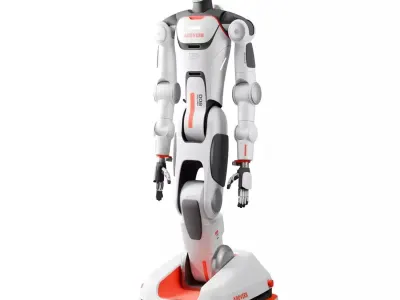
RobotEra Q5 vs ELIXIS W
Compare Q5 by Robot Era and ELIXIS W by Addverb Technologies. Detailed analysis of sensors, navigation, battery, and price.
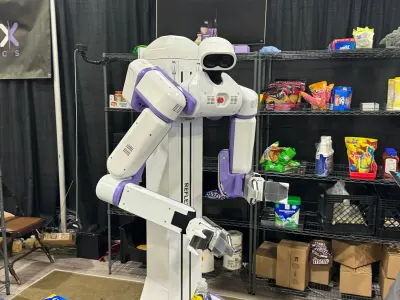
RobotEra Q5 vs Reflex Humanoid
Which robot wins? Q5 vs Reflex Humanoid compared across sensors, navigation, battery, speed, and price.
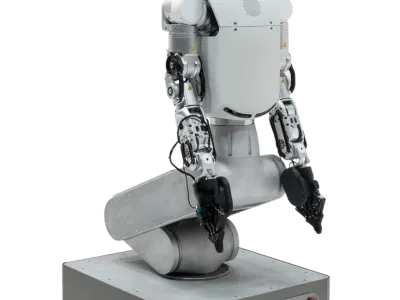
RobotEra Q5 vs HMND 01 Alpha Wheeled
Q5 or HMND 01 Alpha Wheeled? Compare specs, speed, sensors, navigation, and battery for service vs industrial performance.
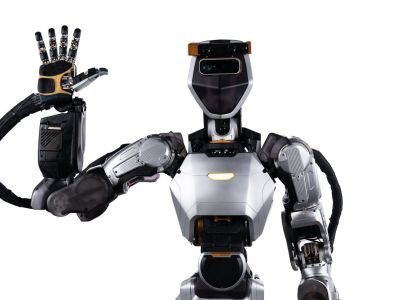
Star1 vs Phoenix
Compare Star1 and Phoenix. Detailed analysis of speed, sensors, AI capabilities, and navigation.
Verdicts reflect our research and opinion. Confirm specifications with the manufacturer before buying.