Unitree G1 vs Unitree H1-2 at a glance
Unitree G1 can be bought now, while Unitree H1-2 is sold through a sales quote. Unitree G1 is the more affordable option at $13,500, while Unitree H1-2 costs $112,000–$150,000. Unitree G1 is lighter at 35 kg, compared with 70 kg for Unitree H1-2.
| Key specs | Unitree G1 | Unitree H1-2 |
|---|---|---|
| Price | $13,500 (stronger) | $112,000–$150,000 |
| Height | 132 cm | — |
| Weight | 35 kg | 70 kg |
| Top speed | 2 m/s | 2 m/s |
| Runtime | 2 hours | 2 hours |
| Degrees of freedom | 23–43 | 27 |
| Payload | 2 kg | 7 kg (stronger) |
| Availability | Available to buy | Order via sales quote |
Last updated:
Which one fits your use?
Based on the uses each robot is built and marketed for. Open a use to see the specs that matter for it.
| Comparing for… | Unitree G1 | Unitree H1-2 |
|---|---|---|
| Suited | Suited | |
| Suited | Suited | |
| Suited | Suited | |
| Suited | Not marketed | |
| Suited | Not marketed | |
| Suited | Suited |
- Only Unitree G1 is marketed for education and training and hospitality, retail and public-facing roles.
- Both suit warehouse and logistics work, factory and manufacturing work, research labs and hazardous or high-risk work, so compare the specs for that use.
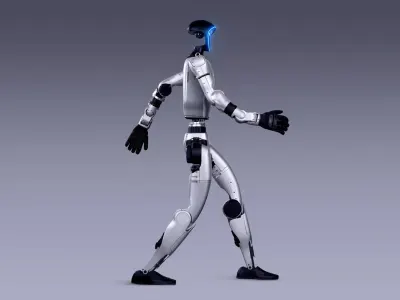
The Unitree G1 is a 132 cm, 35 kg walking humanoid that Unitree Robotics launched in 2024 for universities, labs and robot developers. It carries a depth camera and a 3D LiDAR (a laser scanner that maps rooms), runs about 2 hours per charge, and has 23 joints in the standard model, rising to 43 on the EDU version with optional hands.
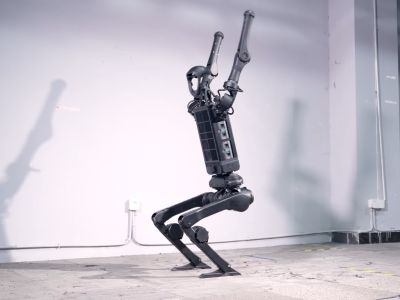
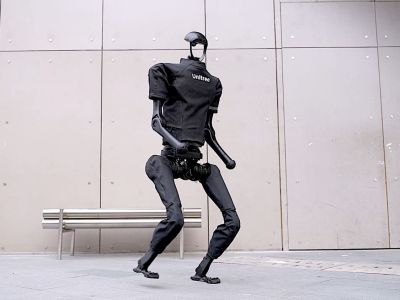
The Unitree H1-2 is the upgraded version of Unitree Robotics' first full-size humanoid, standing about 178 cm tall and weighing about 70 kg. It has 27 joints, 7-joint arms (the original H1 had 4 per arm), 6-joint legs and a 0.864 kWh quick-swap battery. It also carries a 3D LiDAR and a depth camera and runs on Intel Core processors.
Detailed Analysis
Which should you choose, Unitree G1 or Unitree H1-2?
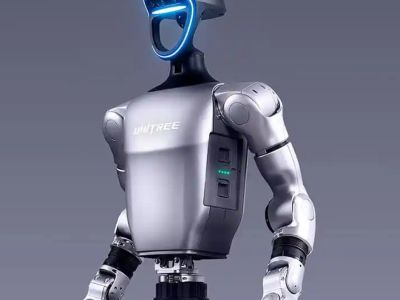
Unitree G1
Choose the G1 if you want a compact, lighter robot for programming, teaching and light object handling; choose the H1-2 if your research needs an adult-sized body with strong arms and legs. The G1 stands 132 cm and weighs about 35 kg, with 23 joints and optional three-fingered hands on the EDU. The H1-2 stands about 178 cm, weighs about 70 kg and has 27 joints, including 7-joint arms. Both carry a 3D LiDAR and a depth camera, and both are research robots, not household helpers. The G1 is easier to move and store, while the H1-2 is closer to human size.
How different are the G1 and H1-2 in size and weight?
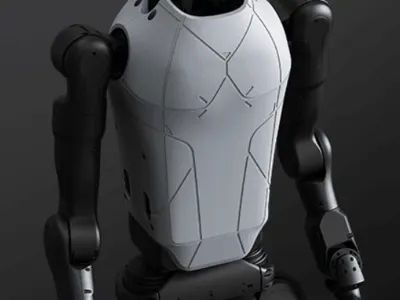
Unitree H1-2
The H1-2 is about 46 cm taller and twice as heavy: about 178 cm and 70 kg against 132 cm and about 35 kg for the G1. That difference changes daily handling. One person can carry a G1, and Unitree says it folds to 69 x 45 x 30 cm for transport. The H1-2 needs a trolley and two people, and a fall from its height carries far more force. The H1-2 leg and thigh sections are longer, which gives it a human stride, while the G1 gets by with legs 0.6 m long from calf plus thigh.
Which robot handles objects better, G1 or H1-2?
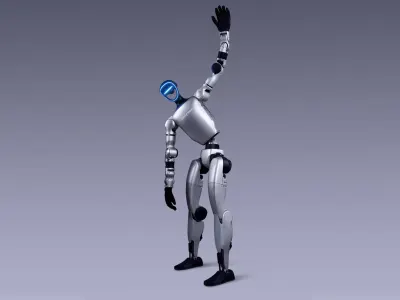
Unitree G1
The G1 is the better choice for fine handling, because the EDU version offers optional force-controlled three-fingered hands with 7 joints each, and its arms are rated for about 2 kg (about 3 kg on the EDU). The H1-2 has the stronger arms: 7 joints per arm (shoulder 3, elbow 1, wrist 3) and up to 120 N.m of arm joint torque, which is the twisting force a joint can produce. Unitree's H1-2 listing does not name a hand model. In practice the G1 suits desk-sized pick-and-place work, while the H1-2 suits reaching and whole-body motion research.
How does the battery compare on the G1 and H1-2?
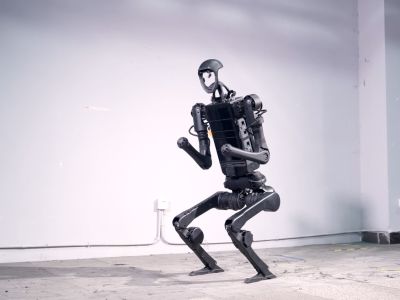
Unitree H1-2
The H1-2 carries the bigger battery, rated at 0.864 kWh (15 Ah at up to 67.2 V), while the G1 uses a 9,000 mAh pack that Unitree rates at about 2 hours of use. Both packs can be swapped without tools, so a spare battery keeps either robot working through a long session. The H1-2 needs the larger pack because it moves 70 kg of body with bigger motors, while the G1 only has 35 kg to carry. The G1 also ships with a 54V 5A charger, so plan for charging time between sessions in either case.
Is the Unitree H1-2 faster than the G1?
Unitree G1
No. Unitree lists the H1-2 at a moving speed under 2 m/s, and the G1 is listed at about 2 m/s, so the two walk at a similar pace. The famous 3.3 m/s record belongs to the original Unitree H1, not the H1-2, and Unitree's own page shows the two side by side, which is why many comparison sites mix them up. If you are buying for speed, the original H1 mattered; the H1-2 was upgraded for stronger arms and legs, not for speed. Neither robot is a runner by Unitree's own listing for the H1-2 and G1.
What can the G1 and H1-2 sense and compute?
Unitree H1-2
Both robots scan the room in 3D, because each carries a LIVOX MID-360 3D LiDAR and an Intel RealSense depth camera, which lets them map space and spot obstacles. The G1 adds a 4-microphone array, a 5W speaker, Wi-Fi 6 and Bluetooth 5.2, plus an 8-core processor, with an optional NVIDIA Orin module on the EDU. The H1-2 ships with an Intel Core i5 for its platform functions and an Intel Core i7 for user development, and accepts up to 3 extra computing devices such as an Orin NX. That makes the H1-2 the stronger choice for heavy on-robot software.
Which is better for programming and research, G1 or H1-2?

Unitree G1
The G1 EDU is the open version of the G1: Unitree lists secondary development (the right to write your own control software) only on the EDU, with 18 months of warranty against 8 months on the standard G1. The G1 also supports reinforcement learning and imitation learning, and UnifoLM, Unitree's own robot model for training. The H1-2 is aimed at labs that already know their research question and need a full-size body, and it works with Python, C++ and ROS 2 (a common robot software framework). For a first humanoid, the G1 EDU is the simpler starting point.
Should you pick the H1-2 now that Unitree sells the H2?
Unitree H1-2
Pick the H1-2 only if you need the proven, smaller full-size body or you already own H1 software, because Unitree now lists the newer H2 as its next-generation full-size humanoid and puts the H1 and H1-2 on one page. The G1 is a different decision: it is a compact robot, not a smaller version of the H-series. If size, folding transport and arm hands matter most, buy the G1. If adult height and 27 joints matter most, compare the H1-2 against the H2 before you order, as the H2 is the model Unitree is now building toward.
Capabilities & Operational Tasks
Head-to-head comparison of what Unitree G1 and Unitree H1-2 can do, their applications, and capabilities.
What Can Unitree G1 & Unitree H1-2 Do?
179 tasks listed for both, 4 only for Unitree G1, 4 only for Unitree H1-2.
Tap a circle area to filter the lists
Only Unitree G1
Not listed for the other robot
Shared by both
Listed for Unitree G1 and Unitree H1-2
Only Unitree H1-2
Not listed for the other robot
Technical Specifications
Unitree G1 and Unitree H1-2 differ on 36 of the 40 specifications listed for both.
Manipulation & Load Capacity
4 Comparative Metrics
Kinematic Architecture & Dexterity
4 Comparative Metrics
Energy & Power Management
7 Comparative Metrics
Frequently Asked Questions
Can I write my own code for the Unitree G1 or H1-2?
Yes, on the right versions. Unitree lists secondary development, meaning your own control software, for the G1 EDU and not the standard G1. The H1-2 works with Python, C++ and ROS 2, and takes up to 3 added computing devices.
Does the Unitree H1-2 have fingers like the G1 EDU?
Unitree's H1-2 listing names no hand model. The G1 EDU offers optional force-controlled three-fingered hands with 7 joints each, so it is the better choice for gripping small objects and fine tasks.
Is the Unitree H1-2 the robot that broke the speed record?
No. The 3.3 m/s record belongs to the original Unitree H1. Unitree lists the H1-2 at under 2 m/s and the G1 at about 2 m/s, so the G1 and H1-2 walk at a similar pace.
Can the Unitree G1 and H1-2 map a room?
Yes. Both carry a 3D LiDAR and a depth camera. They scan the room in 3D, so they can map space and detect obstacles, although neither is a finished product that cleans or fetches things alone.
How many joints do the Unitree G1 and H1-2 have?
The G1 has 23 joints, rising to 43 on the EDU with optional hands and waist joints. The H1-2 has 27: seven in each arm, six in each leg and one at the waist.
Is the Unitree H1-2 better than the G1 for research?
It depends on the question. The H1-2 suits full-size body and arm-strength research, with 120 N.m arm torque and an Intel Core i7 computer. The G1 EDU suits learning, teaching and manipulation with its optional hands.
Can I buy Unitree G1 or Unitree H1-2 today?
Unitree G1 can be bought now, while Unitree H1-2 is sold through a sales quote.
Which costs less, Unitree G1 or Unitree H1-2?
Unitree G1 costs less at $13,500, against $112,000–$150,000 for Unitree H1-2.
Which is lighter, Unitree G1 or Unitree H1-2?
Unitree G1 is lighter at 35 kg, compared with 70 kg for Unitree H1-2.
Which uses is each robot marketed for, Unitree G1 or Unitree H1-2?
Only Unitree G1 is marketed for education and training and hospitality, retail and public-facing roles. Both suit warehouse and logistics work, factory and manufacturing work, research labs and hazardous or high-risk work, so compare the specs for that use.
How much does Unitree G1 cost?
Unitree G1 is listed at $13,500.
How much does Unitree H1-2 cost?
Unitree H1-2 is listed at $112,000–$150,000.
Where can I buy Unitree G1?
Unitree G1 is sold by Unitree Robotics.
Where can I buy Unitree H1-2?
Unitree H1-2 is sold through Unitree Robotics's sales team; request a quote.
Related Comparisons
Unitree G1 vs Unitree R1
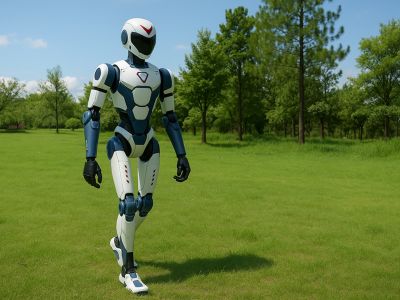
Unitree G1 vs Unitree R1: the G1 maps rooms, handles objects and runs 2 hours; the R1 is smaller, lighter and built for agile motion.

Optimus vs Unitree G1
Compare Optimus vs Unitree G1 for humanoid mobility, dexterity, autonomy, and payload capacity.
Unitree G1 vs Unitree H1
Unitree G1 vs H1 compared: 132 cm and 35 kg against 180 cm and 47 kg, 2 m/s versus 3.3 m/s, with 23 to 43 joints on the G1. See which to pick.
Unitree G1 vs AgiBot X2
Compare Unitree G1 vs AgiBot X2 for humanoid mobility, dexterity, autonomy, and payload capacity.
Verdicts reflect our research and opinion. Confirm specifications with the manufacturer before buying.