Walker S1 vs AlphaBot 2 at a glance
AlphaBot 2 is the taller of the two at 240 cm, against 172 cm for Walker S1. Walker S1 has more degrees of freedom (41 against 34 for AlphaBot 2), which allows finer movement.
| Key specs | Walker S1 | AlphaBot 2 |
|---|---|---|
| Price | $50,000–$150,000 | — |
| Height | 172 cm | 240 cm |
| Weight | 76 kg | — |
| Top speed | 1.4 m/s | — |
| Runtime | — | 6 hours |
| Degrees of freedom | 41 (stronger) | 34 |
| Payload | 15 kg | — |
| Availability | Order via sales quote | — |
Last updated:
Which one fits your use?
Based on the uses each robot is built and marketed for. Open a use to see the specs that matter for it.
| Comparing for… | Walker S1 | AlphaBot 2 |
|---|---|---|
| Suited | Suited | |
| Suited | Suited | |
| Not marketed | Suited | |
| Not marketed | Suited | |
| Not marketed | Suited |
- Only AlphaBot 2 is marketed for research labs, home help and elder care and hospitality, retail and public-facing roles.
- Both suit warehouse and logistics work and factory and manufacturing work, so compare the specs for that use.
UBTECH Robotics built Walker S1 for factory floors. The bipedal humanoid is 172 cm tall and 76 kg, moves 41 joints, handles 15 kg loads and has already worked on car assembly lines at BYD, Geely, Audi-FAW and other carmakers. It reaches 1.4 m/s. Safety features include emergency stop button and tactile sensing in the hands. Listed uses include visual quality inspection, walking while carrying material totes and sorting automotive parts.
AlphaBot 2 is a general-purpose humanoid from Shenzhen-based AI² Robotics, unveiled in April 2025. It runs the AlphaBrain platform and the GOVLA vision-language-action model, reaches anywhere from 0 to 240 cm with a waist-and-leg lifting structure, and works for more than six hours. AlphaBot 2 has 34 degrees of freedom. It runs for 6 hours per charge. Its sensors include RGB cameras, stereo cameras and force feedback sensors.
Detailed Analysis
Design & Build Quality
Walker S1
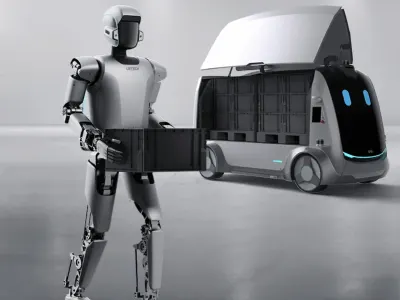
Walker S1 is a full biped, 172 cm tall and 76 kg, with 41 degrees of freedom and UBTECH's own joints rated at 250 N·m of peak torque. AlphaBot 2 puts a humanoid upper body with more than 34 degrees of freedom on a wheeled base, and AI² Robotics has not published its height or weight. Its standout feature is a waist-and-leg lift that gives a vertical working range of 0 to 240 cm, with 700 mm of reach per arm. That means AlphaBot 2 can work on high shelves and low bins that a walking robot of human height would struggle to reach.
Mobility & Navigation
AlphaBot 2
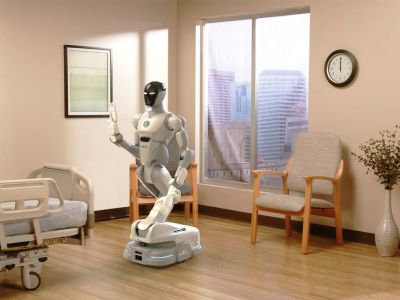
Walker S1 walks on two legs and finds its way with two-stage semantic VSLAM, which adds object-level understanding to its visual map. AlphaBot 2 moves on a wheeled base and uses what AI² Robotics calls 360° × 360° full-space perception to get around. Neither maker has published a top speed. Legs let Walker S1 move through spaces laid out for people, while AlphaBot 2's wheels suit the flat floors of factories, labs and cleanrooms. Walker S1 reaches 1.4 m/s. Walker S1's mobility type is legged.
Sensors & Perception
Walker S1
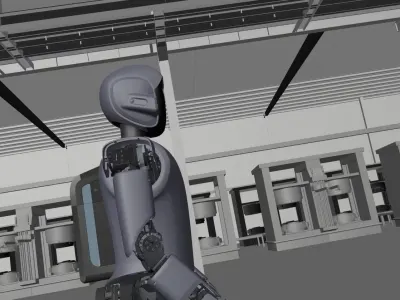
Both robots see in 360°. Walker S1 uses RGB-D cameras in its head and chest plus stereo and panoramic fisheye cameras, with six-axis force sensors in its wrists and ankles and tactile arrays in its hands. AlphaBot 2 combines a ring of cameras with stereo cameras, force feedback sensors, a microphone array and proximity sensors. Walker S1's tactile hands and ankle force sensing are the more detailed published setup for handling and balance. Walker S1 has 41 degrees of freedom, carries 15 kg and can deadlift 16 kg. AlphaBot 2 has 34 degrees of freedom.
AI Capabilities
AlphaBot 2
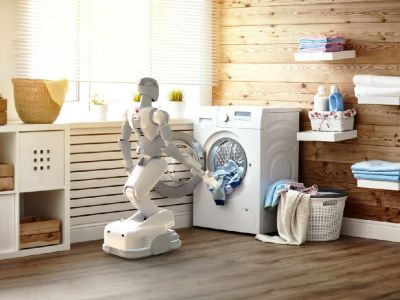
Walker S1 plans tasks with a large language model, uses learning-based whole-body control and coordinates with other units through UBTECH's BrainNet. AlphaBot 2 runs AI² Robotics' GOVLA model, which pairs a slow System 2 that reasons and breaks tasks into steps with a fast System 1 that controls whole-body movement, and DeepSeek technology is integrated into it. AI² Robotics also says AlphaBot 2 learns on site from real industrial data and adapts to new tasks without manual reprogramming. Both aim at autonomy; AlphaBot 2 puts more emphasis on long, multi-step tasks.
Battery & Power Efficiency
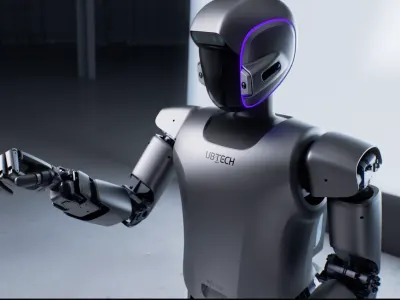
Walker S1
AlphaBot 2 works for more than six hours continuously, according to AI² Robotics. UBTECH has not published Walker S1's battery capacity or runtime, saying only that it charges through a fast-charging port on its back. Six hours covers most of a shift. Until UBTECH publishes a runtime, AlphaBot 2 is the more predictable choice for long working periods. AlphaBot 2 runs for more than 6 hours per charge. Walker S1 stands 172 cm tall and weighs 76 kg. AlphaBot 2 stands 240 cm tall.
Use-Case Suitability
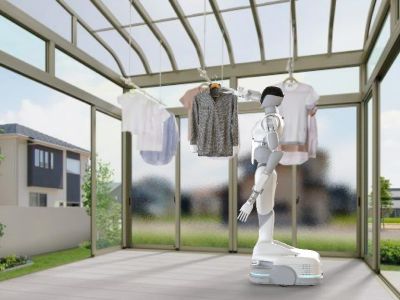
AlphaBot 2
Walker S1 is built for car factories, where it has carried totes, sorted parts and helped with quality inspection and line assembly. AlphaBot 2 targets automotive, semiconductor and biotech manufacturing, and has been shown cooking, doing sterile filling, packing and inspecting, with airports and residential communities planned. Both work in car plants, but AlphaBot 2 reaches further into lab and cleanroom work. Choose Walker S1 for car-factory handling, inspection and assembly, or AlphaBot 2 for multi-step lab and factory tasks over long shifts.
Software Ecosystem
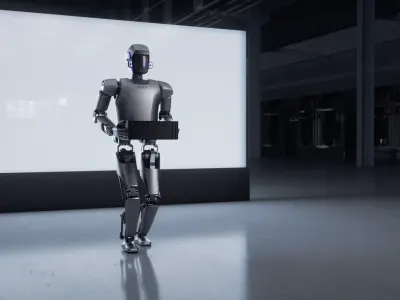
Walker S1
UBTECH runs Walker S1 on its ROSA 2.0 framework and designs it to work with factory management systems, AMRs and AGVs. AlphaBot 2 runs on AI² Robotics' AlphaBrain embodied-AI platform and receives over-the-air software updates. UBTECH's published integrations make Walker S1 straightforward to slot into an existing automated factory. AlphaBot 2's platform is built around continuous model improvement, which suits teams that want the robot to get better with use. Walker S1's control method is listed as autonomous, works with factory management systems, AMRs and AGVs. AlphaBot 2's control method is listed as autonomous.
Safety Features
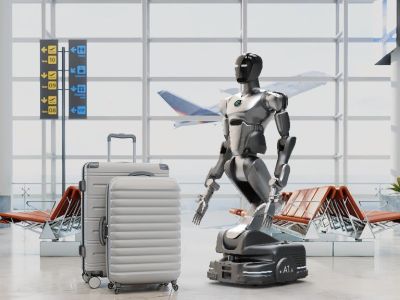
AlphaBot 2
Walker S1 has an emergency stop button on its back, six-axis force sensing in its wrists and ankles and tactile sensing in its hands. AI² Robotics has not published AlphaBot 2's safety features or certifications. Walker S1 is therefore the easier robot to assess for work near people. AlphaBot 2's wheeled base avoids the fall risk of a walking robot, but buyers should ask AI² Robotics for its full safety documentation. AlphaBot 2's sensors include RGB cameras, stereo cameras, force feedback sensors and microphone array.
Capabilities & Operational Tasks
Head-to-head comparison of what Walker S1 and AlphaBot 2 can do, their applications, and capabilities.
What Can Walker S1 & AlphaBot 2 Do?
197 tasks listed for both, 5 only for Walker S1, 7 only for AlphaBot 2.
Tap a circle area to filter the lists
Only Walker S1
Not listed for the other robot
Shared by both
Listed for Walker S1 and AlphaBot 2
Only AlphaBot 2
Not listed for the other robot
Technical Specifications
Walker S1 and AlphaBot 2 differ on 31 of the 34 specifications listed for both.
Manipulation & Load Capacity
3 Comparative Metrics
Kinematic Architecture & Dexterity
4 Comparative Metrics
Energy & Power Management
5 Comparative Metrics
Frequently Asked Questions
Which uses is each robot marketed for, Walker S1 or AlphaBot 2?
Only AlphaBot 2 is marketed for research labs, home help and elder care and hospitality, retail and public-facing roles. Both suit warehouse and logistics work and factory and manufacturing work, so compare the specs for that use.
How much does Walker S1 cost?
Walker S1 is listed at $50,000–$150,000.
Where can I buy Walker S1?
Walker S1 is sold through UBTECH Robotics's sales team; request a quote.
Which has more degrees of freedom, Walker S1 or AlphaBot 2?
Walker S1 has more degrees of freedom, with 41 against 34 for AlphaBot 2. More joints allow finer, more human-like movement, especially in the hands and arms.
How autonomous are Walker S1 and AlphaBot 2?
Walker S1: Fully Autonomous (Goal-based navigation with BrainNet factory coordination). AlphaBot 2: Fully autonomous with teleoperation capability, semi-autonomous task execution.
How are Walker S1 and AlphaBot 2 controlled?
Walker S1: Autonomous (LLM task planning, learning-based whole-body control). AlphaBot 2: Autonomous (GOVLA model).
Related Comparisons
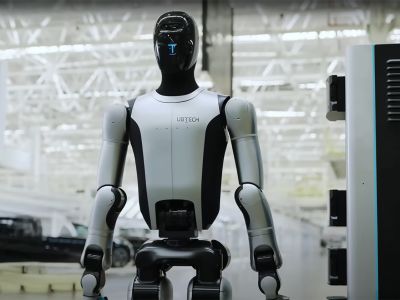
Walker S1 vs Walker S2
Walker S1 vs Walker S2 from UBTECH: speed, battery swap, sensors and software compared, with a clear pick for each factory need.
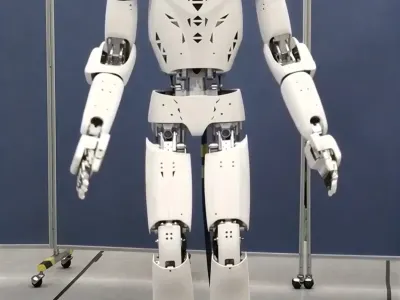
Walker S1 vs Kaleido 8.0
Walker S1 vs Kaleido 8.0: UBTECH's factory humanoid against Kawasaki's robust bipedal humanoid, compared on size, mobility, sensors, AI and best uses.

Walker S1 vs AgiBot G2
Walker S1 vs AgiBot G2: UBTECH's factory humanoid against AgiBot's wheeled precision-assembly humanoid, compared on size, mobility, sensors, AI and best uses.
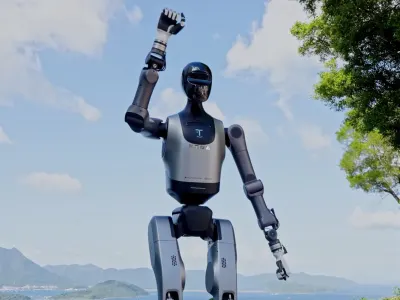
AlphaBot 2 vs Walker Tienkung
AlphaBot 2 vs Walker Tienkung: AI² Robotics' wheeled VLA humanoid against UBTECH's full-size research humanoid, compared on specs and uses.
Verdicts reflect our research and opinion. Confirm specifications with the manufacturer before buying.