Asimov v1
Last updated:
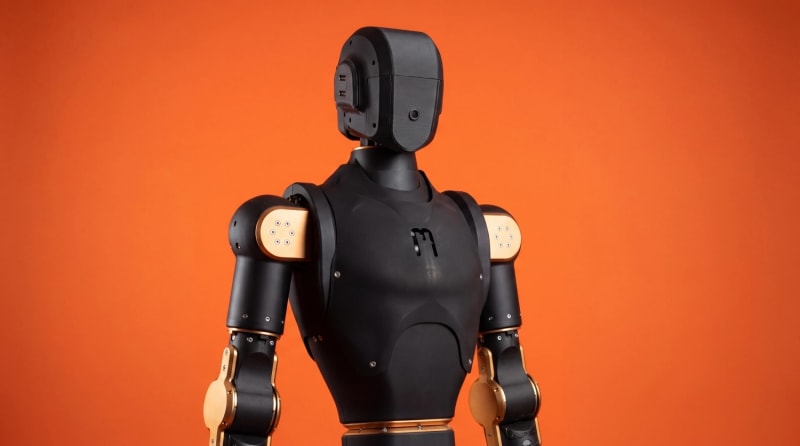
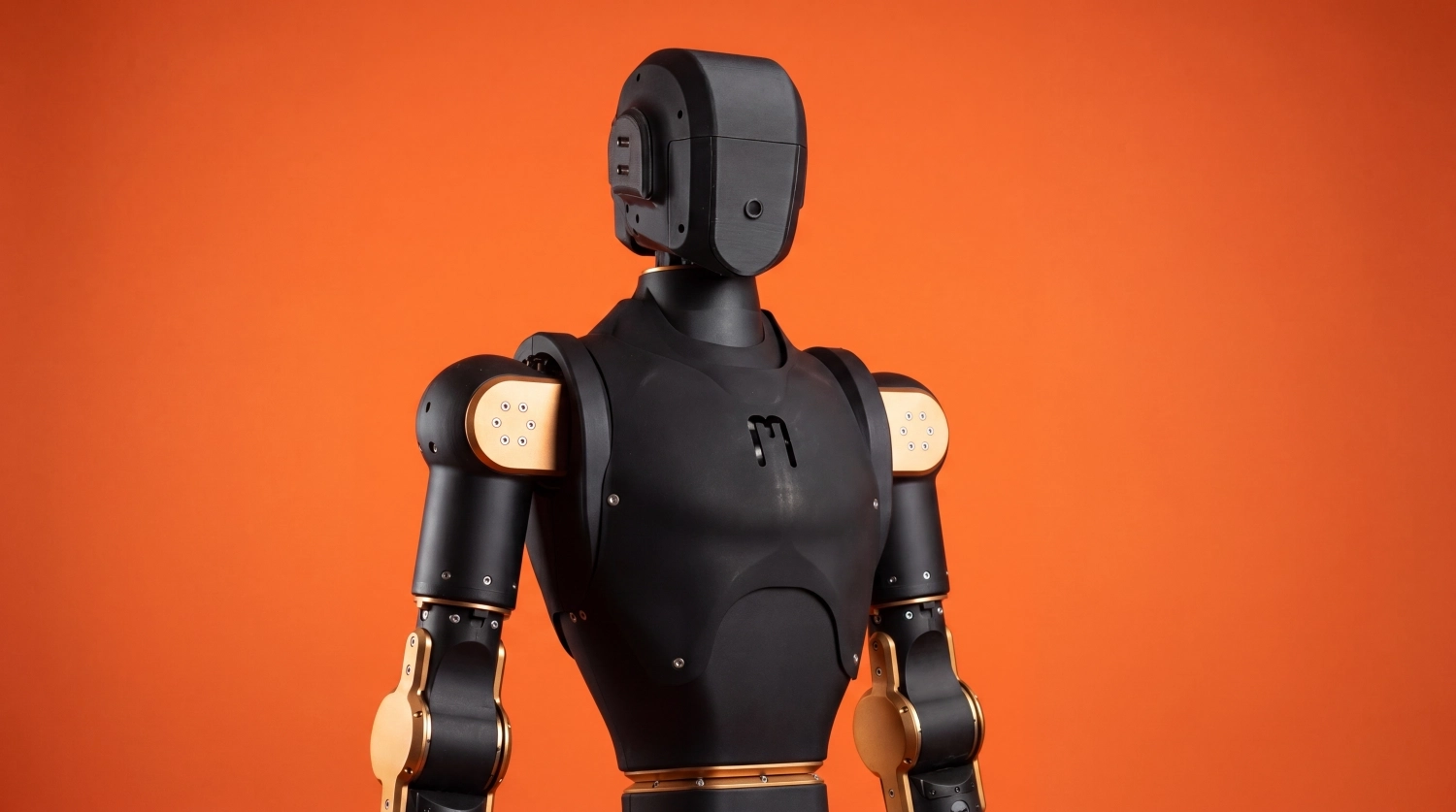
The Asimov v1 is Menlo Research’s first open-source humanoid robot, designed as a DIY kit for developers, researchers, and educators. Standing 1.2 meters tall and weighing 35 kg, it features 25 actuated joints plus 2 passive toe joints for bipedal locomotion. Powered by 120 N·m electric actuators, it supports zero-shot simulation-to-real transfer via MuJoCo. The robot includes a 2MP monocular camera, 4-channel microphone array, embedded speakers, and dual processors (Radxa CM5 for control, Raspberry Pi 5 for networking). Its open hardware (CERN-OHL-S-2.0) and software (GPL-2.0) enable full customization, making it a cost-effective alternative to proprietary humanoid platforms.
Quick Overview & Key Facts
Asimov v1 is a humanoid robot made by Menlo Research in United States, launched in 2026 and built for humanoid locomotion research, AI companion prototyping, and educational demos. Its estimated price is $15,000 (DIY kit). Featured in “Menlo Research’s Asimov v1 pushes humanoid teleoperation into open-source territory”.
- Dimensions
- 120 cm x 45 cm x 30 cm
- Weight
- 35 kg
- Mobility
- Legged (bipedal walking)
- Top speed
- 2.5 km/h (0.7 m/s)
- Handles
- tools, packages, precision instruments, people interaction
- Battery runtime
- 2.5 hours
- Charging time
- 3 hours
- Sensors
- 2MP monocular RGB camera, 4-channel microphone array, IMU, gyroscope, force sensors in joints, temperature sensors
- Operating environment
- Indoor
What Can Asimov v1 Do?
Core operational tasks and activities demonstrated or performed by Asimov v1.
Real-World Applications of Asimov v1
Industries, working environments, and deployment suitability for Asimov v1.
Asimov v1 Capabilities
Inherent physical, perceptual, and cognitive abilities built into Asimov v1.
Download Media Cards
Story CardExport high-resolution story cards summarizing Asimov v1's operational tasks, real-world applications, and capabilities.
Image Gallery
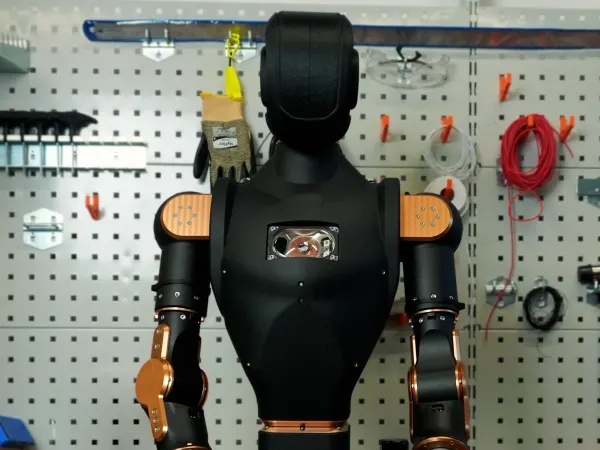
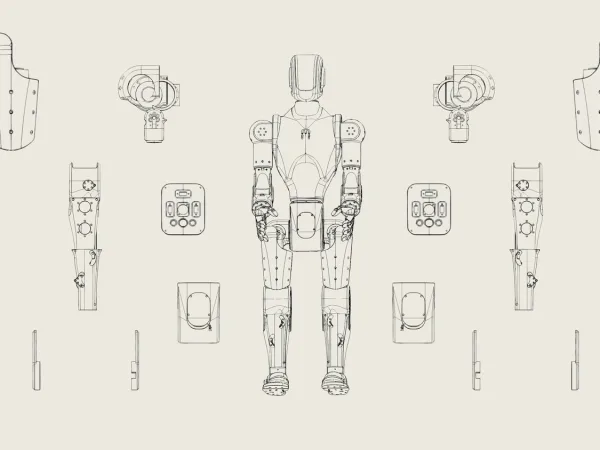
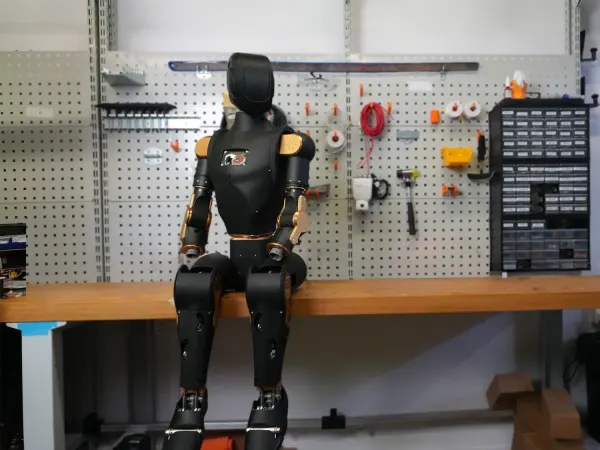
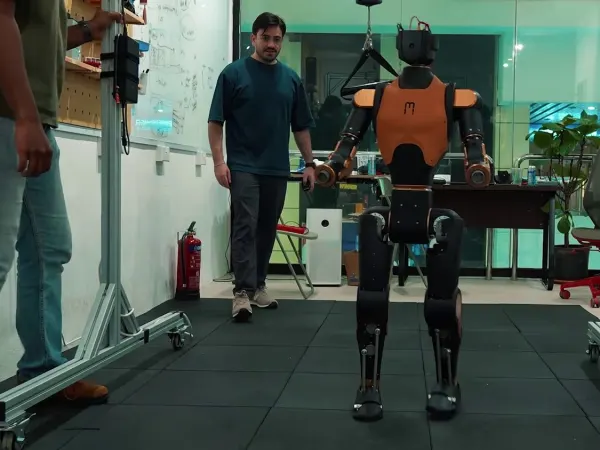
Below images are from Menlo Research's official sources
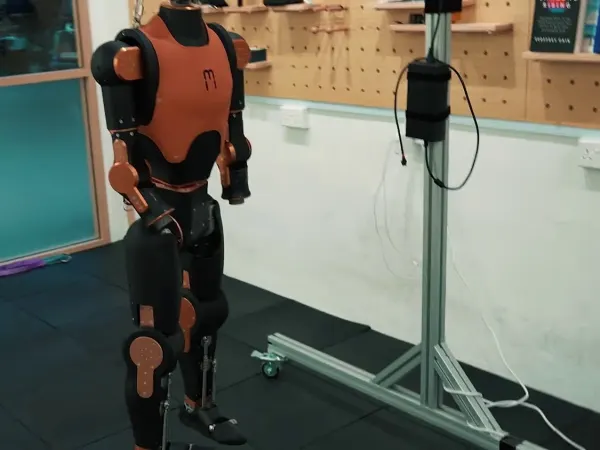
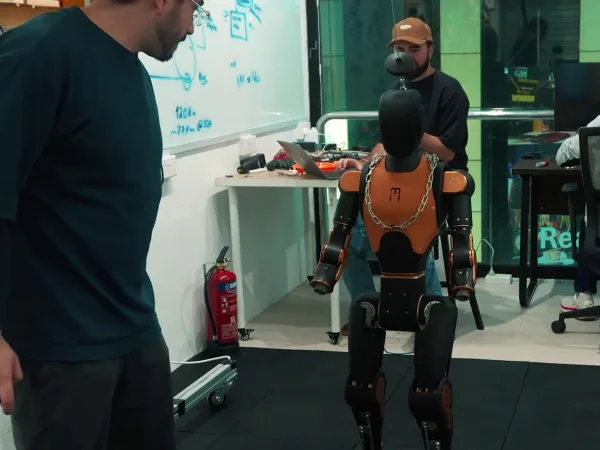
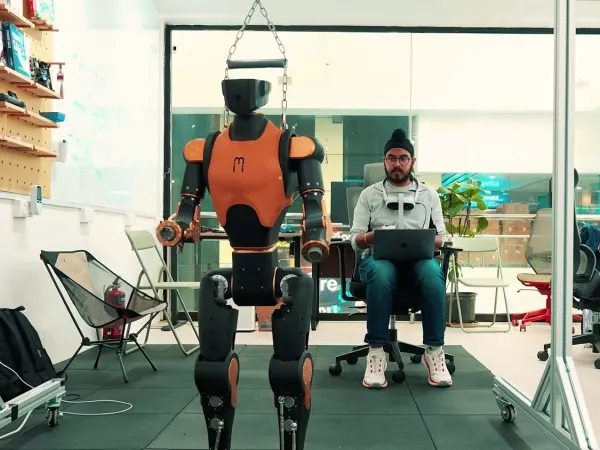
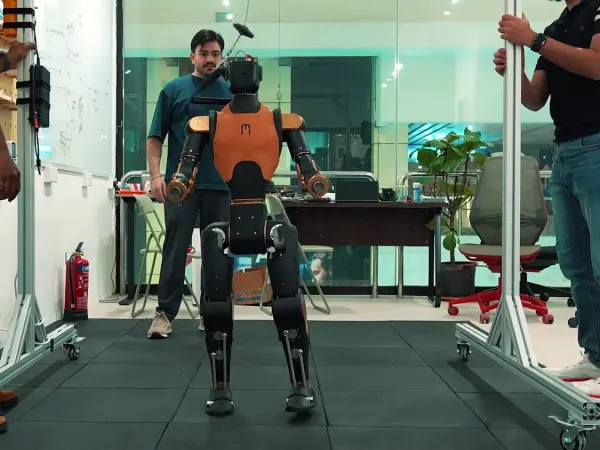
Review Videos
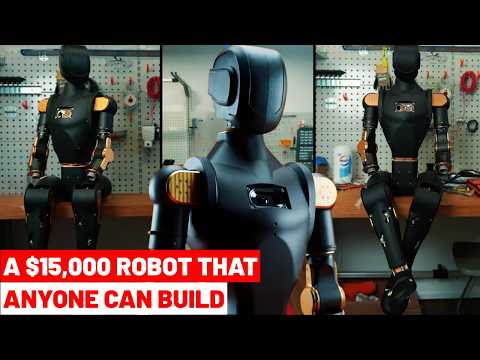
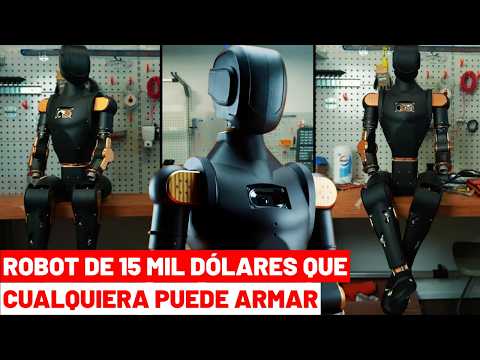
Watch expert reviews and demonstrations of this robot

Robot Specifications
ConfirmedValues marked Confirmed were checked against the manufacturer's official data; select the badge to open the source.
Robot Timeline
Key milestones in this robot's development and rollout
Menlo Research open-sources Asimov v1, a 1.2 m, 35 kg humanoid with 25 actuated degrees of freedom, releasing its CAD, simulation model and software, with a DIY kit targeted at $15,000.
Source: Open Source For You ↗
Latest News About Asimov v1
Stay updated with the latest articles and developments
More Humanoid Robots
Discover more robots in the same category

Robots From Other Categories
Discover complementary robots from different categories that work well together

Frequently Asked Questions
Get answers to common questions about this robot
Q1. What is Asimov v1, and what problem is it designed to solve?
Asimov v1 is a 1.2-meter, 35 kg open-source bipedal humanoid robot by Menlo Research designed to provide a customizable platform for builders to build, train, and experiment with humanoid robotics without proprietary restrictions.
Q2. What are the main capabilities and key features of Asimov v1?
The robot features 25 to 27 actuated degrees of freedom, access to mechanical CAD files, electrical documentation, and a MuJoCo simulation model for locomotion policy training, enabling users to customize and simulate its movements.
Q3. Who is Asimov v1 built for, and which industries can benefit from it?
It targets university labs, robotics startups, independent engineers, controls researchers, and makers with experience in complex electromechanical systems, serving as a platform for serious experimentation rather than commercial deployment.
Q4. Is Asimov v1 a commercial product or still a research prototype?
Asimov v1 is a commercial DIY hardware kit called the "Here Be Dragons Edition" sold at a target price of $15,000, though it is fundamentally an open-source reference platform for development and customization.
Q5. Is Asimov v1 currently available for purchase, and when is it expected to ship?
Pre-orders are available with a $499 deposit, and the company targets shipping by the end of summer 2026, with timelines dependent on distributor fulfillment following pre-order queues.
Q6. How does Asimov v1 actually work in real-world environments?
The robot operates as a bipedal system with independent joints capable of walking, utilizing open simulation files and mechanical designs that allow users to train locomotion policies via reinforcement learning in MuJoCo before physical deployment.
Q7. When was Asimov v1 announced or officially launched?
Menlo Research announced the full release of Asimov v1 files under open licenses on April 27, 2026, publishing mechanical designs, wiring schematics, and simulation models on a public GitHub repository.
Q8. How is Asimov v1 different from other robots in the same category?
Unlike proprietary systems from Boston Dynamics, Tesla, or Unitree, Asimov v1 is released under CERN-OHL-S-2.0 and GPL-2.0 licenses, providing free access to complete designs and enabling anyone to build or modify the robot.
Q9. Does Asimov v1 require additional development or customization after purchase?
Yes, the kit is intended for builders who source components from the published bill of materials and perform assembly, customization, and training, as it functions as a platform for experimentation rather than a ready-to-use product.
Q10. What is the future roadmap or planned upgrades for Asimov v1?
The roadmap includes releasing complete electrical schematics, an open API layer, RL-trained locomotion policies based on MuJoCo simulation, and a mobile app for easier control, according to the project's GitHub repository.
Rating and Reviews
Share your experience and help others decide!
Loading...
User Reviews
No user reviews. Be the first one to review!
User Comments (No Login needed)
Share your thoughts, experiences, or questions about this robot.
Comments are reviewed before posting.