Lumi
AI ChatLast updated:
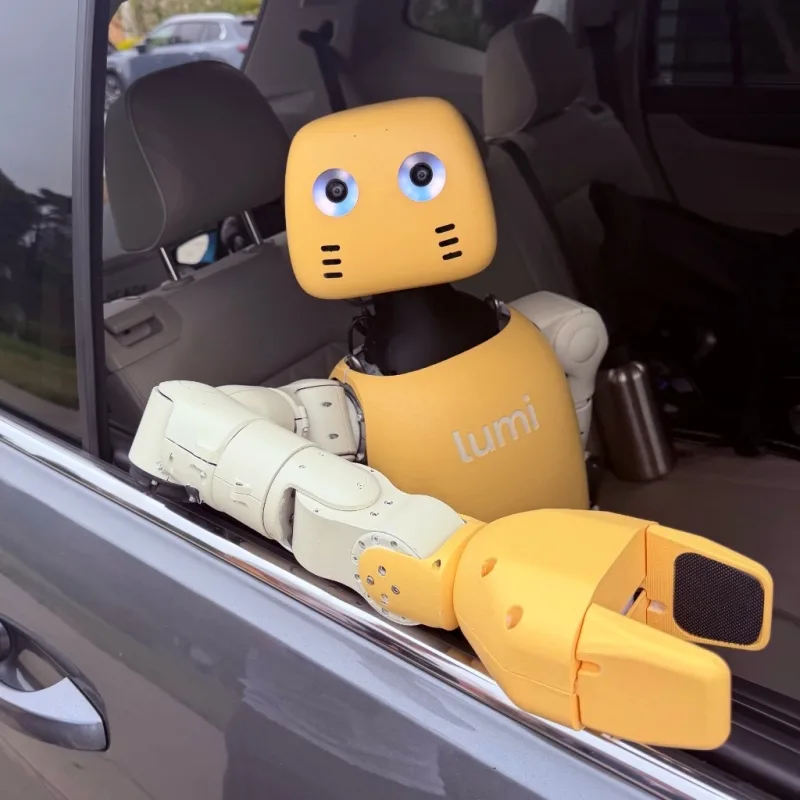
Lumi is a yellow, rounded interactive humanoid from San Francisco software company Lightberry, introduced on August 27, 2026. It combines Lightberry's custom sensors and software with a Unitree G1 base to create a robot that entertains crowds, holds long conversations, tells stories, takes photos, looks up information and guides people. It has 34 degrees of freedom, stands 1.3 m tall, runs Lightberry OS on an NVIDIA Jetson Thor, and the first 100 Founder Edition units ship in 2026 at $39,990.
Quick Overview & Key Facts
Lumi is a humanoid robot made by Lightberry in United States, launched in 2026 and built for entertaining crowds, long conversations, and storytelling. Its estimated price is USD 39,990 (first 100 units); Lightberry targets hardware pricing in the $20,000 range later. Featured in “Humanoid Robots You Can Actually Buy Right Now in 2026, and How to Order”.
- Dimensions
- 1.3 m (4 ft 2 in) tall (published)
- Weight
- Approx. 40 kg (published)
- Mobility
- Bipedal (legged, Unitree G1-compatible base)
- Top speed
- Up to about 2 m/s walking
- Handles
- Light props, photo accessories and handouts
- Battery runtime
- 2.5–3.5 hours of operation on a 421 Wh battery (published)
- Charging time
- 2–3 hours
- Operating environment
- Indoor events, exhibitions, venues, retail and hospitality spaces
What Can Lumi Do?
Core operational tasks and activities demonstrated or performed by Lumi.
Real-World Applications of Lumi
Industries, working environments, and deployment suitability for Lumi.
Lumi Capabilities
Inherent physical, perceptual, and cognitive abilities built into Lumi.
Image Gallery
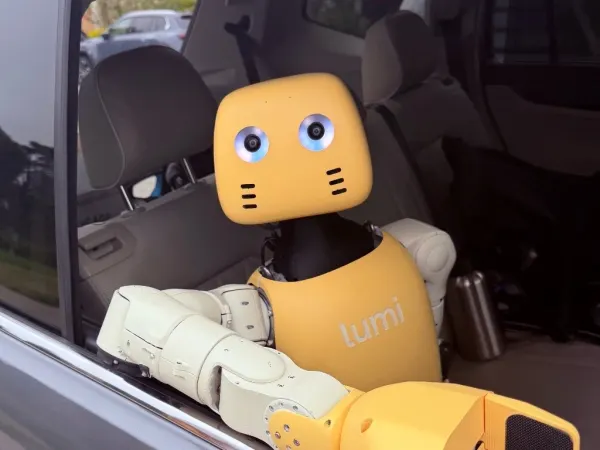
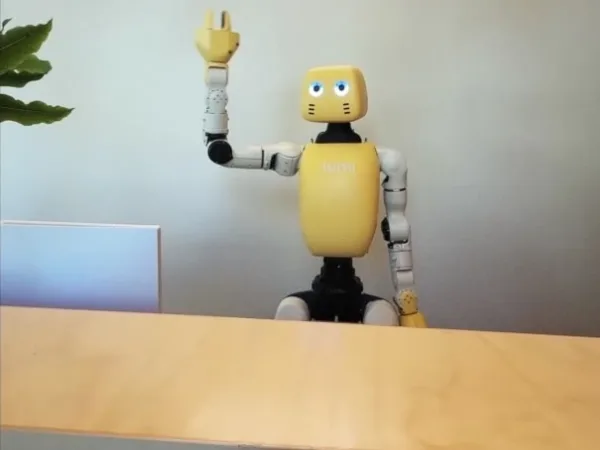
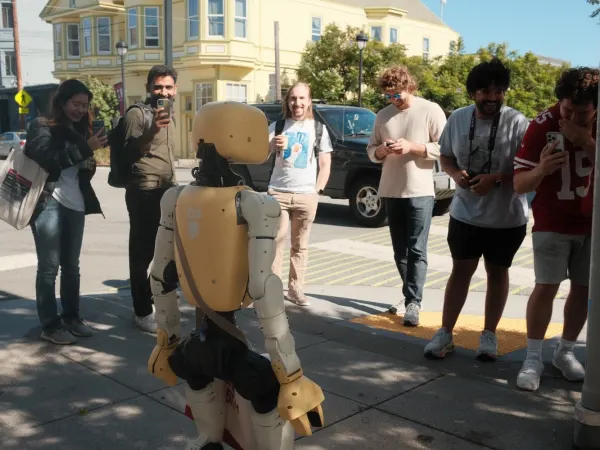
Below images are from Lightberry's official sources

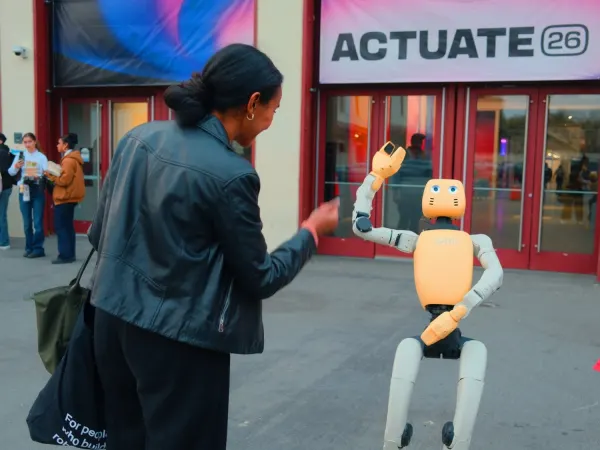
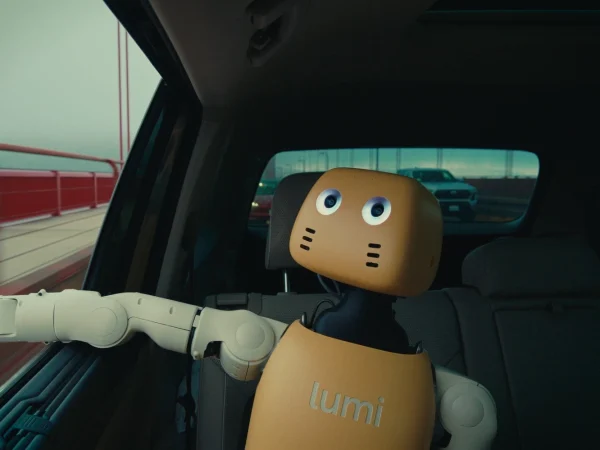
Robot Specifications
ConfirmedValues marked Confirmed were checked against the manufacturer's official data; select the badge to open the source. Values without a Confirmed badge are compiled from public sources and may not be manufacturer-verified.
Not yet published by Lightberry: warranty terms, safety certifications, EMC compliance, IP rating, noise level, expected lifespan, maintenance schedule, firmware version and 5 more.
Robot Timeline
Key milestones in this robot's development and rollout
Lightberry introduces Lumi, a yellow interactive humanoid built on Unitree's G1 platform, and opens reservations for the first 100 Founder Edition units at $39,990.
Source: The AI Insider ↗
Lumi vs KEENON XMAN-L1, LUMO, Unitree G1+ and Laborer C1
Lumi overlaps with these alternatives on Consumer robotics and Hospitality. Lumi leads this group on max speed but trails on weight.
Industries and capabilities are tags, not scores: a tick means the robot is listed for it. Green marks the best figure in a row (highest max speed and runtime; lowest weight). Ranges are not ranked.
| Spec | LumiLightberry | KEENON XMAN-L1KEENON Robotics | LUMODobot Corp Ltd | Unitree G1+Unitree Robotics | Laborer C1Glroad |
|---|---|---|---|---|---|
| Industries | |||||
| Consumer robotics | Yes | No | Yes | Yes | No |
| Hospitality | Yes | Yes | No | No | No |
| Retail | Yes | Yes | No | No | Yes |
| Entertainment and events | Yes | Yes | Yes | Yes | Yes |
| Capabilities | |||||
| Gesture recognition | Yes | No | Yes | No | Yes |
| Perception | Yes | No | Yes | Yes | Yes |
| Human-robot interaction | Yes | Yes | Yes | Yes | Yes |
| Speech interaction | Yes | Yes | Yes | Yes | Yes |
| Max Speed | 2 m/s | 1 m/s | 1.5 m/s | — | 2 m/s |
| Runtime | 2.5–3.5 h | 90–120 min | 120 min | 120 min | 120 min |
| Weight | 40 kg | 38 kg | 40.5 kg | 35 kg | 38 kg |
| Released | 2026 | 2026 | 2026 | 2026 | 2026 |
Notes such as conditions or alternate figures are left out and values are shown in common units; open each page for the full specs. Browse all Humanoid Robots
Lumi Also Mentioned in Below Articles
Find out how this model stacks up against the world's best robots
More Humanoid Robots
Discover more robots in the same category



Robots From Other Categories
Discover complementary robots from different categories that work well together
Frequently Asked Questions
Get answers to common questions about this robot
Q1. What is Lumi, and what problem is it designed to solve?
Lumi is a small, yellow humanoid robot from Lightberry that is designed to feel like a character rather than a machine. It aims to make robots that behave naturally around people and are ready to use without a robotics team.
Q2. What are the main capabilities and key features of Lumi?
It can entertain a crowd, hold long conversations, tell stories, take photos, look up information and guide people. You can change its personality, voice, knowledge or motion just by talking to it, and developers can extend it with the Lightberry SDK.
Q3. Who is Lumi built for, and which industries can benefit from it?
It is built for venues, events, retail, hospitality and other places where an interactive robot draws attention, as well as developers and businesses that want to build their own robot experiences.
Q4. Is Lumi a commercial product or still a research prototype?
It is a commercial product in an early-access stage. The first 100 Founder Edition units are limited, and Lightberry plans lower-priced hardware later.
Q5. Is Lumi currently available for purchase, and when is it expected to ship?
Yes, as a reservation. Lightberry is taking reservations with a refundable deposit for the Founder Edition, which is due to begin shipping in 2026.
Q6. How does Lumi actually work in real-world environments?
Lumi is built on the Unitree G1 platform, with Lightberry adding its own cameras, microphones, speakers, compute and hands. Lightberry OS handles conversation and behavior, while the G1 base handles walking and body motion.
Q7. When was Lumi announced or officially launched?
Lightberry introduced Lumi on August 27, 2026.
Q8. How is Lumi different from other robots in the same category?
Most G1-based robots are sold as research hardware. Lumi is packaged as a finished interactive character with custom sensors, a purpose-built operating system, an SDK and a rounded yellow design.
Q9. Does Lumi require additional development or customization after purchase?
Not much to get started, since Lumi is meant to work from day one. Businesses can customize its behaviors, voice and connected tools through the SDK.
Q10. What is the future roadmap or planned upgrades for Lumi?
Lightberry plans to ship the Founder Edition in 2026 and bring hardware pricing down to a much lower level, while continuing to develop Lightberry OS and its ecosystem of behaviors.
Rating and Reviews
Share your experience and help others decide!
Loading...
User Reviews
No user reviews. Be the first one to review!
User Comments (No Login needed)
Share your thoughts, experiences, or questions about this robot.
Comments appear after moderator review.