Miro U
AI ChatLast updated:
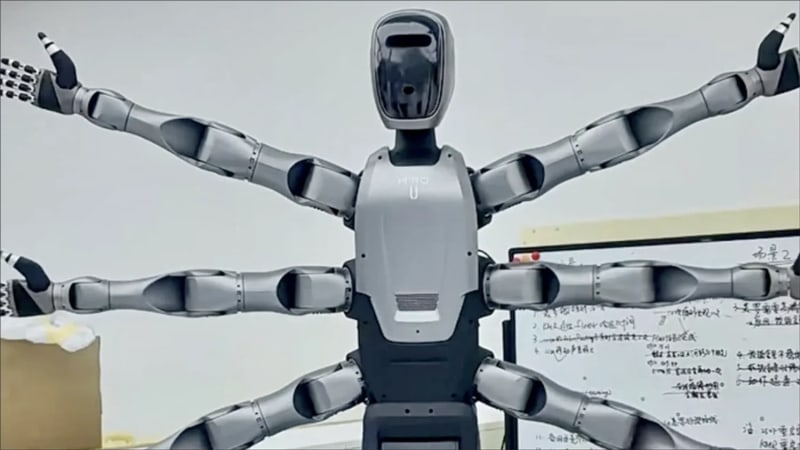
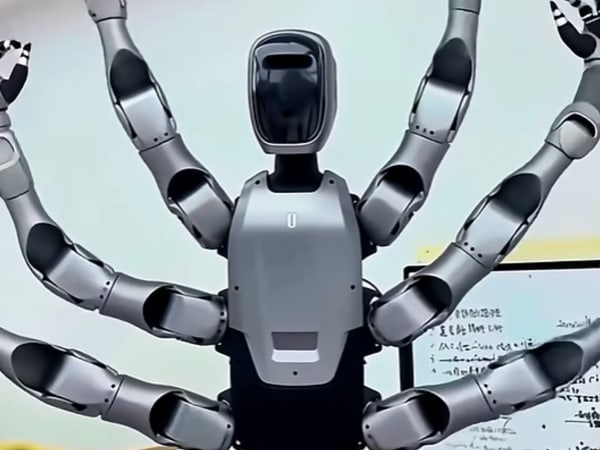
Miro U is a cutting-edge humanoid robot designed by Midea for complex industrial automation tasks. It features a unique six-arm bionic mechanical design combined with a wheeled leg chassis, enabling multitasking and high-precision control in factory environments. The robot supports vertical lifting and 360-degree in-place rotation, allowing it to perform multi-dimensional operations efficiently. Miro U is intended to enhance production line flexibility and efficiency, particularly in high-end manufacturing such as washing machine assembly. It integrates fast end-effector switching for diverse tasks and is part of Midea’s broader AI-driven smart factory ecosystem, aiming to boost operational efficiency by up to 30%. The robot represents the third generation in Midea’s humanoid lineup, combining advanced robotics with AI for industrial applications.
Quick Overview & Key Facts
Miro U is a humanoid robot made by Midea in China, launched in 2025 and built for mechanical assembly of home appliances, component fastening, and machine tending. Its estimated price is USD 150,000–250,000 Industry-aligned depending on configuration. Featured in “Miro U Revolutionizes Robotics with Six-Armed Precision”.
- Dimensions
- Approximate height: 165–175 cm (human-scale industrial humanoid)
- Weight
- 100–140 kg (typical for multi-arm industrial humanoids)
- Top speed
- 3 km/h (max walking speed)
- Payload capacity
- 5 kg per arm (6 coordinated robotic arms, ~25–30 kg coordinated)
- Charging time
- 2 hours
- Sensors
- RGB cameras, stereo cameras, IMU, gyroscope, force sensors on arms, ultrasonic sensors, temperature sensors
- Operating environment
- Indoor industrial environments
What Can Miro U Do?
Core operational tasks and activities demonstrated or performed by Miro U.
Real-World Applications of Miro U
Industries, working environments, and deployment suitability for Miro U.
Miro U Capabilities
Inherent physical, perceptual, and cognitive abilities built into Miro U.
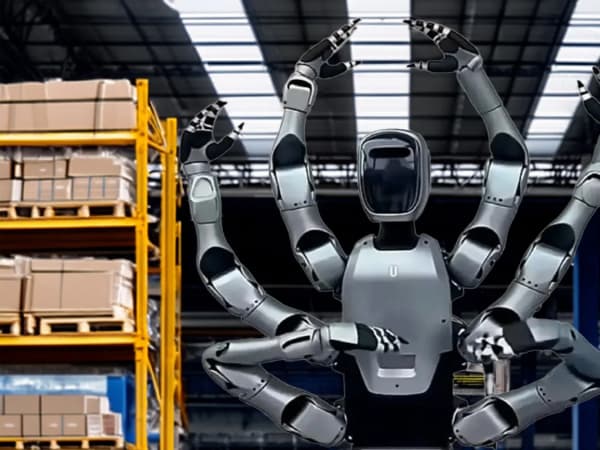
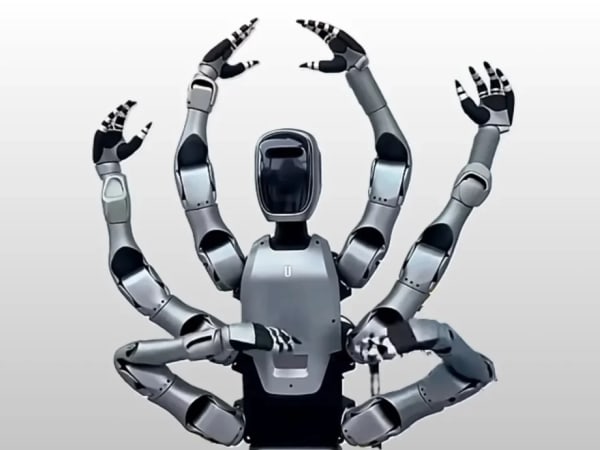
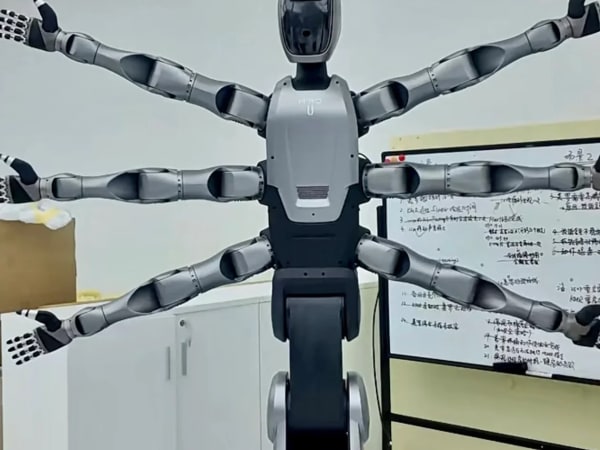
Image Gallery
Below images are from Midea's official sources
Review Videos
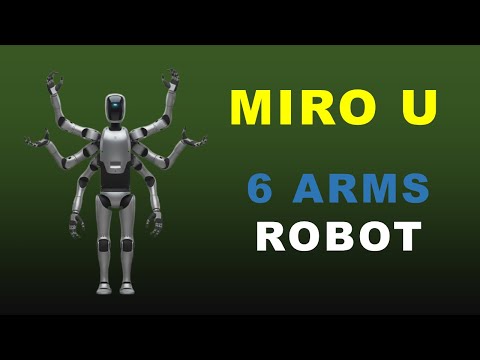
Watch expert reviews and demonstrations of this robot

Robot Specifications
Values without a Confirmed badge are compiled from public sources and may not be manufacturer-verified.
Not yet published by Midea: warranty terms, safety certifications, EMC compliance, IP rating, noise level, expected lifespan, maintenance schedule, firmware version and 6 more.
Robot Timeline
Key milestones in this robot's development and rollout
Midea unveils the Miro U in Guangzhou, billed as the first six-arm wheel-leg humanoid, and plans to deploy it at its Wuxi washing-machine factory by the end of 2025.
Source: Gizmochina ↗
Latest News About Miro U
Stay updated with the latest articles and developments

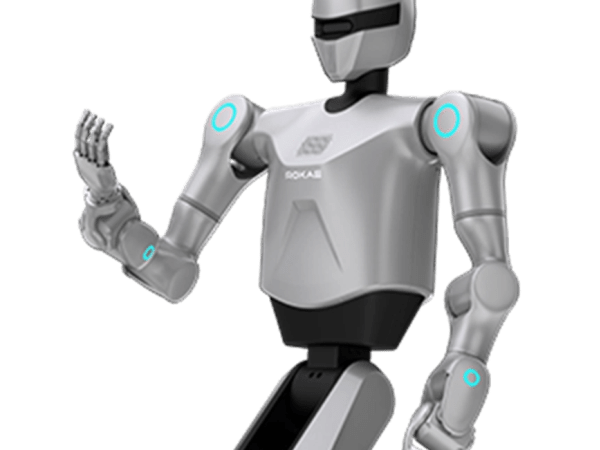
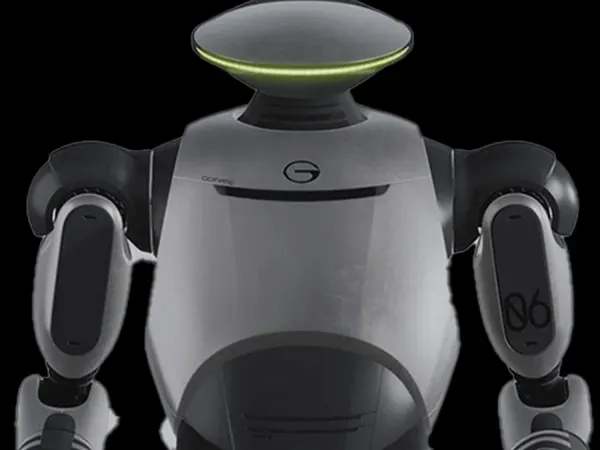
Miro U vs Helios Wheeled Robot, GoMate, North and Hoxo Robot
Miro U overlaps with these alternatives on Assembly and production and Hospitality. Miro U leads this group on runtime but trails on max speed and payload.
Industries and capabilities are tags, not scores: a tick means the robot is listed for it. Green marks the best figure in a row (highest max speed, payload and runtime; lowest weight). Ranges are not ranked.
| Spec | Miro UMidea | Helios Wheeled RobotROKAE | GoMateGuangzhou Auto Group | NorthSharpa | Hoxo RobotOrano And Capgemini |
|---|---|---|---|---|---|
| Industries | |||||
| Assembly and production | Yes | Yes | Yes | Yes | No |
| Hospitality | Yes | Yes | No | Yes | No |
| Logistics | Yes | No | Yes | Yes | No |
| Machine tending | Yes | Yes | No | Yes | Yes |
| Capabilities | |||||
| Balance and stability | Yes | No | Yes | Yes | Yes |
| Speech interaction | Yes | No | Yes | No | No |
| Adaptation | Yes | Yes | Yes | Yes | Yes |
| Autonomous task execution | Yes | Yes | Yes | Yes | Yes |
| Max Speed | 0.83 m/s | 1.11 m/s | 1.5 m/s | 1.39 m/s | 0.02s Reaction Time (Active manipulation) | 1 m/s |
| Payload | 5 kg | — | 20 kg | — | — |
| Runtime | 6 h | 6 h | 6 h | 4–6 h | 6 h |
| Weight | 100–140 kg | 100 kg | 65 kg | 60 kg | 80 kg |
| Released | 2025 | 2025 | 2024 | 2025 | 2025 |
Notes such as conditions or alternate figures are left out and values are shown in common units; open each page for the full specs. Browse all Humanoid Robots
More Humanoid Robots
Discover more robots in the same category


Robots From Other Categories
Discover complementary robots from different categories that work well together
Frequently Asked Questions
Get answers to common questions about this robot
Q1. What are Miro U's primary capabilities?
Miro U features six bionic mechanical arms with high-precision control, supports vertical lifting, 360-degree in-place rotation, and can quickly switch end-effector modules for multitasking in complex industrial environments.
Q2. How to operate Miro U?
Miro U is operated via an integrated AI agent system coordinated by a factory brain, enabling autonomous task execution and real-time decision-making based on multimodal sensing and workflow requirements.
Q3. What is the maximum carrying capacity of Miro U?
Miro U features a rated carrying capacity of 5 kg per arm across its 6 coordinated robotic arms (with total multi-arm capacity up to ~25–30 kg and a deadlift capacity of 15 kg), optimized for handling components like washing machine parts on production lines.
Q4. How long can Miro U operate on a single charge?
Specific battery life is not disclosed, but typical industrial humanoid robots operate 6-8 hours per charge, sufficient for standard factory shifts with quick recharging or battery swaps.
Q5. What safety features does Miro U have?
Miro U includes real-time perception and decision-making to avoid collisions, supports safe human-robot interaction, and integrates with factory safety systems for environment, health, and safety (EHS) compliance.
Q6. How to maintain Miro U?
Maintenance involves regular inspection of mechanical arms, wheel-leg chassis, software updates, sensor calibration, and scheduled servicing to ensure precision and operational reliability in factory conditions.
Q7. What surfaces can Miro U navigate?
Miro U’s wheeled-legged chassis is designed for smooth industrial floors and factory environments, enabling stable movement and 360-degree rotation on flat, hard surfaces.
Q8. How does Miro U handle obstacles?
Equipped with multimodal sensing and AI, Miro U detects obstacles in real time and autonomously plans paths or adjusts tasks to avoid collisions and maintain workflow efficiency.
Q9. What is Miro U's maximum speed?
Estimated maximum speed is around 1-2 km/h, balancing safe navigation and task precision within factory settings.
Q10. What are common use cases for Miro U?
Miro U is used for quality inspection, multitasking assembly, material handling, daily management, TPM inspections, and EHS patrols in automated manufacturing lines.
Q11. How to reset Miro U?
Resetting involves a system reboot via the control interface or factory brain command, with options for soft reset to clear errors or full reboot for system diagnostics.
Q12. How to control Miro U?
Control is primarily autonomous through AI agents, but operators can intervene or program tasks via a centralized factory brain interface or connected control terminals.
Q13. How to connect Miro U to Wi-Fi?
Miro U connects to factory Wi-Fi networks through its onboard communication module, configured via the factory brain system to ensure secure and stable connectivity.
Q14. What is Miro U's warranty?
Warranty details are typically provided by Midea upon purchase, generally covering hardware and software support for 1-2 years with options for extended service plans.
Q15. How to update Miro U's software?
Software updates are deployed remotely through the factory brain system, allowing seamless installation of patches and feature upgrades without disrupting ongoing operations.
Rating and Reviews
Share your experience and help others decide!
Loading...
User Reviews
No user reviews. Be the first one to review!
User Comments (No Login needed)
Share your thoughts, experiences, or questions about this robot.
Comments appear after moderator review.