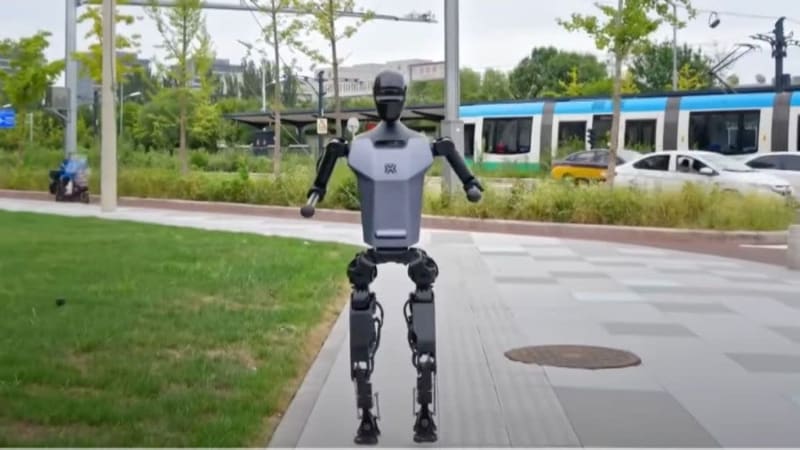
Tiangong
AI ChatLast updated:
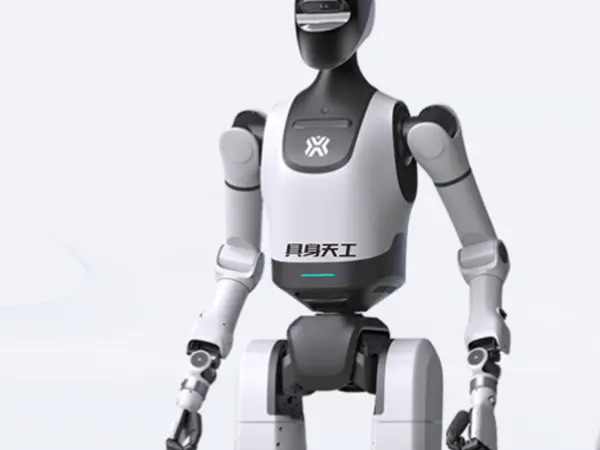
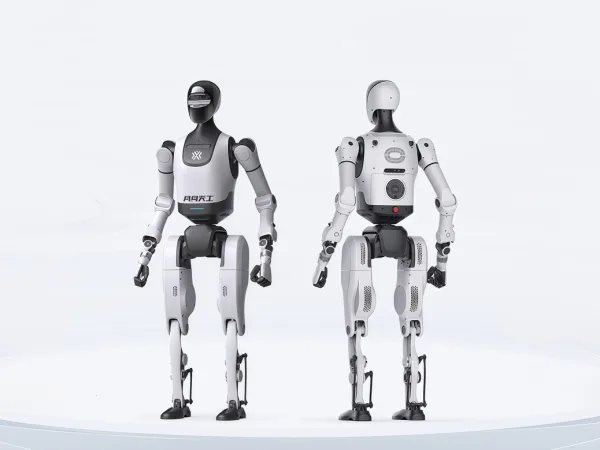
Tiangong is China's pioneering full-sized electric humanoid, blending agility with resilience. Standing 1.63 m tall, it sprints up to 6 km/h, nimbly climbs stairs and tackles uneven terrain thanks to its state-of-the-art perception system. Backed by a high-efficiency battery pack and a modular open-source architecture, Tiangong excels in scenarios from warehouse logistics to disaster response. With its intuitive AI-driven motion control and robust aluminum-composite frame, this robot invites developers worldwide to push the boundaries of human-robot collaboration.
Quick Overview & Key Facts
Tiangong is a humanoid robot made by X-Humanoid in China, launched in 2024 (Unveiled April 2024) and built for electric bipedal running, blind slope traversal, and stair climbing. Its estimated price is USD 41000-42000 (Retail for research-grade variant). Featured in “The 5 Fastest & Most Agile Humanoid Robots in 2026”.
- Dimensions
- 163 cm (H) x 45 cm (W) x 30 cm (D)
- Weight
- 43 kg (95 lbs)
- Top speed
- 12 km/h (Max); 6 km/h (Stable Jogging)
- Payload capacity
- 5 kg carrying capacity (10 kg peak lift, open-source electric running biped)
- Battery runtime
- 4 hours
- Charging time
- 1 hour to 90%
- Sensors
- RGB cameras, stereo cameras, LiDAR, ultrasonic rangefinder, high-precision IMU, gyroscope, six-axis force/torque sensors
- Operating environment
- Indoor and outdoor; 0 °C to 40 °C; non-submerged, dust-light environments
What Can Tiangong Do?
Core operational tasks and activities demonstrated or performed by Tiangong.
Real-World Applications of Tiangong
Industries, working environments, and deployment suitability for Tiangong.
Tiangong Capabilities
Inherent physical, perceptual, and cognitive abilities built into Tiangong.
Download Media Cards
Story CardExport high-resolution story cards summarizing Tiangong's operational tasks, real-world applications, and capabilities.
Image Gallery
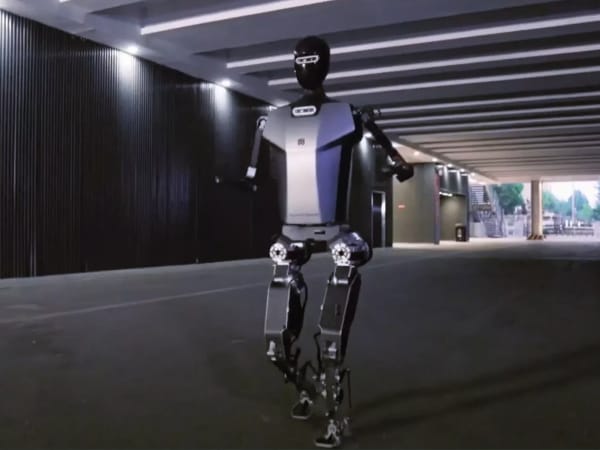
Below images are from X-Humanoid's official sources
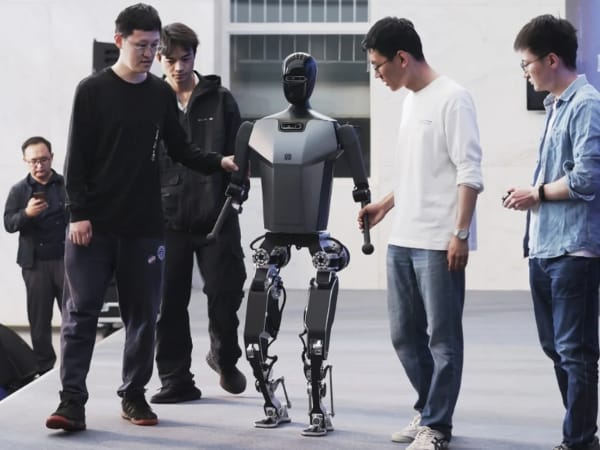
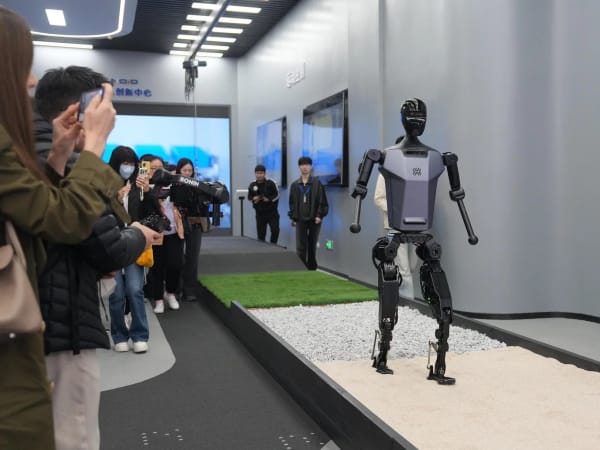
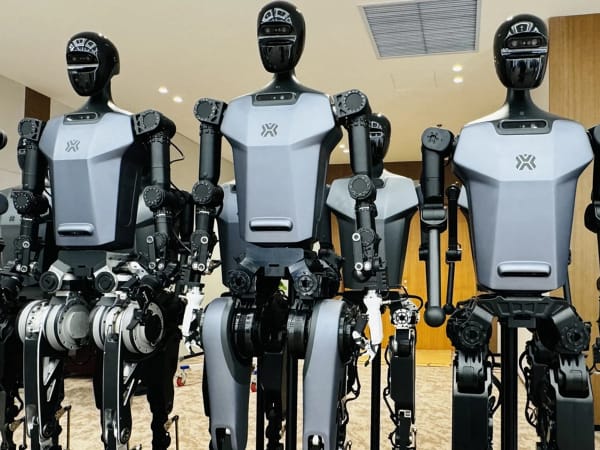
Review Videos
Watch expert reviews and demonstrations of this robot


Robot Specifications
Values without a Confirmed badge are compiled from public sources and may not be manufacturer-verified.
Not yet published by X-Humanoid: warranty terms, safety certifications, EMC compliance, IP rating, noise level, expected lifespan, maintenance schedule, firmware version and 7 more.
Robot Timeline
Key milestones in this robot's development and rollout
The Beijing Humanoid Robot Innovation Center unveils Tiangong, a general-purpose humanoid that runs on electric power.
Source: CGTN ↗
Tiangong Ultra wins the world's first humanoid robot half-marathon in Beijing, finishing in about 2 hours 40 minutes.
Source: Beijing Municipal Government ↗
Latest News About Tiangong
Stay updated with the latest articles and developments

Tiangong Also Mentioned in Below Articles
Find out how this model stacks up against the world's best robots
More Robots from X-Humanoid
Explore other robots from this manufacturer
More Humanoid Robots
Discover more robots in the same category

Robots From Other Categories
Discover complementary robots from different categories that work well together
Frequently Asked Questions
Get answers to common questions about this robot
Q1. What is Tiangong, and what problem is it designed to solve?
Tiangong is a full-size humanoid robot developed by the Beijing Humanoid Robot Innovation Center, unveiled in April 2024. It addresses the engineering challenge of creating a dynamic, full-size humanoid capable of sustained running using electric power rather than hydraulic systems, enabling more scalable and cost-efficient deployment across industrial and logistics applications.
Q2. What are the main capabilities and key features of Tiangong?
Tiangong operates with electric actuators and features a multi-modal sensor array including inertial measurement units, 3D visual sensors, and six-dimensional force sensors. The robot employs a self-developed motion control algorithm called State-Memory-Based Predictive Reinforcement Imitation Learning, enabling navigation across varied terrains including slopes, stairs, gravel, and sand with real-time gait adjustment capabilities.
Q3. Who is Tiangong built for, and which industries can benefit from it?
Tiangong targets commercial and industrial sectors including warehousing, logistics, power plant inspections, and future home services. The robot's design accommodates both specialized industrial applications and broader deployment scenarios requiring dynamic movement across unpredictable environments.
Q4. Is Tiangong a commercial product or still a research prototype?
Tiangong functions as both a research platform and early commercial deployment system. The Beijing Humanoid Robot Innovation Center released the design as open-source with lite and pro versions, supporting secondary development while enabling practical field deployments in warehouse and facility inspection operations.
Q5. Is Tiangong currently available for purchase, and when is it expected to ship?
Tiangong has been deployed in practical applications since its April 2024 announcement, including warehouse operations and power plant patrols. The open-source release enables developer access to structural blueprints and software frameworks, though commercial availability timelines depend on distributor partnerships and specific application requirements.
Q6. How does Tiangong actually work in real-world environments?
Tiangong navigates complex terrain through continuous sensor feedback from its IMU, vision systems, and foot pressure sensors, which inform its motion control algorithm in real time. The system learns human movement patterns through motion capture data and adapts them to its own frame, enabling stable operation on inclines and uneven surfaces without pre-programmed routes.
Q7. When was Tiangong announced or officially launched?
Tiangong was unveiled in April 2024 by the Beijing Humanoid Robot Innovation Center. The robot's open-source release followed, with the innovation center announcing plans to release additional blueprints and system updates throughout 2024.
Q8. How is Tiangong different from other robots in the same category?
Tiangong distinguishes itself as the first full-size humanoid capable of dynamic running solely on electric power, contrasting with earlier designs relying on hydraulic systems. The robot's open-source architecture and modular design framework enable broader developer participation and faster integration across multiple sectors compared to proprietary alternatives.
Q9. Does Tiangong require additional development or customization after purchase?
Tiangong's open-source release includes structural blueprints, software architecture, and development frameworks specifically designed to facilitate secondary development and customization. Users can adapt the platform to sector-specific requirements through modularized hardware and software interfaces, though implementation complexity varies by application.
Q10. What is the future roadmap or planned upgrades for Tiangong?
The Beijing Humanoid Robot Innovation Center has committed to releasing additional blueprints and system updates following its initial 2024 launch. The company positions Tiangong as a general-purpose mother-platform intended to expand from early commercial deployments toward broader household and service applications through continued software and hardware enhancements.
Rating and Reviews
Share your experience and help others decide!
Loading...
User Reviews
No user reviews. Be the first one to review!
User Comments (No Login needed)
Share your thoughts, experiences, or questions about this robot.
Comments appear after moderator review.