Top 6 Humanoid Robots with Advanced Voice Interaction Systems


Humanoid Voices Rise
Humanoid robots are rapidly evolving beyond clunky, scripted interfaces into socially fluent partners thanks to advanced voice interaction systems that blend natural language AI with expressive faces and bodies. Models like Ameca, Aria, NEO, Figure 03, Moya, and Ai‑Da exemplify this shift, each deploying large language models, multimodal sensors, and cloud connectivity to hold fluid conversations, recognize emotions, and adapt tone in real time. These machines are no longer novelties at tech shows; they now staff front desks, tutor students, assist the elderly, and even deliver public speeches, reshaping how society interacts with AI in homes, hospitals, and public venues.
Beyond Speech Recognition
What sets these six apart is not just that they can talk, but that their voices are embedded in purpose‑built platforms designed for continuous learning and domain specialization. Ameca and Ai‑Da, for instance, run on scalable cloud architectures that let researchers plug in new AI models without rebuilding hardware, while NEO and Figure 03 integrate voice with precise manipulation skills to help with chores and caregiving. Aria and Moya lean into companion‑style personalities tailored for hospitality and elder care, using voice tone, humor, and memory of past interactions to build rapport. This convergence of expressive faces, embodied presence, and adaptive speech systems marks a decisive move from automation to genuine interactive partnership.
Quick Overview
These six humanoids represent the current frontier of voice‑driven interaction in robotics, each optimized for distinct social and service roles.
| Rank | Robot | Manufacturer | Key Strength | Best For |
|---|---|---|---|---|
| #1 | 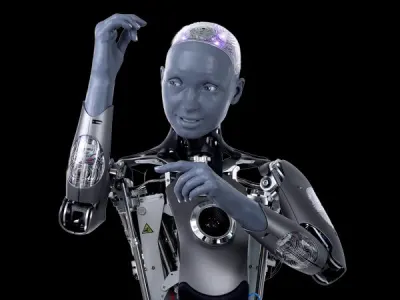 Ameca Ameca | Engineered Arts | Lifelike facial expressions and cloud‑connected AI platform | Human‑robot interaction studies, public demonstrations, AI testing |
| #2 |  Aria - Robot Girlfriend Aria - Robot Girlfriend | Realbotix | Emotionally expressive personality and conversational intimacy | Companionship, hospitality greeter, human‑AI research, entertainment |
| #3 |  Moya Moya | DroidUp | Multilingual, empathetic interface tuned for care and education | Elder care companionship, educational tutoring, customer service, healthcare assistance |
| #4 | 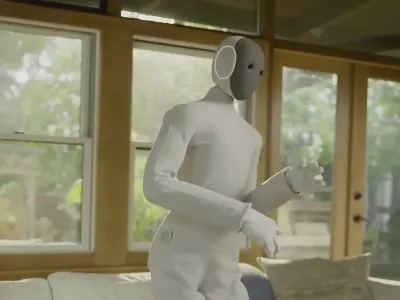 NEO Home Robot NEO Home Robot | 1X Technologies | Compact design with strong object manipulation and mobility | Elderly assistance, home cleaning, light object handling, social companionship |
| #5 | 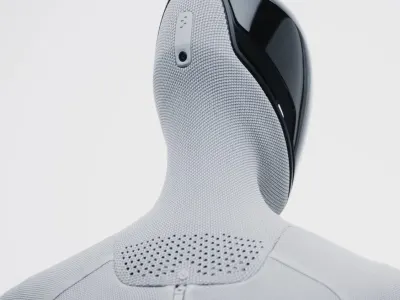 Figure 03 Figure 03 | Figure AI | Human‑scale dexterity and whole‑body task execution | Home assistance, household chores, elderly care support, light cleaning |
| #6 |  Ai-Da Ai-Da | Engineered Arts | Artist‑philosopher persona with performative and ethical discourse | Performance art, gallery exhibitions, STEM advocacy, AI ethics research, public speaking |
Each robot in this group pushes the boundary of how voice, presence, and purpose intersect in everyday life.
Explore the Robots
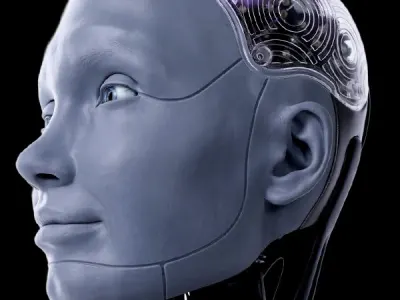
Ameca
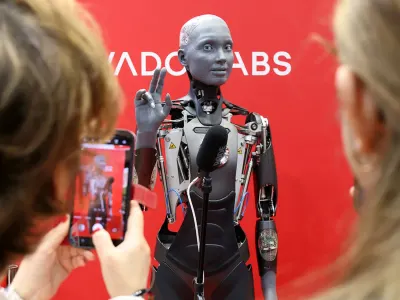
Engineered Arts’ Ameca is widely described as one of the world’s most advanced humanoids, designed explicitly to showcase the state of the art in human‑robot interaction. Its highly articulated face and neck enable natural smiles, frowns, and surprise, while embedded cameras and microphones let it see and hear people, track faces, and respond contextually. Cloud‑connected and running large language models, Ameca serves as a living testbed for AI developers, performs in public demos, and supports research into how humans accept and engage with lifelike machines. Unlike many competitors, it was built from the start as a modular platform that can be upgraded over time, ensuring its voice and behavior stay at the cutting edge.

Aria - Robot Girlfriend
Realbotix’s Aria positions itself at the intersection of intimacy, hospitality, and entertainment, offering a humanoid companion optimized for long‑form, emotionally resonant dialogue. With a focus on companionship and social bonding, Aria uses advanced voice interaction systems to remember user preferences, sustain multi‑turn conversations, and adjust tone for comfort and engagement. In hospitality settings, she can greet guests, answer questions, and create a welcoming atmosphere, while in research contexts she helps explore the psychological and ethical dimensions of human‑AI relationships. Her design prioritizes expressive speech and personality over physical tasks, making her a distinctive voice‑centric humanoid in the social robotics space.

Moya
DroidUp’s Moya is a humanoid tailored for elder care, education, and customer‑facing roles, with a voice system tuned for empathy, clarity, and multilingual communication. In care settings, Moya can converse with older adults, provide companionship, and gently encourage routine activities, using tone and pacing to reduce anxiety. In schools and public venues, it can tutor students, explain exhibits, and answer visitor questions in a friendly, approachable manner. Moya’s design emphasizes trust and accessibility, so its voice interaction feels supportive rather than mechanical, and it can integrate with local services to relay health alerts or schedule appointments, making it a versatile voice‑driven interface in socially sensitive environments.

NEO Home Robot
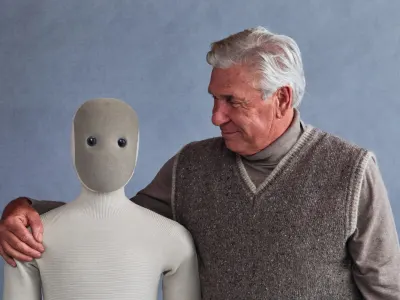
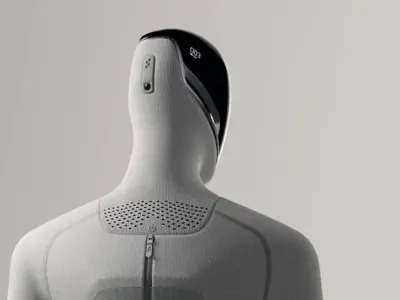
1X Technologies’ NEO Home Robot is a compact humanoid built for practical domestic roles, combining mobility, object manipulation, and social interaction. Its voice system enables natural conversation with residents, especially older adults, while its hands and sensors support cleaning, fetching, and light object handling. NEO is designed to assist with daily routines, provide remote monitoring for family or caregivers, and act as a social companion that can engage in conversation, set reminders, and answer questions. Recent updates emphasize smoother integration of speech with physical tasks, so users can give voice commands that trigger both dialogue and action, such as “clean the kitchen” or “call my daughter.”
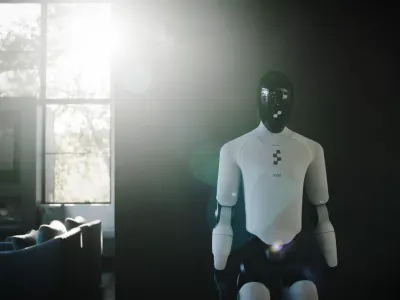
Figure 03
Figure AI’s Figure 03 is a human‑scale humanoid focused on real‑world utility in homes and care environments, where voice interaction complements physical dexterity. It can perform household chores, assist with light cleaning, and support elderly users with reminders and simple tasks, all coordinated through a responsive voice interface. Figure 03’s strength lies in its ability to parse everyday spoken instructions, navigate cluttered spaces, and manipulate objects with human‑like hands, turning casual commands into concrete actions. By combining advanced speech understanding with embodied intelligence, Figure 03 aims to move beyond demonstration robots into genuinely helpful home assistants that can evolve as AI models and hardware improve.

Ai-Da
Ai‑Da, also from Engineered Arts, is a humanoid artist and public speaker whose voice interaction system is built for performance, critique, and philosophical dialogue. With a highly realistic face and expressive eyes, Ai‑Da delivers speeches, participates in panel discussions, and creates art while engaging audiences in real‑time conversation about AI ethics and creativity. Her platform is used in gallery exhibitions, STEM outreach, and high‑level forums such as parliamentary venues, where she can respond to questions, defend viewpoints, and provoke debate. Ai‑Da’s value lies not in physical labor but in her ability to articulate complex ideas through speech, blending performance art with serious inquiry into the role of AI in society.
Sources
Related Articles

Top 8 Humanoid Robots with Autonomous Navigation (2026)
5/3/2026
8 Most Compact Humanoid Robots in 2026
5/3/2026
Top 10 Humanoid Robots for Logistics & Delivery Tasks 2026
6/8/2026

Best AI-Powered Humanoid Robots for Hotels & Restaurants (2026)
5/3/2026
Top 8 Humanoid Robots Built for Hazardous Environments
5/3/2026
Top 5 Most Energy Efficient Humanoid Robots in 2026
5/3/2026
Top 10 Humanoid Robots with the Highest Payload & Heavy-Lifting Capacity in 2026
9/9/2026
Top 10 Wheeled & Hybrid Humanoid Robots for High-Speed Facility Mobility in 2026
9/9/2026
Top 5 Humanoid Robots Being Developed for Defense, Security & First Responders in 2026
9/3/2026