8 Most Compact Humanoid Robots in 2026
Compact Revolution
In 2026, compact humanoid robots under 1.4 meters tall dominate innovation, packing advanced AI, dexterous manipulation, and agile mobility into lightweight frames ideal for tight spaces like homes, labs, and factories. These eight standouts, from Unitree's G1 and R1 to Noetix's athletic E1, signal a shift toward affordable, human-scale automation that fits everyday environments without bulky infrastructure. Priced from research-grade tools at $16,000 to versatile educators, they enable rapid deployment in R&D, education, and light industry, addressing labor shortages amid global manufacturing slowdowns. Their small footprints allow seamless integration where larger models falter, driving adoption in warehouses, classrooms, and elder care settings right now.
Size Drives Agility
What sets these 2026 compacts apart is their emphasis on lightweight designs under 40kg, enabling superior balance, quick recovery from falls, and force-controlled tasks like palletizing or object fetching that outpace bulkier predecessors. Recent upgrades, including Unitree G1's anti-gravity stability and Noetix E1's athletic prowess, stem from miniaturized actuators and edge AI, slashing costs while boosting real-time adaptation via imitation learning. Unlike early humanoids confined to labs, these excel in dynamic scenarios: Booster's K1 shines in competitions, AgiBot X2 patrols securely, and SoftBank's NAO evolves for therapy. This trend, fueled by last six months' firmware pushes, promises scalable humanoid fleets for homes and businesses.
Quick Overview
These compact humanoids excel in niche applications through specialized strengths.
| Rank | Robot | Manufacturer | Key Strength | Best For |
|---|---|---|---|---|
| #1 | 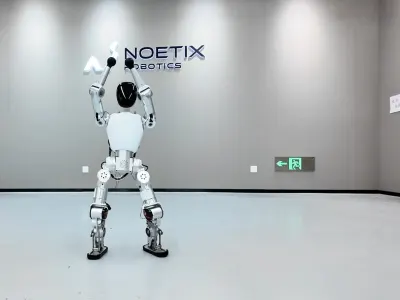 Bumi | Noetix Robotics | Interactive companionship | Home demonstration |
| #2 | 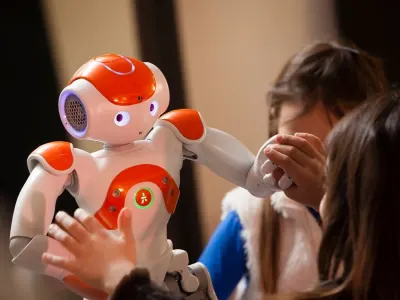 NAO | SoftBank Robotics | Therapeutic engagement | Autism therapy |
| #3 |  Noetix E1 | Noetix Robotics | Humanoid / General Purpose | Athletic robotics research, STEM education |
| #4 | 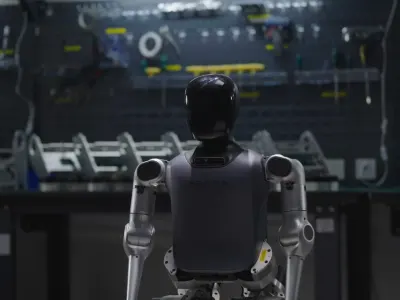 N2 (Athlete) | Noetix Robotics | Dynamic performance | Elder care demos |
| #5 | 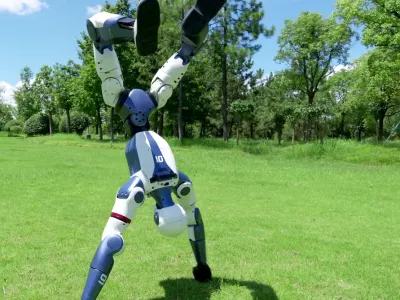 Unitree R1 | Unitree Robotics | Rapid prototyping | STEM education |
| #6 | 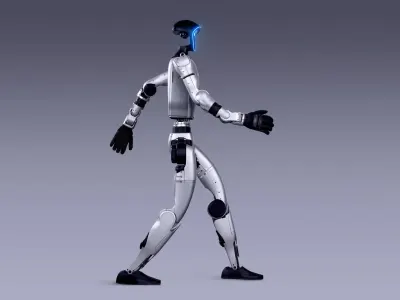 Unitree G1 | Unitree Robotics | Agile manipulation | R&D and palletization |
| #7 |  K1 Humanoid | Booster Robotics | Competition agility | Robotics exhibitions |
| #8 |  AgiBot X2 | AgiBot | Versatile assistance | Elderly care |
Their compact builds make them practical leaders for 2026 deployment.
Explore the Robots
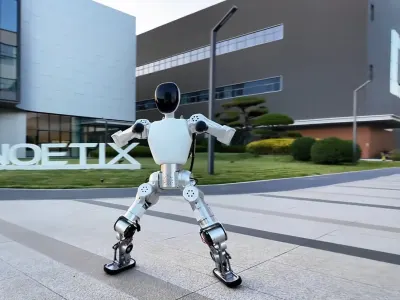
Bumi
At 94 cm and 12 kg, Bumi is the smallest full humanoid in this list, roughly the size of a young child, so it is easy to carry between a classroom and a lab. Noetix gave it arms that carry 1.5 kg each and a walking speed of 0.8 m/s, slow enough to follow on foot. A 200 Wh battery gives about 1.5 hours of use. More than 100 units sold within an hour of its October 2025 launch, a sign of strong interest in small humanoids.
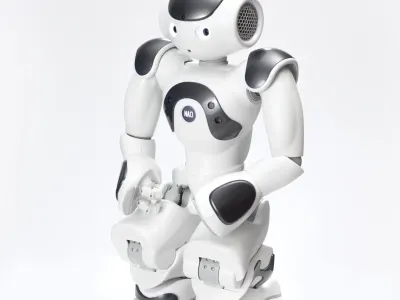
NAO
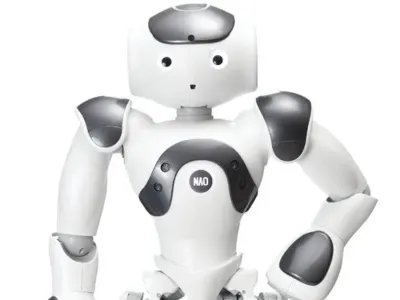
NAO is the smallest robot on this list: a 58 cm, 5.48 kg humanoid with 25 degrees of freedom and hands built for gesturing. Battery life is about 1.5 hours, enough for a class or a demo. Its size makes it easy to carry between classrooms and labs. SoftBank Robotics' NAO was chosen in 2007 as the standard robot of the RoboCup Standard Platform League, the first production units shipped in March 2008, and NAO6 added a larger battery in 2018.
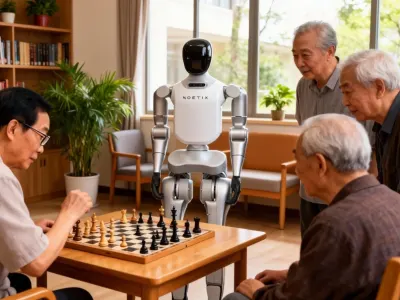
Noetix E1
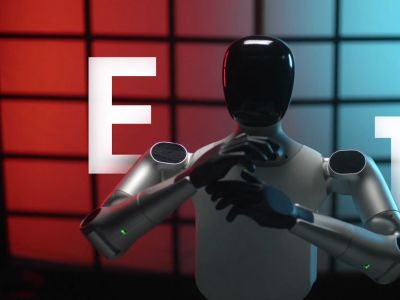
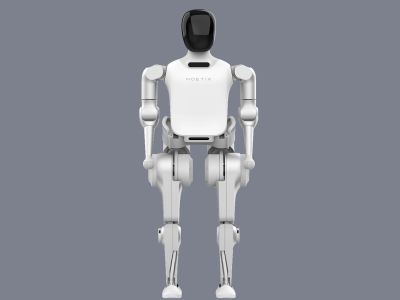
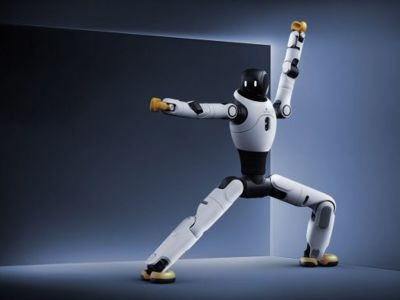
Noetix's E1 is a compact biped at 1.36 m tall and 36 kg, with 21 or more degrees of freedom, a walking speed of 1.2 m/s and arms that carry 5 kg each. A 48 V, 9 Ah battery gives one to two hours, and modular expansions let buyers adjust the robot. It sees in 3D through two depth cameras. It brings a nearly human-height body to classrooms and labs. The E1 took silver in the solo dance event at the Global Humanoid Robotics Games in August 2025.

N2 (Athlete)
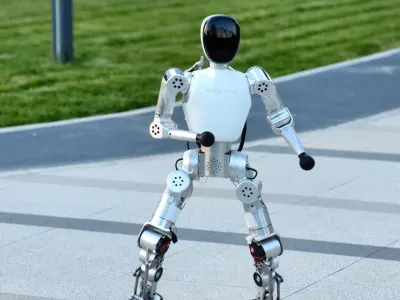
Noetix's N2 (Athlete) packs athletic performance into a 118 cm, 30 kg body. Heavy joints sit close to the torso to keep the limbs light, which helps it run at up to 12.6 km/h, fast for its size, and perform backflips. Its compact frame is easy to transport to events and competitions. After its second-place finish in the Beijing half-marathon, the orders that followed led Noetix to aim for 2,000 robots by the end of 2025. Each arm carries 5 kg.
Unitree R1
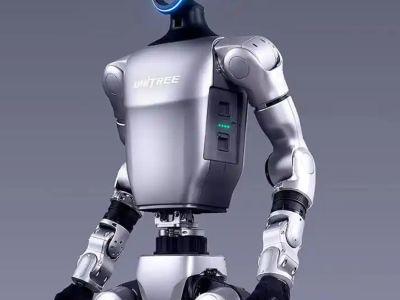
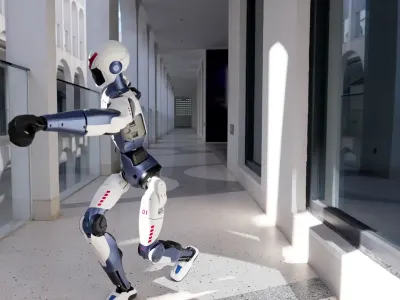
Unitree's R1 stands 123 cm tall and weighs about 27 kg, making it one of the smallest humanoids with adult proportions that can still run, at up to 9 km/h. One person can carry it between rooms or pack it for a demo. The small frame still fits 26 degrees of freedom, enough for cartwheels and handstands. The compact size comes with limits: active operation lasts about an hour per charge, and there is no LiDAR for mapping larger spaces.
Unitree G1
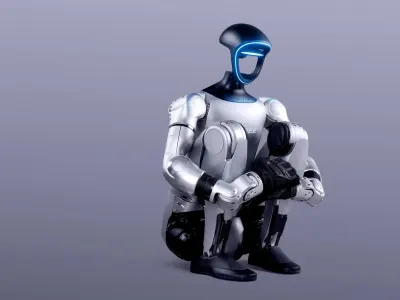
Unitree's G1 is a compact humanoid that stands about 1.3 m tall, small enough to move around a lab or classroom with one person. Unitree designed its legs and waist to fold for storage and transport, which few full humanoids allow. Despite the size it has up to 43 degrees of freedom and a full sensor set with LiDAR and depth camera. At 35 kg it is heavier than the smallest robots in this group, but it is the most widely used of them.

K1 Humanoid
Booster Robotics' K1 is one of the lightest humanoids here at 19.5 kg, a size chosen for robot soccer. The company built it to the RoboCup KidSize rules, and it won that league at RoboCup 2025 in Brazil in July, before its commercial launch on October 21, 2025. Its 9-axis IMU keeps it upright while kicking, and a microphone array lets it respond to voice commands. Short matches suit its battery, which lasts up to 80 minutes in the Education version.

AgiBot X2
AgiBot's X2 is a compact 35 kg biped with 25 degrees of freedom: five per arm, three in the waist and six per leg. It runs at up to 1.8 m/s, carries up to 3 kg in specific poses and uses an interactive RGB camera, a 6-axis IMU and a microphone for voice control. A roughly 500 Wh swappable battery lasts about two hours. AgiBot launched the Lingxi X2 in Shanghai on March 11, 2025, and an X2 became its 5,000th robot on December 8, 2025.
Sources
- Bumi Profile
- NAO Profile
- Noetix E1 Profile
- N2 (Athlete) Profile
- Unitree R1 Profile
- Unitree G1 Profile
- K1 Humanoid Profile
- AgiBot X2 Profile
- Bumi: official specifications (Noetix Robotics)
- NAO: official specifications (SoftBank Robotics)
- PR Newswire: Noetix reports two golds and a silver at the Global Humanoid Robotics Games
- Unitree R1: official specifications (Unitree Robotics)
- Unitree G1: official specifications (Unitree Robotics)
- The Robot Report: Unitree unveils the G1, a compact humanoid, at ICRA 2024 with a base price of $16,000.
- K1 Humanoid: official specifications (Booster Robotics)
- Booster Robotics: Booster robots win 3 gold, 2 silver and 3 bronze medals at RoboCup 2026.
- AgiBot X2: official specifications (AgiBot)
Related Articles
Top 10 Humanoid Robots for Logistics & Delivery Tasks 2026
6/8/2026

Top 10 Humanoid Robots with the Best Learning Capabilities (AI Training) 2026
6/8/2026
Top 10 Humanoid Robots Competing with Tesla Optimus (2026)
6/8/2026
Top 8 Humanoid Robots with Autonomous Navigation (2026)
5/3/2026
Top 6 Humanoid Robots with Advanced Voice Interaction Systems
5/3/2026

Best AI-Powered Humanoid Robots for Hotels & Restaurants (2026)
5/3/2026
Humanoid Robots That Can Fold Laundry in 2026, Ranked by What They Really Do
10/30/2026
Waterproof and Dustproof Humanoid Robots in 2026, Ranked by IP Rating
10/29/2026
Tallest Walking Humanoid Robots in 2026, Ranked by Height and Weight
10/28/2026