Apple Researchers Teach a Unitree G1 Humanoid to Move Through Unseen Rooms Using Simulation
Robot Details
Unitree G1 • Unitree RoboticsPublished
November 4, 2026
Reading Time
5 min read
Author
Origin Of Bots Editorial Team
The Robot That Trained in Imaginary Homes
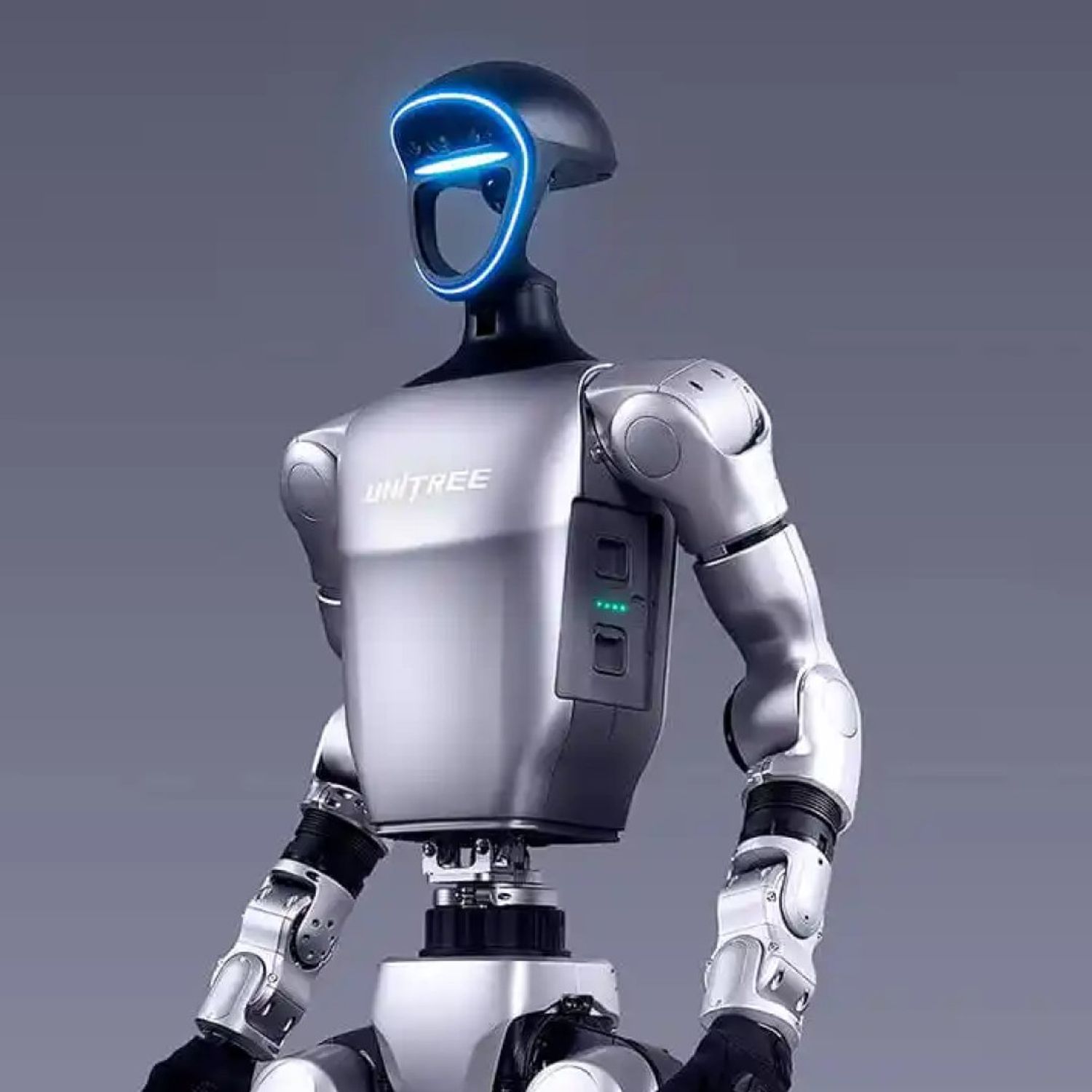
A team of Apple researchers has shown that a humanoid robot can learn to get around rooms it has never seen, mostly by practicing in computer-made worlds. In a paper posted on November 4, 2026, they describe HALO, a system that lets an off-the-shelf Unitree G1 carry out everyday movement tasks on request.
The result matters because teaching robots is slow and expensive. Recording a person guiding a machine, or wearing motion-capture gear, takes about an hour of human time for each hour of useful data. If computers can produce that data instead, home robots could one day learn new abilities far more cheaply than they do now.

A Thousand Rooms That Never Existed
HALO's training ground was 1,000 rooms generated automatically by software: 45 percent living rooms, 30 percent offices and 25 percent bedrooms. An AI motion model, which writes realistic body movements from text descriptions and key poses, filled those spaces with examples of how a humanoid should move through them.
The scenes were then rendered as images through a simulated wide-angle camera matched to the robot's real one, with blur, noise and color shifted at random so the robot would not be thrown by real-world lighting. The finished dataset held 162,698 short examples across six skills, about 296 hours of footage.
Three Brains Working at Three Speeds
On the robot, HALO splits the work into three layers. A language model, the same kind of software behind chatbots, runs about every two seconds, breaking a request into steps and deciding when to move on or try again. Beneath it, a second model plans the next five seconds of whole-body movement about three times per second.
The third layer runs 50 times a second and turns those plans into commands for the robot's 29 joints, using depth images and the robot's sense of its own balance. It was trained separately through trial and error in simulation, a method known as reinforcement learning, where good behavior is rewarded and mistakes are not.
A Mac Mini on Its Back
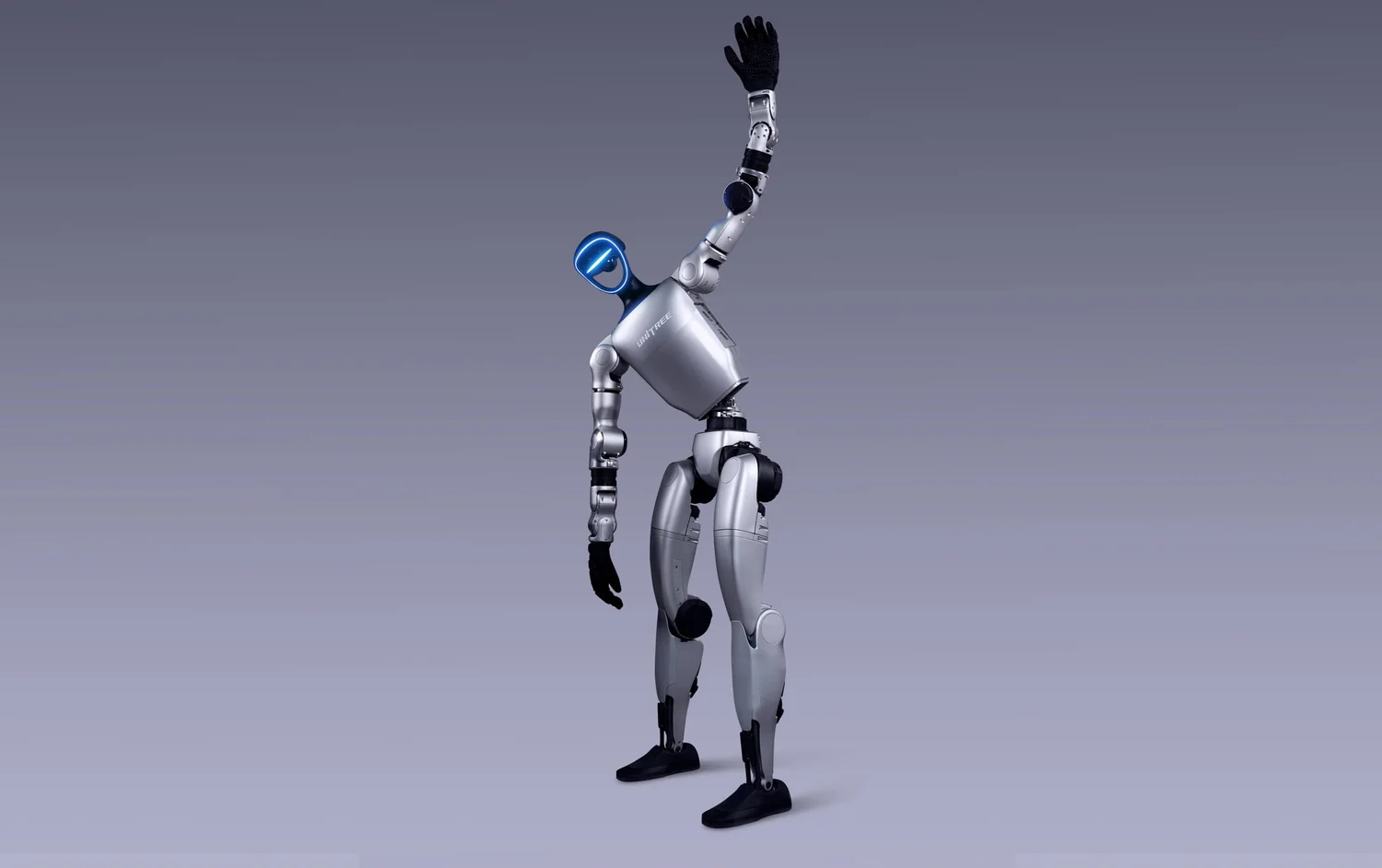
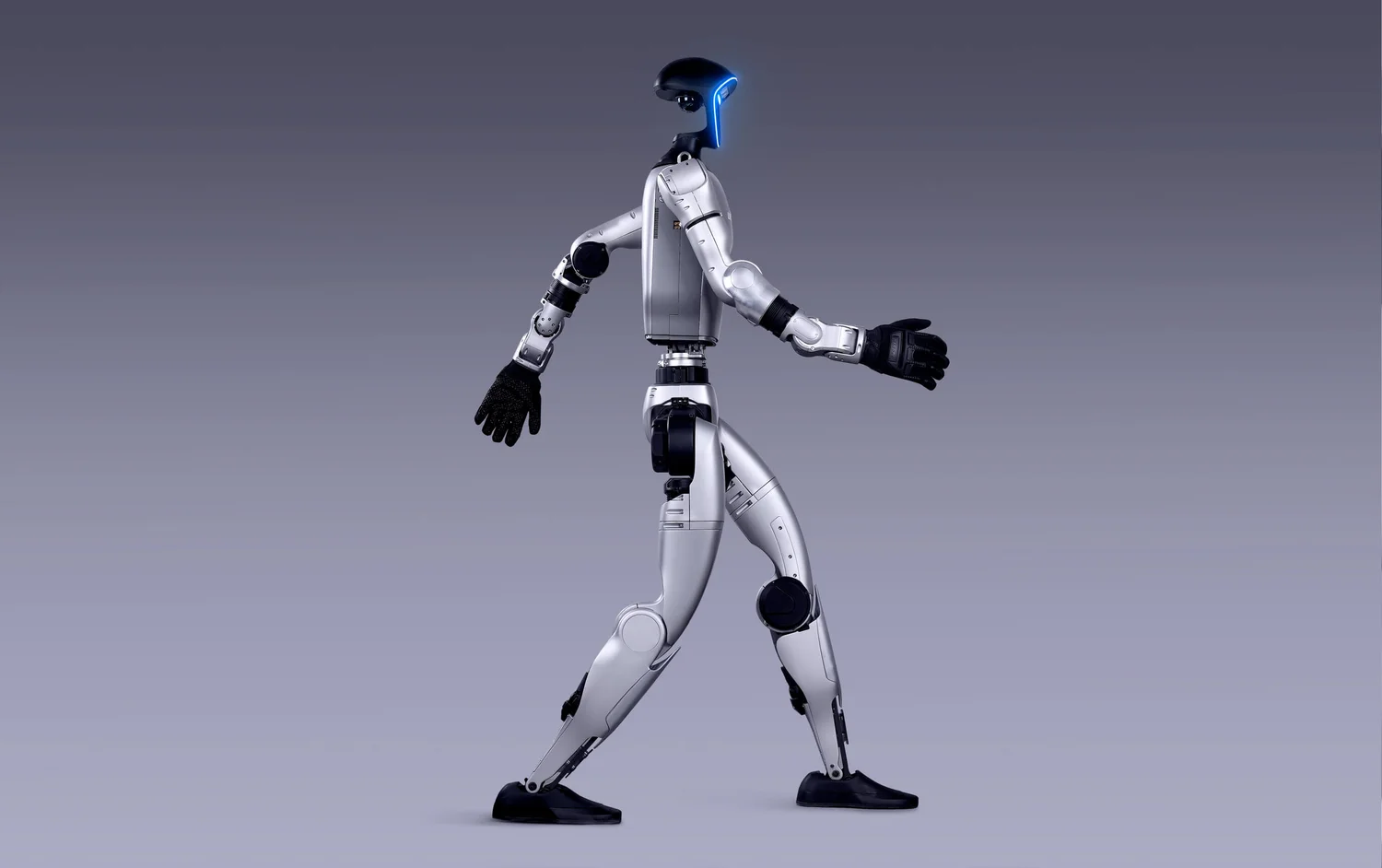
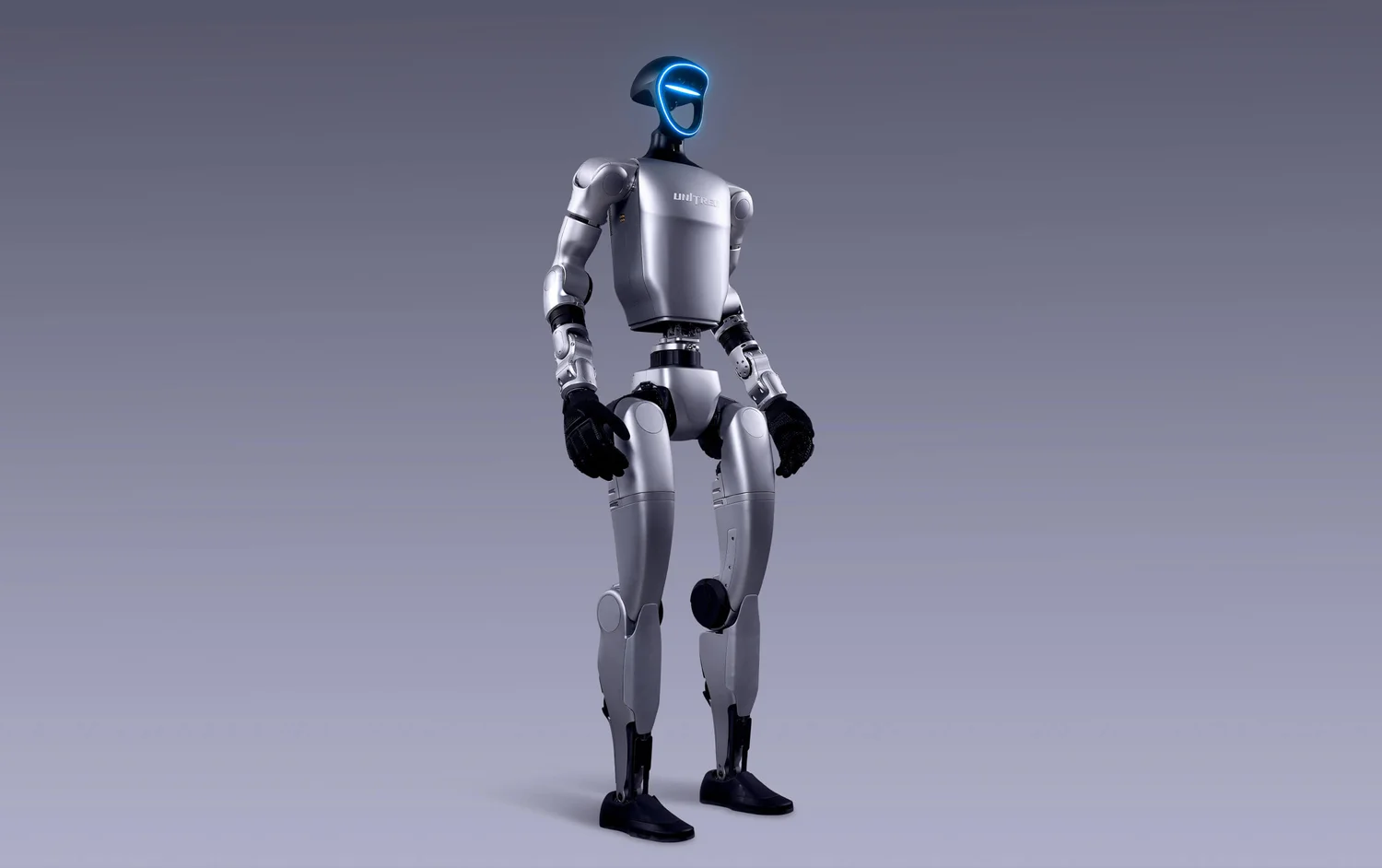
The hardware is surprisingly ordinary. The team used a stock G1, a child-sized humanoid sold by Chinese maker Unitree, added a wide-angle camera and mounted an Apple Mac mini computer on its back. The robot carried all of its computing on board, with no cable tying it to a desk or a server.
The Mac mini ran the planning models, while the robot's built-in Nvidia Jetson computer handled the fast layer that steers its joints. Running everything on the machine itself is significant, since a household robot cannot count on a perfect internet connection, and a delay of even a fraction of a second could cost it its balance.
How It Fared in Real Rooms
The researchers tested each skill ten times in each of six real environments, 360 trials in all, and report an average success rate of 91 percent. The robot walked to named objects 92 percent of the time, sat on chairs in 85 percent of attempts and stepped through half-open doors in 93 percent.
It crouched under a table in every attempt, crawled beneath a lower one 90 percent of the time and pushed a box in 88 percent of tries. The real-world average matched the 91 percent the system scored in simulation, which suggests the computer-made training carried over to physical rooms well. These are the authors' own results.
Why Variety Was the Secret Ingredient
The team also removed pieces of the system to see what mattered. Training on a single room instead of 1,000 cut the sitting success rate in unfamiliar simulated rooms from 84 percent to 43 percent. Swapping the motion planner for a simpler prediction method cut it to just 19 percent.
In plain terms, variety seems to be doing much of the work. A robot that has only ever seen one living room learns that room, while one that has seen a thousand starts to grasp what chairs, doors and tables generally look like. Apple has published the training and deployment code, though not the trained models.

What the Robot Still Cannot Do
HALO has clear limits. None of its six skills involves picking anything up or using hands with any finesse, and the robot has no sense of touch. Each new skill also needs a person to write prompts and set key poses, so its repertoire can only grow as fast as people can describe tasks.
Stringing tasks together proved harder too. Across three chained sequences in one real environment, success averaged 70 percent, and crouching, walking to a box and pushing it worked only half the time. The paper does not compare its success rates directly against rival systems, so it is hard to say how far ahead HALO really is.
A Research Step, Not a Product
The paper's eight authors are all listed under Apple, with Siyuan Hu as lead author and Vladlen Koltun, who previously ran a research lab at Intel, as the senior name. It is a research paper and not a product announcement, but it does show the company working seriously on robot intelligence.
The authors' suggested next step is helping the robot recover when something goes wrong, for example by searching around or turning in place. If simulated training keeps working this well, the slow bottleneck of recording human demonstrations could loosen. For now, HALO is a promising step toward robots that learn a home without ever having been in one.
Explore Humanoids
Sources
Related Articles
South Korea's ETRI Unveils Its Own Humanoid Robot Brain at a Physical AI Showcase
AgiBot G2 Robots Finish a 24-Hour Shift in a Shanghai Convenience Store, and Four of Six Pass
Swiss Startup Embodied AI Unveils AIR, a Humanoid That Learns Factory Jobs on the Shift

Xinhua and UBTECH Unveil Xinyan and Xinyu, Humanoid Robot News Anchors Designed by Zhang Yimou
Related Comparisons
Compare Unitree G1 with similar robots

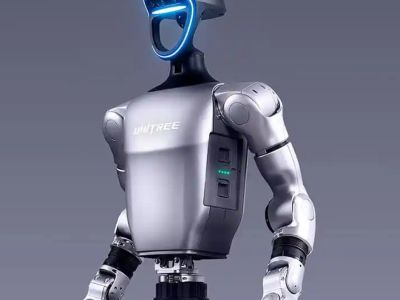
Optimus vs Unitree G1
Compare Optimus vs Unitree G1 for humanoid mobility, dexterity, autonomy, and payload capacity.
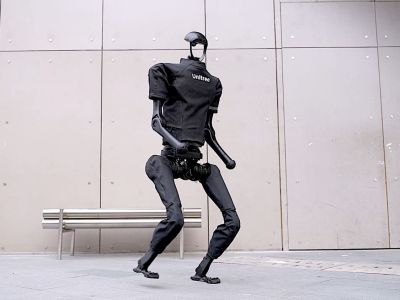
Unitree G1 vs Unitree H1
Head-to-head: Unitree G1 vs Unitree H1 compared on bipedal balance, AI learning, and real-world deployment.
Unitree G1 vs AgiBot X2
Compare Unitree G1 vs AgiBot X2 for humanoid mobility, dexterity, autonomy, and payload capacity.
Unitree G1 vs Unitree H2
In-depth comparison of Unitree G1 and Unitree H2, covering hardware capabilities, teleoperation, and enterprise readiness.
Learn More About This Robot
Discover detailed specifications, reviews, and comparisons for Unitree G1.
View Robot Details →