Dongfeng to Trial-Produce 'Xiaodong' Humanoid Robot in Automotive Plants Targeting Human-Level Assembly by 2027
Robot Details
Next‑Gen IRON • XPENGPublished
September 25, 2026
Reading Time
4 min read
Author
Origin Of Bots Editorial Team

Chinese Automotive Giant Enters the Humanoid Race
State-owned Chinese automotive manufacturer Dongfeng Motor Corporation officially announced its entry into the commercial humanoid robotics sector. The automaker revealed that its proprietary general-purpose humanoid, named Xiaodong, will enter vehicle production plants in October. The deployment initiates rigorous on-site trials ahead of small-batch serialized trial production scheduled before the conclusion of 2026.
Dongfeng’s announcement marks the latest major automotive conglomerate to establish a dedicated in-house embodied robotics division. The move follows aggressive humanoid manufacturing programs established by international automotive peers including Tesla, Hyundai, and XPENG. Dongfeng aims to leverage its immense industrial scale to accelerate the integration of artificial intelligence into vehicle manufacturing.
Aggressive Milestone: Matching Human Worker Productivity by 2027
Alongside the factory deployment timetable, Dongfeng leadership established an exceptionally aggressive performance benchmark for Xiaodong. Zhang Zhenlin, Chief Engineer of Intelligent Technology at Dongfeng, declared that the company aims to match human worker capabilities by late 2027. Achieving parity with human assembly technicians across speed, dexterity, and error rates represents a formidable technological objective.
To reach human-level productivity, Xiaodong must execute complex assembly routines within strict automotive takt times of under sixty seconds. The bipedal machine must manipulate flexible wiring harnesses, install interior trim clips, and verify fastener torque tolerances flawlessly. Dongfeng engineers are optimizing both mechanical joint velocities and visual foundation models to eliminate operational hesitation.
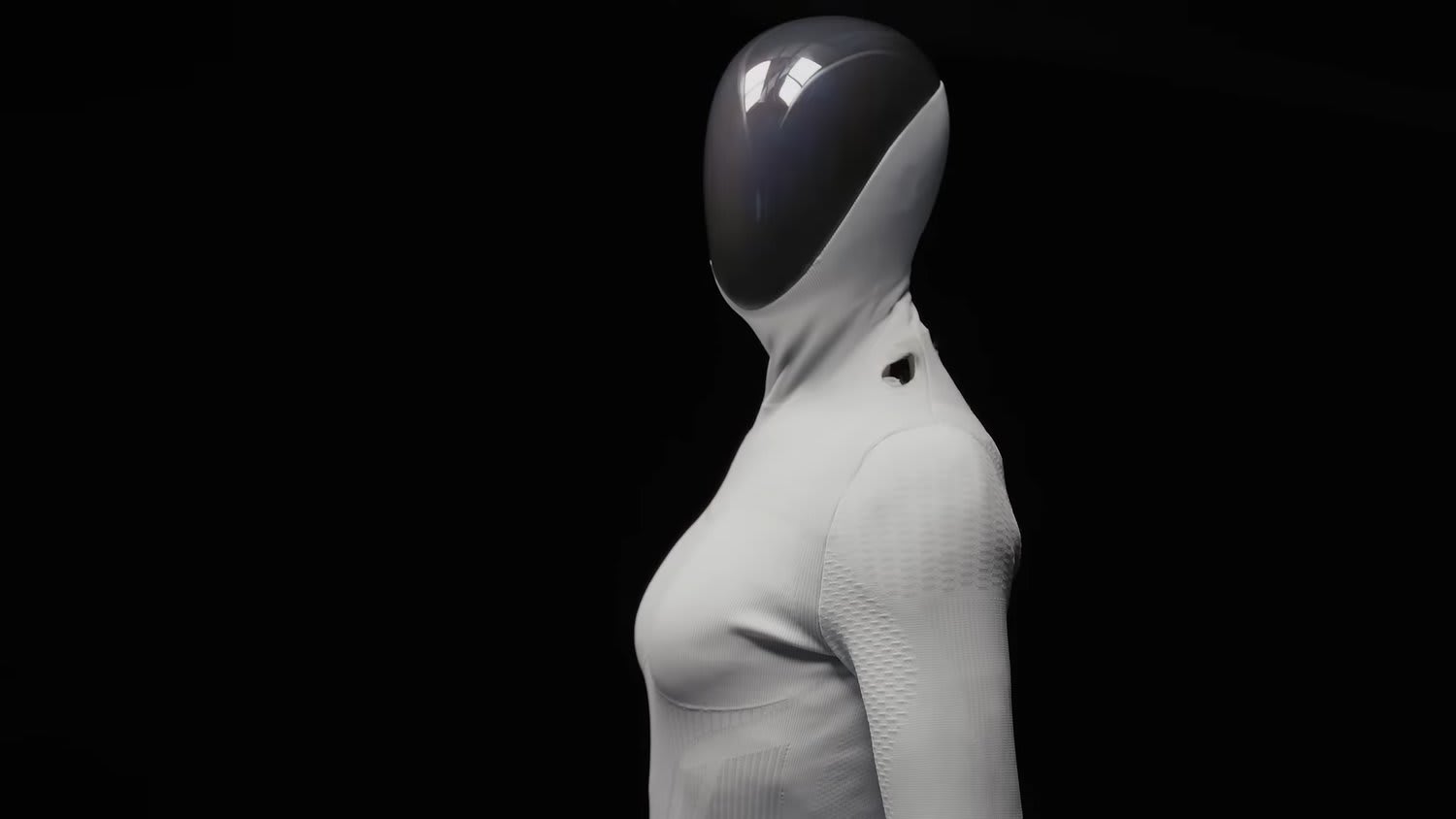
Initial Deployment Focus: Material Sorting and Quality Inspection
Initial factory testing commencing this October will concentrate on high-volume material sorting and automated visual quality inspection. Automotive assembly plants process thousands of distinct fasteners, brackets, and electronic modules that require meticulous staging before chassis installation. Xiaodong will identify misaligned parts, extract components from shipping containers, and transport subassemblies to specific assembly workcells.
Simultaneously, the humanoid will perform multi-angle optical inspections on stamped metal panels and painted vehicle bodies. Equipped with high-resolution depth cameras and localized neural networks, Xiaodong can detect sub-millimeter surface flaws that escape human vision. Automating repetitive inspection tasks relieves human technicians from severe visual strain while dramatically improving quality assurance consistency.
Transitioning from Rehearsed Movements to Flexible Task Autonomy
A core developmental priority emphasized by Dongfeng engineers is transitioning Xiaodong away from pre-programmed, scripted motions. Traditional industrial automation relies on rigid, hardcoded trajectories that fault immediately if a part is slightly misplaced or misaligned. Dongfeng is training end-to-end vision-language-action models to endow Xiaodong with genuine adaptive problem-solving capabilities.
The robot must autonomously analyze unscripted workplace variations, adjusting its grip and arm trajectory in response to real-time visual feedback. If a part shifts unexpectedly inside a tote, Xiaodong recalculates its grasping strategy dynamically rather than halting the assembly line. Developing flexible scenario autonomy is essential for deploying humanoids into dynamic automotive plants without expensive physical retooling.
Dual-Platform Strategy: Partnering with 'Yuanzai' Quadruped Scout
Dongfeng’s embodied robotics portfolio is not limited to bipedal humanoids; the automaker unveiled a companion quadruped platform named Yuanzai. Equipped with autonomous navigation, multi-modal perception, and intelligent interaction capabilities, Yuanzai is engineered for agile campus security and facility patrol. Dongfeng confirmed that the quadruped scout will achieve commercial deployment significantly sooner than its bipedal counterpart.
The first public assignment for Yuanzai will be customer reception and interactive vehicle guidance inside Dongfeng retail dealerships across China. Visitors browsing electric vehicles in showrooms will soon be greeted and guided to display cars by autonomous four-legged robots. Deploying quadrupeds in showrooms generates immediate public brand visibility while harvesting valuable edge interaction data for future models.
Capitalizing on Automotive Supply Chains and Autonomous Driving AI
The underlying strategic logic compelling Dongfeng’s robotics investment centers on profound industrial and computational synergies with electric vehicles. Modern electric cars and humanoid robots share nearly identical hardware architectures, including brushless motors, harmonic gearboxes, and lithium battery packs. Automakers can utilize their existing multi-billion-dollar supply chains to manufacture robotic actuators at a fraction of startup costs.
Furthermore, Dongfeng is adapting its autonomous driving perception stacks directly into Xiaodong’s spatial navigation and obstacle avoidance systems. Occupancy grid algorithms perfected across millions of road miles provide the robot with instantaneous spatial awareness in factory aisles. This cross-pollination of automotive silicon, supply contracts, and perception models gives established automakers an immense competitive advantage.
The Maturing Landscape of Automotive Embodied Robotics
Dongfeng’s decisive entry underscores how rapidly automotive factories are becoming the primary proving grounds for embodied artificial intelligence. With XPENG commissioning automated robot assembly lines and Chery-backed Aimoga delivering thousands of units, Chinese automakers are mobilizing at scale. State-owned giants view robotics not merely as a factory efficiency tool, but as a critical new pillar of national economic competitiveness.
As Xiaodong begins active workshifts alongside human assembly technicians this October, the trajectory of automotive manufacturing will permanently shift. The factory of the future is rapidly evolving into a collaborative ecosystem where bipedal machines shoulder hazardous, repetitive physical burdens. Dongfeng's ambitious roadmap signals that the race to commercialize general-purpose industrial labor has entered an aggressive new phase.
Explore Humanoids
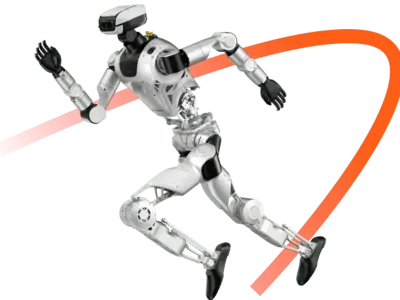
Related Articles

XPENG Robotics Unveils XPACE: Simulation Platform Training IRON Humanoids via Video Prediction and Synthetic Failure Recovery
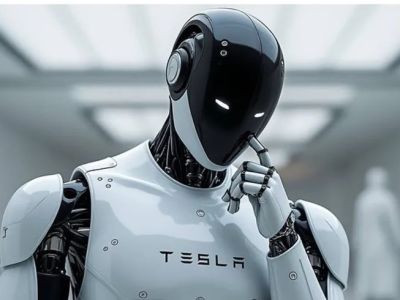
Tesla AI VP Ashok Elluswamy Delivers Candid Reality Check on Optimus Remote Control and Physical Safety Stakes
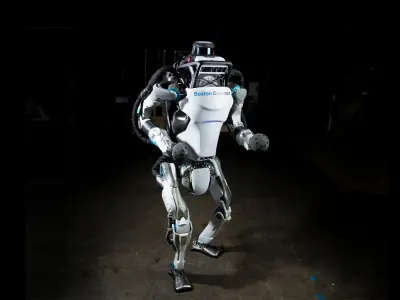
Boston Dynamics Opens Robotics Metaplant Application Center to Train Atlas Humanoid Fleet for Hyundai Manufacturing

Intel Unveils Open Edge Infrastructure Strategy to Scale Physical AI and Humanoid Robotics
Related Comparisons
Compare Next‑Gen IRON with similar robots
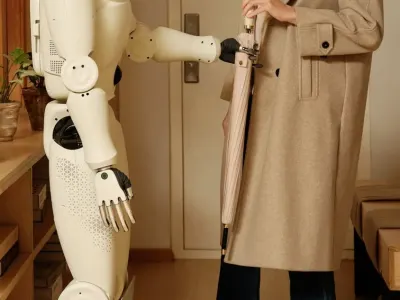
Next‑Gen IRON vs Jupiter
Which humanoid robot is better? Next-Gen IRON vs Jupiter compared for dexterity, AI autonomy, payload, and industrial use cases.
Next‑Gen IRON vs Bolt
Compare Next-Gen IRON vs Bolt for humanoid mobility, dexterity, autonomy, and payload capacity in industrial and dynamic use cases.

Next‑Gen IRON vs Moya
In-depth comparison of Next-Gen IRON by XPENG and Moya by DroidUp, covering hardware capabilities, teleoperation, and enterprise readiness.
L7 vs Next‑Gen IRON
Head-to-head: L7 vs Next-Gen IRON. Explore differences in speed, sensors, navigation, and AI capabilities.
Learn More About This Robot
Discover detailed specifications, reviews, and comparisons for Next‑Gen IRON.
View Robot Details →