Ex-Amazon AI Head Scientist Rohit Prasad Appointed CEO of Boston Dynamics to Lead Industrial Atlas Rollout
Robot Details
Atlas • Boston DynamicsPublished
October 6, 2026
Reading Time
6 min read
Author
Origin Of Bots Editorial Team
Leadership Transition Marking a Strategic Pivot Toward Mass Production
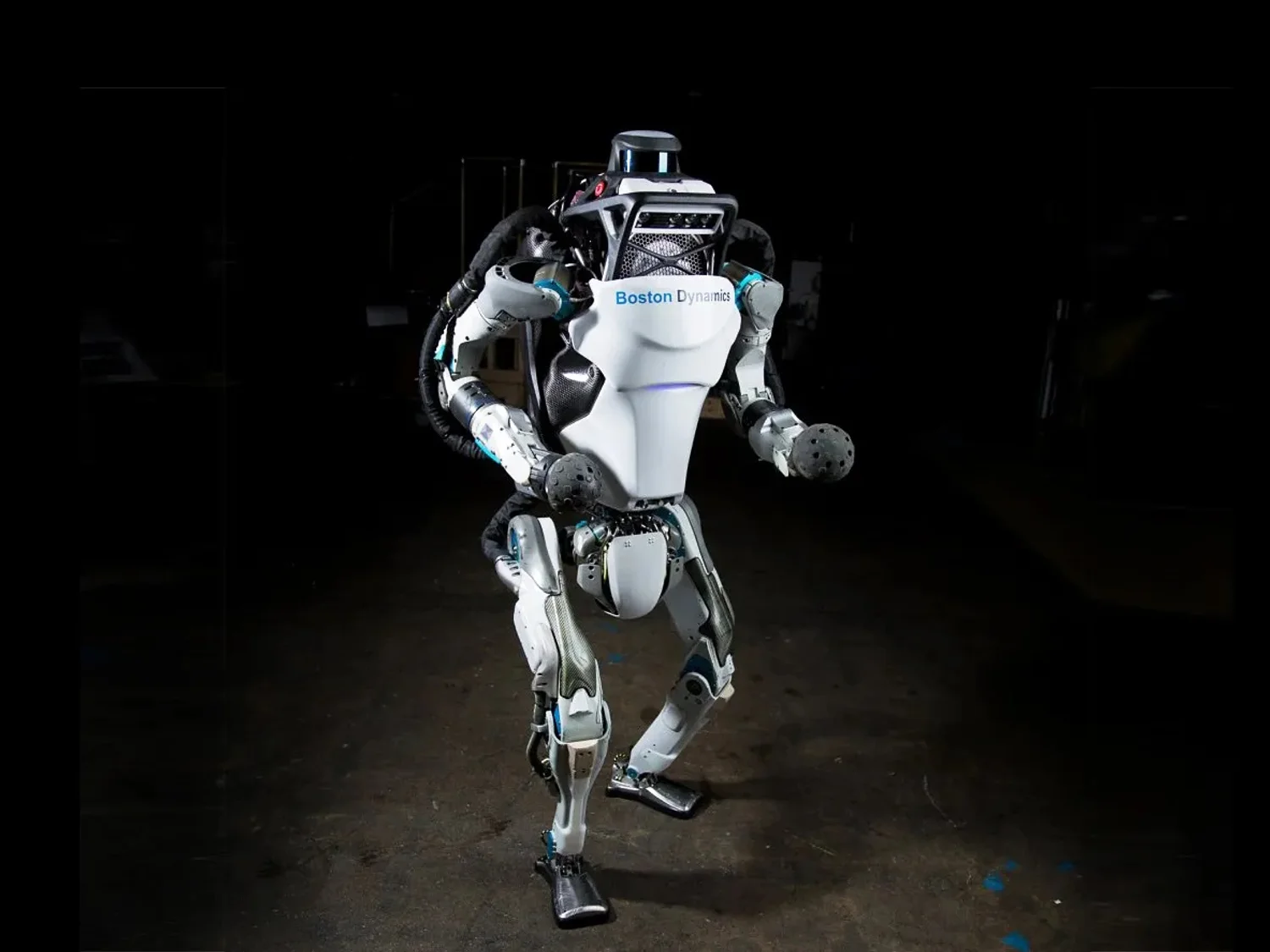
Boston Dynamics has officially announced the appointment of Rohit Prasad as its new Chief Executive Officer, effective October 7. A prominent technologist who previously served as Amazon's Senior Vice President and Head Scientist for Artificial General Intelligence, Prasad assumes the helm of the Hyundai-owned robotics company.
The high-profile leadership change signals a profound operational transition for the storied robotics enterprise. For decades, Boston Dynamics captured global fascination with viral research videos of acrobatic robots, but the company is now being aggressively tasked by parent company Hyundai Motor Group to execute scaled industrial manufacturing.
Prasad's appointment follows an extensive restructuring across Boston Dynamics' executive suite following the resignation of former chief executive Robert Playter earlier this year. Hyundai's corporate leadership sought an AI-native executive capable of uniting cutting-edge generative software with high-throughput mechatronic assembly lines.
Prasad's Pedigree: Scaling Artificial Intelligence at Amazon
Rohit Prasad brings more than a decade of premier executive experience managing large-scale artificial intelligence initiatives at Amazon. Renowned as the chief architect who scaled the Alexa voice assistant into hundreds of millions of living rooms, Prasad later led Amazon's centralized Artificial General Intelligence team.
Following the commercial explosion of generative AI models, Prasad mobilized thousands of research scientists to train Amazon's proprietary large multimodal models and conversational interfaces. His background blends deep theoretical machine learning expertise with the practical discipline of deploying physical hardware products at global consumer scale.
While Prasad's career has been anchored primarily in digital artificial intelligence rather than physical robotics, his strategic vision centers on embodied intelligence. In his inaugural address, Prasad underscored that Boston Dynamics possesses an unassailable advantage in physical mechatronics that will serve as the foundation for the coming physical AI era.
Hyundai's Ambitious Manufacturing Mandate: 30,000 Atlas Robots by 2028
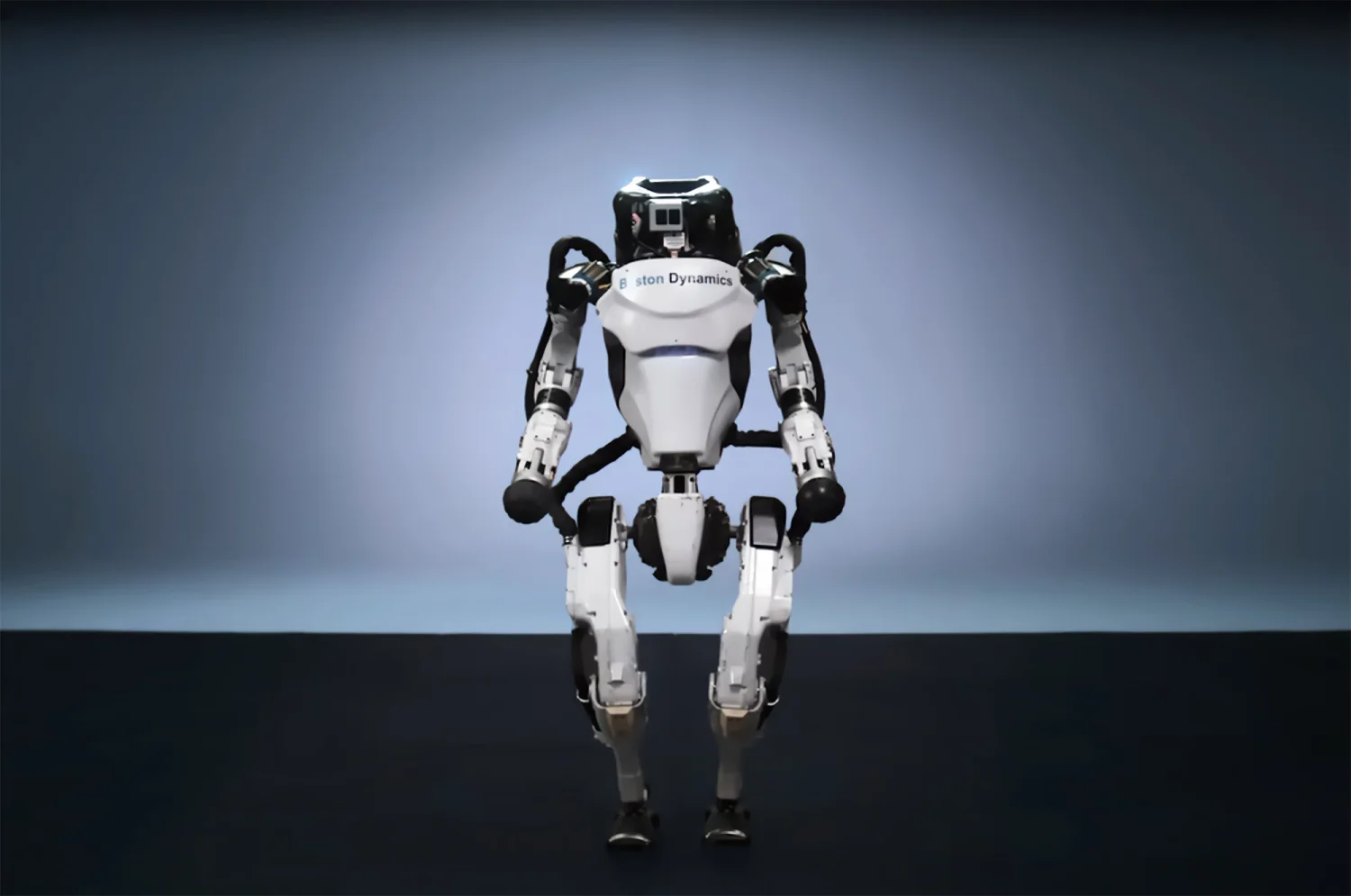
The primary operational directive confronting Prasad is delivering on Hyundai Motor Group's aggressive commercial robotics roadmap. During recent briefings to institutional investors, Hyundai leadership detailed plans to manufacture thirty thousand electric Atlas humanoid robots annually by 2028.
Rather than relying strictly on external commercial sales, the vast majority of this initial manufacturing volume will be deployed internally. Approximately twenty-five thousand Atlas humanoids are designated to work across Hyundai and Kia automotive assembly plants in South Korea and North America.
The remaining five thousand units produced by 2028 will be distributed to select commercial partners and research organizations, including long-term collaborator Google DeepMind. This internal-first deployment strategy guarantees a massive, captive customer base to absorb early production runs while proving operational return on investment.
Savannah Metaplant Application Center as the Production Proving Ground
A cornerstone of the Atlas production ramp is the newly established Robotics Metaplant Application Center in Savannah, Georgia. Situated adjacent to Hyundai's state-of-the-art electric vehicle manufacturing complex, the dedicated facility functions as an operational testbed and initial assembly site.
Within the application center, engineers are optimizing automated manufacturing cells designed to assemble humanoid chassis at high throughput. The facility serves a dual role, housing manufacturing cells while simultaneously providing realistic assembly environments where Atlas units practice parts kitting and chassis sequencing.
Hyundai plans to expand the Savannah site tenfold by next year, establishing a dedicated robotic manufacturing plant designed for thirty thousand units annually. The center allows Boston Dynamics to resolve assembly line bottlenecks and test tool durability in close proximity to automotive factory floors.
Physical Capabilities and Workstation Ergonomics of Electric Atlas
Engineered specifically for heavy automotive fabrication, the electric Atlas platform boasts physical specifications that surpass human capabilities across critical factory workflows. The humanoid features an expansive vertical reach of 7.5 feet and a continuous payload lifting capacity of 110 pounds.
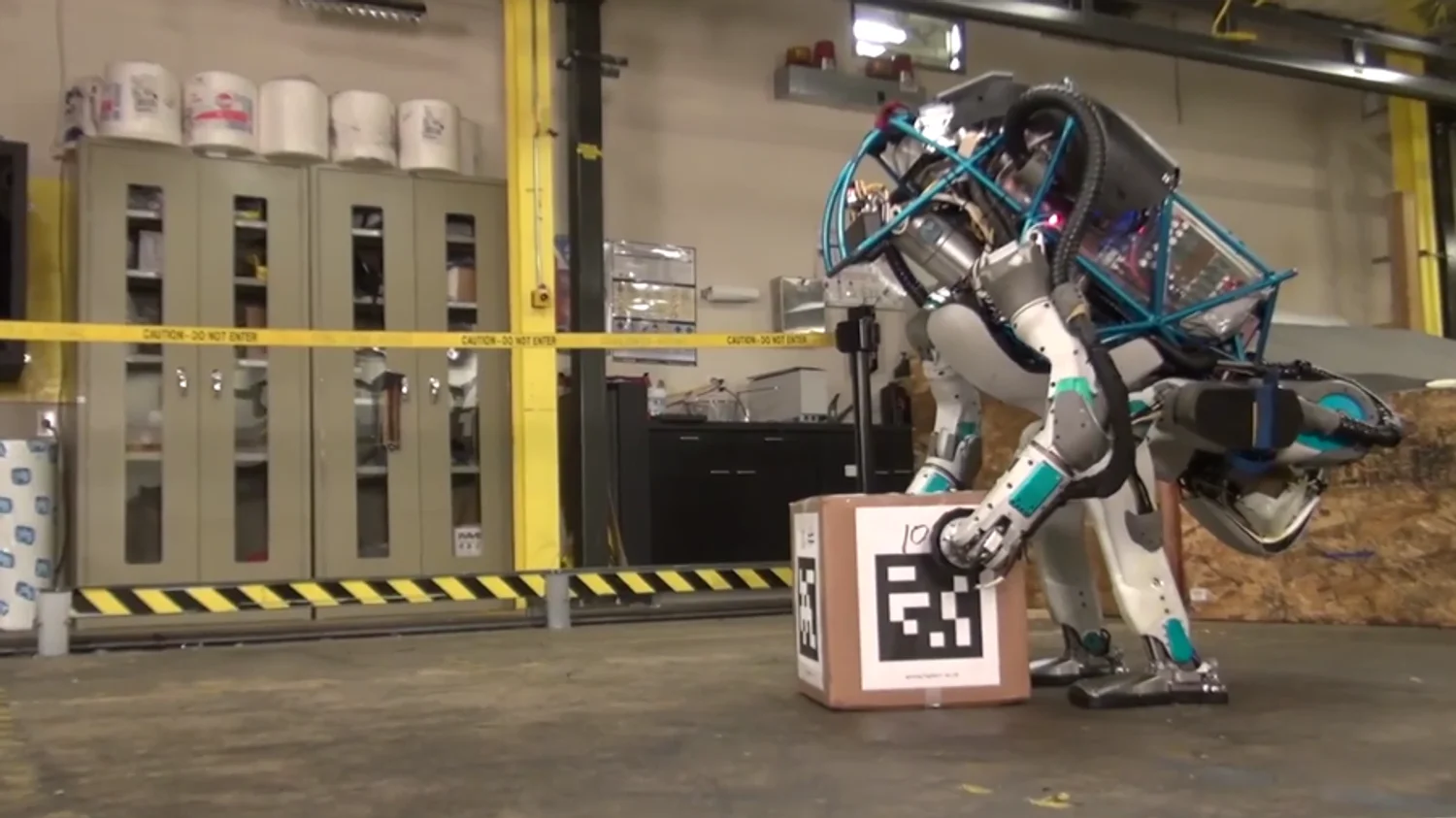
This high-capacity physical envelope enables Atlas to lift heavy stamped steel components, vehicle suspension arms, and battery packs that typically require two human workers or mechanical lift assists. By operating within standard human workstation footprints, the machine eliminates the need for expensive factory retooling.
Furthermore, the recent integration of a 13-degree-of-freedom four-finger tactile hand allows Atlas to manipulate standard power tools, including pneumatic wrenches and drills. The machine can thread bolts and tighten fasteners with high torque precision, matching the cycle times of veteran human assembly workers.
Economics of Scale: Driving Unit Costs from $140,000 Down to $30,000
Achieving commercial viability hinges on driving steep economies of scale across humanoid hardware fabrication. Industry estimates reported by the Korea Herald indicate that current prototype and low-volume batches of the electric Atlas cost between $130,000 and $140,000 to manufacture.
However, Hyundai's industrial financial models project that cumulative manufacturing volume will dramatically compress unit costs. Once production surpasses fifty thousand total units, the bill-of-materials and assembly costs are projected to drop to approximately $30,000 per robot.
Securing this radical cost deflation requires automated stamping of structural limbs, standardized brushless motor windings, and volume procurement of custom harmonic gearsets. Prasad's extensive supply chain experience at Amazon will be pivotal in establishing the global supplier network needed to achieve these manufacturing targets.
Overcoming Labor Friction and Cultural Headwinds
Beyond engineering challenges, the massive deployment of Atlas humanoids must navigate delicate labor union relationships across Hyundai's global production footprint. Earlier this summer, unionized autoworkers at Hyundai's flagship Ulsan plant in South Korea staged partial walkouts, demanding formal union approval prior to robotic deployments.
Labor representatives expressed deep anxiety that humanoid robots could permanently displace assembly line workers and erode hard-won wage standards. To mitigate friction, Hyundai management has emphasized that initial deployments will target ergonomically hazardous, repetitive tasks associated with chronic workplace injuries.
Prasad and Hyundai leadership are pursuing collaborative dialogue with plant labor councils, framing Atlas as a collaborative tool that protects human health rather than a replacement workforce. Ensuring smooth industrial labor relations will be essential to meeting Hyundai's 2028 factory integration milestones.
Establishing the Definitive Standard for Commercial Physical AI
The selection of Rohit Prasad to lead Boston Dynamics represents a watershed moment in the commercial physical artificial intelligence race. With Hyundai providing the capital, factory proving grounds, and manufacturing scale, Boston Dynamics has assembled the components necessary to dominate industrial humanoid automation.
As Prasad assumes executive leadership, the broader robotics sector will be watching closely to see if the world's most famous robotics brand can successfully transform into an industrial powerhouse. The transition from spectacular laboratory acrobatics to profitable factory utility has begun in earnest.
Under Prasad's guidance, Boston Dynamics is poised to prove that physical artificial intelligence can redefine global manufacturing productivity. The coming years will determine whether the electric Atlas becomes the ubiquitous robotic worker that automates the factory floors of the twenty-first century.
Explore Humanoids
Sources
Related Articles

Intel Unveils Open Edge Infrastructure Strategy to Scale Physical AI and Humanoid Robotics
Saudi Arabia and Humanoid AI Form Strategic Partnership for Up to 10,000 Humanoid Robots Under Vision 2030
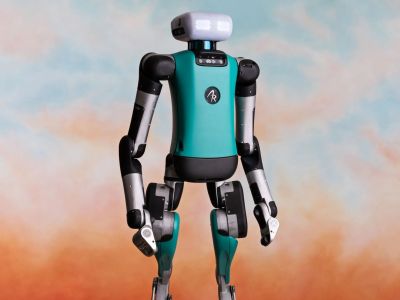
Agility Robotics Explores Wheeled Humanoid Variants to Complement Bipedal Digit Fleet
Related Comparisons
Compare Atlas with similar robots
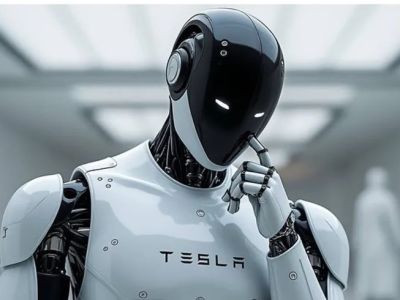
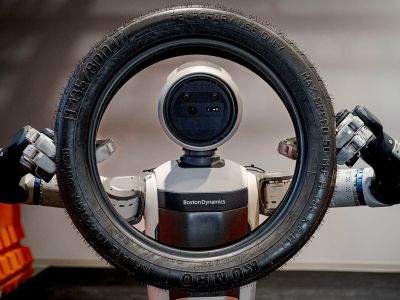
Optimus vs Atlas (Electric Atlas, 2025)
In-depth comparison of Optimus and Atlas (Electric Atlas, 2025), covering hardware capabilities, teleoperation, and enterprise readiness.
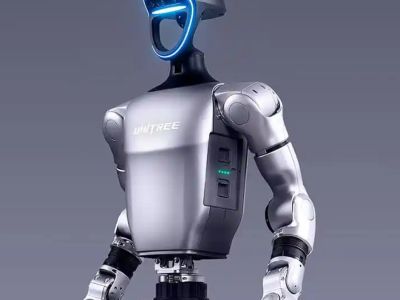
Optimus vs Unitree G1
Compare Optimus vs Unitree G1 for humanoid mobility, dexterity, autonomy, and payload capacity.
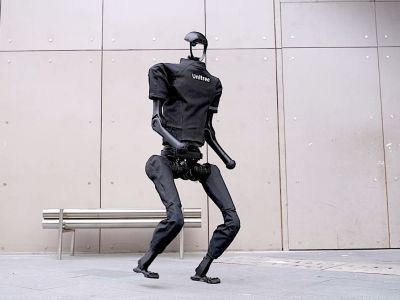
Unitree G1 vs Unitree H1
Head-to-head: Unitree G1 vs Unitree H1 compared on bipedal balance, AI learning, and real-world deployment.
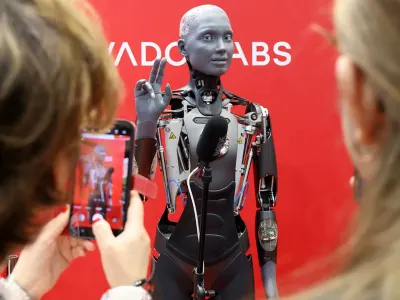
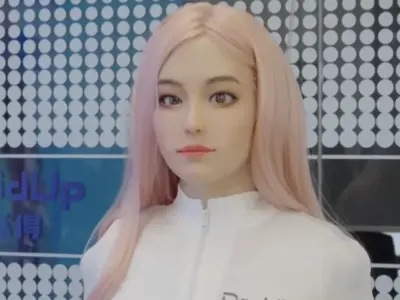
Ameca vs Moya
Which humanoid robot is better? Ameca vs Moya compared for dexterity, AI capabilities, and price.
Learn More About This Robot
Discover detailed specifications, reviews, and comparisons for Atlas.
View Robot Details →