Richtech's Dex Humanoid Makes CES Debut, Targeting Industrial Deployments in 2026
Robot Details
Dex • Richtech RoboticsPublished
January 23, 2026
Reading Time
3 min read
Author
Origin Of Bots Editorial Team
Mobile Dexterity Arrives
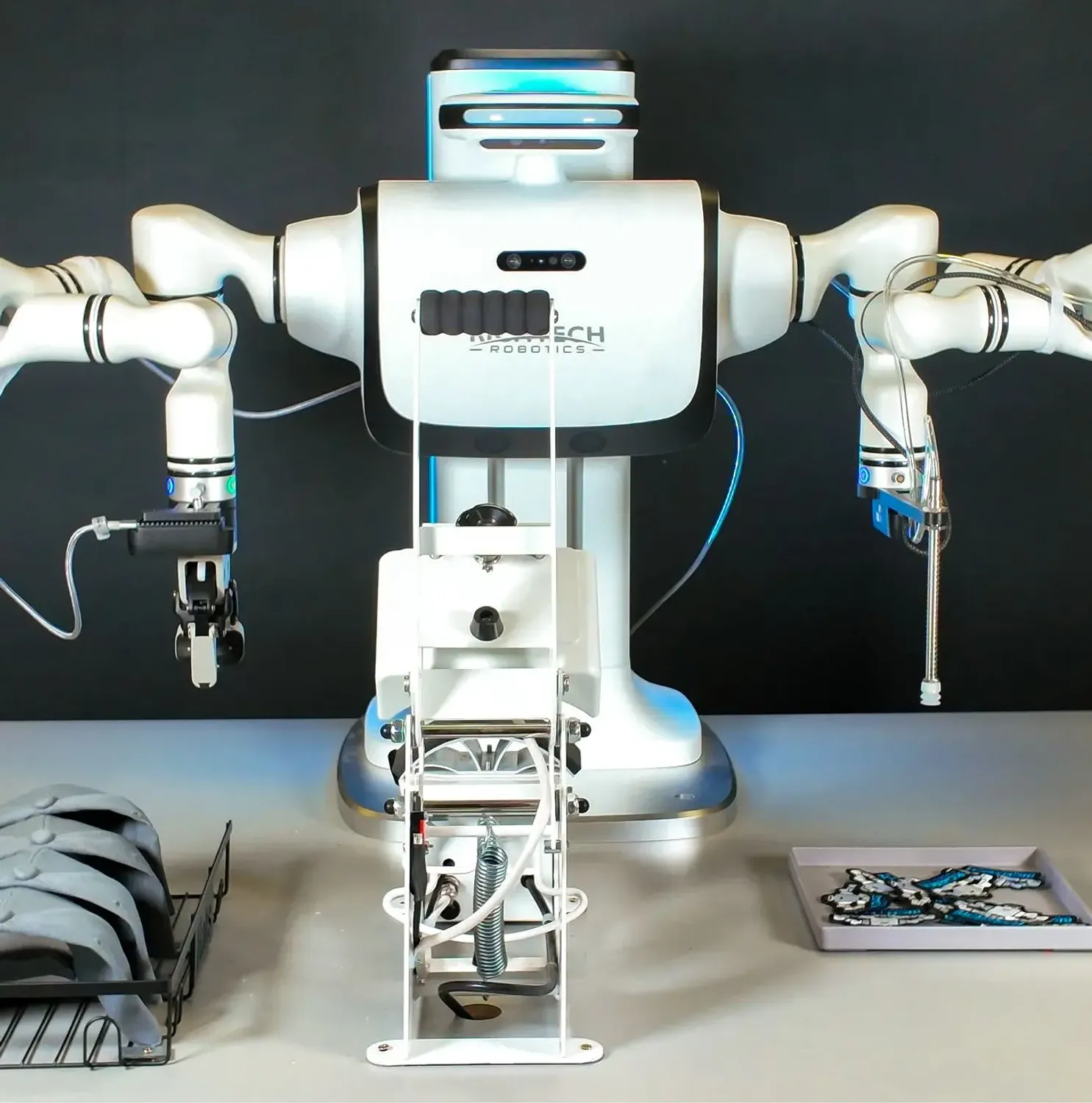
Richtech Robotics introduced Dex at CES 2026, marking the company's entry into the humanoid robotics market with a wheeled mobile platform engineered specifically for industrial and commercial environments. Built on insights from over 450 prior robot deployments, Dex combines the autonomous mobility of Richtech's Titan delivery platform with the dual-arm precision of its ADAM service robot line. The system is powered by NVIDIA's Jetson Thor processor, enabling real-time reasoning and complex task execution in dynamic settings. This convergence of mobility and dexterity positions Dex as a practical alternative to traditional stationary industrial automation, addressing labor shortages and operational inefficiencies across warehouses, manufacturing facilities, and logistics networks.
Engineering for Endurance
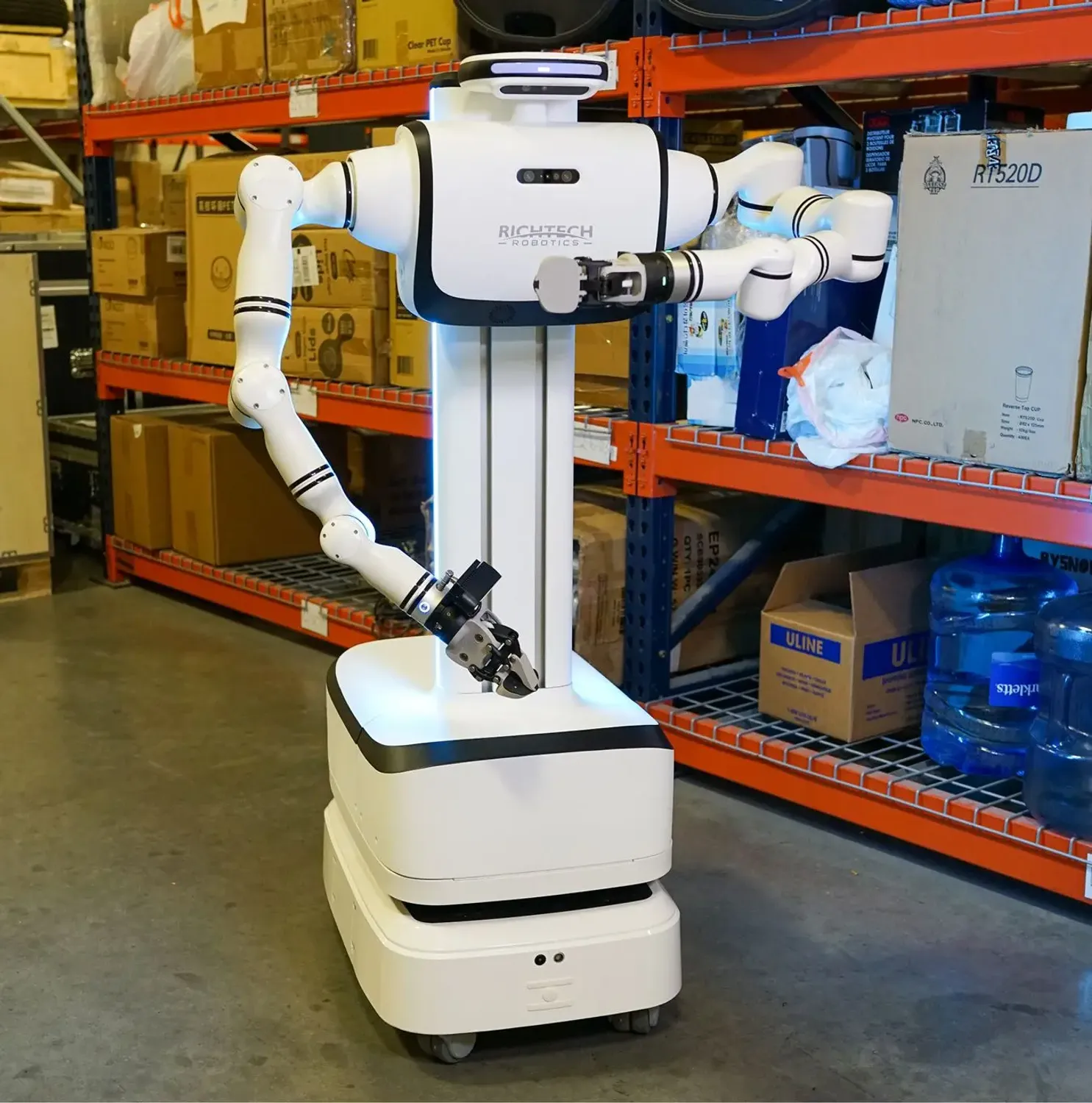
Dex distinguishes itself through energy-conscious design choices that prioritize sustained operation over raw power. The robot features a four-hour battery life during mobile operations and can run continuously from a static charging station, eliminating downtime constraints that plague single-charge systems. Its wheeled platform delivers fast braking, tight maneuvering, and stability in shared human environments while consuming significantly less energy than legged alternatives. Modular end-effectors allow rapid tool swaps, transforming Dex from parts handler to quality inspector to packaging specialist without hardware modifications. A four-camera vision system provides 360-degree environmental awareness, enabling navigation through congested spaces and precise task execution in unpredictable conditions.
Simulation Accelerates Reality
Richtech leveraged NVIDIA Isaac Sim to compress development cycles through a proprietary "Sim2Real" training pipeline that teaches Dex behaviors in virtual environments before real-world deployment. This approach combines simulated learning with real-world data, allowing the robot to adapt behaviors across diverse industrial contexts without expensive trial-and-error cycles. By training in simulation first, Richtech reduces deployment risk, enhances safety protocols, and accelerates scaling of new applications. The methodology reflects a broader industry shift toward digital twins and synthetic data, enabling manufacturers to validate complex robotic tasks before committing resources to physical prototypes.
Where Dex Operates
Dex's dual-arm architecture and mobile base unlock versatility across fragmented industrial workflows. In warehousing, Dex handles part sorting, material transport, and inventory management without requiring dedicated infrastructure. Manufacturing facilities deploy Dex for machine operation, quality inspection, and assembly assistance alongside human workers. Logistics centers leverage its mobility for package handling and last-mile preparation. Healthcare and research environments benefit from Dex's collaborative design, which enables human-robot teamwork in sensitive tasks. This breadth of application reduces the per-unit cost of robotic automation by allowing facilities to deploy a single platform across multiple operational areas, rather than maintaining specialized robots for isolated tasks.

Architecture Built for Interaction
Dex's technical foundation emphasizes human-centric interaction over raw specifications. Its dual production arms feature modular end-effectors that transition seamlessly between hands, clamps, and specialized tools, enabling the robot to learn and execute diverse manipulation tasks. The four-camera vision system—comprising two front-facing RGB cameras, two depth cameras, and arm-mounted sensors—grants Dex spatial reasoning and precise object recognition in cluttered environments. Force and torque sensors embedded in the arms enable collaborative operation, allowing Dex to detect unexpected contact and adjust behavior safely. An IMU and gyroscope maintain balance and orientation during mobility transitions. The ROS2-based operating system supports Python and C++ APIs, allowing industrial teams to customize Dex's behavior without deep robotics expertise. Battery capacity supports multi-hour interaction sessions, critical for sustained industrial workflows where frequent charging disrupts productivity.
Versus Rivals Breakdown
| Robot | Strengths over Dex | Dex Advantages | Weaknesses vs. Dex |
|---|---|---|---|
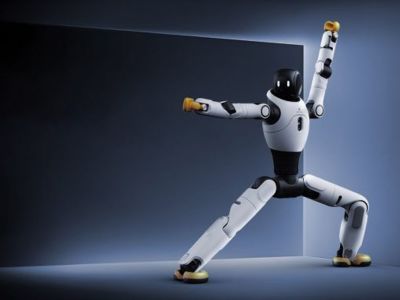
| AgiBot X2 | Higher payload capacity; faster processing in controlled environments | Mobile platform enables dynamic task switching; lower energy consumption; proven industrial deployment track record | Limited bipedal stability in unstructured spaces; higher maintenance overhead |
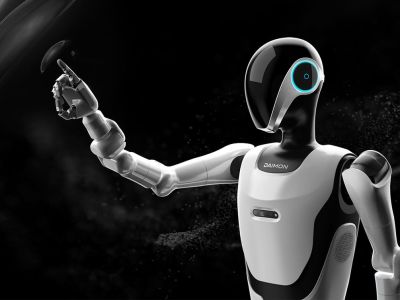
| Daimon One | Advanced facial expression systems for customer service roles | Dual-arm precision with modular tooling; extended battery life; seamless human-environment navigation | Fewer emotional interaction capabilities; specialized for task execution over social engagement |
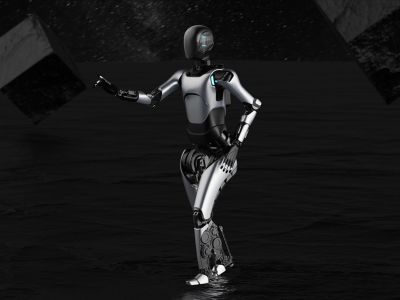
| DR01 | Superior static manipulation accuracy in fixed workstations | Autonomous mobility eliminates infrastructure constraints; faster deployment cycles via Sim2Real training | Requires environmental integration; less suited for single-location, high-precision assembly |
| AgiBot A2 | Lighter weight enables faster acceleration in time-sensitive tasks | Four-camera vision system provides superior environmental awareness; proven NVIDIA integration; larger deployment ecosystem | Lower speed in sprint tasks; wheeled platform less adaptable to extreme terrain |
Explore Humanoids



Sources
Related Articles

Chery's Mornine Redefines Retail Robotics with Real-World Dexterity and Global Expansion
Mirokaï Humanoids Enter UK Healthcare Trials to Elevate Patient Support
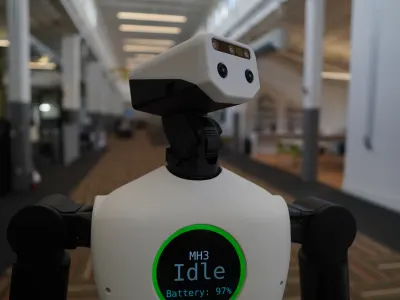
Mirsee's MH3 Redefines Hazmat Response with Precision Teleoperation and Extended Runtime
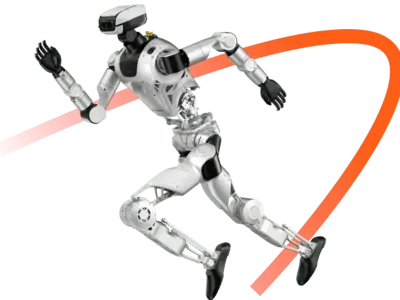
LimX Oli Powers Up with COSA OS Brain
Related Comparisons
Compare Dex with similar robots
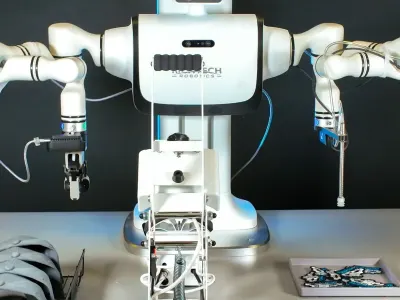
Mirsee Robotics MH3 vs Dex
Which robot wins? MH3 vs Dex compared across navigation, battery, sensors, mobility, and price.

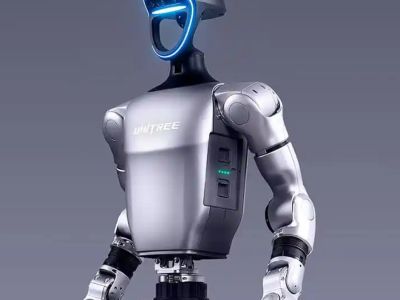
Optimus vs Unitree G1
Compare Optimus vs Unitree G1 for humanoid mobility, dexterity, autonomy, and payload capacity.

Unitree G1 vs Unitree H1
Head-to-head: Unitree G1 vs Unitree H1 compared on bipedal balance, AI learning, and real-world deployment.
Optimus vs Atlas (Electric 2025)
In-depth comparison of Optimus and Atlas (Electric Atlas, 2025), covering hardware capabilities, teleoperation, and enterprise readiness.
Learn More About This Robot
Discover detailed specifications, reviews, and comparisons for Dex.
View Robot Details →