Hiva Haiwa vs Mirokaï at a glance
Mirokaï is sold through a sales quote. There is no public way to buy Hiva Haiwa as of Nov 2026. Mirokaï is lighter at 26 kg, compared with 70 kg for Hiva Haiwa. Hiva Haiwa has more degrees of freedom (44 against 26 for Mirokaï), which allows finer movement. Mirokaï is quicker, with a top speed of 0.9 m/s versus 0.6 m/s for Hiva Haiwa.
| Key specs | Hiva Haiwa | Mirokaï |
|---|---|---|
| Price | — | $30,000 |
| Height | — | 123 cm |
| Weight | 70 kg | 26 kg |
| Top speed | 0.6 m/s | 0.9 m/s (stronger) |
| Runtime | 4 hours | 4 hours |
| Degrees of freedom | 44 (stronger) | 26 |
| Payload | 2–3 kg (stronger) | 1.5 kg |
| Availability | — | Order via sales quote |
Last updated:
Which one fits your use?
Based on the uses each robot is built and marketed for. Open a use to see the specs that matter for it.
| Comparing for… | Hiva Haiwa | Mirokaï |
|---|---|---|
| Suited | Not marketed | |
| Suited | Not marketed | |
| Suited | Suited | |
| Suited | Suited | |
| Suited | Suited |
- Only Hiva Haiwa is marketed for research labs and education and training.
- Both suit home help and elder care, hospitality, retail and public-facing roles and healthcare settings, so compare the specs for that use.
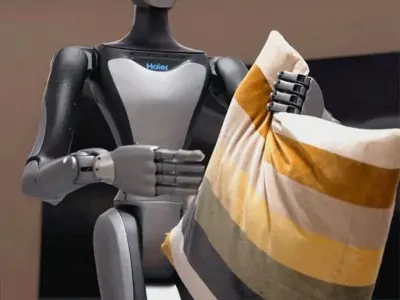
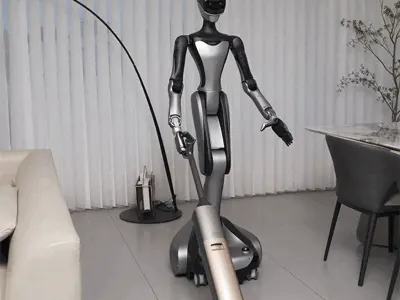
Hiva Haiwa by Haier is a wheeled-base humanoid robot designed for domestic assistance in smart homes, standing 165 cm tall and weighing 70 kg. It integrates with Haier's smart home ecosystem to perform tasks like cleaning, laundry folding, cooking assistance, and appliance management. Key differentiators include its 44 degrees of freedom for human-like dexterity, reaching up to 2 meters high, and current remote teleoperation with AI learning for future autonomy.
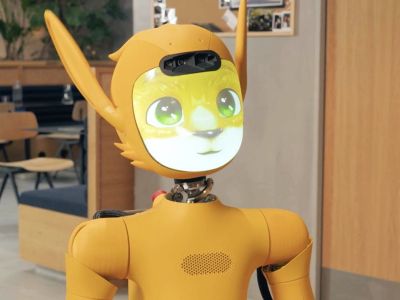
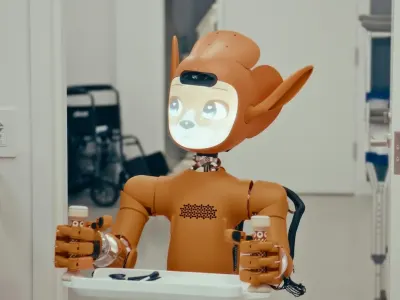
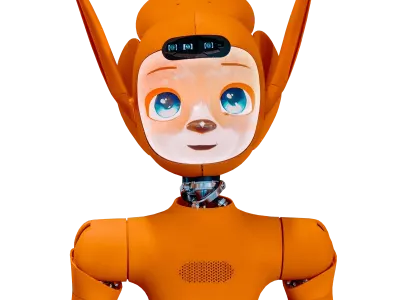
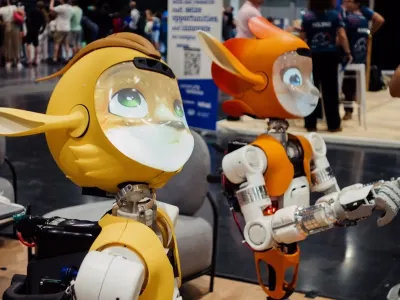
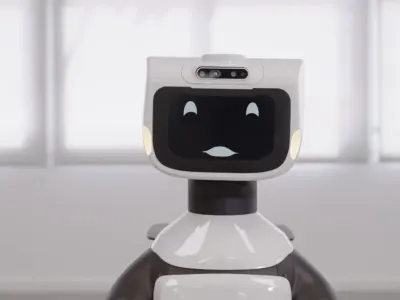
Mirokaï by Enchanted Tools is a lighter humanoid robot at 123 cm tall and 26 kg, positioned for social and service applications in public spaces. It supports use cases such as guiding visitors, carrying trays, repetitive manipulation, and social engagement. Its differentiators encompass advanced sensor arrays for social awareness navigation and autonomous behaviors learned via AI, with a focus on collaborative indoor operations.
Detailed Analysis
Design & Build Quality

Hiva Haiwa
Hiva Haiwa features a taller 165 cm frame with 70 kg weight and wheeled base for stable household mobility, offering 44 degrees of freedom for dexterous arm and hand movements up to 2 meters high. Mirokaï has a more compact 123 x 52.5 x 50 cm build at 26 kg, enabling agile deployment in varied public environments. Both employ humanoid forms but Hiva Haiwa prioritizes robust domestic reach while Mirokaï emphasizes lightweight portability. Mirokaï carries 1.5 kg per arm and can deadlift 15 kg.
Mobility & Navigation
Mirokaï
Hiva Haiwa achieves speeds around 1.5-2 km/h using SLAM, visual odometry, and IMU for efficient home navigation on wheeled base. Mirokaï reaches 3.2 km/h (0.8-0.9 m/s) with Visual SLAM incorporating social awareness for indoor public spaces. Mirokaï's higher speed suits dynamic service tasks, whereas Hiva Haiwa focuses on precise household traversal. Hiva Haiwa reaches 0.56 m/s. Mirokaï reaches 0.89 m/s. Hiva Haiwa's mobility type is wheeled mobile domestic base. Mirokaï navigates with visual SLAM with social awareness and indoor navigation. Hiva Haiwa weighs 70 kg. Mirokaï stands 123 cm tall and weighs 26 kg.
Sensors & Perception
Hiva Haiwa
Hiva Haiwa includes RGB cameras, stereo cameras, ultrasonic, IMU, gyroscope, force sensors, and temperature sensors for environmental interaction. Mirokaï deploys 2 RGBD cameras, 2 infrared, 9 time-of-flight, 8 torque, 6 ultrasound, 4 microphones, 3 IMUs, Hall effect, and contact sensors for comprehensive perception including audio and social cues. Mirokaï's extensive array supports advanced manipulation and interaction in crowded settings. Hiva Haiwa carries 2–3 kg per arm and can deadlift 5 kg. Hiva Haiwa's safety features include emergency stop, obstacle avoidance and collision detection. Mirokaï's safety features include force limiting, collision detection, emergency stop and collaborative mode.
AI Capabilities
Mirokaï
Hiva Haiwa employs AI-assisted autonomous control combined with remote teleoperation for task learning in domestic scenarios. Mirokaï utilizes learned behaviors via AI, autonomous navigation, and teleoperation tailored for social engagement and repetitive tasks. Both leverage AI progression, with Mirokaï emphasizing social awareness and Hiva Haiwa focusing on smart home integration. Hiva Haiwa is listed as 100% Teleoperated / Remote-Piloted. Mirokaï is listed as semi-autonomous. Hiva Haiwa runs linux-based OS with ROS integration, Python and C++ APIs. Hiva Haiwa runs for 4 hours per charge and recharges in 2 hours. Mirokaï runs for 4 hours per charge and recharges in 60 minutes.
Battery & Power Efficiency
Hiva Haiwa
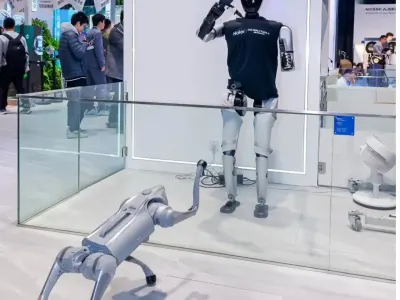
Hiva Haiwa runs about 4 hours per charge, and Mirokaï lists the same 4 hours. Design priorities ensure prolonged operation suitable for continuous home or service use. Hiva Haiwa's sensors include RGB cameras, stereo cameras and force sensors. Hiva Haiwa's listed uses include teleoperated clothes folding, dish sorting and imitation-learning data collection. Mirokaï's listed uses include reception and greeting, visitor engagement, demo hosting and light delivery. Mirokaï's mobility type is wheeled. Hiva Haiwa navigates with visual odometry and inertial measurement unit.
Use-Case Suitability
Mirokaï
Hiva Haiwa excels in household tasks including cleaning, laundry folding, cooking assistance, and appliance management within smart homes. Mirokaï targets public space applications like visitor guidance, tray carrying, repetitive manipulation, and social engagement. Hiva Haiwa suits private domestic environments, while Mirokaï fits collaborative service settings. Mirokaï's sensors include 2 RGB-D cameras, 2 infrared cameras, 9 time-of-flight cameras and 6 ultrasonic sensors. Hiva Haiwa's control method is listed as remote teleoperation, AI-assisted autonomous control, app control. Mirokaï's control method is listed as autonomous navigation, teleoperation, learned behaviors via AI.
Software Ecosystem
Hiva Haiwa
Hiva Haiwa runs a Linux-based OS with ROS integration and Python and C++ APIs, and it connects to Haier's smart-home cloud and app, with imitation-learning data collected under teleoperation. Mirokaï uses a custom Linux OS with ROS2 compatibility and Python and C++ APIs for programming, and it refines motion policies and scripted behaviours. Both provide robust development frameworks, with Hiva Haiwa emphasising ecosystem integration and Mirokaï emphasising programmable service behaviours.
Pricing & Value
Mirokaï
Hiva Haiwa is a research prototype and is not commercially available, so it has no price. Mirokaï starts at US $30,000 plus monthly maintenance fees and is sold to care facilities through Enchanted Tools' team, so long-term costs rise over time. Mirokaï is the one a buyer can actually order, as a 26 kg, 123 cm wheeled robot with 4 hours of runtime and a 1.5 kWh battery. Hiva Haiwa is a research reference for teleoperated household tasks.
Capabilities & Operational Tasks
Head-to-head comparison of what Hiva Haiwa and Mirokaï can do, their applications, and capabilities.
What Can Hiva Haiwa & Mirokaï Do?
134 tasks listed for both, 5 only for Hiva Haiwa, 4 only for Mirokaï.
Tap a circle area to filter the lists
Only Hiva Haiwa
Not listed for the other robot
Shared by both
Listed for Hiva Haiwa and Mirokaï
Only Mirokaï
Not listed for the other robot
Technical Specifications
Hiva Haiwa and Mirokaï differ on 29 of the 34 specifications listed for both.
Manipulation & Load Capacity
3 Comparative Metrics
Kinematic Architecture & Dexterity
3 Comparative Metrics
Energy & Power Management
7 Comparative Metrics
Frequently Asked Questions
Can I buy Hiva Haiwa or Mirokaï today?
Mirokaï is sold through a sales quote. There is no public way to buy Hiva Haiwa as of Nov 2026.
Which is lighter, Hiva Haiwa or Mirokaï?
Mirokaï is lighter at 26 kg, compared with 70 kg for Hiva Haiwa.
Which uses is each robot marketed for, Hiva Haiwa or Mirokaï?
Only Hiva Haiwa is marketed for research labs and education and training. Both suit home help and elder care, hospitality, retail and public-facing roles and healthcare settings, so compare the specs for that use.
How much does Mirokaï cost?
Mirokaï is listed at $30,000.
Where can I buy Mirokaï?
Mirokaï is sold through Enchanted Tools's sales team; request a quote.
Which is faster, Hiva Haiwa or Mirokaï?
Mirokaï is faster, with a top speed of 0.9 m/s (3.2 km/h), against 0.6 m/s (2 km/h) for Hiva Haiwa. Top speed is the maker’s stated maximum, so everyday pace depends on the task and the terrain.
Related Comparisons

Mirokaï vs Hobbs W1(Guidance Expert)
Head-to-head: Mirokaï vs Hobbs W1(Guidance Expert) compared on bipedal balance, AI learning, dexterity, payload, and real-world service deployment.
Mirokaï vs RobotEra Q5
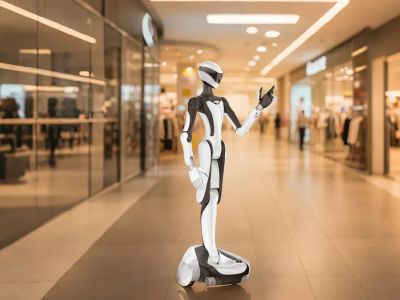
Which robot wins? Mirokaï vs Q5 compared across sensors, navigation, speed, battery, and price for service robotics applications.
Hiva Haiwa vs RobotEra Q5
In-depth comparison of Hiva Haiwa by Haier and Q5 by Robot Era. Analyze sensors, navigation, speed, and software capabilities.
Mirokaï vs TIAGo Pro
Mirokaï or TIAGo Pro? Compare specs, navigation, battery, and sensors.
Verdicts reflect our research and opinion. Confirm specifications with the manufacturer before buying.