Next-Gen IRON vs T800 at a glance
Next-Gen IRON has more degrees of freedom (82 against 25–46 for T800), which allows finer movement. Next-Gen IRON is lighter at 70 kg, compared with 75–85 kg for T800.
Which one fits your use?
Based on the uses each robot is built and marketed for. Open a use to see the specs that matter for it.
| Comparing for… | Next-Gen IRON | T800 |
|---|---|---|
| Suited | Suited | |
| Suited | Suited | |
| Suited | Not listed | |
| Not listed | Suited |
- Pick Next-Gen IRON for hospitality, retail and public-facing roles.
- Pick T800 for hazardous or high-risk work.
- Both suit research labs and education and training, so compare the specs for that use.
The Next-Gen IRON by XPENG positions itself as an advanced humanoid robot leveraging automotive AI expertise for versatile applications in customer guidance, sales assistance, industrial inspection, healthcare support, and research. Its market positioning emphasizes bionic design with 178 cm height, 70 kg weight, and unique features like touch sensors embedded in skin and indoor SLAM navigation. Key differentiators include slightly higher max walking speed of 6 km/h and comprehensive sensor suite enabling precise environmental interaction.
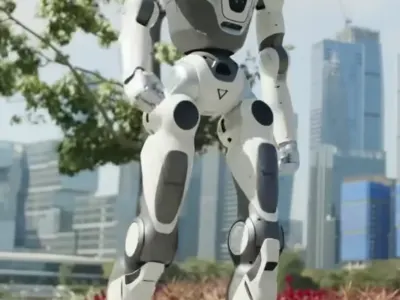
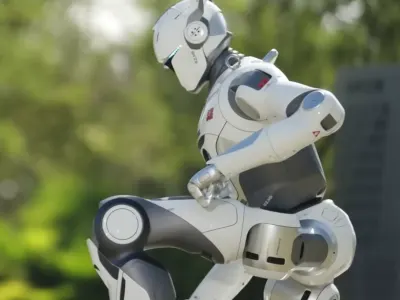
The T800 by EngineAI targets robust applications such as heavy-duty industrial tasks, robot boxing, retail assistance, human-robot interaction, and logistics automation, establishing its place in demanding physical environments. With dimensions of 185 x 60 x 40 cm and 85 kg weight, it offers a more substantial build suited for strength-oriented roles. Differentiators encompass its focus on heavy-duty capabilities and comparable control modes including autonomous operation and learned behaviors.
Detailed Analysis
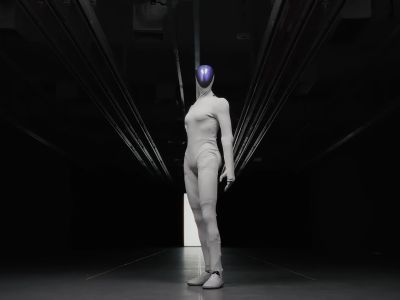
Next-Gen IRON
Design & Build Quality
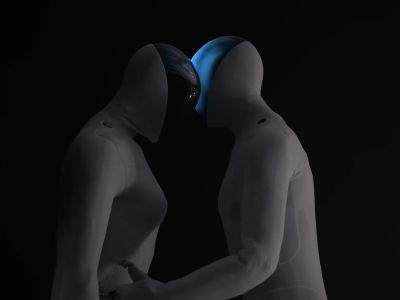
Next-Gen IRON measures 178 x 45 x 35 cm and weighs 70 kg, providing a lighter and slimmer profile compared to T800's 173 cm, 75–85 kg build. Both feature humanoid structures, but Next-Gen IRON includes touch sensors embedded in skin for enhanced tactile feedback. T800's heavier frame aligns with its heavy-duty use cases, while Next-Gen IRON prioritizes agility in varied environments.
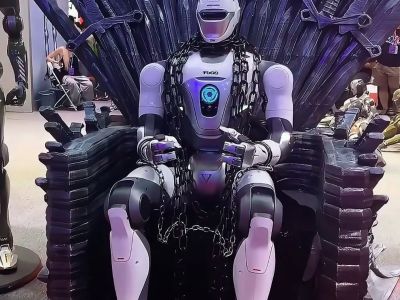
T800
Mobility & Navigation
Next-Gen IRON achieves a maximum walking speed of 7 km/h (1.9 m/s) using Visual SLAM, LiDAR mapping, and indoor SLAM, close to T800's 2 m/s or more with Visual SLAM and LiDAR mapping. Both support autonomous navigation, but Next-Gen IRON's additional indoor SLAM enhances precision in confined spaces. This enables Next-Gen IRON for customer guidance, while T800 suits logistics automation.
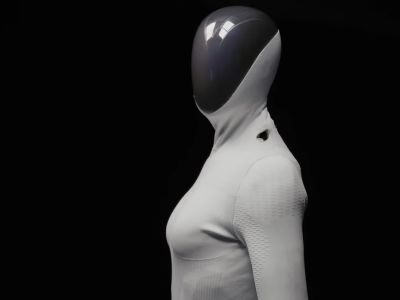
Next-Gen IRON
Sensors & Perception
Next-Gen IRON equips RGB cameras, stereo cameras, LiDAR, ultrasonic sensors, IMU, gyroscope, force sensors, temperature sensors, and touch sensors embedded in skin. T800 includes RGB cameras, stereo cameras, LiDAR, ultrasonic sensors, IMU, gyroscope, force sensors, and temperature sensors, lacking embedded touch sensors. The extra tactile sensing in Next-Gen IRON supports healthcare and interaction tasks.
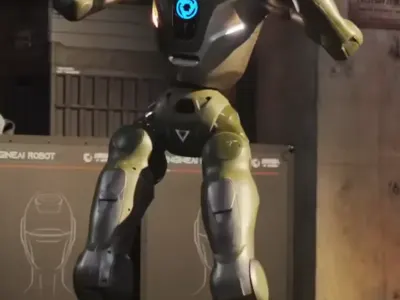
T800
AI Capabilities
Both robots offer autonomous control, teleoperation, and learned behaviors, with proprietary OS based on ROS2 supporting Python and C++ APIs. Next-Gen IRON's control includes explicit indoor navigation advantages, while T800 emphasizes heavy-duty learned behaviors for industrial tasks. Shared software foundations enable similar AI extensibility.
Next-Gen IRON
Battery & Power Efficiency
This equivalence supports extended deployments in industrial inspection or logistics. Neither specifies runtime per charge, focusing instead on overall endurance.
T800
Use-Case Suitability
Next-Gen IRON targets customer guidance, sales assistance, industrial inspection, research, and healthcare support, leveraging its lighter build and tactile sensors. T800 focuses on heavy-duty industrial tasks, robot boxing, retail assistance, human-robot interaction, and logistics automation, benefiting from its robust 85 kg frame. Overlaps exist in retail and interaction, but specialization drives distinct applications.

Next-Gen IRON
Pricing & Value
Next-Gen IRON is priced at $120,000 to $150,000, well above T800's $25,000 to $80,000 range. The premium for Next-Gen IRON reflects added sensors and speed, while T800 offers value for heavy-duty needs. Both fall in the high-end humanoid market segment.
T800
Safety Features
Both robots include force limiting, collision detection, emergency stop, and collaborative mode for safe human interaction. Shared safety protocols enable co-working in industrial and retail settings. No additional differentiators are specified.
Capabilities & Operational Tasks
Head-to-head comparison of what Next-Gen IRON and T800 can do, their applications, and capabilities.
What Can Next-Gen IRON & T800 Do?
96 tasks listed for both, 2 only for Next-Gen IRON, 1 only for T800.
Technical Specifications
Next-Gen IRON and T800 differ on 28 of the 54 specifications listed for both.
Functional Utility & Use Cases
4 Comparative Metrics
Manipulation & Load Capacity
4 Comparative Metrics
Kinematic Architecture & Dexterity
4 Comparative Metrics
Related Comparisons
Next-Gen IRON vs Jupiter
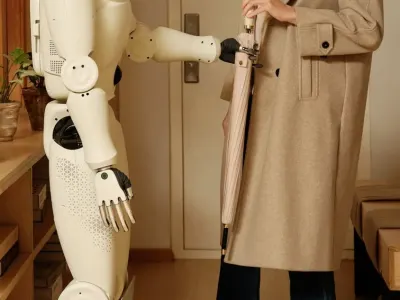
Which humanoid robot is better? Next-Gen IRON vs Jupiter compared for dexterity, AI autonomy, payload, and industrial use cases.
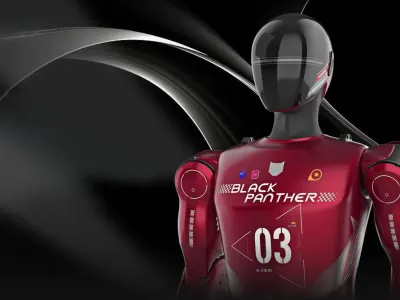
Next-Gen IRON vs Bolt
Compare Next-Gen IRON vs Bolt for humanoid mobility, dexterity, autonomy, and payload capacity in industrial and dynamic use cases.
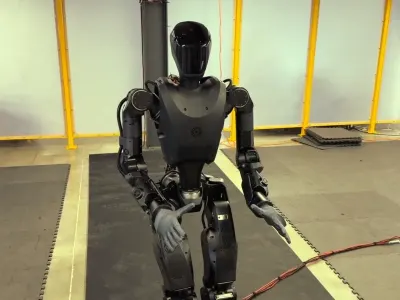
T800 vs Phantom MK1
Compare T800 by EngineAI vs Phantom MK1 by Foundation for humanoid mobility, dexterity, autonomy, payload, and industrial vs defense use cases.
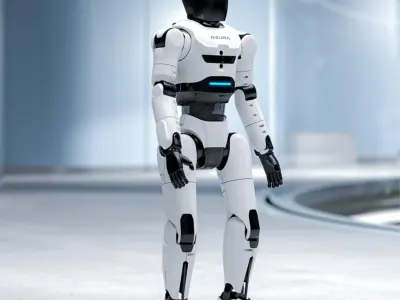
T800 vs 4NE-1 Mini
T800 or 4NE-1 Mini? See which humanoid robot performs better for manufacturing, logistics, and research with comparisons on dexterity, autonomy, and payload.
Verdicts reflect our research and opinion. Confirm specifications with the manufacturer before buying.