Walker S1 vs AgiBot A2 Lite at a glance
AgiBot A2 Lite is the more affordable option at $44,560, while Walker S1 costs $50,000–$150,000. Walker S1 has more degrees of freedom (41 against 23 for AgiBot A2 Lite), which allows finer movement. Walker S1 is quicker, with a top speed of 1.4 m/s versus 0.8 m/s for AgiBot A2 Lite. AgiBot A2 Lite is lighter at 63 kg, compared with 76 kg for Walker S1.
Which one fits your use?
Based on the uses each robot is built and marketed for. Open a use to see the specs that matter for it.
| Comparing for… | Walker S1 | AgiBot A2 Lite |
|---|---|---|
| Suited | Not listed | |
| Suited | Not listed | |
| Not listed | Suited |
- Pick Walker S1 for warehouse and logistics work and factory and manufacturing work.
- Pick AgiBot A2 Lite for hospitality, retail and public-facing roles.
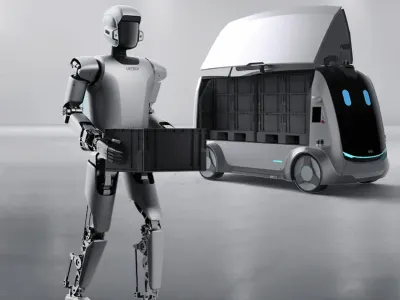
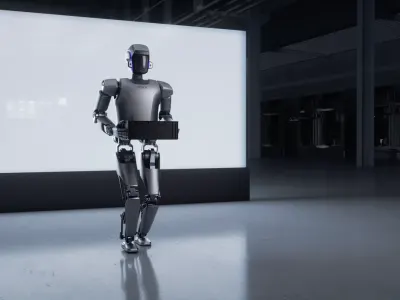
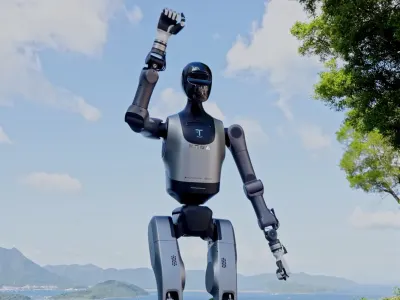
UBTECH Robotics built Walker S1 for factory floors. The bipedal humanoid is 172 cm tall and 76 kg, moves 41 joints, handles 15 kg loads and has already worked on car assembly lines at BYD, Geely, Audi-FAW and other carmakers.
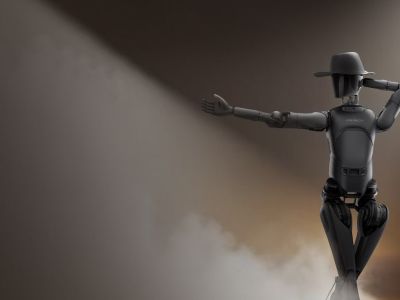
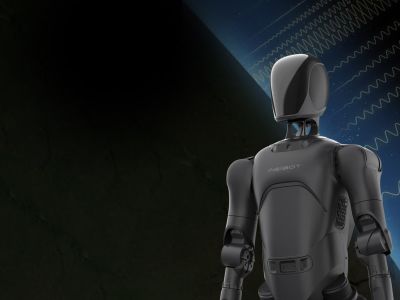
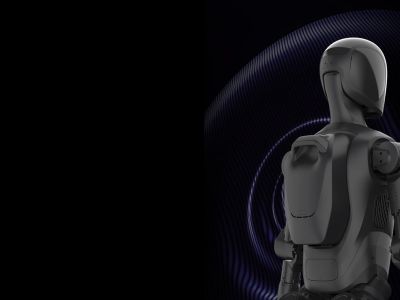
AgiBot A2 Lite is a performance-focused version of AgiBot's A2 bipedal humanoid, sold through AgiBot's global store at $44,560. It stands 169 cm tall, weighs 63 kg, has 23 degrees of freedom and walks at up to 0.8 m/s. It has no perception or speech AI; instead it ships with routines such as handshakes, tai chi and Peking opera for entertainment and commercial performances.
Detailed Analysis
Walker S1
Design & Build Quality
Both are bipeds of similar height, but they are built for very different work. Walker S1 is 172 cm and 76 kg, with 41 degrees of freedom and 250 N·m joints for handling parts in factories. AgiBot A2 Lite is 169 cm and 63 kg, with 23 degrees of freedom (five in each arm, six in each leg and one in the head), joints producing up to 270 N·m and soft prosthetic hands. Walker S1's extra 18 joints go into dexterous hands and a more capable upper body, while A2 Lite keeps things simple for performing set routines.
AgiBot A2 Lite
Mobility & Navigation
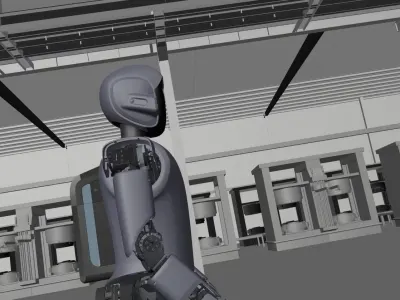
Walker S1 walks on two legs and finds its way with two-stage semantic VSLAM, which builds an object-aware map from its cameras. AgiBot A2 Lite walks at up to 0.8 m/s, or 0.6 m/s or less in daily use, under remote control or autonomous walking. It needs flat floors with steps of no more than 20 mm, slopes of no more than 8% and passages wider than 1 m under remote control or 2 m when walking on its own. Walker S1 is built to navigate a working factory, while A2 Lite needs a prepared stage or open floor.
Walker S1
Sensors & Perception
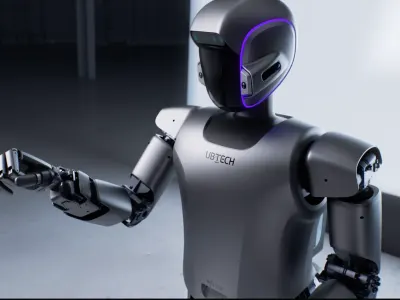
Walker S1 has one of the fuller published sensor sets among humanoids: RGB-D cameras in its head and chest, stereo and panoramic fisheye cameras for 360° vision, six-axis force sensors in its wrists and ankles and tactile arrays in its hands. AgiBot lists perception as not supported on the A2 Lite, so it has no camera-based vision package at all. A2 Lite cannot see or react to objects around it. That alone rules it out for any task that needs the robot to find, recognise or handle things.

AgiBot A2 Lite
AI Capabilities
Walker S1 relies on a large language model to plan tasks, learning-based whole-body control to move, and UBTECH's BrainNet to share work with other units. AgiBot A2 Lite has no speech or perception AI; it performs pre-built routines from an action library, and new moves can be recorded through an optional VR teleoperation kit. Walker S1 decides what to do based on what it sees. A2 Lite replays movements it has been given, which is exactly what a performance robot needs.
Walker S1
Battery & Power Efficiency
AgiBot A2 Lite runs for about 1.5 hours of walking, or 4 hours 35 minutes standing, on a hot-swappable 14.4 Ah battery that recharges in 2 hours. UBTECH has not published Walker S1's battery capacity or runtime; it charges through a fast-charging port on its back. A2 Lite's swappable battery means a spare pack can keep shows going back to back. Walker S1's endurance on a full shift is something to confirm with UBTECH.
AgiBot A2 Lite
Use-Case Suitability
Walker S1 is a factory worker, with trials at carmakers such as BYD, Geely and Audi-FAW handling parts, carrying totes and helping with inspection. AgiBot sells the A2 Lite for entertainment, cultural and commercial performances, with routines such as handshakes, tai chi, Peking opera and optional dances. These two robots do not compete for the same job. Choose Walker S1 for car-factory handling, inspection and assembly, or A2 Lite for scripted performances and entertainment.
Walker S1
Software Ecosystem
Walker S1 runs UBTECH's ROSA 2.0 application framework and connects to factory management systems, AMRs and AGVs. AgiBot A2 Lite is deployed through AgiBot's AIMMASTER client, with optional group-control software that times several robots together and a skill-pack shop for new routines. UBTECH's software is about joining a production system. AgiBot's is about staging and choreographing shows.
AgiBot A2 Lite
Safety Features
Walker S1's safety kit is an emergency stop button on its back, six-axis force sensors in its wrists and ankles and tactile sensors in its hands. AgiBot A2 Lite has a low-power alarm, self-balancing, collision avoidance and a wireless emergency stop switch, and its joint modules are rated IP5X against dust. A2 Lite's wireless stop lets an operator halt a performance from a distance. Walker S1's force and touch sensing are aimed at handling parts safely next to factory staff.
Capabilities & Operational Tasks
Head-to-head comparison of what Walker S1 and AgiBot A2 Lite can do, their applications, and capabilities.
What Can Walker S1 & AgiBot A2 Lite Do?
141 tasks listed for both, 11 only for Walker S1, 2 only for AgiBot A2 Lite.
Technical Specifications
Walker S1 and AgiBot A2 Lite differ on 39 of the 53 specifications listed for both.
Functional Utility & Use Cases
4 Comparative Metrics
Manipulation & Load Capacity
4 Comparative Metrics
Kinematic Architecture & Dexterity
4 Comparative Metrics
Related Comparisons
AgiBot A2 Lite vs Kaleido 8.0
AgiBot A2 Lite vs Kaleido 8.0: AgiBot's performance humanoid against Kawasaki's robust bipedal humanoid, compared on size, mobility, sensors, AI and best uses.
Walker S1 vs Kaleido 8.0
Walker S1 vs Kaleido 8.0: UBTECH's factory humanoid against Kawasaki's robust bipedal humanoid, compared on size, mobility, sensors, AI and best uses.

Walker S1 vs AgiBot G2
Walker S1 vs AgiBot G2: UBTECH's factory humanoid against AgiBot's wheeled precision-assembly humanoid, compared on size, mobility, sensors, AI and best uses.
Walker S1 vs Walker Tienkung
Walker S1 vs Walker Tienkung: UBTECH's factory humanoid against UBTECH's full-size research humanoid, compared on size, mobility, sensors, AI and best uses.
Verdicts reflect our research and opinion. Confirm specifications with the manufacturer before buying.