
Fourier N1
AI ChatLast updated:
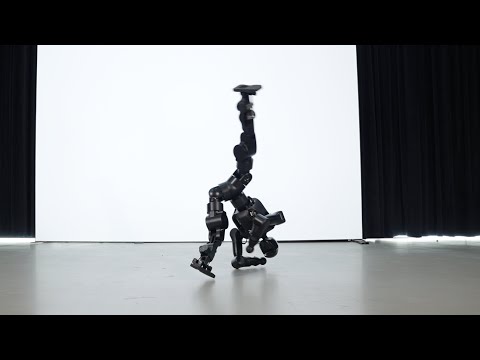
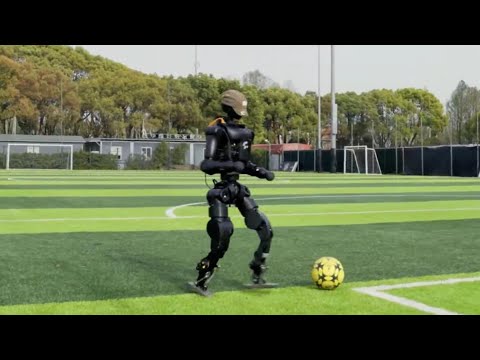
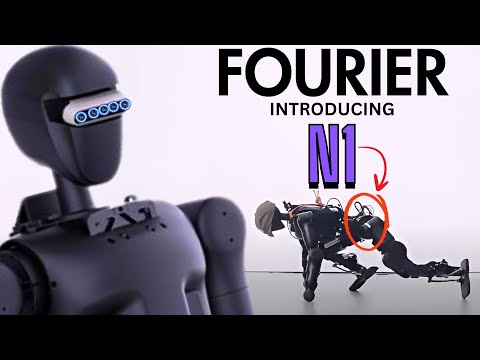
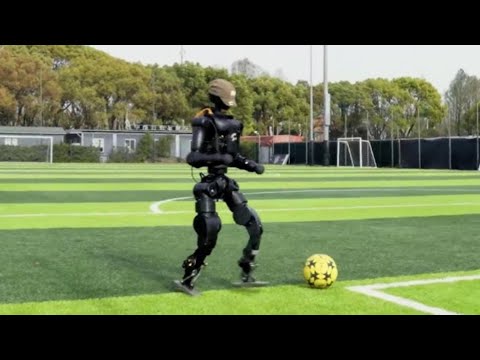
Fourier N1, also called Nexus-01, is the first open-source humanoid robot from Fourier in Shanghai, created for developers, researchers and robot enthusiasts who want to build on a real, full-body machine. It stands 1.3 meters tall, weighs about 38 kilograms and moves on two legs with 23 powered joints, so it can walk, run, climb stairs and keep its balance in ways that look surprisingly natural. Its lightweight frame mixes aluminum alloy with engineering plastics, and its strong joints let it run at up to 3.5 meters per second, handle slopes of 15 to 20 degrees, climb 20 centimeter steps without cameras to guide it, stand on one leg and even get back up on its hands. In demonstrations it has done cartwheels and street-dance moves. Fourier published the robot's bill of materials, structural drawings, assembly guide, core control software and base operating code, and it plans to open more modules such as whole-body motion control over time, so the community can modify and extend it. The head is left open on purpose, so owners can mount a stereo camera or other sensors of their own choice. Inside, an Intel Core i7 computer running Ubuntu handles control, powered by a lithium battery that runs it for around two hours. Fourier presents N1 as the entry point to its humanoid ecosystem, aimed at lowering the barrier for newcomers after its industrial GR series.
Quick Overview & Key Facts
Fourier N1 is a humanoid robot made by Fourier Intelligence in China, launched in 2025 and built for open-source humanoid development; locomotion and whole-body control research; reinforcement-learning and sim-to-real experiments; education and robotics training; entertainment and demonstrations. Its estimated price is USD 10,000 – 20,000. Featured in “Best Chinese Humanoid Robots in 2026: 10 Models Ranked by What You Can Actually Get”.
- Dimensions
- Height 1.3 m; body 1245 mm × 441 mm × 202 mm; arm span 1240 mm
- Weight
- About 38–39 kg
- Mobility
- Bipedal walking and running (6 DoF per leg, 1 DoF waist)
- Handles
- Not publicly disclosed
- Battery runtime
- About 2 hours
- Charging time
- About 3.5 hours
- Sensors
- 6-axis IMU (acceleration and angular velocity); dual joint encoders (16-bit / 14-bit); optional stereo camera mounted on the open head
What Can Fourier N1 Do?
Core operational tasks and activities demonstrated or performed by Fourier N1.
Real-World Applications of Fourier N1
Industries, working environments, and deployment suitability for Fourier N1.
Fourier N1 Capabilities
Inherent physical, perceptual, and cognitive abilities built into Fourier N1.
Image Gallery
Below images are from Fourier Intelligence's official sources


Review Videos
Watch expert reviews and demonstrations of this robot
Robot Specifications
Values without a Confirmed badge are compiled from public sources and may not be manufacturer-verified.
Not yet published by Fourier Intelligence: warranty terms, safety certifications, EMC compliance, IP rating, noise level, expected lifespan, maintenance schedule, firmware version and 4 more.
Robot Timeline
Key milestones in this robot's development and rollout
Fourier unveils N1, its first open-source humanoid robot, releasing the bill of materials, structural blueprints, assembly guide and core control code.
Source: Yicai Global ↗
Fourier shows N1 performing cartwheels and street-dance moves in an official demonstration film.
Source: Fourier (YouTube) ↗
Fourier N1 vs RP1, Unitree G1+, Booster T2 and Genisom NE01
Fourier N1 overlaps with these alternatives on Consumer robotics and Education and training. Fourier N1 trails the closest alternatives on max speed and runtime.
Industries and capabilities are tags, not scores: a tick means the robot is listed for it. Green marks the best figure in a row (highest max speed and runtime; lowest weight). Ranges are not ranked.
| Spec | Fourier N1Fourier Intelligence | RP1RoboParty | Unitree G1+Unitree Robotics | Booster T2Booster Robotics | Genisom NE01Genisom AI |
|---|---|---|---|---|---|
| Industries | |||||
| Consumer robotics | Yes | No | Yes | No | No |
| Education and training | Yes | Yes | Yes | Yes | Yes |
| Research and development | Yes | Yes | Yes | Yes | Yes |
| Entertainment and events | Yes | Yes | Yes | Yes | Yes |
| Capabilities | |||||
| Bipedal locomotion | Yes | Yes | Yes | No | Yes |
| Developer friendly | Yes | Yes | No | No | Yes |
| Running | Yes | Yes | No | Yes | No |
| Stair climbing | Yes | Yes | No | Yes | No |
| Max Speed | 3.5 m/s | 4 m/s | — | 3 m/s | 2.5 m/s |
| Runtime | 120 min | 3 h | 120 min | 120 min | 120 min |
| Weight | 38–39 kg | 39 kg | 35 kg | 42–43 kg | 37 kg |
| Released | 2025 | 2026 | 2026 | 2026 | 2026 |
Notes such as conditions or alternate figures are left out and values are shown in common units; open each page for the full specs. Browse all Humanoid Robots
Fourier N1 Also Mentioned in Below Articles
Find out how this model stacks up against the world's best robots

More Robots from Fourier Intelligence
Explore other robots from this manufacturer
More Humanoid Robots
Discover more robots in the same category



Robots From Other Categories
Discover complementary robots from different categories that work well together
Frequently Asked Questions
Get answers to common questions about this robot
Q1. What is Fourier N1, and what problem is it designed to solve?
Fourier N1 is an open-source humanoid robot from Fourier, designed so developers and researchers can build, modify and learn on a full-body walking machine.
Q2. What are the main capabilities and key features of Fourier N1?
It walks and runs on two legs, climbs stairs and slopes, balances on one leg and performs acrobatic moves, and its hardware and control code are published for the community.
Q3. Who is Fourier N1 built for, and which industries can benefit from it?
It is built for developers, universities, hobbyists and research labs, and it also suits robotics education and demonstration projects.
Q4. Is Fourier N1 a commercial product or still a research prototype?
It is a real product that Fourier released for the developer community, with open hardware and software that owners can extend.
Q5. Is Fourier N1 currently available for purchase, and when is it expected to ship?
Fourier offers it in different kit and platform options, and interested buyers should contact the company for current pricing and delivery.
Q6. How does Fourier N1 actually work in real-world environments?
Its joints, battery and computer sit inside a lightweight aluminum and plastic body, and open-source control software keeps it balanced while it walks and runs.
Q7. When was Fourier N1 announced or officially launched?
Fourier unveiled N1 in April 2025 as the first open-source robot in its lineup.
Q8. How is Fourier N1 different from other robots in the same category?
Unlike Fourier's larger industrial GR series, N1 is compact, open-source and aimed at newcomers who want to learn and experiment.
Q9. Does Fourier N1 require additional development or customization after purchase?
Owners can add their own camera or sensors to the open head and modify the published software and hardware designs to suit their projects.
Q10. What is the future roadmap or planned upgrades for Fourier N1?
Fourier plans to release more modules over time, including whole-body motion control and multi-task coordination, and to grow its developer community.
Rating and Reviews
Share your experience and help others decide!
Loading...
User Reviews
No user reviews. Be the first one to review!
User Comments (No Login needed)
Share your thoughts, experiences, or questions about this robot.
Comments appear after moderator review.