Best Chinese Humanoid Robots in 2026: 10 Models Ranked by What You Can Actually Get

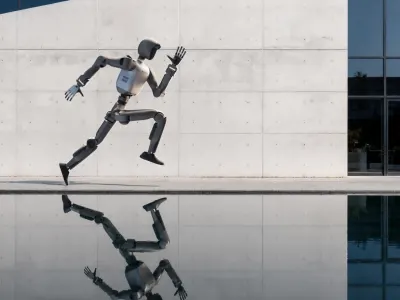
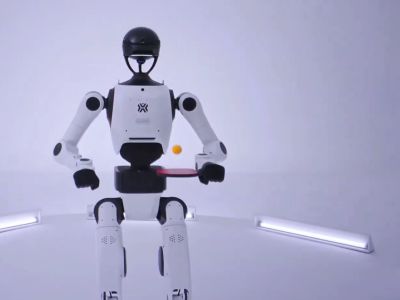
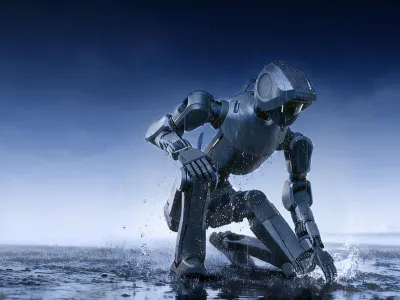
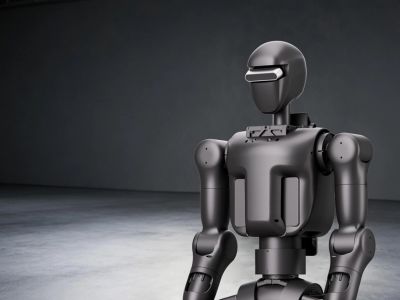
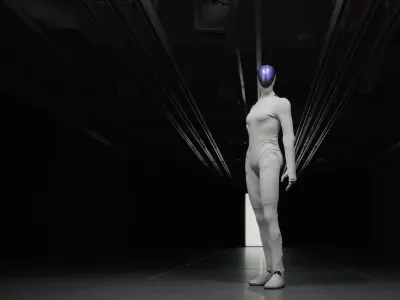
The Short Answer: UBTECH's Walker S2 Is Most Proven
The best Chinese humanoid robot in 2026 is the UBTECH Walker S2, because it is already being delivered to paying customers. UBTECH has delivered hundreds of units to carmakers and electronics factories since mid-November 2025, and its orders for the robot exceed 800 million yuan. EngineAI's T800 and the Unitree G1+ come next, since both are sold openly by their makers.
China now has hundreds of humanoid models, so this list keeps ten. They are ranked by how real each one is today, from robots in customer hands to robots announced for later. The table below gives the quick comparison, and each robot gets a short profile after it.
Quick Overview
Ten Chinese humanoids, ranked by how real each one is today. The last column shows how a buyer can get it.
| Rank | Robot | Manufacturer | Key Strength | Best For | Availability |
|---|---|---|---|---|---|
| #1 | 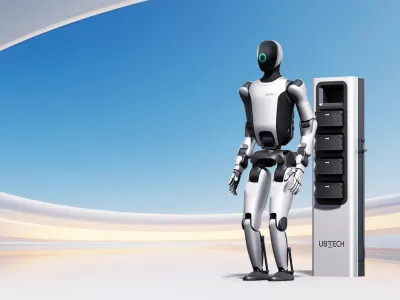 Walker S2 | UBTECH Robotics | Hundreds delivered, swaps its own battery | Factory and warehouse work | Delivered to customers |
| #2 |  T800 | EngineAI | First batch shipped from a plant built for 10,000 units | Heavy industrial tasks | Sold online |
| #3 |  Unitree G1+ | Unitree Robotics | Compact 134 cm robot sold through the maker's store | Research and education | Sold online |
| #4 |  AgiBot A3 | AgiBot | Up to 10 hours of running with a 10-second battery swap | Long shifts and demonstrations | By sales quote |
| #5 | 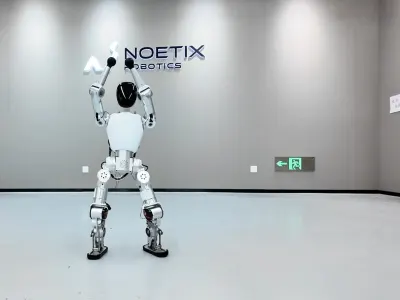 Bumi | Noetix Robotics | 94 cm, 12 kg, launched under 10,000 yuan | Schools and homes | By sales form |
| #6 |  Booster T2 | Booster Robotics | 31 joints and NVIDIA Thor compute | Embodied AI research | By inquiry form |
| #7 |  Embodied Tien Kung 3.0 | X-Humanoid | Touch-interactive whole-body control, open platform | Research and guide work | By sales contact |
| #8 |  DR02 | Deep Robotics | Whole body rated IP66 against dust and water jets | Outdoor industrial work | By inquiry |
| #9 |  Fourier N1 | Fourier Intelligence | Open parts list, drawings and control code | Developers and hobbyists | By sales quote |
| #10 | 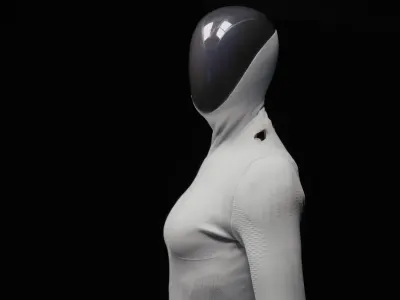 Next-Gen IRON | XPENG | 22 joints in each hand, human-like spine | Retail and service roles | Mass production planned for end of 2026 |
Only a few of these are delivered or sold openly today. The rest are launched and orderable or still announced, so check the availability column before you plan around any of them.
Explore the Robots
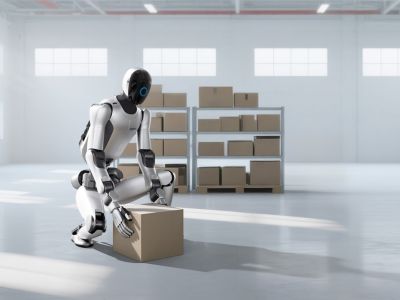
Walker S2
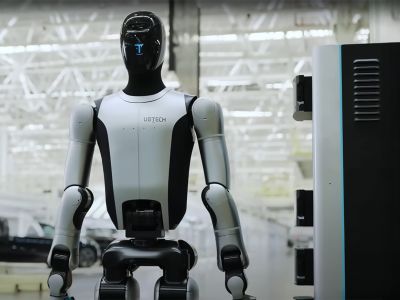
The Walker S2 ranks first because it is the only robot here with a large delivery record. UBTECH has delivered hundreds of units since mid-November 2025 and says orders exceed 800 million yuan. Its customers include BYD, Geely, FAW Volkswagen, Dongfeng and Foxconn, which use it in assembly lines, warehouses and logistics. The robot stands 176 cm tall, weighs 73 kg and lifts 15 kg per arm. Its best feature is a battery system that lets it swap its own battery without a person, so it can keep working. Each battery runs about 2 hours. The limits are its size, which needs clear floor space, and a sales route that goes through UBTECH directly. It suits car plants, electronics factories and logistics sites that want a proven worker.

T800
The T800 ranks second because EngineAI has moved from testing to shipping. In June 2026 the company opened its Shenzhen plant and rolled out the first batch of T800 robots, with a target of 10,000 units of delivery capacity and a line that EngineAI says can finish one robot every 15 minutes. The T800 stands 173 cm tall and runs up to 4 hours. It comes in several editions, from Basic to Max, and is sold through EngineAI's purchase page and JD.com. The maker designs it for heavy and high-motion work. Its limits are the weight, 75 to 85 kg depending on the edition, and the very short time the plant has been running. It suits buyers who want an openly sold full-size robot.

Unitree G1+
The Unitree G1+ ranks third because Unitree sells it through its own online store. This is the 2026 upgrade of the G1, the compact robot that research labs know best. It stands 134 cm tall, weighs about 35 kg with its battery and has 25 joints, and the EDU version offers 25 to 45 depending on the hand and waist options. Each arm lifts about 3 kg. The battery runs about 2 hours, and an external power supply covers longer work. The limits are the small size, which rules out heavy tasks, and the short battery. It suits university labs, robotics teams and schools that want a well-supported, widely used platform they can order directly.

AgiBot A3
The AgiBot A3 ranks fourth because its maker lists it for sale and publishes the strongest running-time numbers on this list. AgiBot says it runs up to 10 hours on two batteries, swaps a battery in 10 seconds and can work around the clock with hot swaps. The robot stands 173 cm tall and weighs 55 kg, light for its height thanks to magnesium and titanium alloys. It can also do somersaults, and the maker says one system can coordinate more than 100 robots. Buyers order it through AgiBot's store and sales team. Its limit is the sales route, which starts with a quote. It suits sites that want long shifts and operators who plan fleets.
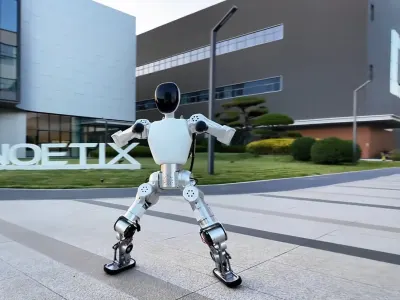
Bumi
The Bumi ranks fifth because it is the only humanoid here made for ordinary homes and schools. Noetix launched it in October 2025 as the first high-performance humanoid under 10,000 yuan. It stands 94 cm tall, weighs 12 kg, walks on two legs and can dance. The maker aims it at education and home use, and builds it from lightweight composite materials. Each arm lifts 1.5 kg and the battery runs about 1.5 hours. The limits are clear: it is small, light and meant for demonstrations, learning and play, not for work. It suits schools, families and young engineers who want a first humanoid, and buyers contact Noetix through its sales form.

Booster T2
The Booster T2 ranks sixth because it launched in July 2026 and is orderable, but it is new. It stands 140 cm tall, weighs 42 to 43 kg and has 31 joints, with an NVIDIA Thor chip that delivers up to 2,070 TFLOPS of onboard computing. That chip lets the robot run its vision and decision software on its own body. It walks for about 2 hours and takes dexterous hands as an option. Booster sells it through an inquiry form in several versions. The limits are its short time on the market and the walking time. It suits research labs and robotics teams that already know Booster's smaller robots and want a bigger platform.

Embodied Tien Kung 3.0
The Embodied Tien Kung 3.0 ranks seventh because it is a major 2026 launch with an open design but few public deployment details. The Beijing government says it launched in February 2026 and calls it the first full-size humanoid capable of touch-interactive, high-motion whole-body control. X-Humanoid has committed to opening key parts of its software and the Wise KaiWu AI platform. The robot stands 169 cm tall, weighs 62 kg, has 43 joints and lifts 15 to 20 kg per arm. It runs 1.5 to 2 hours. The limits are the short battery and the sales route, which goes through a business contact. It suits research teams and guide or reception work.

DR02
The DR02 ranks eighth because its strength is narrow but real. Deep Robotics announced it in October 2025 and describes it as the first humanoid with an IP66 rating for the whole machine, which means it is sealed against dust and strong water jets. The arms and legs are modular, so a damaged limb can be swapped quickly. The robot stands about 175 cm tall and lifts 10 kg with its whole body. Deep Robotics takes orders by inquiry. The limits are the weight, 75 kg, and the focus on harsh settings, which makes it less natural for a classroom or an office. It suits outdoor inspection, factories with dust or washdowns, and rescue teams.

Fourier N1
The Fourier N1 ranks ninth because it is a 2025 robot with an unusual offer: Fourier published its parts list, structural drawings, assembly guide, core control system and base operating code. Yicai reported the launch in April 2025 and described it as the company's first open-source humanoid, aimed at developers and hobbyists, in contrast to Fourier's industrial GRx robots. The N1 stands 1.3 m tall, weighs 38 kg and has 23 joints. Its battery runs about 2 hours. The limits are its age, since newer robots have launched since, and the effort needed to build on open code. It suits developers who want to see and change how a humanoid works.

Next-Gen IRON
The Next-Gen IRON ranks tenth because XPENG has unveiled it but not yet put it into mass production. XPENG showed it on 5 November 2025 and said large-scale production would start by the end of 2026. The robot is built to look and move like a person, with a human-like spine and muscle system, a flexible outer skin, a curved display in its head and 22 joints in each hand. It stands 178 cm tall, weighs 70 kg and runs 4 hours. XPENG designs the robot in-house. The limit is timing: buyers cannot order it yet. It suits readers who follow where Chinese carmakers are heading with robots.
How to Choose Between Them
Start with what you need the robot to do. For factory work, look at the Walker S2, the T800 and the DR02, which are all built for industrial settings. For research and teaching, the Unitree G1+, Booster T2, Fourier N1 and Bumi are the usual picks, because they are smaller, easier to program and made for labs and classrooms.
Next, check how you can buy it. Unitree sells the G1+ through its own website, EngineAI sells the T800 through its purchase page and on JD.com, and UBTECH, AgiBot, Booster, X-Humanoid and Deep Robotics take orders through sales contacts. A robot you can order today beats one that is only announced, however good the demo video looks.
Think about running time and charging. The AgiBot A3 can run up to 10 hours with a 10-second battery swap, and the Walker S2 changes its own battery without help. The Unitree G1+ and the Booster T2 run about 2 hours, which suits a lab session but not a shift. If the robot will work all day, battery design matters more than most other specs.
Match the size to the room. The Bumi stands 94 cm tall and weighs 12 kg, while the Walker S2, T800, AgiBot A3 and DR02 stand 173 to 176 cm. Adult-sized robots need clear floor space, a trained operator and a safety plan, and a falling machine of 60 to 75 kg can cause real harm.
Look at how open the software is. The Fourier N1 publishes its parts list, drawings and control code, and X-Humanoid has committed to opening key parts of the Tien Kung platform. An open robot lets your team change how it behaves, while a closed one is easier to start with but harder to adapt.
A quick way to pick: the Walker S2 for a factory that wants a proven robot, the T800 for a buyer who wants an openly sold full-size robot, the Unitree G1+ for a research team, the Bumi for a school or a home, the Fourier N1 for developers who want to see the design, and the DR02 for outdoor and wet work.
How We Ranked These Robots
We started with the live humanoid robots in our database that are made by Chinese companies, then kept one model per maker so the list shows ten different companies. For each maker we used the newest model on our site that has solid public evidence. Robots that exist only as prototypes or research demos were left out.
The rank comes from how real the robot is today. A robot delivered in volume to paying customers ranks above one sold openly, which ranks above one that can be ordered after a launch, which ranks above one announced for later. Within the same level we looked at what the maker publishes about size, weight, battery life and software.
Size, weight and battery figures come from each maker's own product pages and launch material. Claims about deliveries and orders come from the news reports linked in our sources, and where a number is the maker's own claim we say so. We did not use our own page views to choose the robots, because views follow what we promote.
The list has limits. China makes hundreds of humanoid models and new ones launch every month, a robot ranked lower may suit your job better, and a delivery claim from a maker is not an independent count. We review the list as makers publish new results.
Frequently Asked Questions
What is the best Chinese humanoid robot in 2026?
The UBTECH Walker S2 has the strongest record, with customer deliveries under way and a large order book. For research, the Unitree G1+ is the most widely used, and for a full-size robot you can buy openly, look at the EngineAI T800. The best pick depends on whether you need factory work, a lab platform or a robot for a school.
Which Chinese humanoid robot can you buy today?
The Unitree G1+ is sold through Unitree's own online store, and the EngineAI T800 is sold through EngineAI's purchase page and JD.com. UBTECH, AgiBot, Booster, Noetix, X-Humanoid, Deep Robotics and Fourier take orders through sales forms or contacts. XPENG's IRON is not on sale yet.
Which Chinese humanoid robot is the smallest and easiest to start with?
The Noetix Bumi is the smallest here at 94 cm and 12 kg, and Noetix launched it for education and home use. The Unitree G1+ is the next smallest at 134 cm and about 35 kg, and it is the usual starting point for university labs. Neither is built for heavy work.
Which Chinese humanoid robot runs the longest on one battery?
The AgiBot A3 runs up to 10 hours, according to AgiBot, and its batteries swap in 10 seconds. The EngineAI T800 and XPENG IRON run about 4 hours. The Walker S2 runs about 2 hours per battery but swaps its own battery without help, which lets it keep working.
Are there open-source Chinese humanoid robots?
Yes. Fourier published the parts list, structural drawings, assembly guide and control code for the N1 in 2025. X-Humanoid has committed to opening key parts of the Tien Kung platform and its AI software. Open does not mean free to build, so check what is actually released before you plan a project.
Why do Chinese companies make so many humanoid robots?
China has hundreds of humanoid models, and Chinese makers such as UBTECH and EngineAI have moved from testing to factory production. Carmakers including BYD, Geely and FAW Volkswagen buy them for assembly work. Strong parts supply, government backing and falling robot costs also help new makers launch quickly, which is why this list changes often.
Sources
- Walker S2 Profile
- T800 Profile
- Unitree G1+ Profile
- AgiBot A3 Profile
- Bumi Profile
- Booster T2 Profile
- Embodied Tien Kung 3.0 Profile
- DR02 Profile
- Fourier N1 Profile
- Next-Gen IRON Profile
- UBTECH begins mass delivery of humanoid robots for industrial use
- Chinese humanoid robot manufacturer opens mass production plant
- AGIBOT A3
- China’s Noetix Robotics unveils $1,370 humanoid robot “Bumi”
- Beijing's Humanoid Robots See Another Upgrade: Next-Generation General-Purpose Robot 'Embodied Tien Kung 3.0' Launched
- DEEP Robotics unveils DR02 humanoid robot with all-weather capabilities
- Chinese Robotics Pioneer Fourier Unveils First Open-Source Android
- XPENG unveils next-generation humanoid robot IRON, to begin mass production by end of 2026
Related Articles
Which Humanoid Robots Are Built in Germany? 8 Models Compared for 2026
11/15/2026
Humanoid Robots With a Sense of Touch in 2026: Tactile Hands Compared
11/14/2026
Teleoperated Humanoid Robots in 2026: Which Ones a Person Can Drive Remotely
11/13/2026
Humanoid Robots That Teach Kids, Compared (2026)
11/18/2026
Best Humanoid Robots in 2026: Our Top 7 Picks, Ranked by Real Use
11/16/2026
Humanoid Robots With ROS 2 Support in 2026: Which Ones Really Work With It
11/16/2026