Which Humanoid Robots Are Built in Germany? 8 Models Compared for 2026


The Short Answer: Eight German Humanoids, and Two You Can Reserve Today
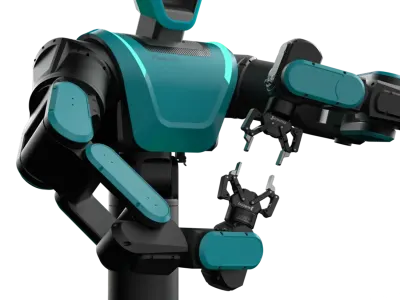
Germany now has eight humanoid robots from seven companies that matter in 2026. The two closest to a normal customer are both from NEURA Robotics in Metzingen: the 4NE-1 Mini, a child-sized walking humanoid that anyone can reserve online, and MiPA, a wheeled personal assistant robot with the same reservation page. Next come Devanthro's Robody, a remote-controlled home-care robot already tried in private homes, and the Agile ONE from Agile Robots in Munich, a factory humanoid sold by quote.
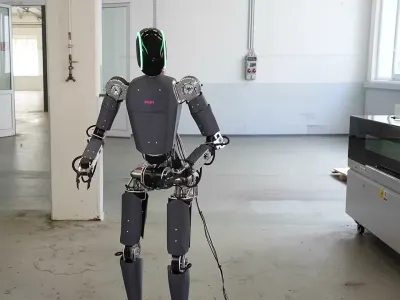
The rest are earlier. NEURA's 4NE1 Gen 4 was unveiled on October 22, 2026 and works in the company's own training gyms. The PLEXA One from Fruitcore Robotics in Konstanz is heading into its first customer projects. The P0 from Pink Robotics in Darmstadt is a prototype, and the Vesoma 1 from Vesoma in Munich is still being built. Germany is also strong in parts such as joints and hands, but this list covers only complete robots.
Quick Overview
The eight German humanoids side by side, in ranked order. Figures come from each maker's own pages and from news reports.
| Rank | Robot | Manufacturer | Key Strength | Best For | Where It Stands Today |
|---|---|---|---|---|---|
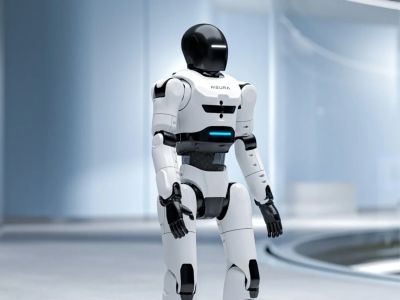
| #1 |  4NE-1 Mini | NEURA Robotics | 132 cm tall, 25 degrees of freedom, hot-swap battery | Schools, labs, demos | Reservations open; deliveries expected in 2026 |
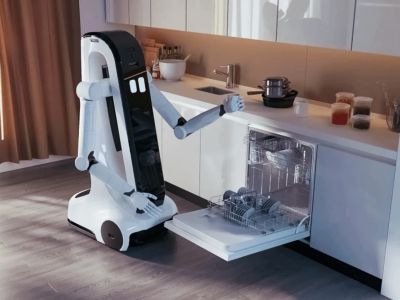
| #2 |  MiPA | NEURA Robotics | Wheeled base, 4 to 8 hours of runtime | Homes, offices, light carrying | Reservations open since June 2025 |
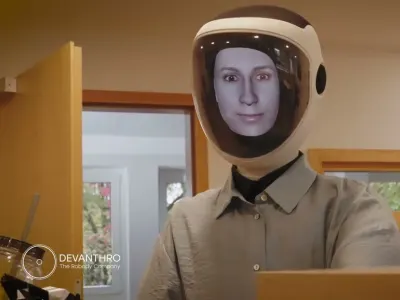
| #3 |  Robody | Devanthro | Remote VR driving with haptic hands, 6 hours of runtime | Home care for older adults | Tested in unmodified private homes |
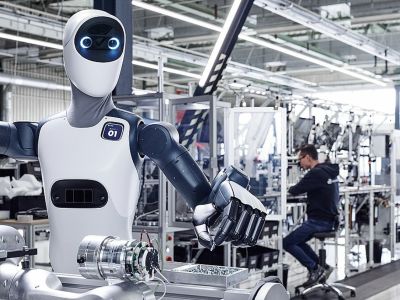
| #4 |  Agile ONE | Agile Robots | 21 joints per hand with fingertip and force sensing | Factory assembly and parts handling | Sold by quote; in-house production in Bavaria |
| #5 |  4NE1 Gen 4 | NEURA Robotics | 20 percent lighter than the last generation | Industrial work beside people | Working in NEURA gyms; series production being prepared |
| #6 |  PLEXA One | Fruitcore Robotics | 0.05 mm repeatability, IP54 or IP65 protection | Machine tending and assembly | First customer configurations due in late 2026 |
| #7 |  P0 | Pink Robotics | 32 degrees of freedom, 8 kg payload | Package sorting in distribution centers | Prototype; supermarket pilot being prepared |
| #8 |  Vesoma 1 | Vesoma | Learns skills with reinforcement learning on real hardware | Warehouse and factory shifts | Design complete; first units being built |
Only the two NEURA entries at the top have a public order page. Five of the eight robots walk on two legs and three use wheels or fixed bases, so decide on legs or wheels before you compare anything else.
Explore the Robots

4NE-1 Mini
The 4NE-1 Mini ranks first because it is the German humanoid anyone can reserve today. NEURA Robotics, based in Metzingen, built it as a compact, child-sized walking robot for classrooms, labs and demos. It stands 132 cm tall, weighs 36 kg, has 25 degrees of freedom, carries 3 kg per arm and walks at 3 km/h. NEURA lists a runtime of 2.5 hours on a hot-swappable battery, and a two-hour charge. In March 2026 it handed over a microphone and carried the match ball onto the pitch at a Bundesliga game between VfB Stuttgart and RB Leipzig. The standard version has no hands, and the Pro version adds dexterous hands with 12 degrees of freedom. Its limits are short battery life and light loads. It suits schools, universities and research teams.

MiPA
MiPA ranks second because NEURA has taken reservations for it since June 2025 and it is built for ordinary indoor places. It rolls on a wheeled base, stands about 150 cm tall, weighs 56 kg and reaches 5.4 km/h. NEURA lists a runtime of 4 to 8 hours depending on the load, with a swappable battery. Force and torque sensors in the wrists, a 360 degree laser scanner and a touchless safety system let it work near people, and it responds to voice and gesture commands. It carries trays, items and office deliveries, and add-ons such as a shelf or backpack extend its use. It does not walk or climb stairs. It suits homes, care settings and offices that need a friendly carrier.
Robody
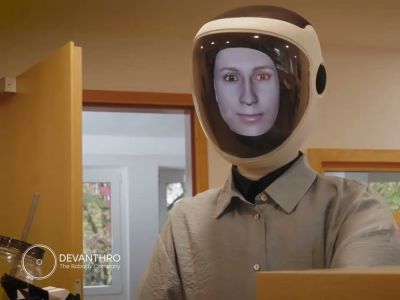
Robody ranks third because it has already worked in unmodified private homes. Devanthro, a German company, built it as a robot body that a person drives from far away. The operator wears a VR headset, sees through the robot's cameras, speaks in their own voice and moves both hands with haptic feedback. It stands 1.65 m tall, weighs 60 kg, rolls on a wheeled base and runs for 6 hours, then docks itself to charge in one to two hours. Each arm lifts light items up to 1.5 kg, such as cups, medication boxes and clothing. A soft skin and enclosed joints keep contact gentle. Its limit is that a person must operate it. It suits older adults who want daily help and family contact.

Agile ONE
The Agile ONE ranks fourth because it is a finished factory humanoid that Agile Robots sells by quote. The company, based in Munich and founded by experts from the German Aerospace Center, unveiled it on November 19, 2025 and planned to build it in its own facility in Bavaria. It stands 174 cm tall, weighs 69 kg and walks at up to 2.0 m/s. Its hands have 21 articulation points each, with fingertip sensors and force-torque sensors in every joint, so it can do both delicate and firm grasps. A layered AI system handles planning, quick reactions and fine motor control. The battery is not swappable. It suits electronics assembly, tool use and machine tending on a factory floor.

4NE1 Gen 4
The 4NE1 Gen 4 ranks fifth because it is brand new and works only inside NEURA's own training gyms for now. NEURA unveiled it on October 22, 2026 at the opening of the TUM RoboGym near Munich. The company says the new body is 20 percent lighter than the previous generation, with a black textile skin, advanced hands for more accurate grips and Smart Limbs that build reflexes into each limb. It stands about 180 cm tall, weighs about 65 kg and carries up to about 20 kg. Its Neuron AI model turns vision, touch, force and sound directly into movement. NEURA is preparing it for series production, and no runtime has been published. It suits future industrial work beside people.

PLEXA One
The PLEXA One ranks sixth because its first customer configurations are only due later in 2026. Fruitcore Robotics, based in Konstanz, introduced it on May 5, 2026 as the top version of its Industrial Humanoid Platform. It is built on the company's proven HORST600 G2 and HORST800 G2 industrial arms, giving a dual-arm setup with 14 to 16 axes, up to 7 kg per arm, 0.05 mm repeatability and IP54 or IP65 protection. It comes as a stationary unit or on an autonomous mobile platform that runs about 8 hours per charge. AI agents on the horstOS operating system plan and control its work. It does not walk. It suits machine tending, electronics assembly and warehouse parts handling.

P0
The P0 ranks seventh because it is a prototype from a very young company. Pink Robotics, a Darmstadt startup founded by engineer Christopher Helmke, introduced it in a video on August 24, 2026. It stands 1.75 m tall, weighs 82 kg, has 32 degrees of freedom and handles an 8 kg payload. It is aimed at sorting packages and bins in distribution centers, where its human proportions let it work in existing buildings. Its demonstrations are teleoperated while the company trains AI models for manipulation, and a pilot with a supermarket chain is being prepared. Its battery runs for about 1.5 to 2.5 hours per charge. It suits logistics teams that want to watch an early German design develop.

Vesoma 1
The Vesoma 1 ranks eighth because its first units are still being built. Vesoma, a Munich physical-AI company founded in December 2025, says the design is complete, with a product unveiling planned for early 2027. Its first prototype walked on a policy it learned by itself in June 2026. The robot is about 170 cm tall, weighs about 75 kg and uses a hot-swappable battery that runs 3 to 4 hours. A fabric-clad body and a faceless head give it a calm look. Vesoma trains it with reinforcement learning, where the robot tries, fails and improves, rather than copying human demonstrations. It aims first at warehouses and factories and suits companies that want to follow an early programme.
How to Choose Between Them
Start with the job. If you want a robot for a classroom, lab or demo stand, the 4NE-1 Mini is the only German humanoid here built for that, and it has already appeared in public at a Bundesliga match. If you want help at home or in a care setting, look at MiPA for light carrying on wheels, or at Robody if you want a real person to drive the robot remotely and help an older relative.
For factory work, the choice depends on how much you want the robot to walk. The Agile ONE and the 4NE1 Gen 4 walk on two legs and are built for human-sized workplaces. The PLEXA One is different: it grows out of industrial arms, so it offers high precision and a stationary or wheeled base rather than walking. That suits machine tending better than roaming a hall.
Check what stage the robot is at. A robot you can reserve, a robot in customer pilots and a prototype in a lab are very different things. The Vesoma 1 and the P0 are interesting bets, but neither is ready to order, and a buyer today would be paying for a promise.
Read the numbers that matter for real work: payload per arm, battery time and how the battery is changed. The 4NE-1 Mini lists 2.5 hours per charge with a hot-swappable battery, while MiPA lists 4 to 8 hours depending on the load. The Robody runs 6 hours and docks itself to charge, so it does not need a person to swap a pack.
Ask about support in your language and time zone. All of these makers build in Germany, so service visits, spare parts and safety paperwork can stay inside Europe, which many companies value. Before you commit, ask for a trial on your own floor.
A quick shortcut by need: for education and labs, pick the 4NE-1 Mini. For a wheeled helper at home or in an office, pick MiPA. For remote home care, pick Robody. For a factory humanoid with serious hands, talk to Agile Robots. For precise machine tending, ask Fruitcore Robotics about the PLEXA One.
How We Ranked These Robots
We started with every live humanoid on our site whose maker is based in Germany, then kept only the newest version of each product line. So the 4NE1 Gen 4 is listed and the earlier 4NE-1 is not. We left out the Minerva Humanoids Roger, because the company is headquartered in San Francisco and only builds its first prototypes in Germany, and we left out the research robot GARMI because it has no published weight, runtime or speed.
The order rewards how close each robot is to real customers. A robot you can reserve online ranks highest, then robots already in customer pilots, then robots sold by quote to factories, then robots used inside the maker's own sites, then robots heading into first customer projects, then prototypes and robots still being built. Where two robots sit at a similar stage, the one with more published specs ranks higher.
Every number in this article comes from the maker's own pages or from reporting by credible outlets, checked in November 2026. We did not rank on funding size, company claims such as first or best, or lab demonstration videos. The main limit is that German humanoids are young, so several robots have thin spec sheets, and a robot's position can change fast once it ships.
Frequently Asked Questions
Which companies make humanoid robots in Germany?
The main German humanoid makers in 2026 are NEURA Robotics in Metzingen (4NE-1 Mini, MiPA, 4NE1 Gen 4), Agile Robots in Munich (Agile ONE), Devanthro (Robody), Fruitcore Robotics in Konstanz (PLEXA One), Pink Robotics in Darmstadt (P0) and Vesoma in Munich (Vesoma 1). Only NEURA and Agile Robots have shown robots in public at scale. The others are in pilots, prototypes or early builds.
Can I buy a humanoid robot made in Germany today?
You can reserve two of them. NEURA takes reservations for the 4NE-1 Mini, listed at 19,999 euros for the standard version and 29,999 euros for the Pro, with a refundable 100 euro fee and deliveries expected in 2026. MiPA is listed at 9,999 euros on a reservation page. Agile ONE is sold by quote to industrial customers, and the other robots are not yet on sale.
Who is the biggest German humanoid robot maker?
NEURA Robotics is the best known. It has three robots on this list and works on humanoids with Bosch under a partnership announced in January 2026. Agile Robots is the other large name, a Munich company that grew out of the German Aerospace Center and reports about 200 million euros in revenue. Both are far smaller in shipments than the leading Chinese makers.
Do German humanoid robots walk or roll?
It is about an even split. The 4NE-1 Mini, Agile ONE, 4NE1 Gen 4, P0 and Vesoma 1 walk on two legs. MiPA, Robody and the stationary or mobile PLEXA One use wheels or fixed bases. Wheels give a steadier base and longer battery life, while legs help in spaces built for people, such as stairs and narrow aisles.
Are German humanoid robots made for factories or homes?
Most target factories and warehouses first: Agile ONE, 4NE1 Gen 4, PLEXA One, P0 and Vesoma 1. Two target homes and care: MiPA and Robody. The 4NE-1 Mini targets education and research. Home robots in Germany are still at the reservation or pilot stage, so factories will see German humanoids first.
Why does Germany build fewer humanoids than China?
Reporting in 2026 describes Germany's strength as parts rather than whole robots. Companies such as Schaeffler, Bosch and Schunk are developing joints, gearboxes and robot hands, while Chinese firms account for the large majority of humanoid shipments. German makers are young and ship in small numbers, so the complete robots on this list are early compared with Chinese models.
Sources
- 4NE-1 Mini Profile
- MiPA Profile
- Robody Profile
- Agile ONE Profile
- 4NE1 Gen 4 Profile
- PLEXA One Profile
- P0 Profile
- Vesoma 1 Profile
- A Powerhouse for Physical AI: NEURA Robotics and TUM Open RoboGym in Munich
- Agile Robots launches Agile ONE industrial humanoid
- Agile Robots launches humanoid robot for industry: Agile ONE
- PLEXA One: fruitcore robotics brings industrial humanoids into production
- Pink Robotics Emerges in Germany With a Mission to Revive Industrial Engineering
- Humanoid robots: China builds them, but Germany could supply the joints and hands
Related Articles

Humanoid Robots That Can Climb Stairs in 2026: Step Heights and Loads Compared
11/11/2026
Best Dancing Humanoid Robots in 2026, Ranked by Real Performances
11/10/2026
Humanoid Robots With Swappable Batteries in 2026: Which Can Work Around the Clock?
11/9/2026
Humanoid Robots With a Sense of Touch in 2026: Tactile Hands Compared
11/14/2026
Teleoperated Humanoid Robots in 2026: Which Ones a Person Can Drive Remotely
11/13/2026

Humanoid Robots Running NVIDIA Jetson Thor in 2026: Which Ones Ship?
11/12/2026