Humanoid Robots With Swappable Batteries in 2026: Which Can Work Around the Clock?



The Short Answer: Three Robots Change Their Own Batteries
Yes, a handful of humanoid robots can now work around the clock, and three of them change their own batteries with no person involved: the Galbot S1, the Atlas (Electric 2025) from Boston Dynamics and the Walker S2 from UBTECH Robotics. The Galbot S1 has the strongest proof. It runs up to 8 hours per charge and has been reported working 24/7 on a CATL battery production line. Atlas and the Walker S2 each swap their own pack in 3 minutes.
The other four robots in this ranking use hot-swapping, which means a battery comes out while the robot stays powered on, so nothing has to restart. Their makers do not describe the robot doing that change alone, so plan on a person handling it. Around the clock work also depends on spare charged packs and somewhere to charge them, which makes 24/7 as much a site plan as a robot feature. Below you will find a side by side table, a ranked card for each robot, advice on choosing, our method and answers to common questions.
Quick Overview
The seven robots side by side, in ranked order. The last column shows how the battery gets changed and how long one charge lasts, using figures from each maker or from credible reporting.
| Rank | Robot | Manufacturer | Key Strength | Best For | Swap Method and Runtime |
|---|---|---|---|---|---|
| #1 |  Galbot S1 | Galbot Robotics | Up to 8 hours per charge, reported 24/7 on a CATL line | Factory lines running every shift | Changes its own battery; up to 8 h per charge |
| #2 | 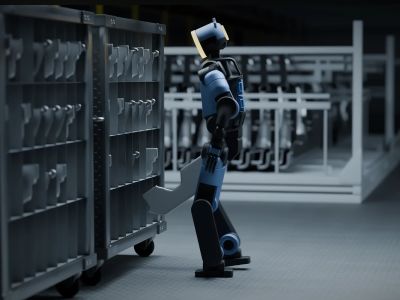 Atlas (Electric 2025) | Boston Dynamics | 3 minute self-swap, 1.5 hour recharge | Heavy factory and warehouse work | Changes its own battery in 3 min; 4 h, or 2 h heavy lifting |
| #3 | 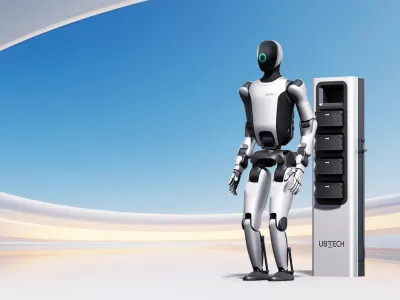 Walker S2 | UBTECH Robotics | Two batteries, picks swap or charge by task priority | Production lines with swap stations | Changes its own battery within 3 min; 2 h per battery |
| #4 |  Rex G1 | RoboScience | Back at work about 5 seconds after a swap | Picking in narrow warehouse aisles | Hot-swap by staff; up to 4 h per charge |
| #5 |  Feather | Feather Robotics | Advertises 10 hours on two packs | Developers building robot applications | Hot-swap by staff; 10 h at a 240 W load |
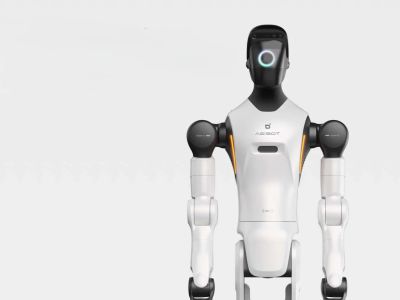
| #6 | 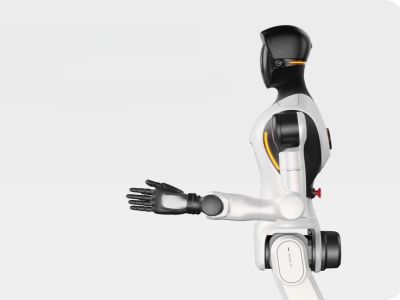 AgiBot G2 | AgiBot | 1,652 Wh across two batteries | Precise assembly and machine tending | Hot-swap by staff, drives itself to charge; about 4 h |
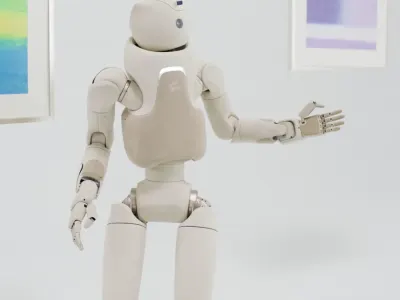
| #7 |  GR-3 | Fourier Intelligence | Recharges in about 1.5 hours | Hospitals, care homes and schools | Hot-swap by staff; about 3 h per charge |
Three of the seven change their own batteries, and those three take the top places. The runtime column matters almost as much, because a robot that runs longer needs fewer trips to a charged pack.
Explore the Robots

Galbot S1
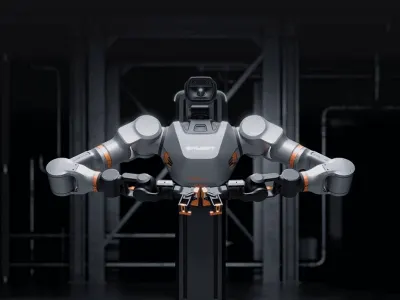
The Galbot S1 ranks first because it pairs the longest runtime among the self-swapping robots with real factory proof. It is a wheeled industrial humanoid from Galbot Robotics, listed with up to 8 hours of work per charge and batteries it changes by itself. CATL, the battery giant, runs it on a power battery production line moving materials and picking parts. Reports from June 2026 say it had passed three months of work around the clock on that line. The limits are plain: at 320 kg it is a big machine, its wheels need flat factory floors, and Galbot has not shared how long each swap takes. Its batteries come from CATL, and the two companies plan a shared after-sales service for robots. It suits battery, automotive and electronics plants that want a single robot covering every shift.
Atlas (Electric 2025)
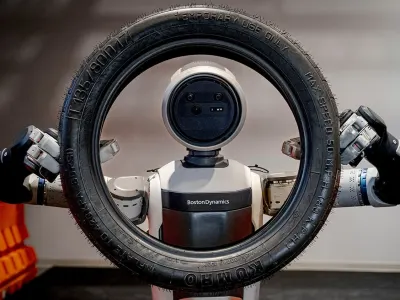
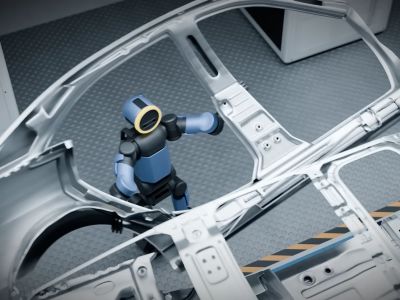
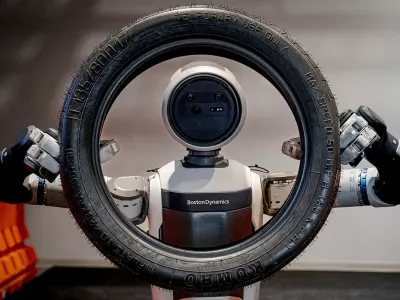
The Atlas (Electric 2025) ranks second because Boston Dynamics gives the most complete battery figures of any robot here. Its spec sheet lists 4 hours of battery life, 2 hours under heavy lifting, a 3 minute autonomous swap and a 1.5 hour charge. When the pack runs low, Atlas walks to a charging station, changes its own battery and returns to the job. It stands 1.9 m tall, weighs 90 kg and has 56 degrees of freedom, which is the count of joints that can move independently. It can lift 50 kg briefly and handle 30 kg continuously. The limit is runtime under load: heavy work cuts the time between swaps in half. Even so, a 3 minute break every 2 hours is a small loss. It suits car plants and large warehouses with heavy, repetitive work across several shifts.

Walker S2
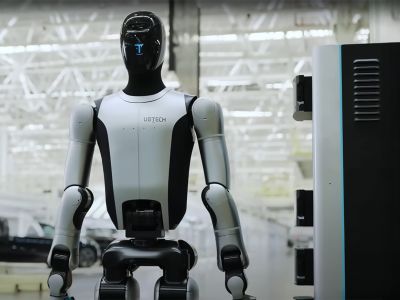
The Walker S2 ranks third because it swaps as fast as Atlas but has the shortest run per battery among the self-swappers. UBTECH Robotics calls it the first humanoid able to change its own battery, and says it completes the job within 3 minutes. Two batteries sit in its back, so one keeps the robot running while the other is replaced, and software decides whether to swap or charge based on how urgent the current task is. It can lift 15 kg and turn its waist 162 degrees each way. It runs 2 hours of active work per battery, and a pack recharges in 90 minutes. The limit is its reliance on swap stations installed on your floor, stocked with enough charged packs. It suits production lines ready to install that equipment for continuous shifts.

Rex G1
The Rex G1 ranks fourth because it has the fastest battery change we could confirm, even though the robot does not appear to make that change itself. RoboScience released it on August 17, 2026, as a wheeled humanoid with 22 degrees of freedom. Its battery can be replaced while the robot stays powered on, and work resumes in about 5 seconds. One charge gives up to 4 hours. The two arms together handle a combined load of 10 kg, so this is a light-duty picker and no heavy lifter. Since the launch material does not show it changing its own pack, plan on a staff member doing each swap. It suits warehouses with narrow aisles and dense shelving, where a quick change keeps picking moving with little interruption.

Feather
Feather ranks fifth because it advertises the longest runtime of any robot in this ranking, but that figure is rated at a light load and the robot only launched in September 2026. Feather Robotics promises 10 hours of battery life from dual hot-swappable packs at 240 W, so a harder working robot will run for less. The company announced $7.6 million in funding at launch, and the robot rolls on an omnidirectional wheeled base at up to 1.3 m/s. Packs change without powering off, and each one takes 3 to 5 hours to recharge, so nonstop use calls for spares on the charger. Feather is a developer platform programmed through Python and ROS 2, and buyers should expect to build their own applications on it. It suits robotics teams and startups that want a ready body for their own software.
AgiBot G2
The AgiBot G2 ranks sixth because it offers the widest choice of ways to refill, though people still change its packs. It carries two batteries totalling 1,652 Wh, which give about 4 hours of operation and charge in up to 2 hours. It supports direct charging, battery swapping and autonomous recharging, which means it can head to a charger by itself. Hot-swapping lets staff replace one pack while the other keeps the robot running. It rolls on an omnidirectional base at up to 1.5 m/s and carries an IP42 rating, meaning light protection against dust and dripping water. Its heavy-duty sibling, the Genie G2 Max, also uses dual hot-swappable batteries. The limit is that recharging by itself still takes the robot off the job while it charges. It suits factories doing precise assembly and machine tending.
GR-3
The GR-3 ranks seventh because it is the only walking care robot here, and its runtime is the shortest in the hot-swap group. Fourier Intelligence built it for hospitals, eldercare centers and schools, places where a fixed swap station on the floor makes little sense. Its documentation lists about 3 hours of endurance, about 1.5 hours to charge and support for hot-swappable battery replacement, with the packs housed in the torso. Because it walks on two legs and weighs 71 kg, it can move through ordinary indoor spaces, and its design leans toward helping and talking with people instead of factory labour. A care site will need someone to change packs and a shelf of charged spares. It suits hospitals, care homes and schools that want a companion robot available through a long day.
How to Choose Between Them
Start by counting the hours you really need covered. If the robot only works one 8 hour day shift, a machine with a long single charge and an overnight top up will do the job, and battery swapping adds little. Swapping earns its keep when a robot has to work two or three shifts in a row, or when the line cannot stop while a robot recharges for an hour or two.
Next, decide who does the swap. A robot that changes its own pack, like the Galbot S1, the Atlas (Electric 2025) or the Walker S2, removes a human from the routine, but the site needs a charging station or swap tower the robot can reach. A hot-swap robot needs less equipment and more staff attention, since someone has to carry a full pack over every few hours, for every robot, on every shift. With one or two robots that is easy. With a fleet of twenty it becomes a job in itself.
Then work out how many packs you need. Every robot in this ranking refills a battery faster than it drains one. The Atlas (Electric 2025), for example, runs 4 hours and recharges in 1.5 hours, and the GR-3 runs about 3 hours and recharges in about 1.5 hours. In theory two packs per robot could keep the cycle going forever, with one working and one charging. In practice most sites will want a third pack as a margin, because batteries age and heavy tasks drain them faster.
Think hard about your floor as well. The two longest runtimes here belong to wheeled robots, the Feather and the Galbot S1, because rolling takes far less energy than balancing on two legs. If your site has flat concrete and no stairs, wheels will usually give you longer stretches between swaps. Legs make sense when the robot has to use steps, cross thresholds or work in spaces designed for people, and you should expect shorter runs in exchange.
Before you commit, ask the maker five direct questions. How long does a swap take under the load you plan to run, and does the robot keep doing its task during the change? Where do charged packs live, and who monitors their health? How many charge cycles does each pack last before it needs replacing? What safety procedure covers a person handling a pack near a powered robot? And can the maker show you a site where the robot has already run multiple shifts?
A quick shortcut by need: for a proven nonstop factory role, look first at the Galbot S1. For heavy lifting with published swap figures, choose the Atlas (Electric 2025). For a production line ready to install swap stations, consider the Walker S2. For quick picking in tight aisles, try the Rex G1. Developers building their own applications should look at the Feather, factories doing precise assembly at the AgiBot G2, and care settings at the GR-3.
How We Ranked These Robots
We started from every live humanoid on our site with a battery swap value on its record, then kept only the newest generation from each product line. Most of those records simply say the battery is hot-swap capable, so we kept a robot only when we could confirm the swap method and a runtime figure on a page from its maker or in credible reporting. That left seven robots from seven companies. We left out the MagicBot X1, whose maker promises zero downtime but lists no runtime, and the Phybot M1, whose 15 second swap we found only on a reseller listing.
The ranking has three steps. First comes the method: a robot that changes its own battery ranks above one that needs a person, because that is what removes the human from a round the clock schedule. Inside each group, a stated swap time ranks above no stated swap time, since a buyer can plan around a number. After that we compared runtime per charge. The Galbot S1 leads the self-swapping group on runtime and on real factory use, even though its maker has not shared a swap time.
Every figure here comes from a maker's own page or technical sheet, or from credible reporting, and we checked each one in November 2026. Swap times and 24/7 claims are the makers' own, measured under their own conditions, and only the Galbot S1 has outside reports of nonstop work on a real production line. Runtimes also vary with the task, so treat them as a guide and test on your own floor before you plan a fleet around them.
Frequently Asked Questions
Can a humanoid robot really work 24/7?
Some can, with support. The Galbot S1 has been reported working around the clock on a CATL production line for more than three months, and Boston Dynamics and UBTECH Robotics design the Atlas (Electric 2025) and the Walker S2 for continuous work through self-swapping. All of them need spare charged batteries and a charging setup nearby. Maintenance and software updates still take robots offline from time to time.
Which humanoid robot can change its own battery?
Among the robots we could confirm, three change their own batteries: the Galbot S1, the Atlas (Electric 2025) and the Walker S2. Atlas walks to a charging station and replaces its pack. The Walker S2 uses its two arms at a swap station, keeping one battery running while the other is exchanged. UBTECH Robotics first showed the Walker S2 doing this in July 2025.
What is the difference between hot-swapping and self-swapping?
Hot-swapping means a battery can be removed while the robot stays powered on, usually because a second battery carries it through the change. Self-swapping means the robot does the job itself, with no person involved. A robot can be hot-swappable without being self-swapping, which is the case for most models in this ranking. The Walker S2 is both.
How long does it take to swap a humanoid robot battery?
The Atlas (Electric 2025) and the Walker S2 each take 3 minutes when they do it themselves. The Rex G1, with a person making the change, resumes work in about 5 seconds. Swap time alone can mislead, though, because it leaves out the walk to the station and the wait for a charged pack, so ask for the full time away from the task.
How long does a humanoid robot battery last on one charge?
Among the robots here, one charge lasts from 2 hours on the Walker S2 up to 8 hours on the Galbot S1, and the Feather advertises 10 hours at a light 240 W load. The Atlas (Electric 2025) shows how much the task matters: Boston Dynamics lists 4 hours in normal use and 2 hours with heavy lifting.
Is a swappable battery better than fast charging for a humanoid robot?
For work across several shifts, usually yes. A swap takes seconds or minutes, while even a fast charge keeps a robot idle for an hour or more. Charging by itself is simpler and needs fewer spare packs, so it suits robots that have natural breaks in their day. Some models, like the AgiBot G2, support both approaches.
Do humanoid robots work while their battery is being changed?
They can stay powered on, and the Atlas (Electric 2025) gets right back on task after its swap. Robots with two batteries, such as the Walker S2, run on one pack while the other is replaced. Full task work during the swap is another matter: a robot using its arms to change a battery cannot also use them on the job, so expect a short pause.
Sources
- Galbot S1 Profile
- Atlas (Electric 2025) Profile
- Walker S2 Profile
- Rex G1 Profile
- Feather Profile
- AgiBot G2 Profile
- GR-3 Profile
- Galbot's Galbot S1 begins operations at CATL's factory
- Galbot S1 — Heavy‑Duty Industrial Humanoid Robot
- Atlas Humanoid Robot
- UBTECH New Generation of Industrial Humanoid Robot
- REX G1: China’s humanoid robot packs 22 degrees of freedom and 5-second battery swap
- Feather launches a $30,000 wheeled humanoid for developers, announces $7.6M funding
- AGIBOT G2
- About GR-3
Related Articles
South Korean Humanoid Robots in 2026: Models, Makers and Specs Compared
11/4/2026

Humanoid Robots That Box and Fight in 2026, Ranked by What They Have Shown in Public
11/3/2026

Which Humanoid Robots Can Actually Cook? Six Compared for 2026
11/2/2026

Indian Humanoid Robots in 2026: Every Made in India Model Ranked
11/8/2026
Humanoid Robots You Can Actually Buy Right Now in 2026, and How to Order
11/7/2026
Which Humanoid Robots Can Do a Backflip? Every Flipping Robot Compared (2026)
11/5/2026