Humanoid Robots That Can Climb Stairs in 2026: Step Heights and Loads Compared


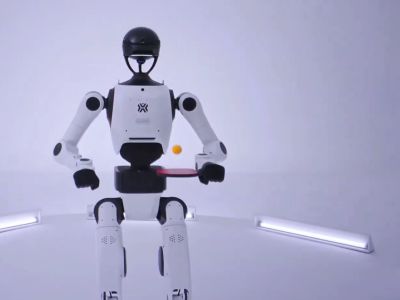
The Short Answer: The DR02 Has the Clearest Stair Numbers
Yes, several humanoid robots can climb stairs today, but only a few back it with hard numbers. The DR02 from Deep Robotics leads this list: its maker rates it for steps up to 25 cm high, platforms up to 40 cm and slopes of 20 degrees, and it has been filmed climbing outdoor concrete stairs. The Tron 2 from LimX Dynamics comes next with a published 20 cm step limit and a 20 kg load rating on stairs. The VR-M3 from VinRobotics has shown the hardest test, climbing stairs it had never seen while carrying 5 kg.
Stairs matter because homes, factories, ships and plants are built around them. A robot that needs a ramp or a lift is shut out of half the building. Climbing is also a strong test of balance, since every step means standing on one leg while lifting the whole body. Below you will find seven current humanoids ranked by how well their stair claims are backed up, what each one has shown, and which kind of buyer or lab each one suits.
Quick Overview
Seven current humanoids with stair climbing shown or stated by their makers, ranked by how well the claim is backed by numbers and public tests.
| Rank | Robot | Manufacturer | Key Strength | Best For | Stair Ability Shown |
|---|---|---|---|---|---|
| #1 |  DR02 | Deep Robotics | Rated for 25 cm steps and 40 cm platforms, sealed to IP66 | Outdoor industrial sites | Outdoor concrete stairs, 20 degree slopes |
| #2 | 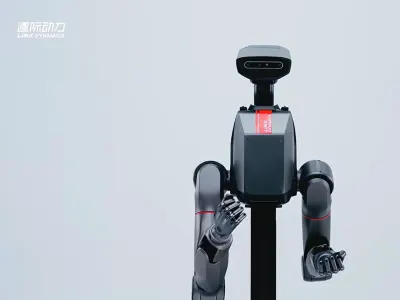 Tron 2 | LimX Dynamics | 20 cm step limit and 20 kg load on stairs | Research labs needing several body types | Camera-planned climbing in bipedal mode |
| #3 |  VR-M3 | VinRobotics | Climbed unfamiliar stairs at 0.6 m/s with 5 kg | Stair learning research on a heavy robot | Unseen stairs, one camera, no map or handrail |
| #4 |  AgiBot X2-N | AgiBot | Climbs stairs without cameras, by feel | Mixed floors with ramps and steps | Stairs while carrying light loads |
| #5 | 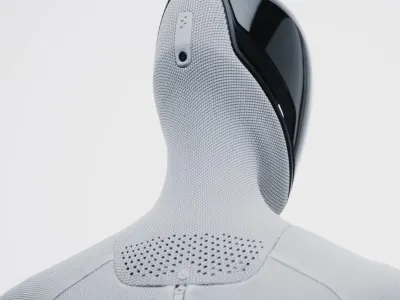 Figure 03 | Figure AI | Stair walking learned in simulation, no tuning on site | Homes and service work | Real stairs under changing light |
| #6 |  Roger | Minerva Humanoids | Driven by a remote operator, sealed to IP66 | Dangerous energy and safety jobs | Built for stairways and wet decks |
| #7 |  Embodied Tien Kung 3.0 | X-Humanoid | Clears 1 meter obstacles, 43 degrees of freedom | Full-size research and factory trials | Stair climbing listed among its moves |
Only the DR02 and Tron 2 publish a maximum step height. The rest have shown stairs in demonstrations, so check their limits on your own steps.
Explore the Robots

DR02
The DR02 ranks first because Deep Robotics publishes the most complete stair figures of any humanoid here: steps up to 25 cm, platforms up to 40 cm and slopes of 20 degrees. In August 2026 the company released footage of it climbing outdoor concrete stairs, and earlier clips show it running on uneven grass and jumping obstacles. It stands 175 cm tall, walks at 1.5 m/s and reached 4 m/s in lab tests. Its full-body IP66 sealing and a working range of -20 to 55 degrees Celsius let it climb outside in rain and dust, which few humanoids can claim. Arms and legs swap out quickly for repairs. The limit is that its stair tests come from the maker, not an outside lab. It suits plants, utilities and inspection teams that need a robot on outdoor stairs.
Tron 2
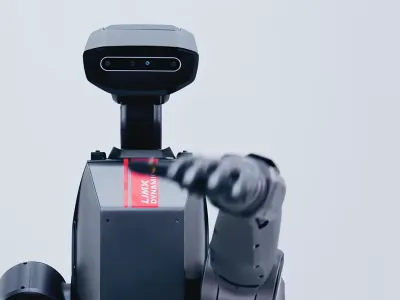
The Tron 2 ranks second because LimX Dynamics lists stair limits in a proper spec table: a maximum step height of 20 cm and a load of 20 kg while climbing stairs, against 30 kg on flat ground. It is a multi-form robot. The same upper body can sit on bipedal feet for stairs, on wheeled legs for speed, or on a desk for arm work. In walking mode it uses camera input to plan each step. Walking speed is 2 to 3 m/s, and up to 5 m/s on wheels. It supports Python, C++ and ROS, and its battery can be swapped. The limit is that its walking mode handles slopes only up to 15 degrees. It suits research labs that want stairs, wheels and manipulation in one platform.
VR-M3
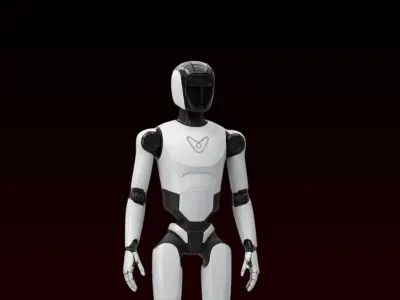
The VR-M3 ranks third because it passed the hardest stair test on this list: in May 2026 VinRobotics showed the roughly 60 kg robot climbing stairs it had never seen, at 0.6 m/s, while carrying 5 kg. It did this with a single onboard camera, and with no LiDAR, no motion capture, no handrails, no remote driver and no map made in advance. The robot builds a 3D picture of the steps ahead, judges each foothold and shortens its stride when the footing looks risky. Its walking skill was trained entirely in simulation and moved to the real robot without extra tuning. The limit is that VinRobotics has not given a maximum step height. It suits research groups and industrial pilots in Vietnam and beyond that study stair walking on a heavy robot.

AgiBot X2-N
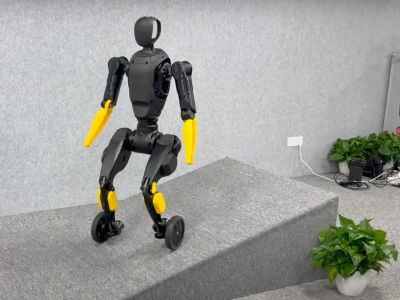
The AgiBot X2-N ranks fourth because it climbs stairs with no cameras at all. It feels its way through joint torque, foot pressure and a balance sensor, and reports say it has climbed stairs while carrying light loads. Its feet hold wheels, so it can switch between walking and rolling in under a second, rolling across flat floors and ramps, then walking up steps. That mix saves battery on long flat stretches. The limit is that feeling for steps is less suited to broken or irregular stairs than looking ahead, and AgiBot gives no step height. AgiBot names logistics, healthcare and public services as its target uses. It suits buildings that mix long corridors and ramps with short flights of regular stairs.
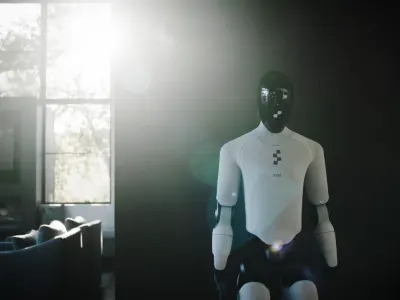
Figure 03
The Figure 03 ranks fifth because Figure has described in detail how it now walks stairs, without giving numbers. Its whole-body control model, part of Figure's Helix system, used to feel only its own body and needed manual mode switches on stairs. Figure gave it a view of the ground ahead and trained it across thousands of random terrains in simulation. The same model now climbs real stairs with no tuning on site, under varying light. The robot stands 173 cm tall and weighs 61 kg, with soft coverings and tactile hands aimed at home and service work. The limit is that Figure gives no step height or load figure. It suits households and service sites where the robot must move between floors on ordinary stairs.

Roger
Roger ranks sixth because Minerva Humanoids built it for stairways and wet decks, but a person drives it. An operator in a safe place wears a VR headset, body trackers and haptic gloves, and Roger copies their movements. Minerva's own software handles balance, fall recovery and navigation, so the operator can focus on the task. It weighs under 100 kg when outfitted, is light enough to ride in a car passenger seat, is sealed to IP66 and can wade through 260 mm of water. It was unveiled as a prototype in October 2026. The limit is that Minerva gives no step height. It suits oil and gas, bomb disposal and emergency teams that need a robot on stairs where a human would be at risk.

Embodied Tien Kung 3.0
The Embodied Tien Kung 3.0 ranks seventh because X-Humanoid lists stair climbing among its moves but has published no stair figure for this model. Its standout number is obstacle clearance: high-torque joints of up to 400 N·m let it climb over obstacles one meter tall. It stands 169 cm, weighs 62 kg and has 43 degrees of freedom, so it can kneel, bend and work with millimeter precision in tight spots. It has a clear stair history too: an earlier Tien Kung robot climbed 134 outdoor steps at Beijing's Haizi Wall Park in February 2025, using vision to handle uneven step heights. The limit is the missing stair data for the current version. It suits full-size research and factory trials with rough, cluttered ground.
How to Choose Between Them
Start with the steps you actually have. A normal home or office stair rises about 17 to 18 cm per step, while industrial access stairs and ship ladders can be steeper. The DR02 at 25 cm and the Tron 2 at 20 cm both cover ordinary stairs on paper. For the others, the maker has shown stair climbing but has not given a maximum step height, so test on your own stairs before you count on it.
Next, think about what the robot carries. Climbing with empty hands is far easier than climbing with a box, because the load shifts the robot's balance with every step. The Tron 2 is rated for 20 kg on stairs against 30 kg on flat ground, which shows how much stairs cost. The VR-M3 climbed with 5 kg and the AgiBot X2-N with light loads. If your job means carrying parts or tools between floors, look for a load figure on stairs, not only a flat ground payload.
Then check how the robot sees the stairs. The DR02, Tron 2, VR-M3 and Figure 03 use cameras or other sensors to read each step before placing a foot. The AgiBot X2-N climbs by feel through its joints and foot pressure, with no cameras used for walking. Feel alone works on regular steps, while seeing ahead helps on broken, uneven or unfamiliar stairs. Roger is a separate case: a trained person drives it while software keeps it balanced.
Weather and dirt matter for any stairs outside. The DR02 carries an IP66 rating, which means it is sealed against dust and strong water jets, and it is rated to work from -20 to 55 degrees Celsius. Roger is also sealed to IP66 and built for wet decks on offshore sites. Most other robots here are aimed at indoor floors, labs or homes and should be kept out of rain.
Before you commit, ask the maker for a live stair demonstration on steps like yours, going both up and down. Down is often harder, because the robot has to brake its own weight on every step, and several makers show only the climb. Ask how the robot recovers if it misses a step, how long its battery lasts during repeated climbs, and what safety stops it has when people share the stairwell.
A quick guide by need: for outdoor industrial stairs, pick the DR02. For a research lab that wants one body for stairs, wheels and desk work, pick the Tron 2. For stair learning research on a heavy robot with a single camera, pick the VR-M3. For mixed rolling and walking without cameras, pick the AgiBot X2-N. For a home robot that learns its own stair walking, watch the Figure 03. For dangerous sites where a person must stay in control, look at Roger, and for obstacle work on a full-size research platform, the Embodied Tien Kung 3.0.
How We Ranked These Robots
We started from every live humanoid on Origin of Bots and kept the ones whose maker, or at least one credible outlet, has shown or stated stair climbing for the current model. For each company we used its newest generation on the site. Older models appear only as history, such as the earlier Tien Kung robot that climbed 134 outdoor steps in Beijing in February 2025.
The ranking order follows the strength of the stair evidence. First come robots with a published maximum step height or a load rating on stairs, because those are numbers a buyer can check. Next come robots filmed climbing stairs they had not seen before, outdoors or while carrying weight. Last come robots whose makers list stair climbing as a skill without a figure or a detailed public test.
We left out robots whose stair claims we could find only on reseller or database pages, and robots whose makers show stairs only for an older model. We did not rank by top speed on flat ground, height or price, since none of those tells you how well a robot handles a staircase. Every value in the table comes from the maker or from published coverage of the maker's own tests, not from an independent lab, so treat each figure as the maker's best case.
Frequently Asked Questions
Can humanoid robots climb stairs?
Yes. Several current humanoids climb stairs, including the DR02, Tron 2, VR-M3, AgiBot X2-N, Figure 03, Roger and Embodied Tien Kung 3.0. Only the DR02 and Tron 2 publish a maximum step height, 25 cm and 20 cm. Most results come from the makers' own demonstrations, so real buildings with odd steps, clutter or people on the stairs can still trip them up.
Why are stairs so hard for robots?
Each step means balancing on one leg while lifting the whole body, and placing the other foot on an edge only a few centimeters deep. A small error in where the foot lands can cause a fall. The robot must also judge step height and depth, which vary from building to building. Going down is often harder still, because the robot has to brake its own weight at every step.
How high a step can a humanoid robot climb?
Among the robots in this list, the DR02 from Deep Robotics is rated for steps up to 25 cm and platforms up to 40 cm. The Tron 2 from LimX Dynamics is rated for 20 cm steps. A normal home stair rises about 17 to 18 cm, so both cover ordinary stairs. The other makers have shown stair climbing without stating a limit.
Can a humanoid robot climb stairs while carrying something?
Yes, but the load usually drops. The Tron 2 is rated for 20 kg on stairs against 30 kg on flat ground. VinRobotics showed its VR-M3 climbing unfamiliar stairs with 5 kg, and the AgiBot X2-N has climbed with light loads. If you need a robot to carry goods between floors, ask the maker for a load figure measured on stairs.
Do humanoid robots need cameras to climb stairs?
Not always. The AgiBot X2-N climbs regular stairs by feel, using joint torque, foot pressure and a balance sensor. Most others, such as the DR02, Tron 2, VR-M3 and Figure 03, look at the steps ahead with cameras or depth sensors. Seeing ahead helps most on broken, uneven or unfamiliar stairs, where feel alone gives the robot less warning.
Can a home humanoid robot use the stairs in my house?
Some are getting close. Figure says the Figure 03 now walks real stairs using a model trained in simulation, and it is aimed at homes. Still, no maker in this list publishes stair figures for a home robot, and steep, narrow or carpeted stairs add risk. Ask for a demonstration on stairs like yours, going both up and down, before relying on it.
Are humanoid robots better on stairs than wheeled robots?
Legs are the main reason to build a humanoid for buildings with stairs, since most wheeled robots cannot climb steps at all and need ramps or lifts. Wheels are faster and use less power on flat floors. Hybrids such as the AgiBot X2-N and Tron 2 try to get both, rolling on flat ground and walking up steps.
Sources
- DR02 Profile
- Tron 2 Profile
- VR-M3 Profile
- AgiBot X2-N Profile
- Figure 03 Profile
- Roger Profile
- Embodied Tien Kung 3.0 Profile
- Watch: Deep Robotics humanoid robot conquers real-world concrete stairs, rough terrain
- LimX TRON 2 Specifications | Multi-Form Embodied Robot
- World’s first heavy humanoid demonstrated climbing unfamiliar staircases with a 5 kg payload
- Humanoid Bot Uses Hybrid Mobility for All Terrains (Video)
- Ramping Figure 03 Production
- New humanoid robot built in five months remotely handles bombs, hazardous energy jobs
- China’s firm launches first full-size humanoid robot with touch motion control
- China-made humanoid robot 'Tien Kung' completes 134-step outdoor stair challenge
Related Articles
Humanoid Robots You Can Actually Buy Right Now in 2026, and How to Order
11/7/2026
Which Humanoid Robots Can Do a Backflip? Every Flipping Robot Compared (2026)
11/5/2026
South Korean Humanoid Robots in 2026: Models, Makers and Specs Compared
11/4/2026
Best Dancing Humanoid Robots in 2026, Ranked by Real Performances
11/10/2026
Humanoid Robots With Swappable Batteries in 2026: Which Can Work Around the Clock?
11/9/2026

Indian Humanoid Robots in 2026: Every Made in India Model Ranked
11/8/2026