Humanoid Robots With ROS 2 Support in 2026: Which Ones Really Work With It


The Short Answer: Six Humanoids With ROS 2 Backed by Their Makers
The humanoid with the strongest ROS 2 support in 2026 is Reachy 2 from Pollen Robotics, whose complete ROS 2 Humble software stack is open source. Next come PAL Robotics' Kangaroo and TIAGo Pro, LimX Dynamics' Oli, Booster Robotics' T2 and AgiBot's X1. Each one has a maker page or an official code repository that names ROS 2, which is the bar we used.
ROS 2 is a free toolkit that many robots use to talk to their sensors, motors and software. If your robot speaks ROS 2, code written by other labs can usually run on it with little change. The catch is that many robot listings say ROS 2 compatible without proof. This list keeps only robots where the maker shows the support itself, and it says how deep that support goes.
Quick Overview
The six robots side by side, in ranked order. Support details come from each maker's own pages and repositories.
| Rank | Robot | Manufacturer | Key Strength | Best For | ROS 2 Support |
|---|---|---|---|---|---|
| #1 | 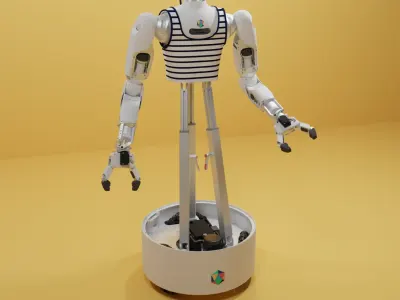 Reachy 2 | Pollen Robotics | Whole software stack open source | Manipulation research | ROS 2 Humble, Python SDK, Gazebo |
| #2 |  Kangaroo | PAL Robotics | Real-time loop access on a biped | Locomotion research | ROS 2 LTS with ros2_control |
| #3 | 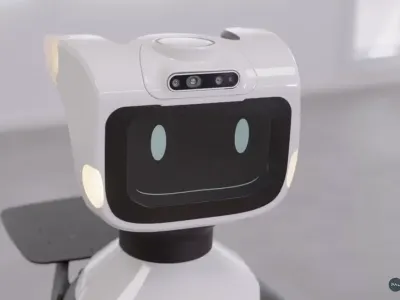 TIAGo Pro | PAL Robotics | Two-arm base with 1 kHz arm bus | Lab manipulation | ROS 2 based, open source |
| #4 |  Oli | LimX Dynamics | Same code runs in sim and on robot | Walking policy training | ROS 2 Humble, Apache-2.0 repo |
| #5 |  Booster T2 | Booster Robotics | 31 degrees of freedom at 140 cm | Athletic AI research | ROS 2 Humble, official interface package |
| #6 | 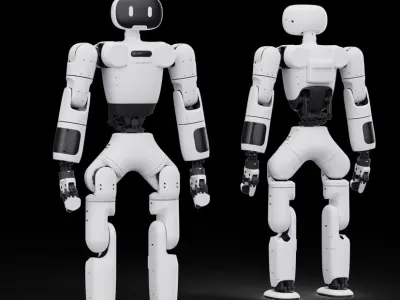 AgiBot X1 | AgiBot | 33 kg open-sourced modular body | Low-weight open platform | ROS 2 Humble for simulation |
Only Reachy 2, Kangaroo and TIAGo Pro put ROS 2 at the centre of the robot. For the other three it is one route among several, so check the repository before you plan around it.
Explore the Robots
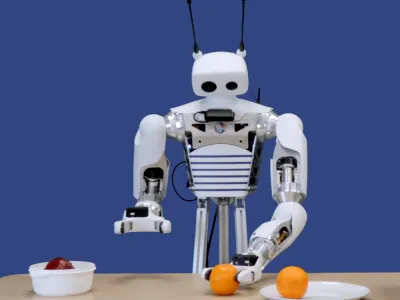
Reachy 2
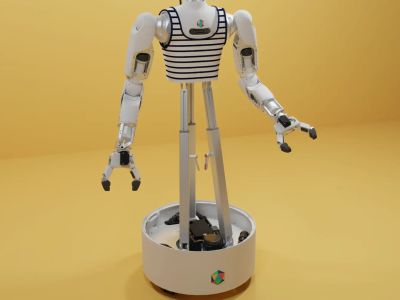
Reachy 2 ranks first because its whole software environment is open source and built on ROS 2. Pollen Robotics, now part of Hugging Face, released the stack with ROS 2 Humble middleware, ros2_control, low-level control in Rust, a Python SDK and Gazebo simulation, plus a one-line Docker install to try it. It stands 136 to 166 cm tall, weighs 50 kg and moves on a wheeled base, so it does not walk. It works well for teleoperation, writing autonomous behaviours and collecting data to train AI. Its limits are the wheels, indoor use and the fact that the full body is aimed at research budgets. It suits labs that want to read, change and share every layer of the software.

Kangaroo
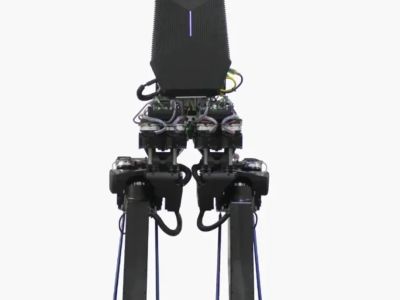
Kangaroo ranks second because PAL Robotics runs it on Ubuntu LTS with a ROS 2 LTS release and ros2_control, and gives researchers access to the real-time control loop. PAL lists a ROS 2 API in C++ and Python, Rviz2 for visualising what the robot sees, and an optional whole-body controller. This is a walking biped about 160 cm tall that weighs 50 to 65 kg, with RGB-D cameras, force sensors in the leg actuators and torque sensors in the arms. It is a research platform, sold on request, and it is indoor only. It suits universities that want to write and test their own balance and walking code.
TIAGo Pro
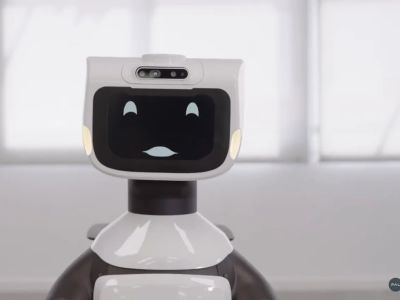
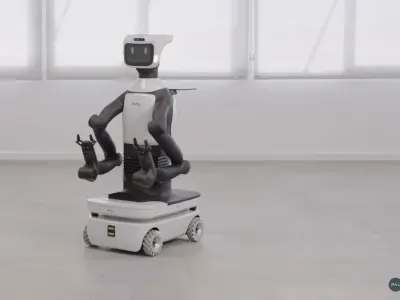
TIAGo Pro ranks third because PAL Robotics describes it as ROS 2 based and open source, with ros_control and ros2_controllers for the arms. It is a wheeled mobile manipulator with two arms, 120 to 155 cm tall and 95 kg, driving at up to 1.5 m per second. It carries two 360 degree LiDAR sensors, a depth camera and force and torque sensors in the wrists, and the arm bus runs at 1 kHz. It is a humanoid in the loose sense: it has a torso and two arms but no legs. Its limits are indoor use and heavy weight. It suits labs that need a dependable ROS 2 manipulation robot for pick-and-place and human interaction work.
Oli
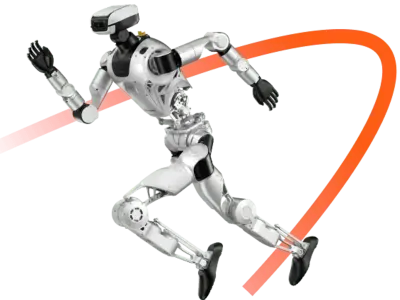
Oli ranks fourth because LimX Dynamics publishes an official ROS 2 Humble repository for its humanoid, released under the Apache-2.0 licence. The code deploys trained walking policies with ros2_control, runs the same build in the MuJoCo simulator and on the real robot, and runs the policy at 100 Hz inside a 1 kHz control loop. The repository supports a full-size humanoid with 31 degrees of freedom. Oli stands 165 cm tall, weighs 55 kg and walks at up to 5 km per hour. The repository ships one example greeting motion, and training the policies is not part of it. It suits teams that already train walking policies and want to put them on real hardware.

Booster T2
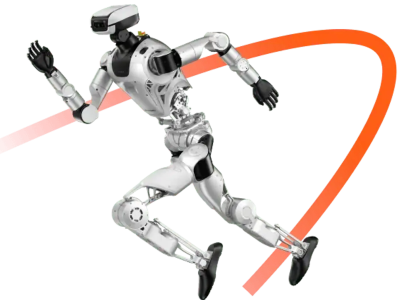
Booster T2 ranks fifth because Booster Robotics lists ROS 2 Humble in its software and publishes an official ROS 2 interface package. The package defines the messages and services for low-level motor state, IMU data, hand commands and fall detection, so your own ROS 2 nodes can talk to the robot. The T2 stands 140 cm tall, weighs 42 to 43 kg, has 31 degrees of freedom, walks at 3 m per second and lifts up to 10 kg with both arms. Its limits are that the maker pitches it mostly at AI and sport research, and that the ROS 2 package covers the interface, not a full open stack. It suits research groups working on running, stairs and whole-body control.
AgiBot X1
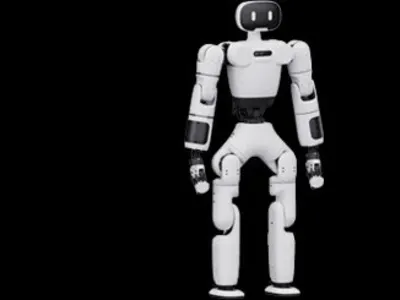
AgiBot X1 ranks sixth because ROS 2 is an add-on rather than the base of its software. AgiBot developed and open-sourced this modular humanoid on its own AimRT framework, and its repository uses ROS 2 Humble for the simulation and example project. The X1 stands 130 cm tall, weighs 33 kg and walks at 1 m per second, with force sensors, an IMU and a Linux secondary-development kit. The open source release makes it one of the lightest robots on this list. Its limit is that the live robot does not run on ROS 2 itself, so bridging to your own ROS 2 code takes extra work. It suits students and builders who value an open, light platform over native ROS 2.
How to Choose Between Them
Start with what you want ROS 2 for. If you want to write your own behaviours and share code with other labs, pick a robot where ROS 2 is the core of the software, such as Reachy 2, Kangaroo or TIAGo Pro. If you want to train a walking policy in simulation and run it on the real robot, the LimX Oli repository and the Booster T2 packages are built for exactly that.
Check the version. Almost every maker here targets ROS 2 Humble, the long-term release that is supported until May 2027. If your lab runs a newer or older release, check whether the maker's packages build on it before you order.
Check how much of the robot you can reach. PAL Robotics lists access to the real-time control loop and custom software deployment for Kangaroo, which matters if you plan to write your own balance controller. A robot that only exposes a high-level walk command is easier to start with but limits research.
Be careful with the phrase ROS 2 compatible. Unitree's official ROS 2 package, for example, lists the Go2, B2 and H1, and works because Unitree's SDK and ROS 2 share the same messaging layer. That is real support for those models, but it does not extend to every Unitree robot, so confirm the exact model.
Allow time for setup. Even with good packages you will install Ubuntu 22.04, build a workspace and learn the maker's message types. Plan days, not hours, for a first working demo, and read the maker's quick start guide end to end before you unbox anything, since the wiring, network and safety steps differ from robot to robot.
A quick way to pick: choose Reachy 2 for open software and manipulation research, Kangaroo for legged locomotion research, TIAGo Pro for wheeled manipulation and lab work, Oli or Booster T2 for reinforcement-learning walking, and the AgiBot X1 for a low-cost open platform where ROS 2 is a simulation add-on.
How We Ranked These Robots
We started from the live humanoids in our catalog that list ROS 2 in their software. Then we kept only the robots where the maker's own product page, documentation or official code repository confirms it. Entries with a ROS 2 line but nothing behind it were left out.
The ranking has two steps. First, how central ROS 2 is: the maker states it as the base of the robot software, not an optional extra. Second, how much of the stack a buyer can use: open licences, real-time loop access, official packages and simulation support.
We used the newest generation of each maker's robot on the site, so older models such as Unitree's H1 and PAL's older Talos appear only as history. We did not rank on price, speed or looks. The table shows published specs only, and a robot's own page remains the final word on what ships with it.
Frequently Asked Questions
What is ROS 2 and why does a humanoid robot need it?
ROS 2 is a free, open software toolkit for robots. It gives a robot a common way to share sensor data and send motor commands, so code written by one lab can run on another lab's robot. A humanoid has dozens of joints and many sensors, so a shared toolkit saves months of writing basic plumbing. Without it, you depend on the maker's own software.
Which humanoid robot has the best ROS 2 support?
In our ranking it is Reachy 2 from Pollen Robotics. The company released its whole software environment as open source, built on ROS 2 Humble with ros2_control, a Python SDK and Gazebo simulation. You can try it with a one-line Docker install before you own the robot. Kangaroo and TIAGo Pro from PAL Robotics follow closely.
Does the Unitree G1 support ROS 2?
Unitree's official ROS 2 package lists the Go2, B2 and H1, and Unitree's G1 is not on that list. Unitree's SDK uses the same messaging layer as ROS 2, and community and vendor bridges exist for the G1, but they are not made by Unitree. If ROS 2 is a hard requirement, check the exact model and package before ordering.
Which ROS 2 version do humanoid robots use?
Most of the robots here target ROS 2 Humble on Ubuntu 22.04. Humble is a long-term support release, and it is supported until May 2027. Kangaroo is listed with a ROS 2 LTS release. If your lab runs a different release, check whether the maker's packages build on it before you commit.
Can I train a walking policy in simulation and run it on a real humanoid with ROS 2?
Yes, on a few robots. LimX Dynamics' official repository for Oli runs the same build in the MuJoCo simulator and on the real robot, and the Booster T2 line is built for reinforcement-learning research. The Oli repository ships one example policy, so you still train your own walking policies elsewhere and bring them over.
Is a humanoid that is ROS 2 compatible the same as one with ROS 2 support?
No. Compatible often means a community member got it to work. Support means the maker publishes the packages, the documentation or the code. In this list every robot has a maker page or official repository behind its ROS 2 claim, and we say where ROS 2 is only an add-on, as with the AgiBot X1.
Do I need to know programming to use a ROS 2 humanoid?
Yes, at least basic Python or C++ and some comfort with Linux. These robots are research tools. Reachy 2 offers a Python SDK and a VR teleoperation app, which is the gentlest start, but writing your own behaviours still means writing code.
Sources
- Reachy 2 Profile
- Kangaroo Profile
- TIAGo Pro Profile
- Oli Profile
- Booster T2 Profile
- AgiBot X1 Profile
- Reachy 2 humanoid – full ROS 2 dev stack now open-source (one-line Docker, sim + Python SDK)
- Kangaroo | Biped Humanoid Robot for Locomotion Research
- TIAGo Pro - Empowering Mobile Manipulation
- GitHub - limxdynamics/humanoid-rl-deploy-ros2: ROS 2 Humble RL deployment for LimX humanoid — ONNX inference & motion control
- GitHub - BoosterRobotics/booster_robotics_sdk_ros2: booster_ros2_interface is a ROS 2 interface package that provides a series of message and service definitions for robot control
- Booster T2 | Flagship Embodied Development Platform
- GitHub - AgibotTech/agibot_x1_infer: The inference module for AgiBot X1.
- GitHub - unitreerobotics/unitree_ros2
Related Articles

Humanoid Robots Running NVIDIA Jetson Thor in 2026: Which Ones Ship?
11/12/2026

Humanoid Robots That Can Climb Stairs in 2026: Step Heights and Loads Compared
11/11/2026
Best Dancing Humanoid Robots in 2026, Ranked by Real Performances
11/10/2026
Which Humanoid Robots Are Built in Germany? 8 Models Compared for 2026
11/15/2026
Humanoid Robots With a Sense of Touch in 2026: Tactile Hands Compared
11/14/2026
Teleoperated Humanoid Robots in 2026: Which Ones a Person Can Drive Remotely
11/13/2026