Best Humanoid Robots in 2026: Our Top 7 Picks, Ranked by Real Use
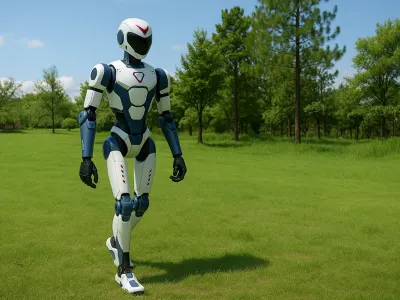
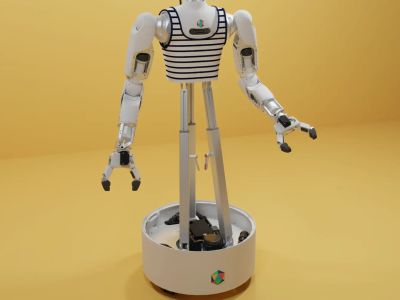
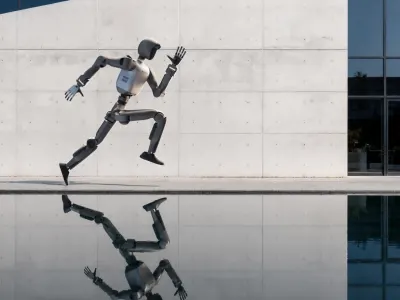
The Short Answer: Atlas Is the Best Humanoid Robot in 2026
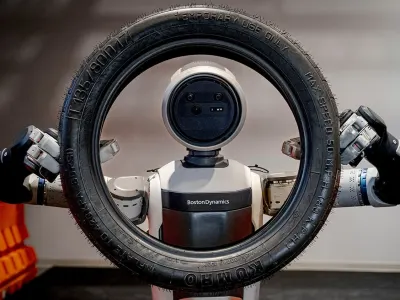
The best humanoid robot in 2026 is the electric Atlas from Boston Dynamics. It is sold to business customers, stands 190 cm tall, lifts 50 kg at its peak, runs about 4 hours per battery and swaps its own battery to keep working. After it come UBTECH's Walker S2 for round-the-clock factory work, 1X's NEO Home Robot for the home, Unitree's G1 and R1 for people who want to buy and build on one, Pollen Robotics' Reachy 2 for open software, and Booster Robotics' T2 for research.
The right pick depends on the job, not on the biggest name. A humanoid robot is a robot built in the shape of a person so it can work in spaces made for people. In 2026 only a few can be ordered and used for real work. This list ranks seven robots by how ready each is for real work or real customers, and then by what each does best.
Quick Overview
The seven picks side by side, in ranked order. Figures come from each maker's own pages and our records.
| Rank | Robot | Manufacturer | Key Strength | Best For | How You Get It |
|---|---|---|---|---|---|
| #1 | 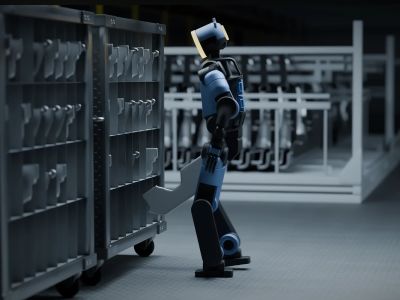 Atlas (Electric 2025) | Boston Dynamics | 190 cm, 50 kg peak lift, IP67 | Heavy industrial work | Sold to customers by quote |
| #2 | 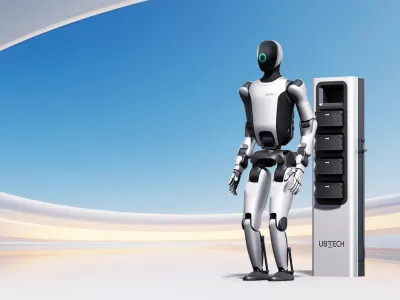 Walker S2 | UBTECH Robotics | Swaps its own battery in 3 minutes | Continuous factory shifts | Quote through UBTECH |
| #3 | 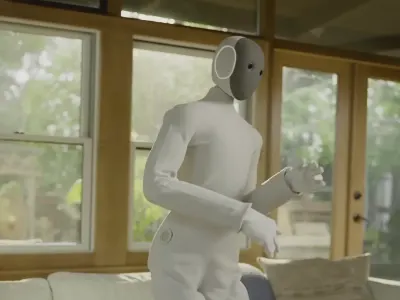 NEO Home Robot | 1X Technologies | Carries up to 25 kg at 30 kg weight | Home chores | Pre-order, US deliveries planned for 2026 |
| #4 | 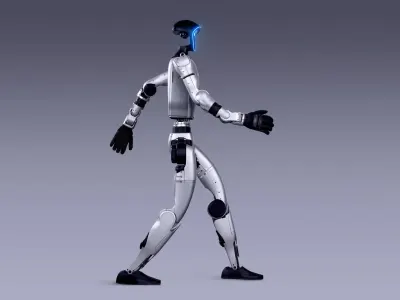 Unitree G1 | Unitree Robotics | 132 cm and 35 kg, danced and boxed in public | Developers and demos | Buy from Unitree |
| #5 | 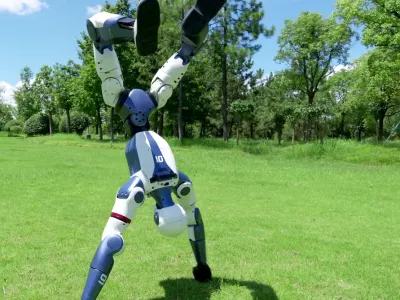 Unitree R1 | Unitree Robotics | 123 cm and 27 kg, runs up to 9 km/h | Entry-level robotics | In stock in Unitree's store |
| #6 | 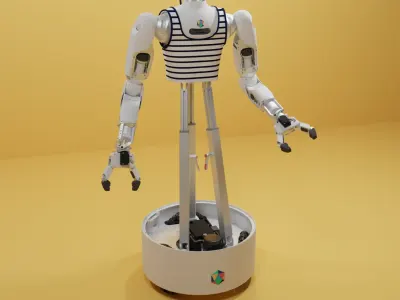 Reachy 2 | Pollen Robotics | Open ROS 2 software stack | Open research | Quote through Pollen Robotics |
| #7 |  Booster T2 | Booster Robotics | 31 degrees of freedom at 140 cm | Sport and AI research | Inquiry form |
Only two of the seven can be bought online without talking to sales: the Unitree G1 and R1. For the other five, plan a conversation with the maker before you plan a budget.
Explore the Robots
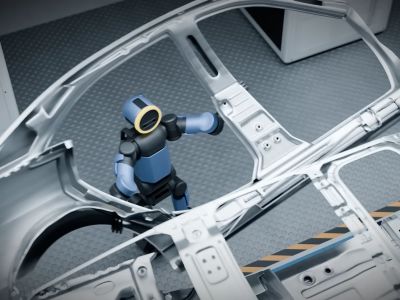
Atlas (Electric 2025)
Atlas ranks first because it is the most complete humanoid robot a business can get today. Boston Dynamics sells it to customers through its sales team, and its page lists 4 hours of battery, a 50 kg peak lift, an IP67 rating against water and dust, and an operating range from minus 20 to 40 degrees Celsius. It stands 190 cm tall, weighs 90 kg and carries 30 kg continuously. Atlas finds its own charging station and swaps its battery before returning to work. Its limits are its size, its weight and the fact that it is built for industrial customers, not homes. It suits factories and warehouses that need a strong robot for heavy, repeated tasks.
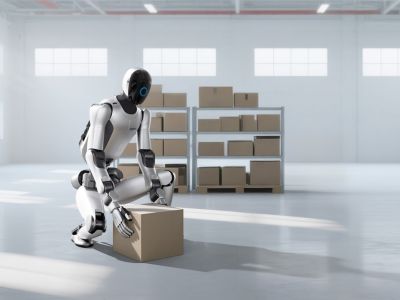
Walker S2
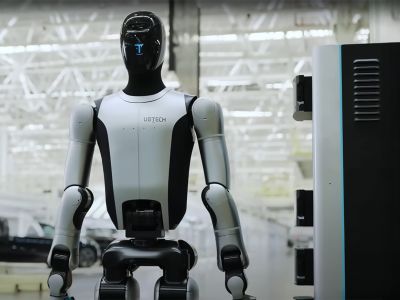
Walker S2 ranks second because UBTECH built it to work around the clock. It is billed as the first humanoid robot that swaps its own battery, doing it autonomously in about 3 minutes with a dual battery design, so one robot can keep working through a long shift. It stands 176 cm tall, weighs 73 kg and handles goods up to 15 kg per arm, with each battery lasting about 2 hours of active work. UBTECH sells it through a request form rather than a store. Its limits are the short time per battery and a quote only route to buy. It suits factories that want a robot to work shifts without a person changing its battery.

NEO Home Robot
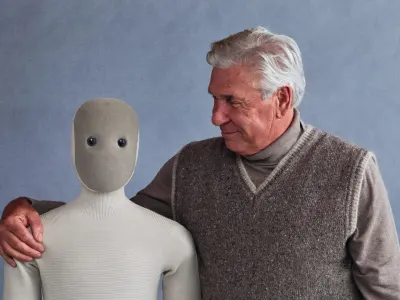
NEO Home Robot ranks third because it is the humanoid made for the home, and the only one on this list aimed at ordinary families rather than companies or labs. 1X Technologies has opened pre-orders and says it will deliver to US customers in 2026. NEO stands 167.6 cm tall, weighs about 30 kg, runs for 4 hours and can carry up to 25 kg, with 8 kg per arm. Its limits are that delivery timing is the maker's plan, so check the current status before you commit, and that 1X plans to serve US customers first, with other markets later. It suits households that want help with everyday chores.
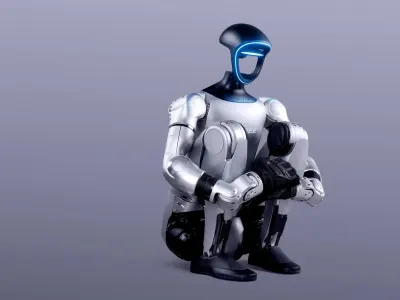
Unitree G1
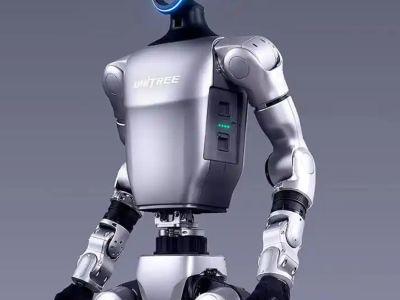
Unitree G1 ranks fourth because it is the capable humanoid that people can actually buy and program. Unitree sells it through its online store. It stands 132 cm tall, weighs 35 kg, walks at up to 2 m per second and runs for about 2 hours. It has danced in the finale of America's Got Talent and boxed in public, which shows how agile it is. Its arms carry only about 2 kg on the base version, so it is not a worker. It suits developers, universities and demo teams that want a proven, small and agile robot to build on.
Unitree R1
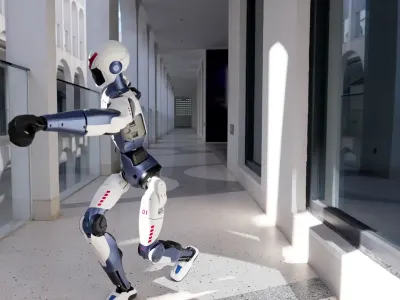
Unitree R1 ranks fifth because it is the easiest humanoid to get. It sits in Unitree's online store, marked in stock, with an Add to Cart button. It stands 123 cm tall, weighs 27 kg in the Air version and 29 kg in the others, and runs at up to 9 km per hour. The base model has fixed fists instead of hands and lifts nothing, and a charge gives about 1 hour of active use. These limits keep it low on the list. It suits students, hobbyists and developers who want to learn about walking robots and AI before they move to a bigger robot.
Reachy 2
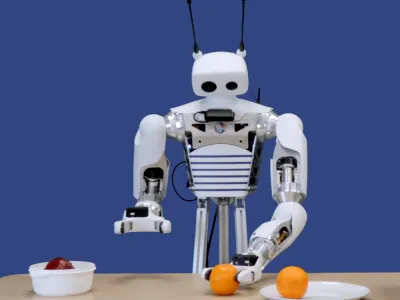
Reachy 2 ranks sixth because it is the most open humanoid on the list. Pollen Robotics, now part of Hugging Face, publishes its software stack, built on ROS 2 Humble, with a Python SDK and Gazebo simulation, and sells a VR kit so a person can drive it. It stands 136 to 166 cm tall, weighs 50 kg and moves on a wheeled base, so it does not walk. That makes it stable but limits where it can go. It is sold through the maker's sales team. It suits labs and developers who want to read, change and share every layer of a robot's software.

Booster T2
Booster T2 ranks seventh because it is a research platform more than a worker. Booster Robotics makes it for AI and sport research. It stands 140 cm tall, weighs 42 to 43 kg, has 31 degrees of freedom and runs at 3 m per second. With both arms it lifts up to 10 kg. Buyers go through an inquiry form with the maker's sales team, and the maker's own page lists open software tools for developers. Its limits are that it targets research rather than paid work, and that there is no online store. It suits research groups working on running, stairs and whole body control.
How to Choose Between Them
Start with the job. If you run a factory or warehouse, look at Atlas and Walker S2, because both are built for shifts and both swap their own batteries. If you want a robot for your home, NEO Home Robot is the one made for that, though you should check its delivery status before you pay a deposit. If you are a developer, student or lab, the Unitree G1, Unitree R1, Reachy 2 and Booster T2 are the ones made for you to program.
Check how a robot is sold. Atlas and Walker S2 are sold by quote through the maker's sales team, and Booster T2 sends buyers to an inquiry form. Unitree lists the R1 in its online store with an Add to Cart button and a starting price of $4,900, which makes it the easiest of the seven to get into your hands.
Check battery time against your shift. Atlas lists 4 hours, NEO lists 4 hours, Walker S2 lists 2 hours per battery, the G1 lists 2 hours and the R1 lists about 1 hour of active use. Short battery life is fine for a lab but a real limit for a working day, which is why the battery swap systems on Atlas and Walker S2 matter.
Check what the hands can do. The base Unitree R1 has fixed fists and cannot carry anything, while the G1 carries about 2 kg on its base version. Atlas, Walker S2 and NEO are built to carry loads of 15 kg or more, so match the payload to the objects you actually need to move.
Check the software. Reachy 2 is the most open, and its code is public. Unitree and Booster robots come with developer kits. Atlas, Walker S2 and NEO run the maker's own software, so plan to use them as products, not as platforms to rebuild.
If you only want a one-line answer: Atlas for heavy industry, Walker S2 for factory shifts that never stop, NEO for a household helper, G1 for a capable developer platform, R1 as a first robot, Reachy 2 for open research and T2 for sport and learning research.
How We Ranked These Robots
We started from the live humanoid robots in our catalog and kept the ones that a customer can order, reserve or deploy in 2026. Each robot had to have a maker page that confirms its main claims. Research prototypes and robots shown only in videos were left out.
The ranking has two steps. First, how ready the robot is: sold to customers, open for pre-order or sold in a store, with specs the maker publishes. Second, how much it can do in its own job, using published height, weight, battery time and payload. Price did not decide the order.
We used the newest generation of each robot on the site, so older models such as the hydraulic Atlas appear only as history. Specs come from the maker's own pages and our records. A maker's page remains the final word on what ships and when.
Frequently Asked Questions
What is the best humanoid robot in 2026?
The electric Atlas from Boston Dynamics is the best overall in 2026. It is sold to business customers, lifts 50 kg at its peak, runs about 4 hours and swaps its own battery. For other jobs the best pick changes: Walker S2 for factory shifts, NEO Home Robot for the home, and the Unitree G1 for developers.
Can I buy a humanoid robot today?
Yes, a few are on sale. Unitree sells the G1 and the R1 through its online store, and the R1 is marked in stock. Atlas and Walker S2 are sold by quote through their makers. NEO Home Robot is open for pre-order, with the maker planning US deliveries in 2026. Check each maker's page for the current status.
Which humanoid robot is the easiest to get started with?
The Unitree R1 is the easiest to get started with. It is in Unitree's online store, stands 123 cm tall and weighs 27 to 29 kg. It has fixed fists, so it cannot carry anything, but it is a low-barrier way to learn how walking robots and their software work.
Which humanoid robot is best for the home?
NEO Home Robot from 1X Technologies is the humanoid designed for the home. It stands 167.6 cm tall, weighs about 30 kg and can carry up to 25 kg. It is open for pre-order, and 1X says it will deliver to US customers in 2026. Check the maker's page for the current delivery status.
How long does a humanoid robot battery last?
Most last between 1 and 4 hours of active use. Atlas and NEO list 4 hours, Walker S2 and the Unitree G1 list about 2 hours, and the Unitree R1 about 1 hour. Atlas and Walker S2 swap their own batteries, so they can work through a long shift without a person.
Which humanoid robot is best for developers and researchers?
It depends on what you build. Reachy 2 is the most open, with its ROS 2 software published for anyone to change. The Unitree G1 is a proven, agile platform you can buy online, and the Booster T2 is made for sport and learning research. All three offer developer tools from the maker.
Can a humanoid robot work in a factory?
Yes, a few can. Atlas is sold to industrial customers and lifts 50 kg at its peak, and Walker S2 handles goods up to 15 kg per arm and swaps its own battery in about 3 minutes. Both are sold through the maker's sales team, so a factory should ask each maker for a trial.
Sources
- Atlas (Electric 2025) Profile
- Walker S2 Profile
- NEO Home Robot Profile
- Unitree G1 Profile
- Unitree R1 Profile
- Reachy 2 Profile
- Booster T2 Profile
- Atlas Humanoid Robot | Boston Dynamics
- UBTECH Walker S2 Humanoid Robot | Autonomous Battery Swapping for Mass Production Delivery
- 1X to deliver humanoid household robot Neo to US customers in 2026
- Unitree G1
- Unitree R1
- Reachy 2: open-source humanoid robot for embodied AI
- Booster T2 | Flagship Embodied Development Platform
Related Articles
Teleoperated Humanoid Robots in 2026: Which Ones a Person Can Drive Remotely
11/13/2026

Humanoid Robots Running NVIDIA Jetson Thor in 2026: Which Ones Ship?
11/12/2026
Humanoid Robots That Can Climb Stairs in 2026: Step Heights and Loads Compared
11/11/2026
Humanoid Robots With ROS 2 Support in 2026: Which Ones Really Work With It
11/16/2026
Which Humanoid Robots Are Built in Germany? 8 Models Compared for 2026
11/15/2026
Humanoid Robots With a Sense of Touch in 2026: Tactile Hands Compared
11/14/2026