5 Best Affordable Humanoid Robots for Developers & Startups (2026)
Affordability Surge
In 2026, humanoid robots have shattered price barriers, dropping below $15,000 to empower developers and startups with tools once reserved for giants like Tesla or Boston Dynamics. Unitree R1 leads this charge at around $13,500, enabling rapid prototyping in labs and small-scale factories without massive capital outlays. Noetix Robotics follows with Bumi at just $1,400, N2 Athlete for dynamic tasks, and E1 for versatile integration, while SoftBank's NAO offers proven programmability at accessible costs. This shift matters now as CES 2026 demos proved production-ready deployment, letting cash-strapped innovators test AI-driven automation in real-world settings like warehouses and education hubs, accelerating market entry by months.
Developer Edge
Driving this trend are Chinese firms like Unitree and Noetix, who leverage mass production and open SDKs to outpace Western rivals, prioritizing developer-friendly features over premium hardware. Recent announcements highlight Unitree R1's global shipping and Noetix's $41 million funding boost for Bumi's ultra-low entry point, distinguishing them from pricier models like Optimus at $30,000. NAO stands out with decades of ecosystem support for custom coding, while Noetix's N2 Athlete excels in athletic simulations and E1 in modular adaptability. Startups gain from these platforms' focus on software iteration, human demonstration learning, and industrial scalability, fostering breakthroughs in service robotics without the six-figure hurdles of legacy systems.
Quick Overview
These five humanoids balance cost, capability, and customization for 2026 innovators.
| Rank | Robot | Manufacturer | Key Strength | Best For |
|---|---|---|---|---|
| #1 | 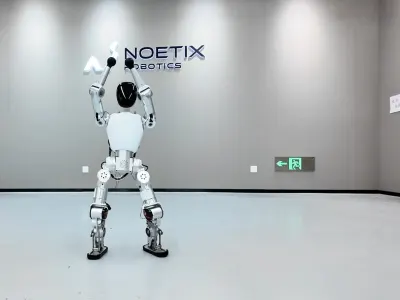 Bumi | Noetix Robotics | Ultra-low cost | Startup experimentation |
| #2 | 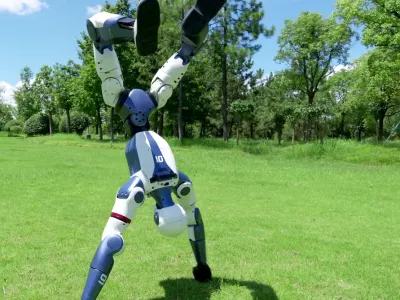 Unitree R1 | Unitree Robotics | Price disruption | Research prototyping |
| #3 | 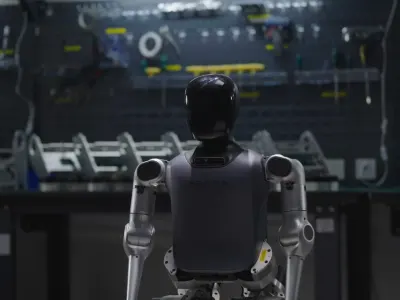 N2 (Athlete) | Noetix Robotics | Dynamic mobility | Simulation testing |
| #4 | 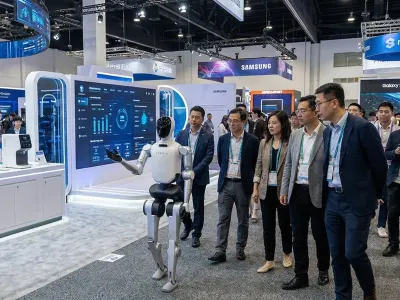 Noetix E1 | Noetix Robotics | Humanoid / General Purpose | Athletic robotics research, STEM education |
| #5 | 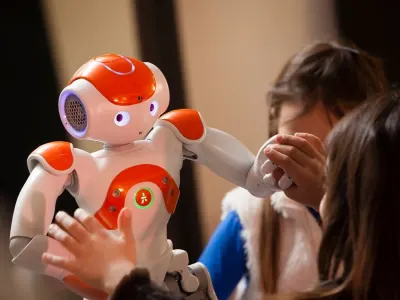 NAO | SoftBank Robotics | Proven programmability | Education coding |
Affordable humanoids like these position developers to lead the robotics revolution.
Explore the Robots
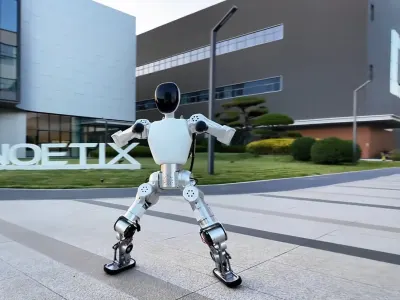
Bumi
Bumi is the smallest full humanoid in this developer ranking. Noetix launched the 94 cm, 12 kg robot in October 2025 and sold more than 100 units in the first hour, which shows how much demand there is for a small, friendly robot to learn on. A self-developed domain controller and reinforcement-learning-based motion give developers a real balance and walking problem to work on. The same month, Noetix raised nearly 300 million yuan in a pre-B round led by Vertex Ventures to scale production.
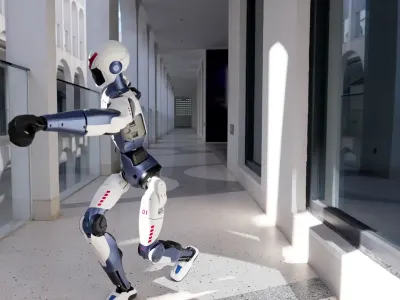
Unitree R1
Unitree's R1 is a compact humanoid for developers, 123 cm tall and about 27 kg, with 26 degrees of freedom. For a start-up it is a quick way to work on full-body control without a large lab: the robot can cartwheel, handstand and spin-kick, so bugs in balance code show up fast. Unitree built a multimodal AI model into it for voice and image recognition, which helps teams prototype interactive features. Its battery lasts about an hour of active use, so sessions stay short.

N2 (Athlete)
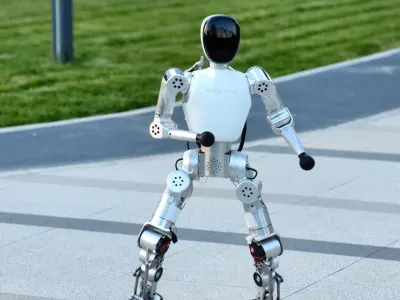
Noetix's N2 (Athlete) is a fast, small biped for developers who want to test dynamic motion. The 118 cm, 30 kg robot has 18 degrees of freedom and runs at up to 12.6 km/h. It has competition results behind it: second place in the world's first humanoid half-marathon in Beijing in April 2025, then two golds and a silver at the Global Humanoid Robotics Games that August. For a start-up, that means a body proven under stress. A quick-release battery lasts about two hours.
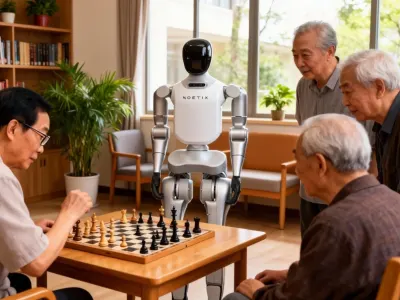
Noetix E1
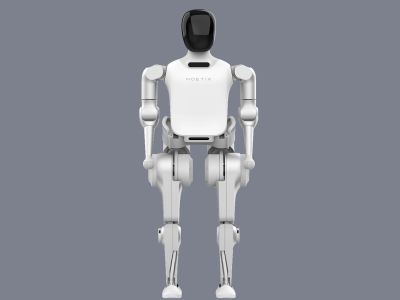
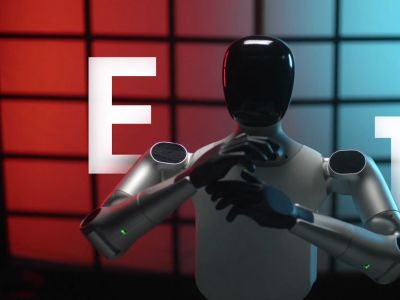
Noetix's E1 is a 1.36 m biped for prototyping and education. It has 21 or more degrees of freedom, carries 5 kg per arm and walks at 1.2 m/s, with a Rockchip RK3588s computer in the standard model and an RK3588s plus NVIDIA Orin Nano Super in the EDU model for heavier AI work. A 48 V, 9 Ah battery runs one to two hours. The E1 was unveiled in August 2025, and with the Beijing Dance Academy it took silver in the solo dance event at the Global Humanoid Robotics Games.
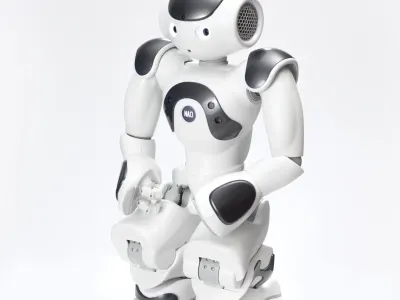
NAO
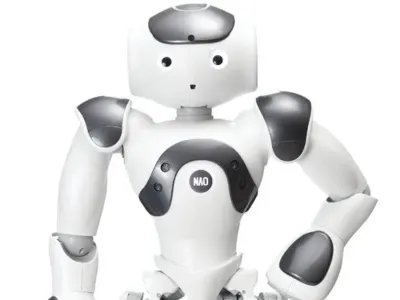
NAO is the long-standing starting point for robot developers. SoftBank Robotics' 5.48 kg, 58 cm humanoid was chosen in August 2007 to replace Sony's AIBO as the standard RoboCup Standard Platform League robot, and the first production units launched in March 2008. It has 25 degrees of freedom, two 5 MP cameras, four microphones and a 62.5 Wh battery that lasts about 1.5 hours. NAO6 added updated processors and a larger battery in 2018, so developers inherit years of tutorials and code.
Sources
- Bumi Profile
- Unitree R1 Profile
- N2 (Athlete) Profile
- Noetix E1 Profile
- NAO Profile
- Bumi: official specifications (Noetix Robotics)
- Unitree R1: official specifications (Unitree Robotics)
- PR Newswire: Noetix reports two golds and a silver at the Global Humanoid Robotics Games, including gold
- NAO: official specifications (SoftBank Robotics)
Related Articles
Top 5 Fastest Humanoid Robots in March 2026
3/17/2026

6 Most Advanced AI-Powered Humanoid Robots 2026
3/17/2026
Top 7 Industrial Humanoid Robots Transforming Workforces 2026
3/17/2026
Major Humanoid Robots Launched in Q1 2026 (January–March)
3/16/2026
Tallest Walking Humanoid Robots in 2026, Ranked by Height and Weight
10/28/2026
Best Open-Source Humanoid Robots in 2026, Ranked by How Open They Really Are
10/27/2026
Top 5 Humanoid Robots Being Developed for Defense, Security & First Responders in 2026
10/9/2026