Top 5 Fastest Humanoid Robots in March 2026
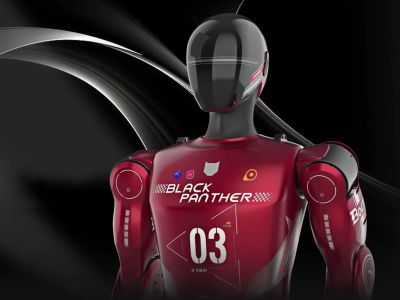



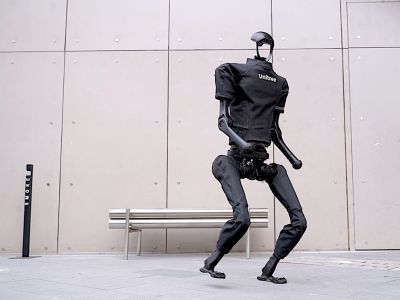
Speed Records as of March 2026
Humanoid sprinting changed fast in early 2026. As of March 2026, the quickest humanoid we can verify is MirrorMe Technology's Bolt, which reached 10 m/s (36 km/h, about 22 mph) in an outdoor sprint test shown on February 2. Behind it, speeds fall sharply: 1X's NEO is rated at 6.2 m/s, Robot Era's L7 at 4 m/s, and both Tiangong and Unitree's H1 sit near 12 km/h. This ranking uses each maker's published top running speed, not walking pace, and counts only robots that had been shown by mid-March 2026.
How This List Is Ranked
Bolt was built around leg power and balance control for sprinting, with more than 40 degrees of freedom, while NEO and L7 trade top speed for household or industrial work. NEO's 22 km/h is a peak run; its everyday walking speed is 1.4 m/s, about 5 km/h. Tiangong, which won the first humanoid half-marathon in April 2025, lists 12 km/h as its maximum and 6 km/h as a steady jog. Unitree's H1 lists speeds above 3.3 m/s, with 5 m/s described as possible. Records keep changing, so each edition of this list is dated.
Quick Overview
These are the five fastest humanoids with a published top speed as of March 2026, ranked by that figure.
| Rank | Robot | Manufacturer | Key Strength | Best For |
|---|---|---|---|---|
| #1 |  Bolt | MirrorMe Technology | 36 km/h (10 m/s) | Sprint benchmarks and outdoor speed tests |
| #2 |  NEO Home Robot | 1X Technologies | 22.3 km/h (6.2 m/s) | Home assistance |
| #3 |  Robot Era L7 | Robot Era | 14.4 km/h (4 m/s) | Factory and logistics work |
| #4 |  Tiangong | X-Humanoid | 12 km/h | Research and open-source development |
| #5 | 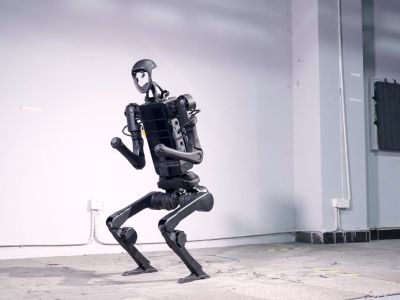 Unitree H1 | Unitree Robotics | Over 3.3 m/s (about 12 km/h) | General-purpose research |
Bolt leads by a wide margin; the other four are separated by only a few kilometres per hour.
Explore the Robots
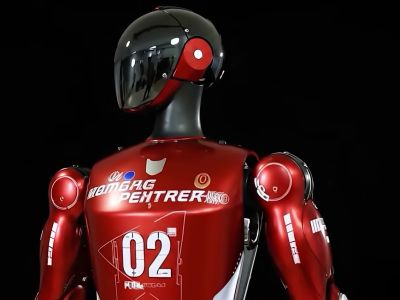
Bolt
MirrorMe Technology's Bolt is the fastest full-size humanoid on record as of March 2026. Unveiled on February 2, it stands 175 cm tall, weighs 75 kg and reached a peak of 10 m/s, or 36 km/h (about 22 mph), in a real-world outdoor sprint test. MirrorMe credits new high-power joints and a power system built for bursts of speed. It has more than 40 degrees of freedom and can carry 20 kg while moving, so its speed is not limited to demonstrations. It is the speed mark other humanoids are now compared with.

NEO Home Robot
NEO has the best-documented speed on this list. 1X's own specification sheet gives a maximum run speed of 6.2 m/s, about 22 km/h, and a normal walking pace of 1.4 m/s. That is a striking figure for a robot of roughly 30 kg built to work in kitchens and hallways, where it mostly walks. The light frame helps, since there is less mass to accelerate and stop. 1X took pre-orders from October 2025 and plans first deliveries for 2026, so owners have not yet tested the speed for themselves.

Robot Era L7
Robot Era's L7 was introduced in July 2025 as the fastest bipedal humanoid of its time, with a top running speed of 4 m/s (14.4 km/h). It weighs 65 kg and has 55 degrees of freedom, including a 12-degree direct-driven dexterous hand. Binocular cameras, 3D LiDAR and a microphone array give it 360° awareness, and its dual arms carry up to 20 kg, so the speed serves factory and logistics jobs. Robot Era raised nearly RMB 1 billion, about $140 million, in a Series A+ round led by Geely Capital in December 2025.
Tiangong
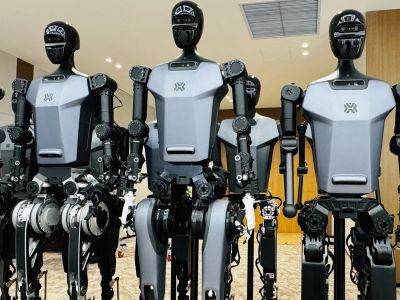
Tiangong, from Beijing's X-Humanoid, is the steady runner of this list: 12 km/h at maximum. The 1.63 m, 43 kg robot was unveiled on April 27, 2024 and open-sourced that November so developers worldwide could build on it. Its Ultra version won the world's first humanoid half-marathon in Beijing on April 19, 2025, in about 2 hours 40 minutes. Tiangong has 32 or more degrees of freedom, carries 5 kg and runs about four hours on a 48 V, 15 Ah pack, so endurance matters more to it than raw speed.
Unitree H1
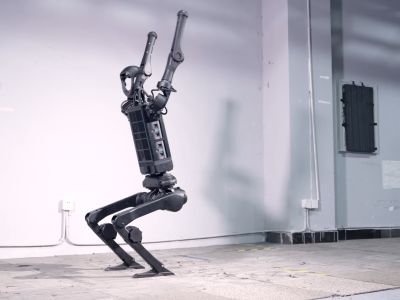
On paper the H1 is quick: Unitree quotes more than 3.3 m/s, about 12 km/h, and up to 5 m/s in its best runs. Unveiled on August 15, 2023, the 180 cm, 47 kg H1 was the company's first full-size humanoid, and a peak torque density of 189 N·m/kg gives its legs the power to sprint and recover. An 864 Wh battery supports roughly one and a half to two hours of running, while 3D LiDAR and depth cameras provide 360° perception. H1 remains a reference point for fast, general-purpose humanoid research platforms.
Sources
- Bolt Profile
- NEO Home Robot Profile
- Robot Era L7 Profile
- Tiangong Profile
- Unitree H1 Profile
- CGTN: MirrorMe Technology launches Bolt, a 175 cm, 75 kg humanoid that reaches a peak of 10 m/s
- NEO Home Robot: official specifications (1X Technologies)
- The Robot Report: 1X opens pre-orders for NEO at $20,000, or $499 a month by subscription, with deliveries
- The Robot Report: Robot Era raises nearly RMB 1 billion (about $140 million) in a Series A+ round led by
- CGTN: The Beijing Humanoid Robot Innovation Center unveils Tiangong, a general-purpose humanoid
- Unitree H1: official specifications (Unitree Robotics)
- The Robot Report: Unitree reveals the H1, its first full-size humanoid at 1.8 m and 47 kg, with a target
Related Articles

6 Most Advanced AI-Powered Humanoid Robots 2026
3/17/2026
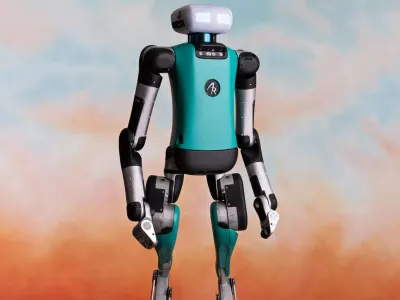
Top 7 Industrial Humanoid Robots Transforming Workforces 2026
3/17/2026

These Female Robots Look Almost Human – Top 6 in 2026
3/20/2026
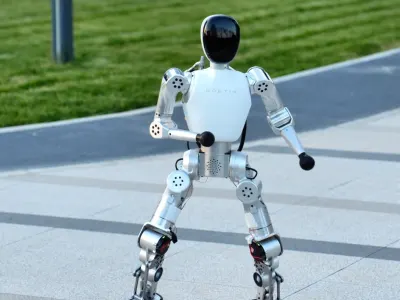
5 Best Affordable Humanoid Robots for Developers & Startups (2026)
3/17/2026
Major Humanoid Robots Launched in Q1 2026 (January–March)
3/16/2026
Waterproof and Dustproof Humanoid Robots in 2026, Ranked by IP Rating
10/29/2026
Tallest Walking Humanoid Robots in 2026, Ranked by Height and Weight
10/28/2026
Best Open-Source Humanoid Robots in 2026, Ranked by How Open They Really Are
10/27/2026