Top 7 Industrial Humanoid Robots Transforming Workforces 2026

Workforce Revolution
In 2026, seven leading humanoid robots are reshaping industrial landscapes by automating repetitive, hazardous tasks in factories, warehouses, and logistics hubs, addressing acute labor shortages amid aging populations and rising operational costs. Tesla's Optimus leads with its mass-production scalability, deploying internally at Fremont for precise assembly work, while Agility Robotics' Digit excels in dynamic package handling. Boston Dynamics' Electric Atlas demonstrates unmatched agility for construction sites, and Figure AI's Figure 03 integrates advanced AI for seamless human-robot collaboration. These machines promise to boost productivity by 30-50% in high-volume settings, enabling firms to reallocate human workers to creative roles and fundamentally altering global supply chains right now.
AI-Driven Edge
What sets these 2026 humanoids apart from prior models is their end-to-end AI integration, enabling real-time adaptation to unstructured environments without rigid programming, a leap fueled by recent neural network breakthroughs and cheaper actuators. Unitree's G1 disrupts with affordability under $16,000, targeting 10,000+ shipments for agile warehouse picking, while Apptronik's Apollo prioritizes industrial stability for safe, stable manipulation in automotive plants. UBTECH's Walker S2 offers versatile mobility for service-heavy sectors, and Optimus Gen 3's 22-degree-of-freedom hands mimic human dexterity for intricate tasks. This convergence of vision systems, reinforcement learning, and energy-efficient gaits positions them to capture a $50 billion market by decade's end, outpacing legacy automation.
Quick Overview
These robots stand out for their tailored industrial strengths, poised to redefine workforce efficiency.
| Rank | Robot | Manufacturer | Key Strength | Best For |
|---|---|---|---|---|
| #1 | 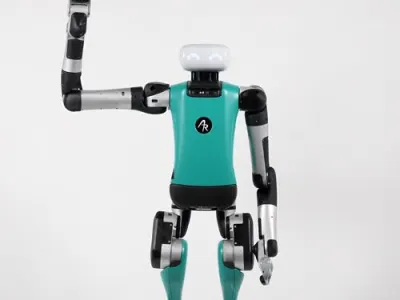 Digit Digit | Agility Robotics | Dynamic object handling | Warehouse logistics |
| #2 | 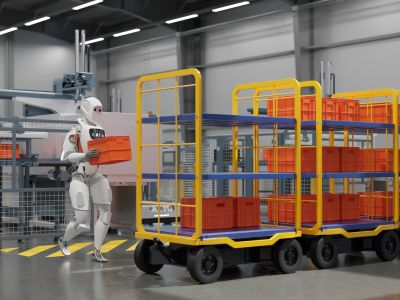 Apollo Apollo | Apptronik | Stable industrial walking | Automotive manufacturing |
| #3 | 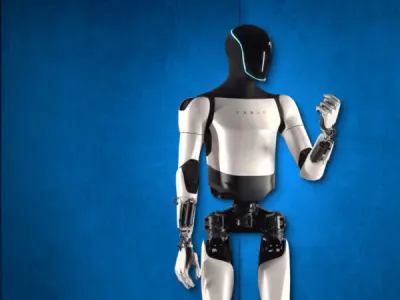 Optimus Optimus | Tesla | Mass-production scalability | Factory assembly |
| #4 | 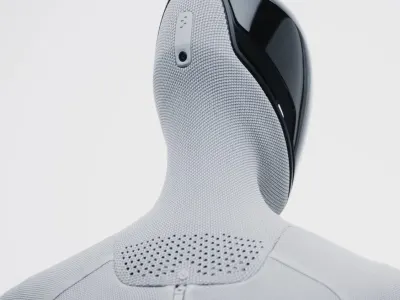 Figure 03 Figure 03 | Figure AI | Natural AI-driven movement | Human-robot collaboration |
| #5 | 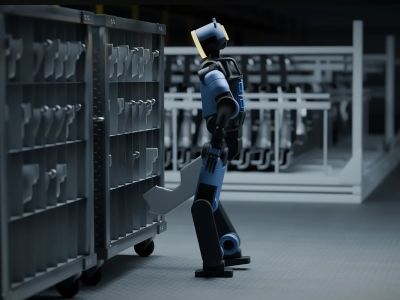 Atlas (Electric Atlas, 2025) Atlas (Electric Atlas, 2025) | Boston Dynamics | Superior dynamic performance | Construction sites |
| #6 | 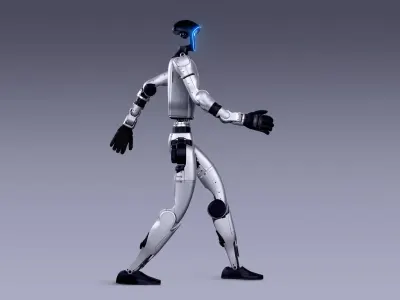 Unitree G1 Unitree G1 | Unitree Robotics | Affordable high agility | Agile picking tasks |
| #7 | 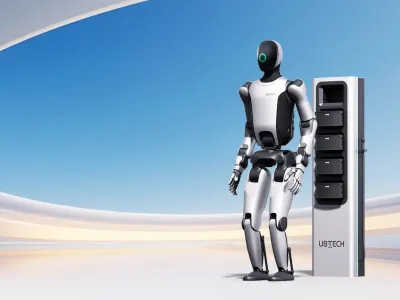 Walker S2 Walker S2 | UBTECH Robotics | Versatile mobility | Service and maintenance |
Collectively, they signal the dawn of scalable humanoid deployment in industry.
Explore the Robots
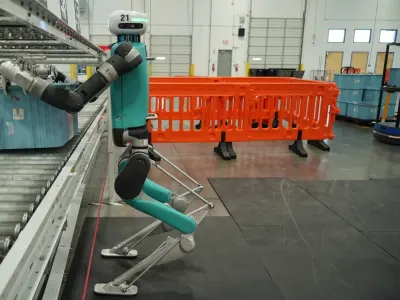
Digit
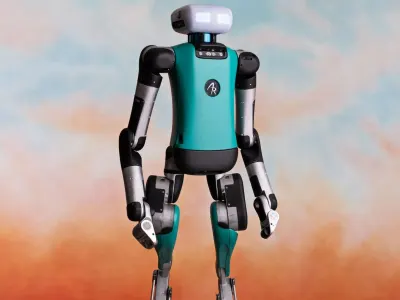
Agility Robotics' Digit targets logistics transformation, excelling in chaotic warehouse environments by autonomously handling totes, climbing stairs, and navigating alongside humans, its legged design outperforming wheeled bots in uneven spaces. Notable for real deployments with Amazon, it lifts 35 kg payloads with intuitive grasping, setting it apart from rigid humanoids through split-leg torque control for fluid recovery from slips or collisions. This makes it ideal for e-commerce fulfillment where speed and safety converge, reducing injury rates in picking operations.
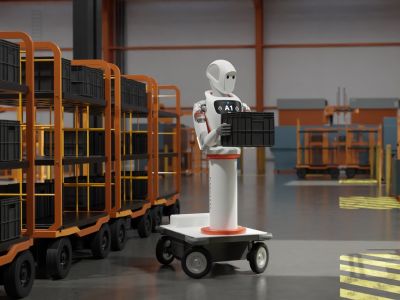
Apollo
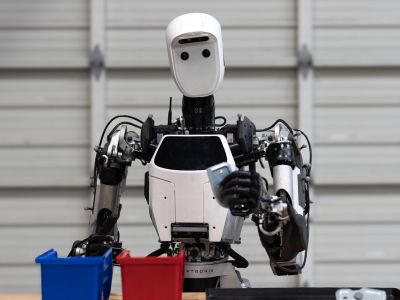
Apptronik's Apollo emphasizes safe, robust performance in heavy industry, built for tasks like tool handling and part inspection in automotive and aerospace plants, its stable bipedal locomotion thriving in human-occupied spaces without halting production. Distinguished by torque-controlled joints for precise force application, it avoids the fragility of research-focused rivals, enabling prolonged shifts in vibration-heavy settings. Recent demos highlight its edge in collaborative assembly, where it learns workflows via teleoperation data.
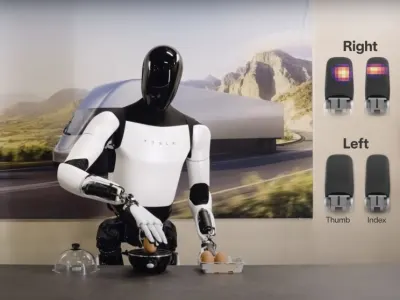
Optimus
Tesla's Optimus redefines industrial scalability, designed for repetitive factory tasks like part assembly and material transport, distinguishing itself through seamless integration with Tesla's Full Self-Driving AI for autonomous learning from human demonstrations. Unlike bulkier predecessors, its lightweight 57 kg frame and energy-efficient gait enable all-day operation in high-volume lines, with recent Fremont deployments proving reliability in real-world picking and sorting. What sets it apart is the forearm-actuated hands with 22 degrees of freedom, allowing delicate manipulation rivaling human precision, positioning it as the go-to for mass automation where cost per unit drops toward $20,000.
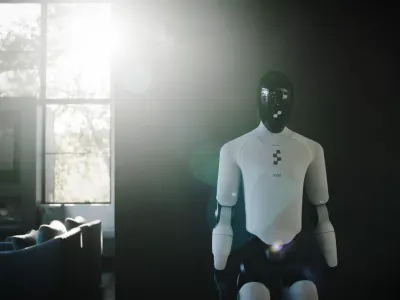
Figure 03
Figure AI's Figure 03 leads with biological-reflex walking and AI fluency for collaborative manufacturing, autonomously sorting, packing, and conversing in factories, its graceful gait and 20 kg payload handling outshining mechanical walkers. Notable for speech-integrated learning, it adapts to verbal instructions on the fly, setting it apart in human-centric workflows like quality control. Backed by OpenAI tech, it promises fluid team integration.
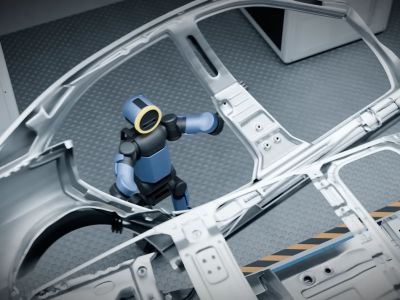
Atlas (Electric Atlas, 2025)
Boston Dynamics' Electric Atlas pioneers extreme dynamism for construction and disaster response, executing parkour, heavy lifts up to 25 kg, and precise tool use in rugged terrains where others falter. Its all-electric shift from hydraulics slashes weight and noise, enabling superhuman feats like mid-air adjustments, distinguishing it as the benchmark for unstructured industrial hazards. 2025 updates focus on workforce augmentation in demos.
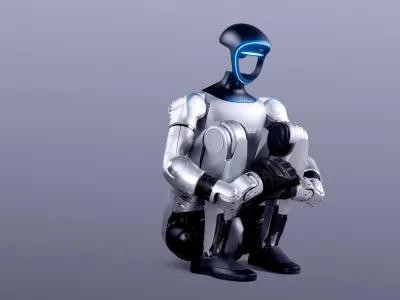
Unitree G1
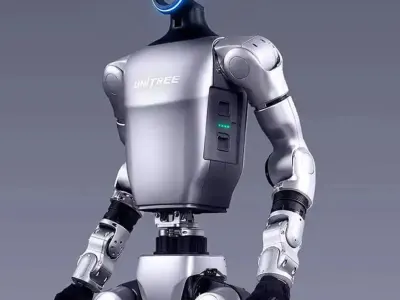
Unitree Robotics' G1 disrupts with unmatched affordability at $13,500-$16,000, delivering compact agility for warehouse picking, inventory checks, and light assembly, its 35 kg frame and quick reflexes enabling backflips and rapid balance recovery that outpace pricier competitors. What makes it notable is AI-driven imitation learning, allowing task mastery from video observation, ideal for SMEs entering humanoid adoption. Targeted for 10,000+ units in 2026, it democratizes access in logistics.
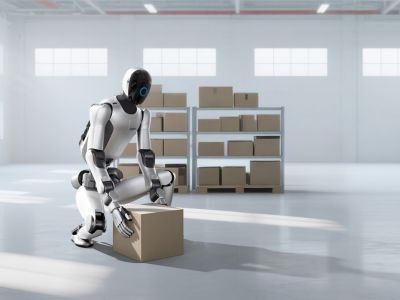
Walker S2
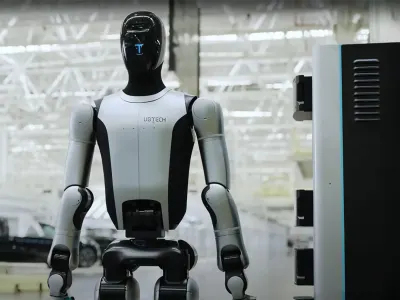
UBTECH Robotics' Walker S2 shines in versatile service roles within factories, performing maintenance, inspections, and human guidance, its smooth humanoid form fostering trust in mixed teams unlike industrial arms. Key differentiator is modular adaptability for custom grippers, supporting diverse payloads in electronics and pharma cleanrooms. Recent upgrades enhance endurance for 8-hour shifts, making it a bridge between research and deployment.
Sources
Related Articles

These Female Robots Look Almost Human – Top 6 in 2026
3/20/2026

Humanoid Robots Which Can Help With Daily Household Tasks In 2026
4/11/2026
6 Most Powerful Humanoid Robots (Strength & Payload Capacity)
4/11/2026

6 Most Advanced AI-Powered Humanoid Robots 2026
3/17/2026
Top 5 Fastest Humanoid Robots in the World 2026 Edition
3/17/2026
5 Best Affordable Humanoid Robots for Developers & Startups (2026)
3/17/2026
Top 10 Humanoid Robots with the Highest Payload & Heavy-Lifting Capacity in 2026
9/9/2026

Top 10 Wheeled & Hybrid Humanoid Robots for High-Speed Facility Mobility in 2026
9/9/2026
Top 5 Humanoid Robots Being Developed for Defense, Security & First Responders in 2026
9/3/2026