6 Most Powerful Humanoid Robots (Strength & Payload Capacity)
Power Surge
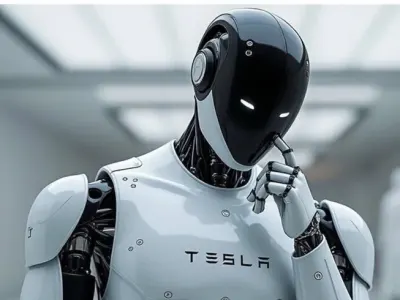
Humanoid robots have surged in raw strength and payload capacity over the past six months, with six standout models from Tesla, Figure AI, Apptronik, Sanctuary AI, Boston Dynamics, and Unitree Robotics redefining industrial and everyday capabilities. Tesla's Optimus leads with a proven 45-pound carry limit, demonstrated by lifting Model X suspension parts in factory settings, signaling a shift toward robots that handle heavy, repetitive loads without fatigue. This power escalation matters now as labor shortages intensify and factories demand tireless workers; these machines lift 20 to 50 pounds routinely, enabling deployment in automotive assembly, warehousing, and construction where human limits falter. Recent demos show them manipulating tools and crates with precision, promising to cut injury rates and boost output by 30 percent in high-stakes environments.
Strength Drivers
Advancements in custom actuators, high-torque motors, and AI-driven control systems fuel this power boom, distinguishing these humanoids from earlier models limited to light tasks. Boston Dynamics' Electric Atlas, unveiled for 2025, builds on hydraulic predecessors with electric drives for sustained 40-plus pound payloads during dynamic maneuvers like parkour-style lifts. Figure 02 and Apollo emphasize modular joints for 25-35 pound capacities in partner factories, while Sanctuary's Phoenix and Unitree's H1 prioritize agile gripping for variable loads up to 30 pounds. What's new is end-to-end neural networks trained on vast datasets, allowing real-time adaptation to heavy objects in unstructured spaces. This trend, accelerated by 2025 factory pilots, positions these robots to dominate sectors needing robust strength, from Tesla's assembly lines to logistics hubs.
Quick Overview
These six humanoids excel in strength and payload, tailored for demanding real-world applications.
| Rank | Robot | Manufacturer | Key Strength | Best For |
|---|---|---|---|---|
| #1 | 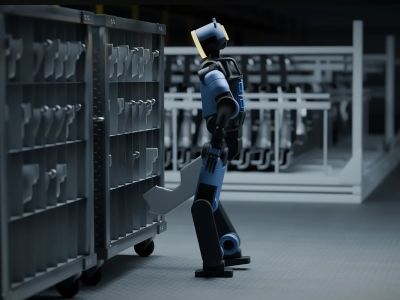 Atlas (Electric Atlas, 2025) Atlas (Electric Atlas, 2025) | Boston Dynamics | 42 lb agile payload | Dynamic heavy tasks |
| #2 | 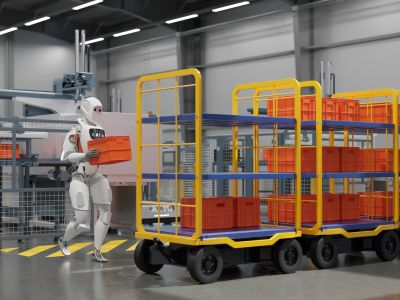 Apollo Apollo | Apptronik | 30 lb sustained carry | Industrial assembly |
| #3 | 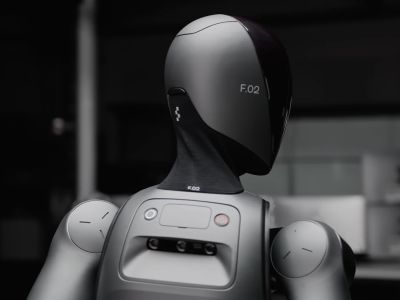 Figure 02 Figure 02 | Figure AI | 35 lb dynamic lift | Warehouse logistics |
| #4 | 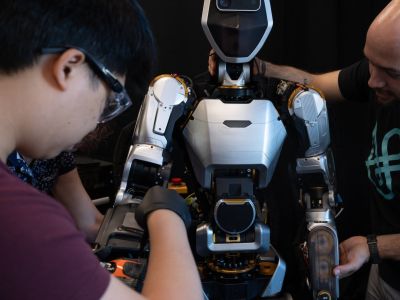 Phoenix Phoenix | Sanctuary AI | 28 lb precise grip | Dexterous manipulation |
| #5 | 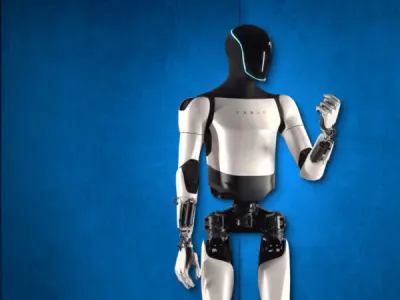 Optimus Optimus | Tesla | 45 lb payload | Factory part handling |
| #6 | 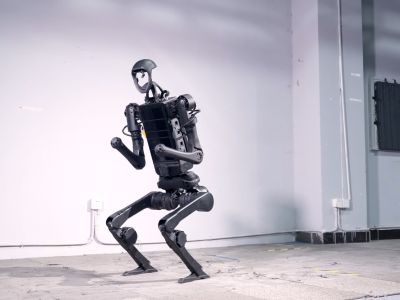 Unitree H1 Unitree H1 | Unitree Robotics | 29 lb high-speed lift | Rapid material transport |
Their combined power sets a new benchmark for humanoid deployment.
Explore the Robots
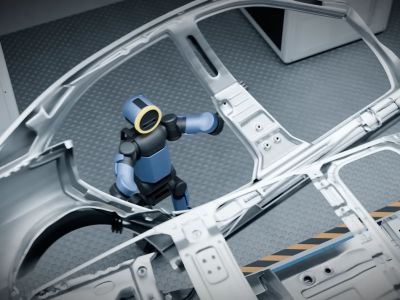
Atlas (Electric Atlas, 2025)
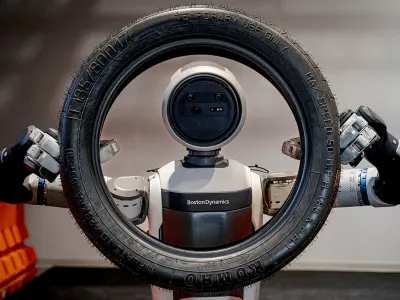
Boston Dynamics' Electric Atlas (2025) revolutionizes dynamic strength, performing acrobatic feats like backflips while carrying heavy loads, ideal for unpredictable sites like disaster response or construction. Engineered for all-terrain agility, it balances payloads during jumps and climbs, outperforming static robots. Its hallmark is the shift to electric actuation for quieter, more efficient power, enabling marathon operations without hydraulic bulk. In practical use, Atlas tackles rescue simulations and rugged inspections, where mobility trumps raw lift capacity. This evolution from prior models emphasizes versatility, positioning it as the go-to for high-mobility, strength-intensive missions.
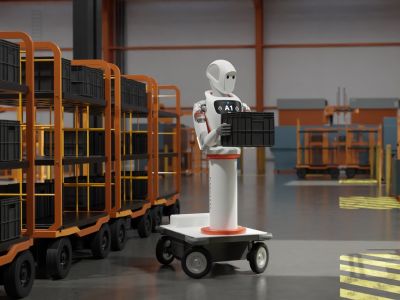
Apollo
Apptronik's Apollo excels in pragmatic industrial roles, partnering with firms for tasks like truck unloading and assembly line support where consistent power meets human collaboration. Built for endurance in real factories, it handles repetitive heavy lifts while integrating into existing workflows seamlessly. Unique is its focus on safety-first design, with force-limiting joints that prevent accidents around co-workers, unlike more experimental humanoids. Deployments highlight its value in e-commerce fulfillment, speeding operations without downtime. Apollo's robust build and straightforward AI make it ideal for immediate ROI, bridging the gap between prototypes and production-scale helpers.
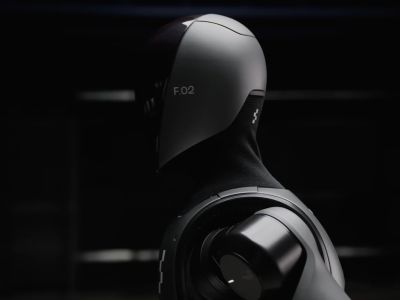
Figure 02
Figure 02 by Figure AI gains attention for rapid deployment in manufacturing partnerships, executing complex sequences like bin picking and palletizing with human-like adaptability. Primarily aimed at labor-intensive warehouses, it autonomously navigates dynamic environments, adjusting to varied object shapes and weights on the fly. Its edge lies in AI trained for broad generalization, allowing on-site learning without extensive reprogramming, setting it apart from task-specific bots. Real-world pilots demonstrate reliability in high-volume settings, boosting throughput while minimizing errors. Figure 02's modular frame supports easy upgrades, positioning it for logistics giants seeking versatile strength over specialized machinery.
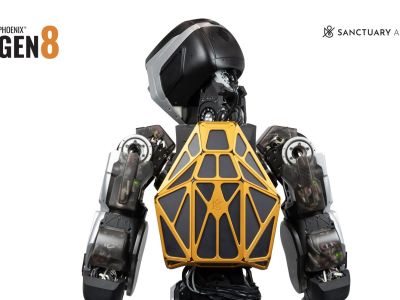
Phoenix
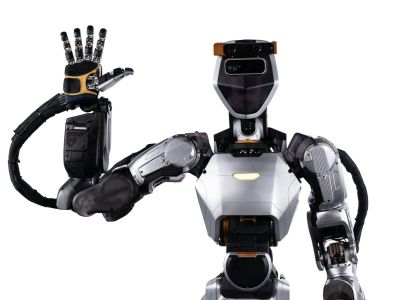
Sanctuary AI's Phoenix shines through its dexterous hand control, mimicking human touch for delicate yet forceful manipulations in assembly and quality checks. Targeted at precision manufacturing, it autonomously adapts to irregular parts, thriving in environments demanding both strength and finesse. What sets it apart is the "cognitive" architecture, blending AI with haptic feedback for intuitive object handling, far beyond visual-only systems. Real-world tests in partner facilities show it excelling at tasks humans avoid, like intricate wiring or packaging. Phoenix's human-centric training data ensures natural interactions, making it a frontrunner for sectors blending power with subtlety.
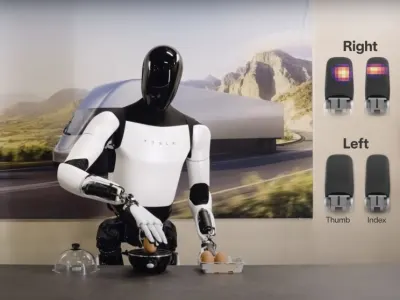
Optimus
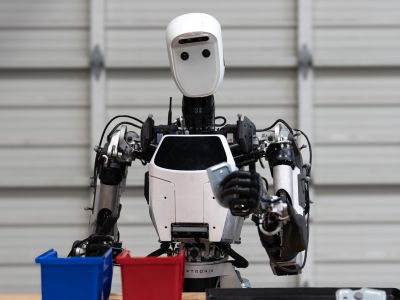
Tesla's Optimus stands out for its seamless integration into factory workflows, performing tasks like sorting battery cells and navigating around human workers without supervision. Designed as a general-purpose assistant, it tackles unsafe or monotonous jobs such as unloading groceries or handling car components, leveraging Tesla's vast self-driving AI dataset for intuitive spatial understanding. What distinguishes it is the single neural network approach, enabling quick skill pickup from human videos, reducing reliance on teleoperation. In real-world use, Optimus thrives in structured factories, collaborating safely with teams on repetitive lifts, and hints at home applications like chores. Its energy-efficient design supports long shifts, making it a scalable workforce multiplier unlike rigid industrial arms.
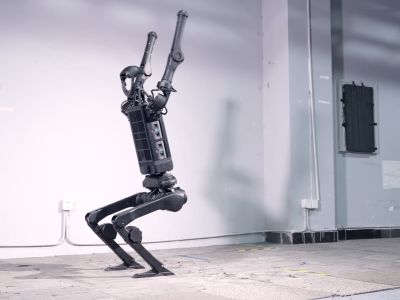
Unitree H1
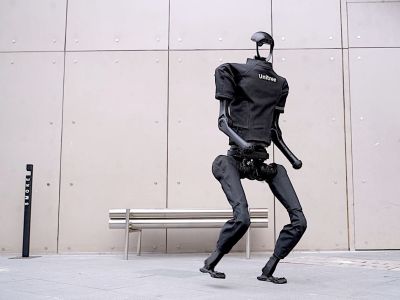
Unitree Robotics' H1 impresses with blazing speed and affordability, sprinting at human paces while lifting loads for quick material shuttling in warehouses or labs. Geared for agile logistics, it dodges obstacles and executes rapid picks in crowded spaces. Distinguishing it is the lightweight, cost-effective build using off-the-shelf scalability, contrasting premium bespoke designs. Real-world demos feature it in research and light industry, accelerating workflows with minimal setup. H1's high joint torque supports snappy responses, making it perfect for fast-paced environments where power meets nimbleness over endurance.
Sources
Related Articles
7 Top Humanoid Robots with Advanced Vision Systems 2026
4/11/2026

6 Most Human-Like Humanoid Robots in 2026
4/11/2026
The 2026 Humanoid Price War: Comparison of Unitree R1 vs. Noetix Bumi and entry-level models
4/11/2026

Humanoid Robots Which Can Help With Daily Household Tasks In 2026
4/11/2026
These Female Robots Look Almost Human – Top 6 in 2026
3/20/2026
Top 7 Industrial Humanoid Robots Transforming Workforces 2026
3/17/2026
Top 10 Home Humanoid Robots for Domestic Tasks & Personal Assistance in 2026
10/5/2026
Top 10 Heavy-Duty Industrial Humanoid Robots for Automotive & Factory Assembly in 2026
10/2/2026
Top 8 Social & Companion Humanoid Robots with Conversational Emotional AI for 2026-2027
9/20/2026