Unitree R1 vs Unitree H2 at a glance
Unitree R1 can be bought now, while Unitree H2 is sold through a sales quote. Unitree R1 is the more affordable option at $4,900, while Unitree H2 costs $29,900. Unitree H2 lasts longer on a charge, about 3 hours against 60 minutes for Unitree R1. Unitree R1 is lighter at 27 kg, compared with 70 kg for Unitree H2. Unitree H2 is the taller of the two at 182 cm, against 123 cm for Unitree R1.
| Key specs | Unitree R1 | Unitree H2 |
|---|---|---|
| Price | $4,900 (stronger) | $29,900 |
| Height | 123 cm | 182 cm |
| Weight | 27 kg | 70 kg |
| Top speed | 2.5 m/s (stronger) | 2 m/s |
| Runtime | 60 minutes | 3 hours (stronger) |
| Degrees of freedom | 26 | 31 (stronger) |
| Payload | — | 7 kg |
| Availability | Available to buy | Order via sales quote |
Last updated:
Which one fits your use?
Based on the uses each robot is built and marketed for. Open a use to see the specs that matter for it.
| Comparing for… | Unitree R1 | Unitree H2 |
|---|---|---|
| Not marketed | Suited | |
| Not marketed | Suited | |
| Suited | Suited | |
| Suited | Suited | |
| Suited | Not marketed | |
| Suited | Not marketed | |
| Not marketed | Suited |
- Only Unitree R1 is marketed for home help and elder care and hospitality, retail and public-facing roles.
- Only Unitree H2 is marketed for warehouse and logistics work, factory and manufacturing work and hazardous or high-risk work.
- Both suit research labs and education and training, so compare the specs for that use.
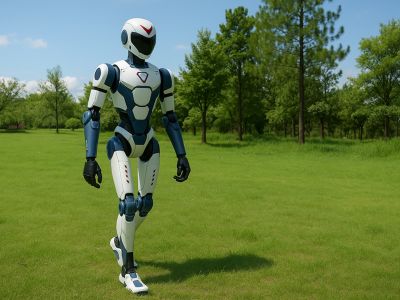
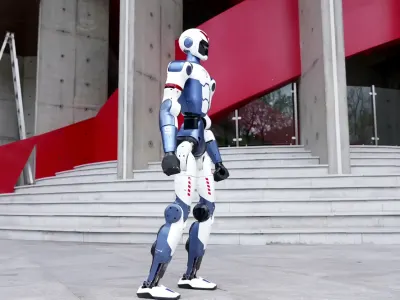
Unitree R1 is the compact, low-cost humanoid from Unitree Robotics, launched in July 2025. It stands 123 cm (4 ft) tall and comes in three versions: R1 AIR, R1 and R1 EDU. The standard R1 has 26 joints, a binocular camera, a four-microphone array and Wi-Fi 6. A quick-release battery gives it about one hour of play and learning per charge.
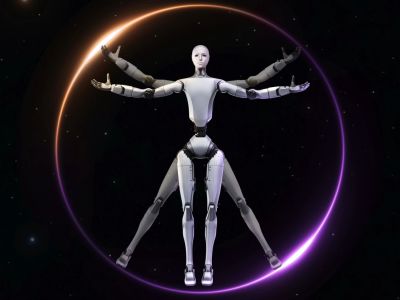
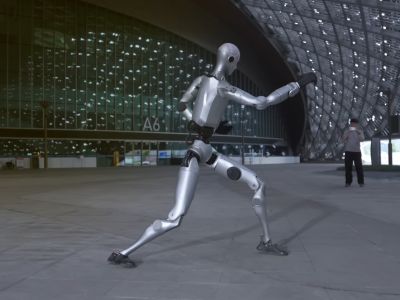
Unitree H2 is the full-size flagship from Unitree Robotics, unveiled in October 2025. It stands 182 cm (6 ft) tall, has 31 degrees of freedom, meaning 31 separate joint movements, and carries a 15 Ah (0.972 kWh) quick-release battery for about three hours of running. Its arms are rated for a payload of about 7 kg, and its head has a bionic face.
Detailed Analysis
Which should you choose, Unitree R1 or Unitree H2?
Unitree R1
Choose the R1 if you want a small humanoid for learning, demos and robot software projects, in a body you can carry and store easily. Choose the H2 if you need a human-size robot with seven-joint arms, a three-hour battery and room to grow into research or service work. The R1 came first, in July 2025, and the H2 is the newer and bigger machine, unveiled three months later. Both come from Unitree, so the real choice is size, runtime and ambition.
How big is each robot, and does size matter?
Unitree H2
The R1 is 123 cm tall and about 29 kg, while the H2 is 182 cm tall and about 70 kg. That is a child-sized robot against an adult-sized one. Size decides what each can reach: the H2 can work at a counter, shelf or desk like a person, and the R1 cannot. The R1 is easier to move, store and test in a small room, and a fall is less costly. The H2 needs open space and a sensible safety distance.
Which robot has more joints and better arms?
Unitree R1
The H2 has 31 degrees of freedom against 26 on the standard R1, and its arms have 7 joints each against 5 on the R1. More arm joints let a robot reach around objects the way a human arm does. Unitree rates the H2 arm payload at about 7 kg, with a peak of about 15 kg. The R1 lists arm joint torque of about 2 kg at its maximum, so it suits gestures, waving and light motion. For lifting a bag, moving a tool or holding a box, the H2 is the only one of the two built for it.
Which robot runs longer on one battery?
Unitree H2
The H2 runs about 3 hours per charge, while the R1 runs about 1 hour. The H2 pack is 15 Ah at up to 75.6 V, which is 0.972 kWh, a figure Unitree publishes; the R1 battery capacity is not listed. Both use a quick-release battery, so an owner can keep a spare pack charged and swap it in. For classroom sessions or short demos, one hour is workable. For long tests or a shift of work, the H2 needs far fewer stops.
Can the R1 and H2 use hands and sensors for real tasks?

Unitree R1
On both, the base model has no dexterous hand; hands are an upgrade on the EDU versions only. The R1 EDU offers an optional hand, and the H2 EDU offers several dexterous hand models. Sensing differs too: the standard R1 has a binocular camera and four microphones, while the H2 carries a wide-view binocular camera and an array microphone with a high-power speaker. If hands matter to your project, plan on an EDU version of either robot and ask Unitree sales for the exact hand options.
Which robot is better for developers and researchers?

Unitree H2
The H2 EDU is the stronger research tool, with an Intel Core i7 computer option, optional high-power modules such as Thor, and a secondary development manual. The R1 EDU also opens secondary development and adds an optional computing module such as Orin at 40 to 100 TOPS. Unitree says R1 control interfaces are open and work with mainstream simulators. The R1 is the lighter, simpler way to test code on a real body; the H2 is where the bigger compute lives.
Is the R1 or the H2 better value for the money?

Unitree R1
The R1 starts at $4,900 for the AIR version and $5,900 for the standard R1, while the H2 starts at $29,900. Taxes and shipping are extra, and the EDU versions are quote-only. That makes the H2 about five times the standard R1. You pay that extra for a much taller body, 5 more joints, three times the runtime and arms with a rated payload. If you only need a humanoid body for software work, the R1 gives far more robot per dollar.
How long is the warranty and how does support differ?

Unitree H2
Unitree sets warranties by version. The R1 AIR carries 6 months, the standard R1 8 months and the R1 EDU 12 months. The H2 carries 8 months, and the H2 EDU 12 months. Both receive over-the-air software updates, which means new motion skills arrive without a visit. The EDU tier is the longest cover on both robots, so teams that depend on uptime, such as a university lab running daily sessions, get the best protection from the 12-month versions. Check the full terms in the warranty brochure before you buy.
Which robot suits a home, a classroom or a lab?
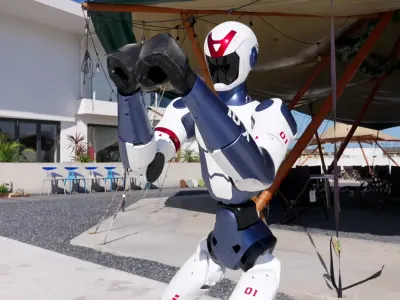
Unitree R1
The R1 suits a classroom, a maker space or a desk-sized lab, where a 29 kg robot is easy to handle and a one-hour battery is enough. The H2 suits a research lab or a showroom that needs a human-size figure with a bionic face and strong legs, rated at 360 N·m of joint torque. Neither is a household helper out of the box. For a first humanoid in a small space, start with the R1; for a serious platform, the H2.
Capabilities & Operational Tasks
Head-to-head comparison of what Unitree R1 and Unitree H2 can do, their applications, and capabilities.
What Can Unitree R1 & Unitree H2 Do?
187 tasks listed for both, 2 only for Unitree R1, 9 only for Unitree H2.
Both Unitree R1 and Unitree H2
7Only Unitree R1
2Only Unitree H2
9Technical Specifications
Unitree R1 and Unitree H2 differ on 37 of the 38 specifications listed for both.
Manipulation & Load Capacity
4 Comparative Metrics
Kinematic Architecture & Dexterity
3 Comparative Metrics
Energy & Power Management
7 Comparative Metrics
Frequently Asked Questions
Can the Unitree R1 and H2 be programmed by developers?
Yes, on the EDU versions. Unitree offers secondary development on the R1 EDU and H2 EDU, and the H2 EDU comes with a developer manual. The standard R1 and H2 do not include it.
Do the Unitree R1 and H2 get software updates?
Yes. Unitree lists over-the-air updates for both robots, so new motion skills and fixes arrive remotely. The R1 page also says it uses a large multimodal model for voice and images.
Can the R1 or H2 use dexterous hands?
Only the EDU versions. The R1 EDU lists an optional dexterous hand, and the H2 EDU lists several dexterous hand models. The base R1 and base H2 do not include them.
Can I swap the battery on the Unitree R1 and H2?
Yes. Unitree lists a quick-release smart battery for both robots, so a charged spare can replace a tired one. The H2 pack is 15 Ah at up to 75.6 V.
Which Unitree humanoid has the better computer?
The H2. Unitree describes a 2070 TOPS chip and an Intel Core i5 computer, with i7 on EDU. The R1 EDU can add an optional computing module such as Orin at 40 to 100 TOPS.
Does the R1 or H2 have a camera and microphones?
Yes, both do. The base R1 carries a binocular camera, four microphones and a speaker. The H2 has a wide-view binocular camera, an array microphone and a high-power speaker for voice interaction.
Can I buy Unitree R1 or Unitree H2 today?
Unitree R1 can be bought now, while Unitree H2 is sold through a sales quote.
Which costs less, Unitree R1 or Unitree H2?
Unitree R1 costs less at $4,900, against $29,900 for Unitree H2.
Which is lighter, Unitree R1 or Unitree H2?
Unitree R1 is lighter at 27 kg, compared with 70 kg for Unitree H2. Unitree H2 is also taller, at 182 cm against 123 cm for Unitree R1.
Which uses is each robot marketed for, Unitree R1 or Unitree H2?
Only Unitree R1 is marketed for home help and elder care and hospitality, retail and public-facing roles. Only Unitree H2 is marketed for warehouse and logistics work, factory and manufacturing work and hazardous or high-risk work. Both suit research labs and education and training, so compare the specs for that use.
How much does Unitree R1 cost?
Unitree R1 is listed at $4,900.
How much does Unitree H2 cost?
Unitree H2 is listed at $29,900.
Where can I buy Unitree R1?
Unitree R1 is sold by Unitree Robotics.
Where can I buy Unitree H2?
Unitree H2 is sold through Unitree Robotics's sales team; request a quote.
Related Comparisons
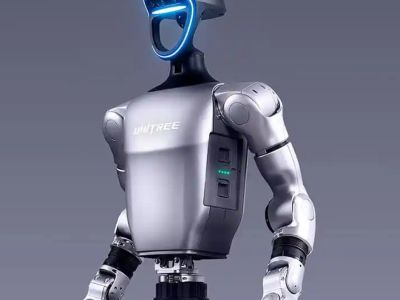
Unitree G1 vs Unitree H2
In-depth comparison of Unitree G1 and Unitree H2, covering hardware capabilities, teleoperation, and enterprise readiness.
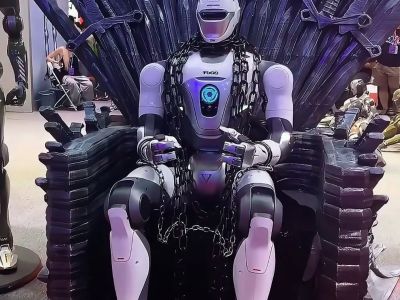
Unitree H2 vs T800
Which robot wins? Unitree H2 vs T800 compared across navigation, battery, sensors, mobility, and price.

Optimus vs Unitree G1
Compare Optimus vs Unitree G1 for humanoid mobility, dexterity, autonomy, and payload capacity.
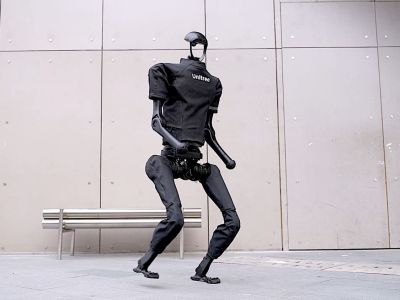
Unitree G1 vs Unitree H1
Head-to-head: Unitree G1 vs Unitree H1 compared on bipedal balance, AI learning, and real-world deployment.
Verdicts reflect our research and opinion. Confirm specifications with the manufacturer before buying.