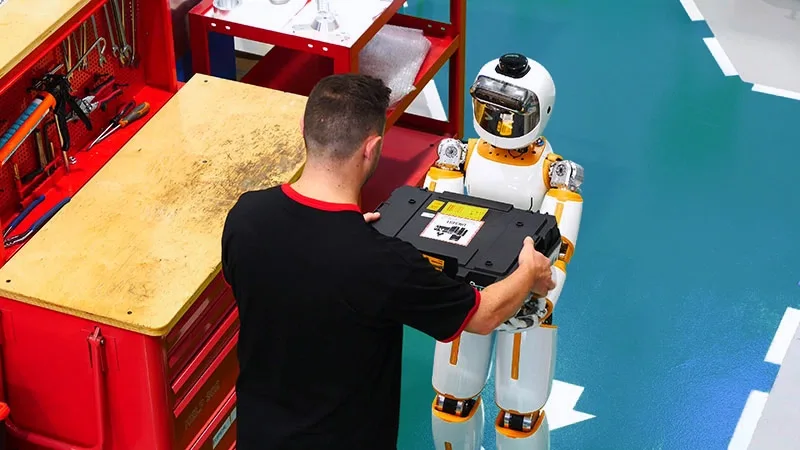
ErgoCub Humanoid Robot
AI ChatLast updated:
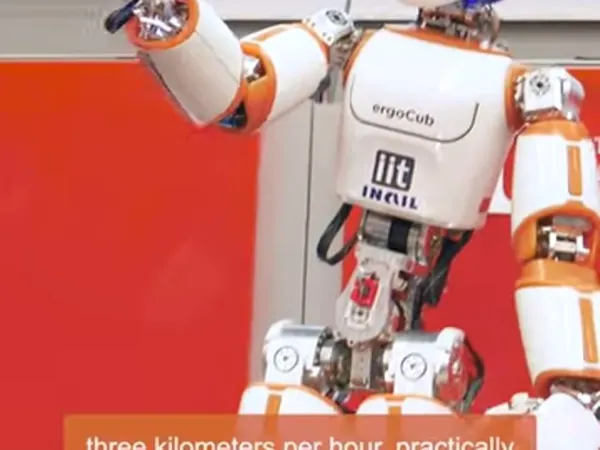
ergoCub is a 1.5 m, 55.7 kg humanoid robot developed by the Italian Institute of Technology (IIT) with INAIL, Italy's workers' compensation authority, as an evolution of the iCub robot. It was designed for physical collaboration with people: its geometry minimizes the joint effort of shared lifting tasks, so it can help reduce the musculoskeletal injuries that heavy lifting causes. It carries up to about 10 kg, walks at roughly human walking speed, works with the iFeel wearable sensors that track a worker's motion, and was presented on September 21, 2023 at IIT's 20th-anniversary celebrations in Genoa.
Quick Overview & Key Facts
ErgoCub Humanoid Robot is a humanoid robot made by Italian Institute of Technology (IIT) in Italy, launched in 2023 and built for collaborative lifting and load transport in warehouses and workshops, reducing biomechanical risk for workers, and support for health workers and rehabilitation settings. Its estimated price is Not commercially sold; replication cost estimated at $250,000 – $500,000.
- Dimensions
- 150 cm tall
- Weight
- 55.7 kg
- Mobility
- Bipedal (legged)
- Payload capacity
- Boxes, tool cases and workshop parts up to about 10 kg (from official demonstrations)
- Battery runtime
- Approx. 1–2 hours per charge
- Charging time
- 1–2 hours
- Sensors
- Intel RealSense depth cameras, LiDAR, force-torque sensors and a 2K OLED face display (published)
- Operating environment
- Indoor warehouses, workshops and laboratory or hospital-like environments
What Can ErgoCub Humanoid Robot Do?
Core operational tasks and activities demonstrated or performed by ErgoCub Humanoid Robot.
Real-World Applications of ErgoCub Humanoid Robot
Industries, working environments, and deployment suitability for ErgoCub Humanoid Robot.
ErgoCub Humanoid Robot Capabilities
Inherent physical, perceptual, and cognitive abilities built into ErgoCub Humanoid Robot.
Image Gallery
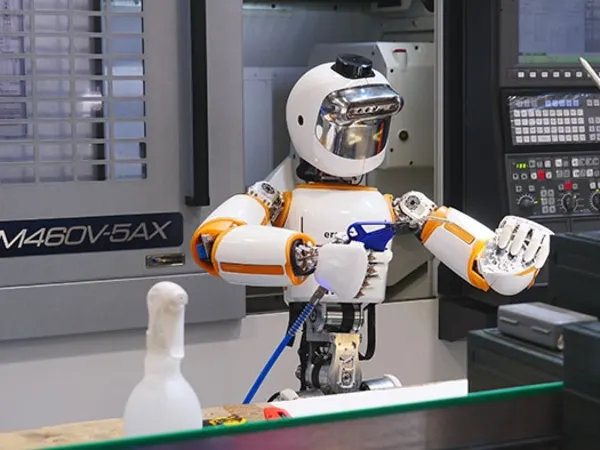
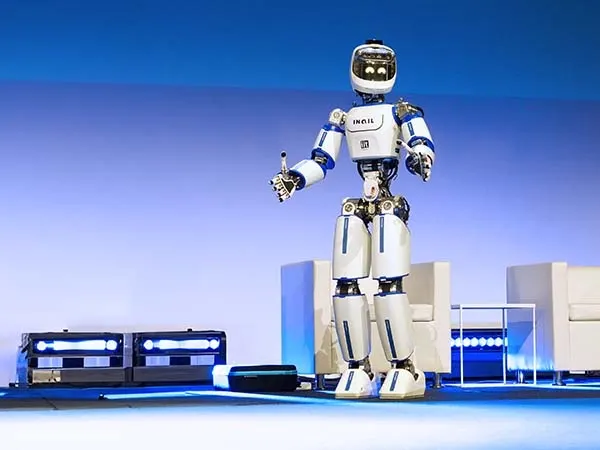
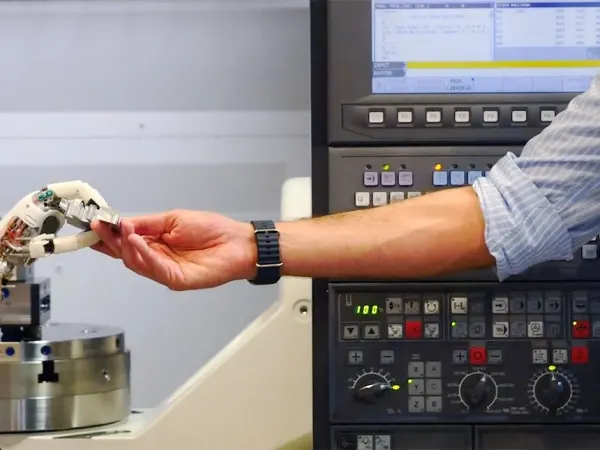
Below images are from Italian Institute of Technology (IIT)'s official sources
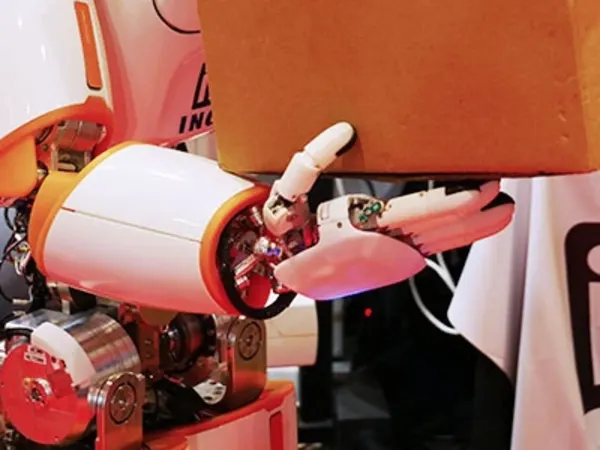
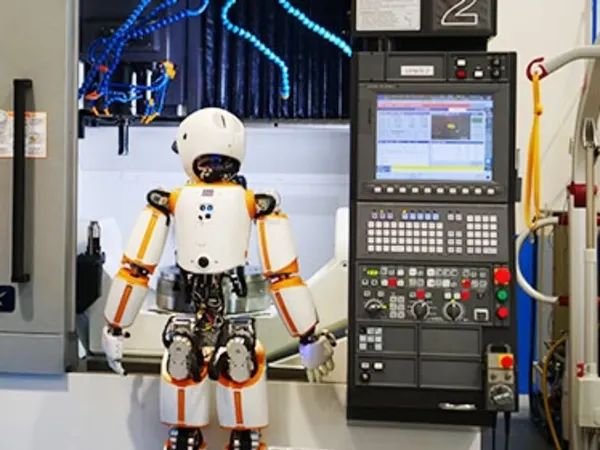
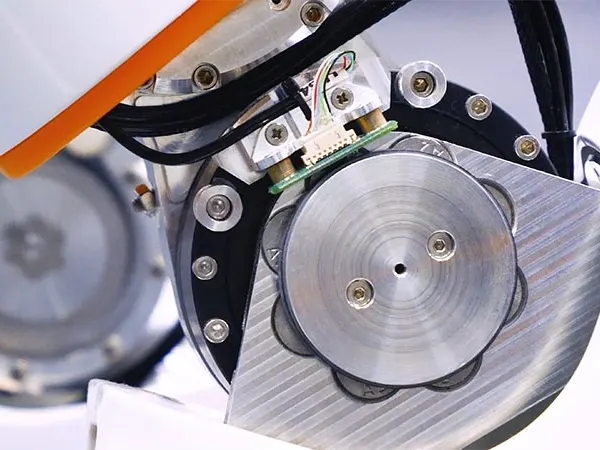
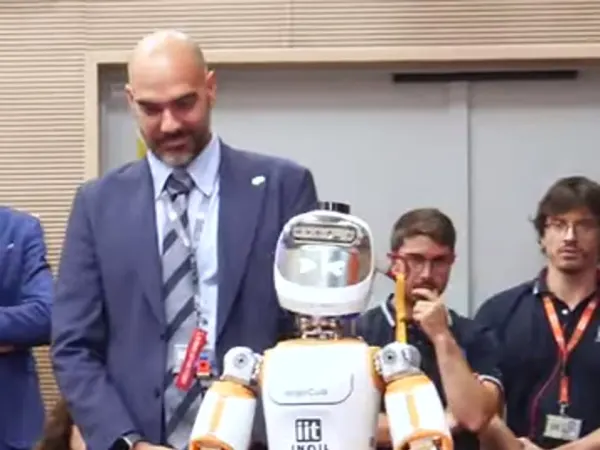
Review Videos
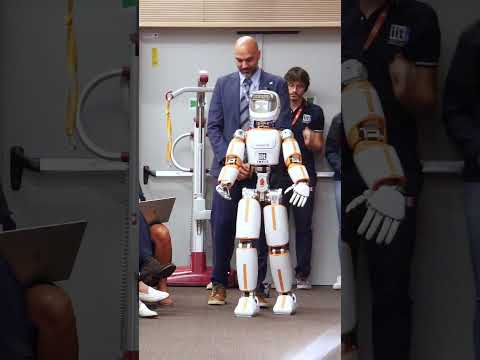
Watch expert reviews and demonstrations of this robot
Robot Specifications
Values without a Confirmed badge are compiled from public sources and may not be manufacturer-verified.
Not yet published by Italian Institute of Technology (IIT): warranty terms, safety certifications, EMC compliance, IP rating, noise level, expected lifespan, maintenance schedule, firmware version and 6 more.
Robot Timeline
Key milestones in this robot's development and rollout
IIT presents ergoCub at its 20th-anniversary celebrations in Genoa, developed with Italy's INAIL.
Source: IIT Talk ↗
The ergoCub project receives the Responsible AI Change Maker award from the Global Partnership on AI (GPAI).
Source: ergoCub project site ↗
ergoCub is demonstrated live at the European Parliament in a workshop on robotics and AI.
Source: ergoCub project site ↗
At the We Make Future event, ergoCub is teleoperated from Genoa while the robot is in Bologna, about 300 km away, alongside a demo of its autonomy.
Source: ergoCub project site ↗
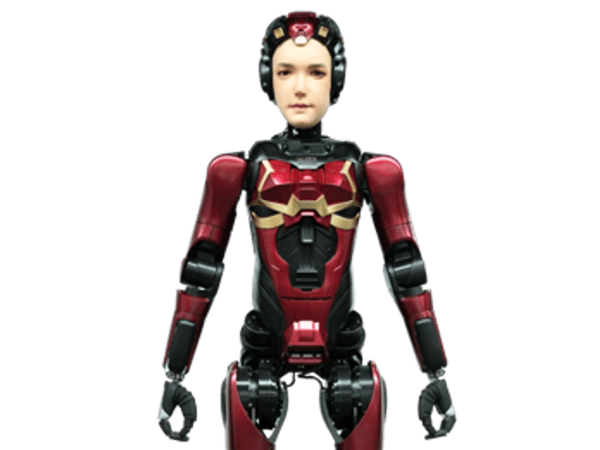
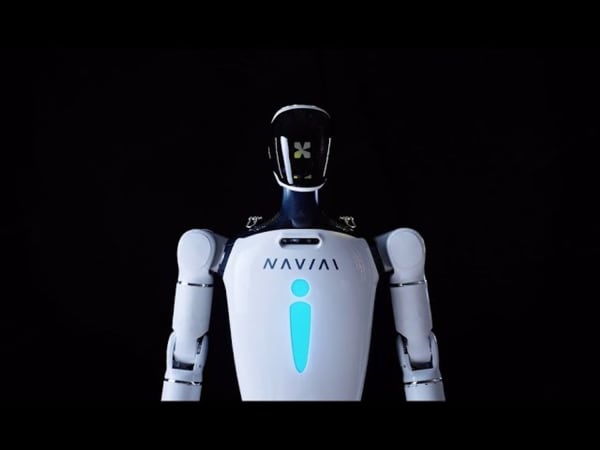
ErgoCub Humanoid Robot vs Xia Lan S02, NAVAI Navigator 2, Unitree H1 and GR-1
ErgoCub Humanoid Robot overlaps with these alternatives on Healthcare and Industrial automation; only ErgoCub Humanoid Robot is tagged for Remote control (teleoperation). ErgoCub Humanoid Robot trails the closest alternatives on max speed and weight.
Industries and capabilities are tags, not scores: a tick means the robot is listed for it. Green marks the best figure in a row (highest max speed and runtime; lowest weight). Ranges are not ranked.
| Spec | ErgoCub Humanoid RobotItalian Institute of Technology (IIT) | Xia Lan S02Digit Robotics | NAVAI Navigator 2Zhejiang Humanoid Robot Innovation Center | Unitree H1Unitree Robotics | GR-1Fourier Intelligence |
|---|---|---|---|---|---|
| Industries | |||||
| Healthcare | Yes | No | No | No | Yes |
| Industrial automation | Yes | Yes | No | Yes | Yes |
| Research and development | Yes | Yes | Yes | Yes | Yes |
| Warehousing | Yes | Yes | Yes | Yes | Yes |
| Capabilities | |||||
| Force control | Yes | No | No | Yes | Yes |
| Human-robot interaction | Yes | No | Yes | Yes | Yes |
| Remote control (teleoperation) | Yes | No | No | No | No |
| Bipedal locomotion | Yes | Yes | Yes | Yes | Yes |
| Max Speed | 0.83 m/s | 1.5 m/s | 1.67 m/s | 3.3 m/s | 1.39 m/s |
| Runtime | 60–120 min | 120 min | 120 min | 90–120 min | 120 min |
| Weight | 55.7 kg | 69 kg | 60 kg | 47 kg | 55 kg |
| Released | 2023 | 2025 | 2024 | 2023 | 2023 |
Notes such as conditions or alternate figures are left out and values are shown in common units; open each page for the full specs. Browse all Humanoid Robots
More Robots from Italian Institute of Technology (IIT)
Explore other robots from this manufacturer

iRonCub
Manufactured by Italian Institute of Technology (IIT)
iRonCub is a groundbreaking jet-powered flying humanoid robot developed by IIT's AMI lab, transforming the iCub3 platform into the world's first humanoid capable of controlled flight. Equipped with four micro-jet engines—two on the arms and two on a backpack jetpack—it generates over 1000 Newtons of thrust to achieve stable hover up to 50 cm, managing extreme heat over 800°C via a titanium spine and heat-resistant covers. Advanced AI control systems, including neural networks and UKF pose estimation, enable human-like balance amid turbulent airflows, shifting center of mass, and limb movements. Onboard sensors like IMU and depth cameras support real-time flight dynamics, multibody aerodynamics, and non-stationary maneuvers. Designed for research in aerial humanoid robotics, it pioneers applications in search-and-rescue, hazardous inspections, and disaster response, blending bipedal morphology with unprecedented aerial agility.
More Humanoid Robots
Discover more robots in the same category
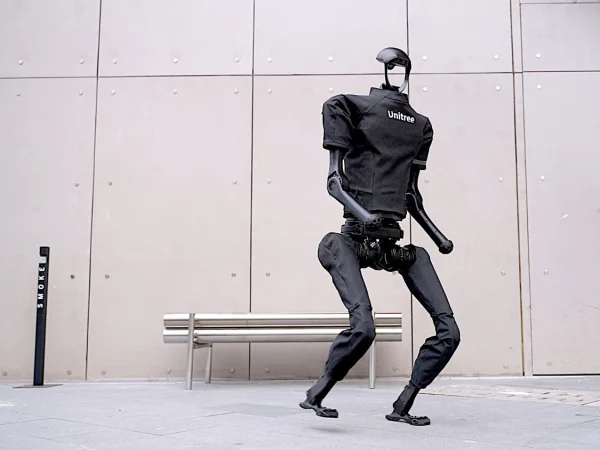
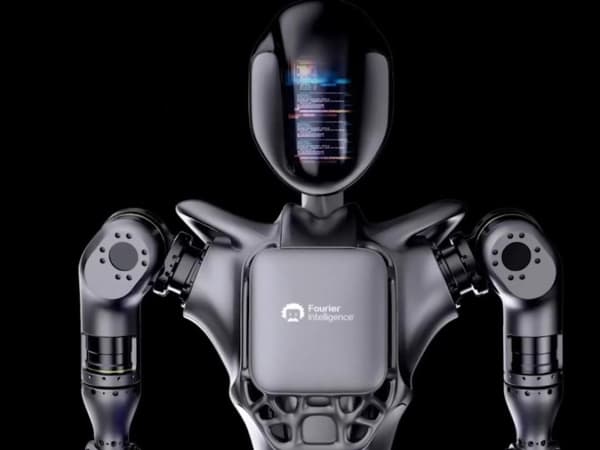
Robots From Other Categories
Discover complementary robots from different categories that work well together
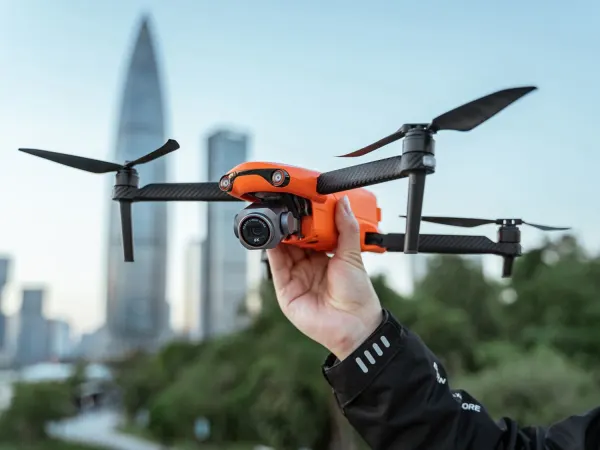
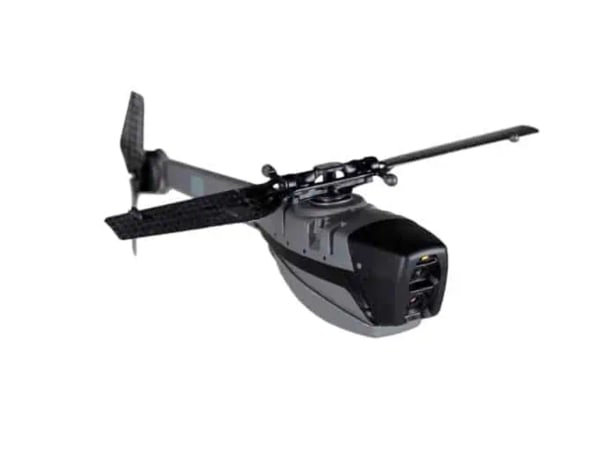
Frequently Asked Questions
Get answers to common questions about this robot
Q1. What is ErgoCub Humanoid Robot, and what problem is it designed to solve?
ergoCub is a humanoid robot built by the Italian Institute of Technology and INAIL to help people lift and carry heavy loads safely. It aims to reduce the muscle and joint injuries that heavy manual work causes.
Q2. What are the main capabilities and key features of ErgoCub Humanoid Robot?
Its body is designed so shared lifting takes minimal joint effort, and it can estimate the strain on a worker's lower back while they lift together. It walks at human pace, carries loads, recognizes what a person wants to do, and navigates warehouses.
Q3. Who is ErgoCub Humanoid Robot built for, and which industries can benefit from it?
It is built for future workers and employers in industry, logistics and healthcare who face musculoskeletal risks, and for researchers studying human-robot collaboration.
Q4. Is ErgoCub Humanoid Robot a commercial product or still a research prototype?
It is a research prototype developed through a public-private project, not a commercial product, although its software is open and its results are aimed at real workplaces.
Q5. Is ErgoCub Humanoid Robot currently available for purchase, and when is it expected to ship?
No. ergoCub is not sold. Interested organizations would collaborate with IIT and INAIL through the ergoCub project team.
Q6. How does ErgoCub Humanoid Robot actually work in real-world environments?
A worker wearing the iFeel sensor suit shares body-motion data with the robot, and AI modules estimate risk, plan the joint task and control the robot's balance and arms. Its depth cameras and LiDAR help it navigate and identify objects.
Q7. When was ErgoCub Humanoid Robot announced or officially launched?
IIT presented ergoCub on September 21, 2023, at its 20th-anniversary celebrations in Genoa.
Q8. How is ErgoCub Humanoid Robot different from other robots in the same category?
Most humanoids focus on autonomy or speed. ergoCub is designed around physical collaboration and ergonomics, evolving from the iCub robot and paired with wearable technology that monitors the human partner.
Q9. Does ErgoCub Humanoid Robot require additional development or customization after purchase?
Yes. As a research platform it needs setup by robotics teams, and IIT provides open-source software, simulation models and documentation for those who want to build on it.
Q10. What is the future roadmap or planned upgrades for ErgoCub Humanoid Robot?
IIT is developing improved joint modules for an ergoCub 2.0 and continues to advance the robot's autonomy, load capacity and collaboration skills, including live teleoperation and warehouse navigation demonstrations.
Rating and Reviews
Share your experience and help others decide!
Loading...
User Reviews
No user reviews. Be the first one to review!
User Comments (No Login needed)
Share your thoughts, experiences, or questions about this robot.
Comments appear after moderator review.