The Cheapest Humanoid Robots You Can Order, Ranked by Listed Price (2026)
The Short Answer: Bumi Is the Cheapest Humanoid Robot
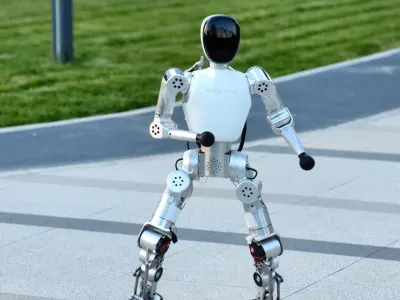
The cheapest humanoid robot you can order in 2026 is the Noetix Bumi, listed at 9,998 yuan, which is about 1,400 US dollars. It is a child-size walking robot, 94 cm tall and 12 kg, made for schools, hobbyists and families. The Nori A3 comes next at 1,688 dollars, and the PrimeBot Q1 follows from 19,999 yuan. The cheapest full-size walker in the list is the Unitree R1 at 4,900 dollars.
A low number on the label does not mean the same thing across these seven robots. Some walk on two legs, some roll on wheels, and one cannot grip anything. The table below puts the listed prices side by side, and each robot then gets a short profile that says what the money buys.
Quick Overview
Seven robots, ordered from the lowest listed price to the highest. Prices are the base model on each maker's own page.
| Rank | Robot | Manufacturer | Key Strength | Best For | Listed Price |
|---|---|---|---|---|---|
| #1 | 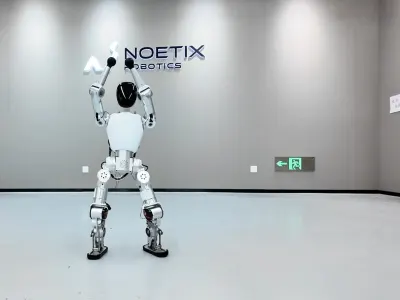 Bumi | Noetix Robotics | 94 cm walker, 12 kg, programmable | Schools and families | 9,998 yuan (about $1,400) |
| #2 |  Nori A3 | Nori Robotics | Two arms, 6 to 8 hours of battery | Kitchen and home chores | $1,688 |
| #3 |  Q1 | PrimeBot | 88 cm walker, 22 joints, open SDK | Companionship and coding | From 19,999 yuan (about $2,800) |
| #4 |  Flourish 1 | Flourish Robots | Runs 12 hours, learns chores from a phone | Tidying a home | $3,555 |
| #5 | 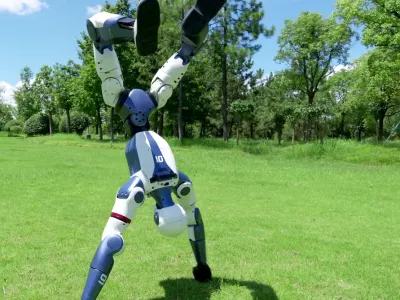 Unitree R1 | Unitree Robotics | 123 cm full-size walker, runs at 2.5 m/s | Developers and teaching | $4,900 |
| #6 |  K1 Humanoid | Booster Robotics | 22 joints, built for robot soccer | Education and competitions | From $4,999 |
| #7 |  EngineAI SA01 | EngineAI | 40 kg biped with swappable battery | Walking research | 42,000 yuan |
The gap between the first and last robot is under four thousand dollars, but the jobs they do are very different. Read the profiles before you pick on the number alone.
Explore the Robots
Bumi
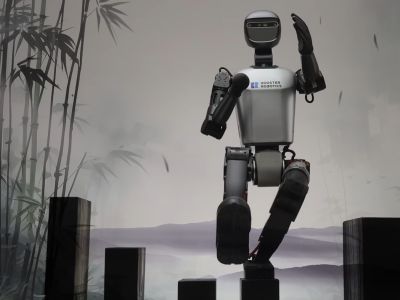
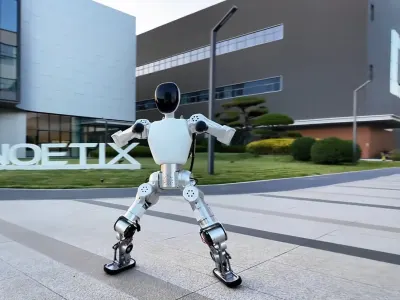
The Bumi ranks first because it carries the lowest listed entry point of any walking humanoid we track. Noetix Robotics of Beijing launched it in October 2025 as a child-size robot, 94 cm tall and 12 kg. It walks on two legs at 0.8 m/s and can dance. It runs about 1.5 hours per charge, takes 2 hours to recharge, and works with ROS 2, Python and C++. Noetix points it at education, home companionship and entertainment, and it supports drag and drop programming for children. The limits are its short battery, its small size and a light carrying ability. Buying goes through the maker's sales form. It suits schools, young learners and families who want a first walking robot.

Nori A3
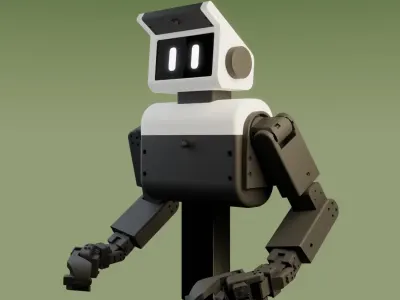
The Nori A3 ranks second because it lists at 1,688 dollars for a full, assembled robot that does real work. Nori Robotics assembles it in San Francisco and ships in fall 2026. It has two arms with seven joints each plus a gripper, and each arm lifts 1.5 kg. A telescoping column lets it reach from 69 to 145 cm, and it rolls on a wheeled base. It carries a 12 m lidar and four cameras, and runs 6 to 8 hours per charge. You teach it with demonstrations through a laptop app, and the software is open. It cannot walk or climb stairs. It suits home cooks and tinkerers who want an arm robot for kitchen tasks.

Q1
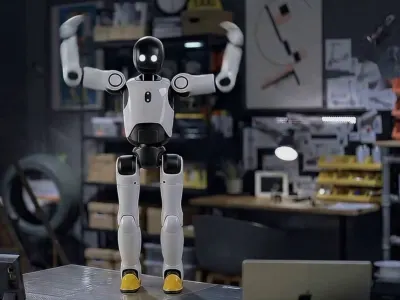
The Q1 ranks third because PrimeBot lists it from 19,999 yuan, which the maker's launch coverage puts at about 2,800 dollars. The brand, known as Qiyuan in China, opened sales in Shanghai on 20 September 2026 and began deliveries on 1 October. The Q1 is an 88 cm walking robot with 22 joints and an open SDK. Owners can change its look, voice and personality, and it links to large language models for conversation. It runs about an hour per charge and needs 1 to 1.5 hours to recharge. The maker has not announced sales outside China, and it does not do household chores. It suits companionship, teaching and developers who like to customize.

Flourish 1
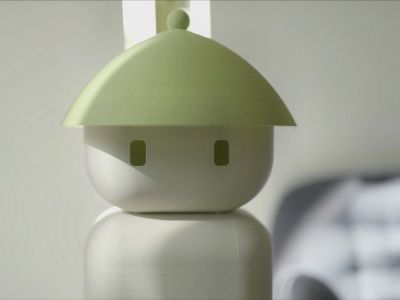
The Flourish 1 ranks fourth because it is the lowest listed robot here that is built to tidy a home. Flourish Robots stands it 3 ft 7 in tall (109 cm) and 44 lb, with a six-wheel base and two arms. It lifts 3.3 lb, reaches from the floor up to 35 in and runs 12 hours per charge. You teach it a chore with about 30 minutes of phone-driven demonstrations, and the cloud training is ready about an hour later. It handles shoes, toys, dishes, plants and a litter box. Only 50 numbered units ship, starting in December 2026, and it does not walk. It suits owners who want a patient helper for small daily jobs.
Unitree R1
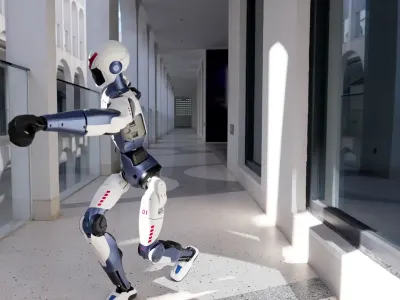
The Unitree R1 ranks fifth because it is the lowest-listed full-size walking humanoid that is in stock. Unitree stands it 123 cm tall at 29 kg, with 20 to 26 joints. It runs at up to 2.5 m/s, and it has done cartwheels and backflips in public demonstrations. A charge lasts about an hour, recharging takes about 1.5 hours, and the battery is hot swappable. The standard model has fixed fists, so it cannot lift or hold anything. It comes with a Python and C++ SDK and an 8 month warranty. Shipping and import duties are paid by the buyer. It suits developers, labs and teachers who want a fast, full-size walker.

K1 Humanoid
The K1 Humanoid ranks sixth because Booster Robotics lists it from 4,999 dollars, just above the Unitree R1. It stands 95 cm tall and weighs 19.5 kg, with 22 joints: six in each leg, four in each arm and two in the head. The Geek edition runs 30 minutes and the Education and Professional editions run 80 minutes, with a charge time of one hour or less. It carries a 3D depth camera, a microphone array and touch sensors, and works with ROS and Python. It was built with RoboCup soccer in mind, and orders go through Booster's inquiry form. It suits classrooms, robot soccer teams and learners who want a compact robot with an open toolkit.

EngineAI SA01
The EngineAI SA01 ranks seventh because its listed 42,000 yuan is the highest of the seven. It is also the heaviest walker on the list at 40 kg, which gives it more mass and more weight to carry than the smaller robots here. EngineAI sells it through its own purchase page, and a JD.com listing exists too. It runs about 2 hours per charge, recharges in 1.5 hours and has a swappable battery. It works with ROS 2 on Linux and has an SDK for research. Its limits are the size, the short run time and lighter tasks. It suits universities and developers studying walking, balance and learning methods.
How to Choose Between Them
Start with what you want the robot to do. If you want a robot that works in a kitchen, the Nori A3 and the Flourish 1 are the two built for chores, because both have two arms with grippers and a wheeled base. If you want a robot that walks, runs and dances, the Bumi, the Q1, the Unitree R1, the K1 Humanoid and the EngineAI SA01 are the walkers.
Check the hands. The Unitree R1 has fixed fists, so it cannot pick anything up. The Nori A3 lifts 1.5 kg with each arm, and the Flourish 1 carries 3.3 lb (about 1.5 kg). Robots made for walking and teaching are usually weak at holding things, so match the arms to the job before you match the budget.
Look at how long it runs. The Booster K1 Humanoid runs 30 minutes in its Geek edition and 80 minutes in the Education and Professional editions. The PrimeBot Q1 runs about an hour, the Unitree R1 about an hour, and the Bumi 1.5 hours. The Nori A3 runs 6 to 8 hours and the Flourish 1 runs 12 hours, because wheeled robots use far less power than walkers. A short battery is fine for a classroom lesson and a problem for anything else.
Ask how and when you can get it. The Unitree R1 is in stock on the maker's store, but shipping adds 300 to 1,200 dollars and you pay your own import duties. The Flourish 1 takes a 200 dollar refundable deposit and ships in December 2026 in a run of 50 units. The Nori A3 ships in fall 2026. The PrimeBot Q1 is on sale in China, and the maker has not announced sales outside China.
Think about the software. The Unitree R1, the Booster K1 Humanoid and the EngineAI SA01 come with developer kits and suit people who want to write code. The Nori A3 uses an open SDK and a common dataset format, so you can train it on your own tasks. If you want a robot that simply does chores without coding, none of the seven is there yet.
A quick way to pick: the Bumi for a child or a classroom, the Nori A3 or the Flourish 1 for home chores, the Unitree R1 for a full-size robot that runs, the Booster K1 Humanoid for robot soccer and teaching, and the EngineAI SA01 for a larger robot that carries more weight.
How We Ranked These Robots
We started with the live humanoid robots in our database that list a price on the maker's own page or purchase page, and ranked them by that number, lowest first. Where a maker lists several editions, we used the base model. Prices in other currencies are shown as the maker lists them, with the dollar figure the maker or its launch coverage gives.
We left out desktop and toy-size robots under 5 kg, such as the small humanoids from Faraday Future, Zeroth and UBTECH's Alpha line, because they are collectors' items and teaching toys, not robots that do work. We also left out robots sold only by quote, robots rented by the month, and robots whose price is a target for a later launch.
A listed price is what the maker asks for the robot, not the full cost of owning it. Shipping, import duties, extra batteries, software plans and repairs can add to it, and the makers change prices without notice. Check the maker's page before you order. When one maker sells several versions, we picked the newest model that is on sale today.
Frequently Asked Questions
What is the cheapest humanoid robot you can buy?
The Noetix Bumi is the cheapest walking humanoid we track, at 9,998 yuan (about 1,400 US dollars). It is 94 cm tall and made for schools and families. The Nori A3 is next at 1,688 dollars and is built for kitchen chores. Both are far cheaper than any robot made for factories.
What is the cheapest full-size humanoid robot?
The Unitree R1 at 4,900 dollars is the cheapest full-size walking humanoid in stock on the maker's store. It stands 123 cm tall and runs at 2.5 m/s. Shipping adds 300 to 1,200 dollars, and you pay import duties yourself. Its fixed fists cannot hold objects.
Can a cheap humanoid robot do household chores?
A few can handle small tasks. The Nori A3 and the Flourish 1 both have two arms and are built for tidying, dishes and fetching light items. Neither walks, and each lifts about 1.5 kg. The walking robots on this list, such as the Bumi and the Unitree R1, are made for teaching and demos, not chores.
Are cheap humanoid robots worth buying?
They are worth it if you want to learn, teach or build, because they come with open tools and let you program a real robot. They are not worth it if you expect a machine that cleans, cooks and folds with no effort. Every robot here is limited by short battery life, light carrying ability or both.
Why are Chinese humanoid robots so cheap?
Makers such as Noetix say they keep costs down by building most parts in one supply chain, redesigning the body to use fewer parts and making small robots in volume. The robots are also small and light, which means smaller motors and batteries. A full-size factory robot weighs far more and costs far more.
Can I buy these humanoid robots outside China?
Some, yes. Unitree ships the R1 worldwide from its store, with the buyer paying shipping and duties. The Nori A3 and the Flourish 1 are made for the United States market. The Bumi and the K1 Humanoid are sold through sales or inquiry forms, and PrimeBot has not announced sales outside China.
How much does a humanoid robot cost in total?
The listed price is only the start. Add shipping, import duties, spare batteries, repairs and any software plan. Flourish includes six months of cloud training, then charges 50 dollars a month if you continue. Resellers can charge more: a European retailer lists the Booster K1 from 9,000 euros with VAT. Check the maker's page first.
Sources
- Bumi Profile
- Nori A3 Profile
- Q1 Profile
- Flourish 1 Profile
- Unitree R1 Profile
- K1 Humanoid Profile
- EngineAI SA01 Profile
- China’s Noetix Robotics unveils $1,370 humanoid robot “Bumi”
- NORI A3 — Affordable bimanual robot
- PrimeBOT Launches Personal Robots at 19,999 Yuan, Betting on Apps and Companionship
- Flourish
- Unitree R1
- Store | Booster Robotics
- Product Purchase
- Booster K1 humanoid robot
Related Articles
Humanoid Robots With ROS 2 Support in 2026: Which Ones Really Work With It
11/16/2026
Which Humanoid Robots Are Built in Germany? 8 Models Compared for 2026
11/15/2026
Humanoid Robots With a Sense of Touch in 2026: Tactile Hands Compared
11/14/2026
Best Chinese Humanoid Robots in 2026: 10 Models Ranked by What You Can Actually Get
11/19/2026
Humanoid Robots That Teach Kids, Compared (2026)
11/18/2026
Best Humanoid Robots in 2026: Our Top 7 Picks, Ranked by Real Use
11/16/2026