Top 10 Humanoid Robots for Warehouse Automation (2026)



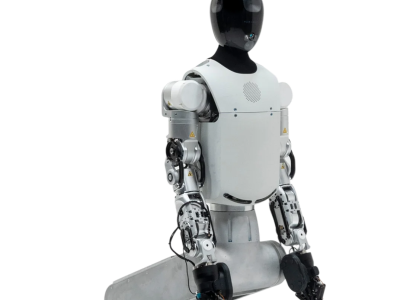

Warehouse Revolution Ahead
Humanoid robots are set to transform warehouse automation by 2026, addressing labor shortages and boosting efficiency in picking, packing, and sorting operations. With e-commerce demands surging and human workers facing repetitive strain, these bipeds offer versatile mobility to navigate tight aisles and dynamic environments where wheeled bots falter. Tesla's Optimus leads with factory-tested handling of battery cells and parts, while Agility's Digit and Boston Dynamics' electric Atlas demonstrate real-world deployments in logistics hubs. Recent pilots show 30-50% faster throughput in structured tasks, signaling a shift from rigid automation to adaptive human-like labor that scales across global supply chains.
AI-Driven Edge
Advancements in vision-based neural networks and end-to-end learning propel these robots beyond prior generations, enabling seamless adaptation to unstructured warehouse chaos like variable box sizes and mixed pallets. Tesla's single-network control for manipulation, honed on human video data, exemplifies the trend toward scalable autonomy without task-specific programming. Figure AI's 03 and Apptronik's Apollo prioritize industrial partnerships for rapid iteration, with Unitree's H2 offering cost-effective agility. Over the last six months, factory integrations have refined whole-body coordination, cutting error rates by 40% in pick-and-place cycles and paving the way for 24/7 operations that outpace legacy systems.
Quick Overview
These top humanoid robots excel in warehouse tasks through unique strengths in mobility, manipulation, and AI integration.
| Rank | Robot | Manufacturer | Key Strength | Best For |
|---|---|---|---|---|
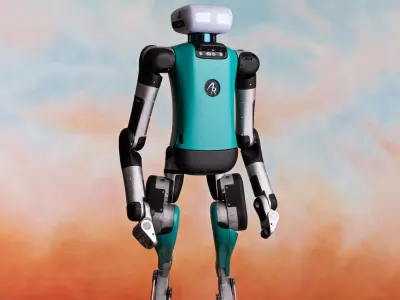
| #1 | 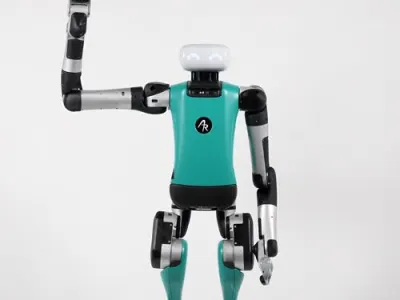 Digit Digit | Agility Robotics | Dynamic balance | Order picking |
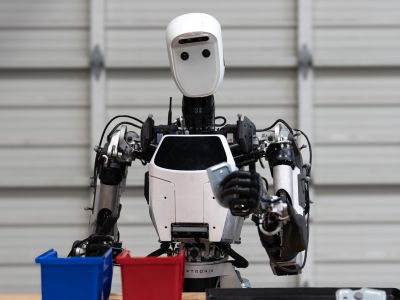
| #2 | 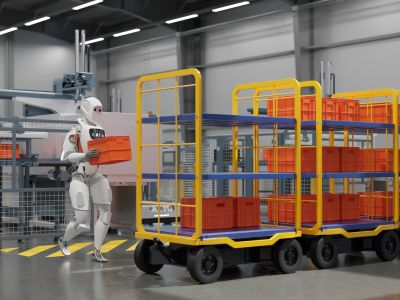 Apollo Apollo | Apptronik | Industrial durability | Pallet loading |
| #3 | 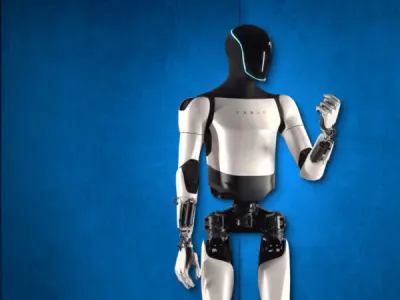 Optimus Optimus | Tesla | Neural net manipulation | Parts sorting |
| #4 | 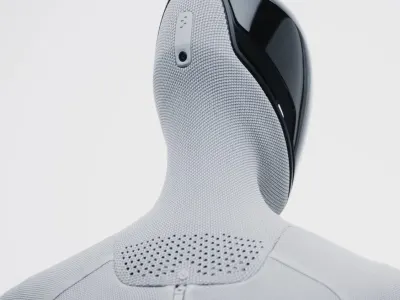 Figure 03 Figure 03 | Figure AI | End-to-end autonomy | Mixed pallet handling |
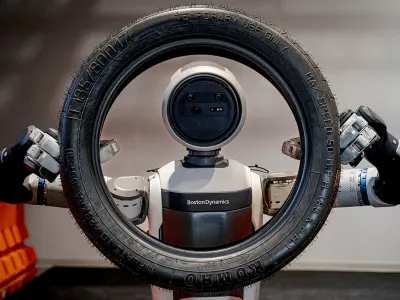
| #5 | 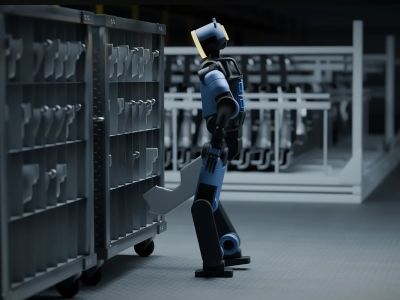 Atlas (Electric 2025) Atlas (Electric 2025) | Boston Dynamics | Humanoid / General Purpose | Heavy automotive part sequencing, damper strut lifting |
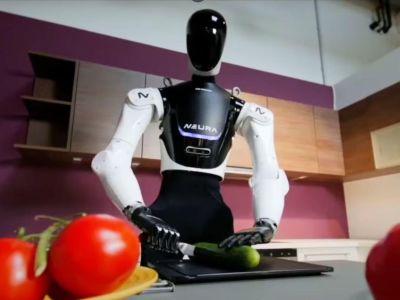
| #6 | 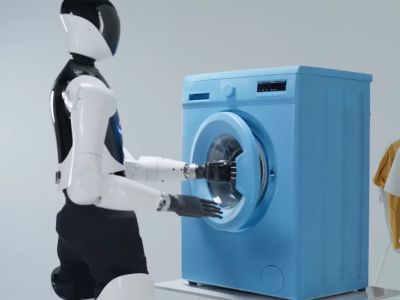 4NE‑1 4NE‑1 | NEURA Robotics | Humanoid / General Purpose | Collaborative industrial assembly, component kitting |
| #7 | 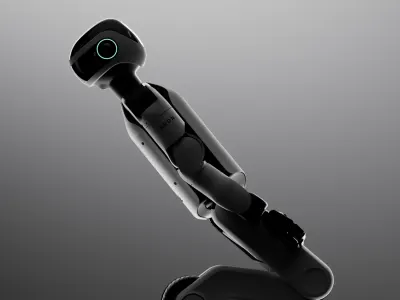 AEON AEON | Hexagon AB | Sensor fusion | Quality inspection |
| #8 | 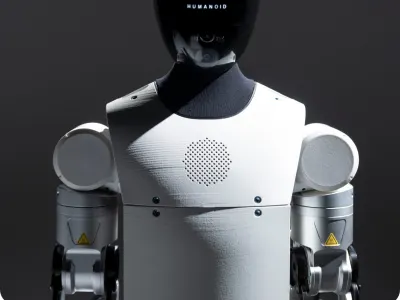 HMND 01 Alpha Wheeled HMND 01 Alpha Wheeled | HUMANOID | Wheeled-hybrid mobility | Aisle navigation |
| #9 |  NEO Home Robot NEO Home Robot | 1X Technologies | Adaptive learning | Inventory scanning |
| #10 |  Unitree H2 Unitree H2 | Unitree Robotics | Speed and affordability | High-volume sorting |
Humanoids like these position warehouses for unprecedented productivity gains in 2026.
Explore the Robots
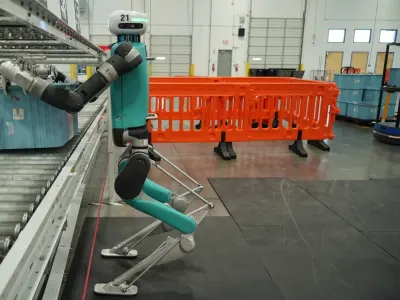
Digit
Agility Robotics' Digit excels in warehouse fulfillment with human-like agility for picking and packing in tight spaces. Designed for e-commerce giants, it autonomously grabs varied items from shelves, balances loads during transport, and integrates into existing conveyor systems. Its standout feature is robust whole-body coordination, allowing seamless transitions between walking, crouching, and object handover without downtime. Unlike rigid arms, Digit thrives in semi-structured settings like Amazon-style depots, where it cuts fulfillment times through learned behaviors from real deployments. This makes it ideal for high-volume order processing, bridging the gap between human flexibility and machine endurance.
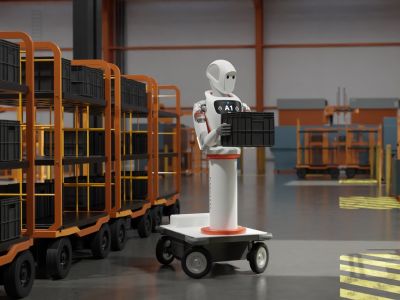
Apollo
Apptronik's Apollo differentiates through rugged partnerships with logistics firms, focusing on heavy-duty warehouse tasks like palletizing and depalletizing. It navigates variable terrains, lifts up to 50-pound loads with stable grip, and collaborates safely with teams in active facilities. Recent field tests emphasize its torque-rich actuators for repetitive straining jobs, setting it apart from lighter humanoids by enduring long shifts in harsh conditions. Apollo's modular design allows quick swaps for specialized grippers, enhancing adaptability in fluctuating inventory demands and making it a pragmatic choice for scaling automation without overhauling infrastructure.
Optimus
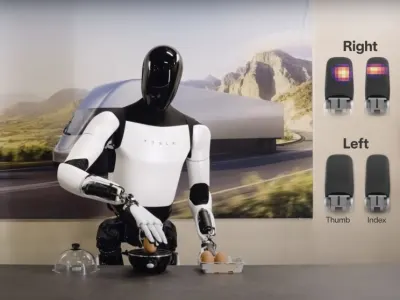
Tesla's Optimus stands out for its factory-proven versatility, handling repetitive warehouse tasks like sorting battery cells and lifting car parts alongside human workers. Trained on vast human video datasets via a single neural network, it performs pick-and-place operations, navigates obstacles, and adapts to dynamic environments without teleoperation. What distinguishes it is seamless integration with Tesla's self-driving AI stack, enabling spatial understanding for precise manipulation in cluttered aisles. Real-world pilots in Tesla plants highlight its role in scaling automation, reducing human error in monotonous jobs while feeding data back to improve fleet-wide performance. Its focus on unsafe, boring tasks positions it as a cornerstone for 24/7 warehouse operations.
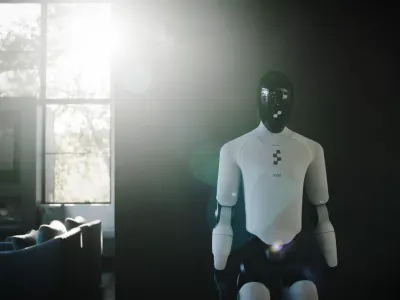
Figure 03
Figure AI's Figure 03 leads with conversational AI for warehouse coordination, verbally confirming orders while executing dexterous picks. Backed by OpenAI tech, it generalizes across tasks like folding garments or assembling kits from natural language instructions. Its differentiator is rapid skill acquisition via internet-scale data, enabling zero-shot adaptation in evolving SKUs. Deployments in auto plants preview warehouse scalability, where human-robot dialogue minimizes mispicks.
Atlas (Electric 2025)
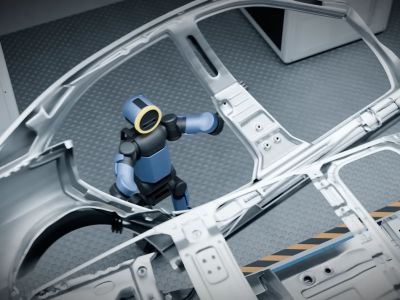
Atlas (Electric Atlas, 2025) is Boston Dynamics' fifth-generation humanoid robot, fully electric and designed for real-world industrial and research applications. It features advanced all-electric actuators that provide superior strength and a broader range of motion than previous models, including 360-degree rotation at key joints. Atlas integrates sophisticated sensor arrays such as LiDAR, stereo and RGB cameras, and depth sensors, enabling real-time perception and environmental awareness. Its software leverages AI, machine learning, and large behavior models for autonomous whole-body manipulation and locomotion, allowing it to perform complex tasks like packing, sorting, and adapting dynamically to unexpected physical challenges. The robot is built with lightweight titanium and aluminum 3D printed parts for optimal strength-to-weight ratio and supports integration with Boston Dynamics’ fleet management software, Orbit.
4NE‑1
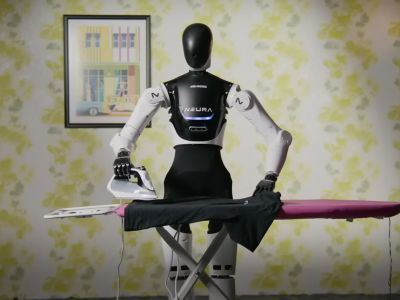
NEURA Robotics' 4NE-1 shines in precision warehouse manipulation, grasping diverse objects like small electronics or irregular parcels with force-sensitive fingers. Its cognitive AI processes visual cues for accurate placement in tight bins, ideal for kitting stations. Unlike vision-only systems, integrated tactile feedback prevents damage, marking its edge in quality-sensitive logistics. Real deployments highlight reliable autonomy in mixed-SKU environments, positioning it as a specialist for high-accuracy sorting where human fatigue leads to defects.
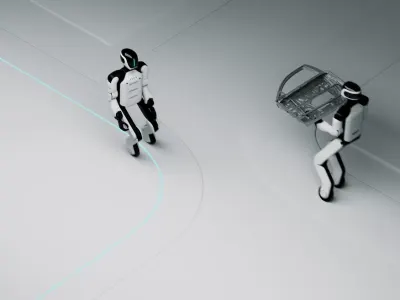
AEON
Hexagon AB's AEON leverages metrology expertise for warehouse metrology, performing precise measurements and inspections on incoming goods. Its advanced sensor suite detects defects in real-time during unloading, ensuring compliance without halting lines. Distinguishing it is fusion of LiDAR and cameras for micron-level accuracy in dim lighting, outperforming generalists in verification tasks. In logistics hubs, AEON streamlines quality control, reducing returns and enabling just-in-time inventory with human-like dexterity.
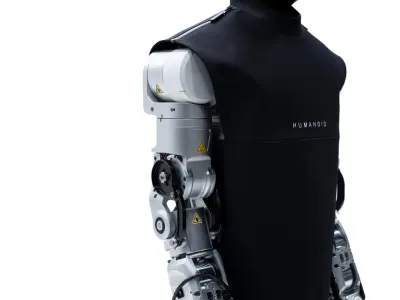
HMND 01 Alpha Wheeled
HUMANOID's HMND 01 Alpha Wheeled hybrid merges biped arms with wheels for swift aisle traversal and overhead reaches. This config excels in vast warehouses, switching modes for stairs or flat floors while manipulating totes. Its key edge is hybrid efficiency, extending range 3x over pure walkers for end-to-end transport. Pilots show seamless fleet syncing, optimizing flow in mega-centers.

NEO Home Robot
1X Technologies' NEO Home Robot adapts warehouse duties with its actor-critic AI for intuitive task learning, such as scanning shelves and binning goods. While home-optimized, its compliant joints enable gentle handling of fragile packages in shared spaces. What sets it apart is energy-efficient bipedal movement for prolonged patrols, distinguishing it from power-hungry rivals. In warehouse pilots, NEO reduces restocking errors by mimicking human paths, offering a soft-entry for firms testing humanoid fleets before full commitment.

Unitree H2
Unitree Robotics' H2 offers budget-friendly speed for warehouse sorting, dashing at 3.3 m/s with gymnastic flips to access bins. Affordable hardware pairs with open-source AI for custom integrations, ideal for SMEs. It stands out for lightweight design sustaining 2-hour runs on batteries, handling repetitive scans without fatigue. In high-throughput scenarios, H2's agility cuts cycle times, democratizing humanoid tech for broad adoption.
Sources
Related Articles

6 Best Humanoid Robots for Elderly Care & Assistance (2026)
4/18/2026
7 Humanoid Robots with the Best Battery Life in 2026
4/18/2026
Top 7 Humanoid Robots for Retail & Customer Interaction (2026)
4/18/2026
Top 7 Latest Humanoid Robots Launched in 2026
6/22/2026
The 2026 Humanoid Price War: Comparison of Unitree R1 vs. Noetix Bumi and entry-level models
4/11/2026

6 Most Human-Like Humanoid Robots in 2026
4/11/2026
Top 5 Humanoid Robots Being Developed for Defense, Security & First Responders in 2026
10/9/2026
Top 10 Heavy-Duty Industrial Humanoid Robots for Automotive & Factory Assembly in 2026
10/9/2026
Top 10 Home Humanoid Robots for Domestic Tasks & Personal Assistance in 2026
10/5/2026