Which AgiBot Humanoid Fits Which Job? AgiBot Robots Compared (2026)


The Short Answer: Pick the AgiBot by the Job, Not the Name
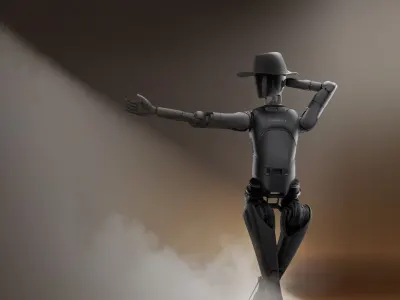
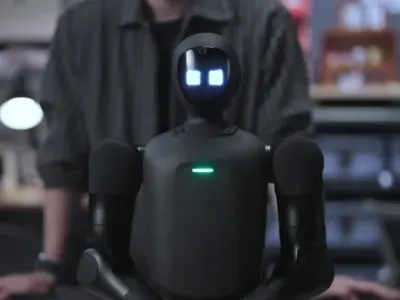
For heavy factory and warehouse work, the Genie G2 Max is the AgiBot to choose: each arm lifts 20 kg and it runs on two hot-swappable batteries. For a walking humanoid that can work a long shift, the AgiBot A3 gives up to 10 hours of operation. For a small, friendly robot for shows, schools and labs, the AgiBot X2 is the one to look at.
AgiBot sells robots in three families. The G series and A2-W are wheeled robots built for factory tasks. The A series are full-size walking humanoids for service, research and performance. The X series and Q1 are small robots for entertainment, education and learning. The ranking below follows that logic: the robots that already do paid work come first, then service robots, then show and learning robots.
Quick Overview
Eight AgiBot humanoids side by side, in rank order. Read the last column first: it tells you which family a robot belongs to, and the family decides the job.
| Rank | Robot | Manufacturer | Key Strength | Best For | Form and Series |
|---|---|---|---|---|---|
| #1 |  Genie G2 Max | AgiBot | 20 kg per arm, 40 kg with both arms | Warehouses and pallets | Wheeled, G series |
| #2 | 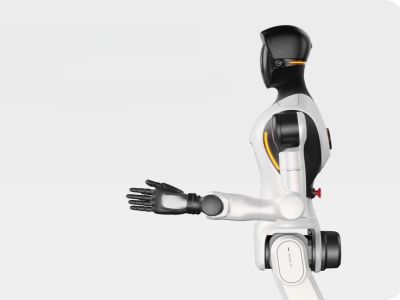 AgiBot G2 | AgiBot | Live tablet production-line deployment | Factory kitting and loading | Wheeled, G series |
| #3 |  AgiBot A2-W | AgiBot | Reaches from floor to 2 m, 5 hours | Flexible manufacturing | Wheeled, A series |
| #4 |  AgiBot A3 | AgiBot | Up to 10 hours, 31 joints | Walking factory work | Biped, A series |
| #5 | 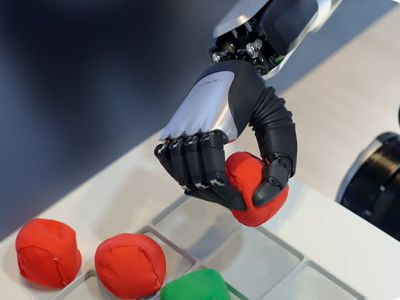 AgiBot A2 Ultra | AgiBot | 40 joints, 6-joint hands | Guides and customer service | Biped, A series |
| #6 |  AgiBot X2 | AgiBot | Runs at up to 1.8 m/s, 35 kg | Shows, schools, exhibitions | Small biped, X series |
| #7 |  AgiBot A2 Lite | AgiBot | Ready-made stage routines | Choreographed performances | Biped, A series |
| #8 |  AgiBot Q1 | AgiBot | Open hardware, 80 cm tall | Hobby and learning | Desktop biped, Q series |
The table shows a clear split. The first four robots are tools for work. The last four are for people to watch, talk to or learn from.
Explore the Robots

Genie G2 Max
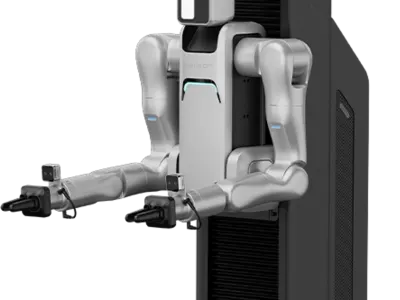
Genie G2 Max ranks first because it is the one AgiBot built to lift real weight all shift. Each arm lifts 20 kg, both arms together carry a rated 40 kg with a 50 kg peak, and the arms repeat positions to within 0.5 mm. It reaches from 0.1 m to 2.5 m high and works pallets from one side, so pallets can sit against a wall. Two hot-swappable batteries and automatic recharging keep it running around the clock, and 2D and 3D LiDAR, ultrasonic sensors, bumper edges and an emergency stop handle safety. AgiBot unveiled it with JD Logistics at WAIC in July 2026 and released it formally on October 26, 2026. It is a wheeled upper body, so it does not walk. It suits warehouses and factories that move totes, cartons and pallets.
AgiBot G2
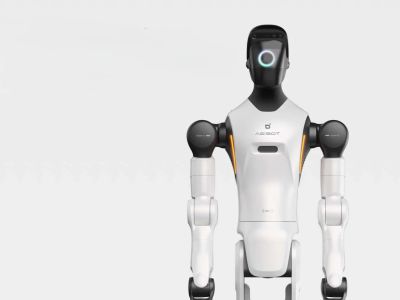
AgiBot G2 ranks second because it already runs on a real production line. At Longcheer Technology's plant in Nanchang, G2 robots were set up on a tablet quality-inspection line in 36 hours and supported about 3,000 units per shift, with downtime kept below 4%. The wheeled body has 26 joints, two 7-joint force-controlled arms that carry 5 kg each, and a base that moves sideways and spins in place. Two hot-swappable batteries give 4 hours of runtime, and 3D LiDAR plus several depth and stereo cameras give it 360-degree awareness. Its IP42 rating means indoor use only. It suits factory teams that need precise loading, unloading and kitting at a fixed station.

AgiBot A2-W
AgiBot A2-W ranks third because it covers the widest working range of the factory robots. Two 7-joint arms and a waist that lifts and tilts let it work from the floor up to 2 m. The 2 kWh hot-swappable battery runs about 5 hours, and each arm carries up to 5 kg. A 360-degree LiDAR, four vision sensors and two six-axis force sensors guide its skills: loading and unloading parts for quality inspection, feeding vibratory machines, moving pallets, shelving and plugging in connectors. At 230 kg it is a heavy machine built for the factory floor, not for crowds. It suits flexible manufacturing lines where one robot has to handle several different tasks.

AgiBot A3
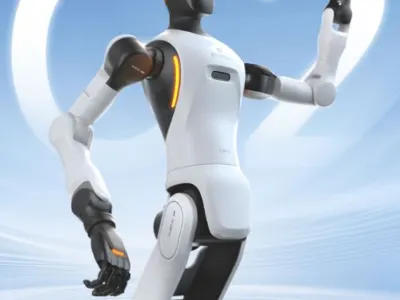
AgiBot A3 ranks fourth because it is the only walking AgiBot here with a full-shift battery. It stands 173 cm, weighs 55 kg and has 31 active joints, which grow to 57 when fitted with dexterous hands. The dual 1,152 Wh hot-swappable battery gives 10 hours of total operation, including 6 hours of continuous standing work and over 4 hours of continuous walking. It walks at 1.5 m/s and can be taught moves through VR teleoperation. AgiBot says it supports coordinating 100 or more units. Its arm payload is lower than the wheeled factory robots, so heavy lifting stays with the G series. It suits precision assembly, light logistics, research and exhibition hosting.

AgiBot A2 Ultra
AgiBot A2 Ultra ranks fifth because it is built for talking and showing rather than lifting. At 169 cm and 69 kg it has 40 joints, including 6-joint dexterous hands, and a 200 TOPS computer. 3D LiDAR, depth, color and fisheye cameras and a microphone array let it walk around obstacles. Owners can customize its knowledge base, wake words, persona and voice. The battery is hot-swappable and gives 3 hours standing or over 1.5 hours walking, with a top speed of 1.2 m/s. Each arm handles about 2 kg, so it is not a worker. It suits customer service, research labs, showrooms and entertainment.

AgiBot X2
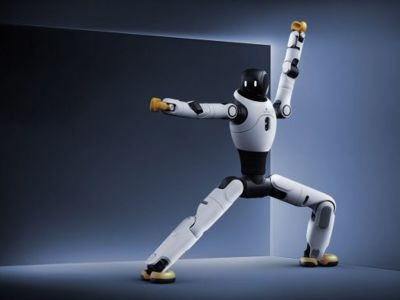
AgiBot X2 ranks sixth because it is a small, agile robot for people to enjoy, not for work. It stands 131 cm, weighs 35 kg, has 25 joints and runs at up to 1.8 m/s, with about 0.8 m/s in everyday use. It comes with 20 or more built-in actions and can be driven by remote, app or voice. The swappable battery of about 500 Wh gives roughly 2 hours of walking. The base model does not allow secondary development; the X2 Ultra adds cameras, LiDAR and an SDK. Each arm carries about 1 kg across its workspace. It suits entertainment, exhibitions, reception and education.

AgiBot A2 Lite
AgiBot A2 Lite ranks seventh because it was made to perform, not to sense or decide. It stands 169 cm, weighs 63 kg, has 23 joints and walks at up to 0.8 m/s, with joints that produce up to 270 N·m. AgiBot lists perception and speech as not supported, so it ships with a library of routines such as handshakes, tai chi and Peking opera. Groups can be controlled together, and an optional VR kit records new moves. Standing time is 4 hours 35 minutes, and walking time is 1.5 hours. Each arm is rated for 1.5 kg. It suits stage shows, cultural events and commercial performances.

AgiBot Q1
AgiBot Q1 ranks last on readiness for work because it is a desktop-size robot, and that is also its charm. It stands 80 cm tall, has 28 joints and compact quasi-direct-drive joints smaller than an egg. Open hardware, an SDK and a hardware design kit let owners 3D-print their own shells, and a block-based tool programs motion without code. The Agi-Soul platform adds voice interaction, English tutoring and dance coaching. Battery life is 2 hours, speed is 2.5 km/h and the pack is not swappable. Each arm carries 0.3 kg. It suits students, hobbyists and teachers who want to learn how a humanoid moves.
How to Choose Between Them
Start with the job, because AgiBot builds each line for a different one. If the robot must move boxes, totes or pallets, look only at the wheeled G series and the A2-W. In general, a wheeled base is steadier under load than a pair of legs. If the robot must walk through spaces made for people, such as showrooms, stairs or crowded halls, look at the A3 and the A2 Ultra.
Check the arm payload against your heaviest item. The G2 and A2-W carry 5 kg per arm. The Genie G2 Max carries 20 kg per arm. The A2 Ultra handles about 2 kg per arm, and the X2 about 3 kg in specific poses. A robot that cannot lift your item is not a bargain at any price.
Ask how long it works before it needs power, and whether you can swap the battery. The G2 Max, G2, A2-W, A3, A2 Ultra and X2 all take swappable batteries, so a spare pack keeps them running. The Q1 does not. The A3 lists 10 hours of total operation, but 6 hours of continuous standing work and over 4 hours of continuous walking, so plan around the shorter figure for the job you have in mind.
Check what you can build on top. The X2 base model does not support secondary development, while the X2 Ultra adds an SDK. The Q1 is open on the hardware side and can be programmed with blocks. The A2 Lite has no perception or speech AI at all, so it plays back routines and cannot react to its surroundings. If you want to teach a robot new tasks, choose a model with software access.
Think about who will service it. The factory models are sold to business customers through AgiBot's sales team. The X2 and A2 Lite are listed in AgiBot's online stores, which suits a school, studio or lab buying a unit or two.
A quick pick by need: heavy lifting, the Genie G2 Max. A proven factory line, the G2. Mixed floor-to-ceiling tasks, the A2-W. A walking worker for long shifts, the A3. A talkative guide, the A2 Ultra. A stage and classroom robot, the X2. Choreographed shows, the A2 Lite. A first robot to learn on, the Q1.
How We Ranked These Robots
We used the newest AgiBot model in each product line on our list and left out earlier versions such as the A1, G1 and the first A2. Every value in this article comes from AgiBot's own pages or from our robot records. Where AgiBot lists no figure for a robot, we leave it out of the comparison instead of filling the gap.
The ranking has three steps. First, can the robot do paid work today? We looked at payload, safety design and reported factory or warehouse use. Second, how long can it work? Runtime and battery swapping decided the order inside each group. Third, if two robots tie, the one that can react to its surroundings ranks above the one that only plays back routines.
So the G2 Max leads, followed by the G2 with its live production-line results, and then the A2-W. The walking A3 sits fourth, ahead of the service and show robots. The ranking says which robot is most ready for work. It does not say which robot is best for you. A school should read this list from the bottom. Sources are linked at the end.
Frequently Asked Questions
Which AgiBot robot should I buy?
It depends on the job. For heavy lifting in a warehouse or factory, choose the Genie G2 Max. For precise loading at a fixed station, the G2. For a walking robot that works long shifts, the A3. For a guide that talks to visitors, the A2 Ultra. For shows and classrooms, the X2. For learning at a desk, the Q1.
How much does an AgiBot cost?
AgiBot publishes few prices. The A2 Lite is listed at $44,560 in its global store, and the base X2 at $25,600 in its official store. For the A3, G2, A2-W and G2 Max you ask the sales team for a quote.
What is the difference between the A, G and X series?
Think of A as the people-facing walkers, G as the wheeled lifters with force-sensing arms, and X as the half-size robots for fun and teaching. The A2-W is a wheeled member of the A family built for factories.
Can an AgiBot work all day without stopping?
Several can, with help. The Genie G2 Max has two hot-swappable batteries and automatic recharging for around-the-clock work. The A3 gives up to 10 hours of total operation, the A2-W about 5 hours, and the G2 4 hours, and all three accept swappable batteries so a spare pack keeps them going.
Which AgiBot is best for a school or research lab?
The X2 and the Q1 are the easiest entry points. The X2 Ultra adds cameras, LiDAR and an SDK for secondary development, while the base X2 does not. The Q1 has open hardware and block-based programming. Labs that need a full-size robot with dexterous hands can look at the A2 Ultra or the A3.
Can an individual buy an AgiBot?
Some models are listed in AgiBot's online stores, including the X2 and the A2 Lite, so a person or small organization can order them. The factory robots are sold through the sales team, so expect to talk to the company first.
Sources
- Genie G2 Max Profile
- AgiBot G2 Profile
- AgiBot A2-W Profile
- AgiBot A3 Profile
- AgiBot A2 Ultra Profile
- AgiBot X2 Profile
- AgiBot A2 Lite Profile
- AgiBot Q1 Profile
- AGIBOT Unveils Four New Products at WAIC 2026, Showcasing Embodied AI in Real-World Operations
- AGIBOT Makes Its U.S. Market Debut at CES 2026 with Its Full Humanoid Robot Portfolio
- AGIBOT Brings Its Humanoid Robot Lineup and Genie Sim 3.0, Built for Real-World Deployment
Related Articles

Unitree G1 Alternatives in 2026: Humanoid Robots Compared by Price, Hands and Software
11/23/2026
Figure 03 Alternatives in 2026: 6 Humanoid Robots and How to Actually Get One
11/21/2026
The Cheapest Humanoid Robots You Can Order, Ranked by Listed Price (2026)
11/20/2026
Best Humanoid Robots for Trade Shows, Events and Exhibitions in 2026, Ranked
11/25/2026

Lightest Humanoid Robots, Ranked by Weight (2026)
11/24/2026
Which Humanoid Robots Can Do the Dishes? Six Compared for 2026
11/23/2026