Lightest Humanoid Robots, Ranked by Weight (2026)
The Short Answer: The Lightest Humanoid Robots in 2026
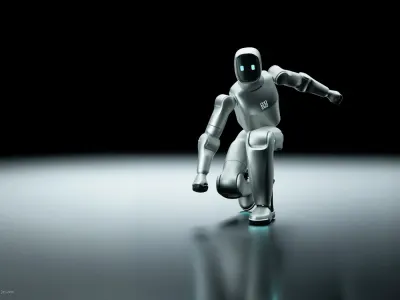
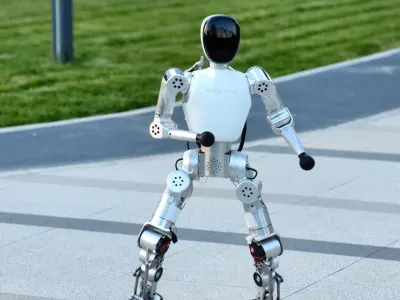
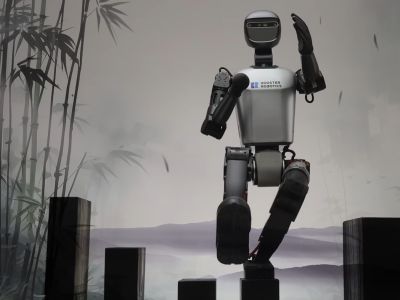
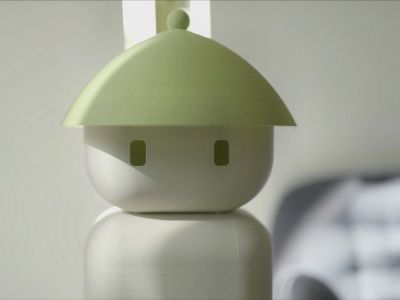
The lightest humanoid robot on our list is the Zeroth Bridge at 13 kg, an open-source developer humanoid that stands 88 cm tall. Next come the Noetix Bumi at 17 kg and the Booster K1 Humanoid at 19.5 kg. If you want a robot of roughly human height, the lightest is the NEO Home Robot at 29.94 kg and 167.6 cm. The Flourish 1 on wheels is about 20 kg, the Unitree R1 is 27 kg, and the AgiBot X2 and Unitree G1 both weigh 35 kg.
Weight matters more than most buyers expect. A light robot is easier to carry up stairs, easier to lift after a fall, and less likely to hurt someone or damage a floor if it tips over. The trade is that light frames carry smaller batteries and weaker arms, so runtime and payload drop as weight drops. The table and cards below show those trade-offs for each robot, using only values the makers publish.
Quick Overview
Eight humanoids ranked from lightest to heaviest by the weight each maker publishes. Height is shown in the Key Strength column so you can see how big each one is.
| Rank | Robot | Manufacturer | Key Strength | Best For | Weight |
|---|---|---|---|---|---|
| #1 |  Zeroth Bridge | Zeroth | 88 cm open-source developer humanoid | Physical AI research | 13 kg |
| #2 | 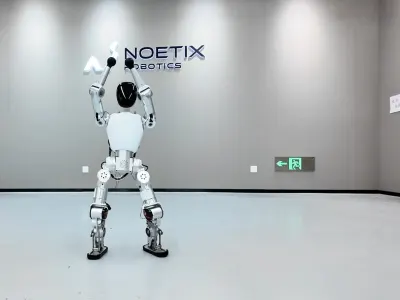 Bumi | Noetix Robotics | 98 cm biped with dance and teaching modes | Family and classroom use | 17 kg (with battery) |
| #3 |  K1 Humanoid | Booster Robotics | 95 cm biped with 22 joints for robot soccer | Schools and competitions | 19.5 kg |
| #4 |  Flourish 1 | Flourish Robots | 12 hours of runtime on a wheeled base | Light chores at home | 20 kg |
| #5 | 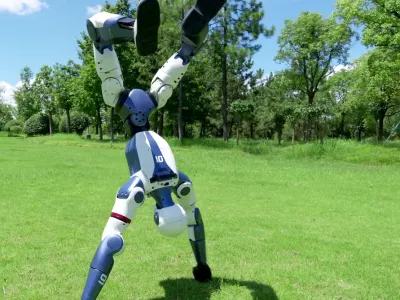 Unitree R1 | Unitree Robotics | 123 cm biped with running moves | Education and developers | 27 kg (R1 AIR); 29 kg (standard) |
| #6 | 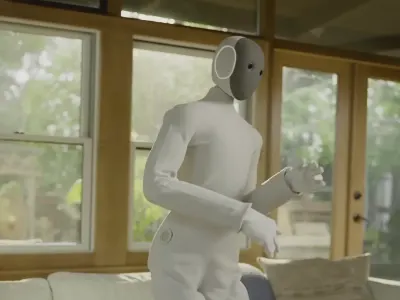 NEO Home Robot | 1X Technologies | Carries 25 kg at 167.6 cm tall | Home help | 29.94 kg |
| #7 |  AgiBot X2 | AgiBot | 131 cm walker with swappable battery | Exhibitions and education | 35 kg |
| #8 | 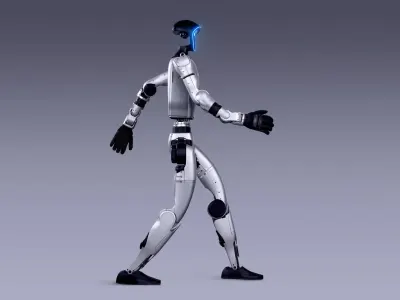 Unitree G1 | Unitree Robotics | 132 cm biped with 2 m/s walking speed | Research labs | 35 kg |
The jump from 20 kg to 27 kg is where robots change from desk or home helpers to walking developer platforms. Past 35 kg, humanoids start to weigh as much as a child.
Explore the Robots

Zeroth Bridge
Zeroth Bridge ranks second at 13 kg. It launched on 2 September 2026 with OpenBridge, an open-source ecosystem built around it. The robot is 88 cm tall, with a 73 cm shoulder height and arms that reach 30 to 40 cm. Each arm ends in a two-finger gripper that holds small objects of up to 2 kg. You can teach it by whole-body teleoperation with motion capture and VR, or run skills through the SDK and open motion-control APIs. Zeroth targets developers, universities and research teams. The limit is that the grippers are simple, so fine hand work is out. It suits people who want an open, hackable humanoid for physical AI practice.
Bumi
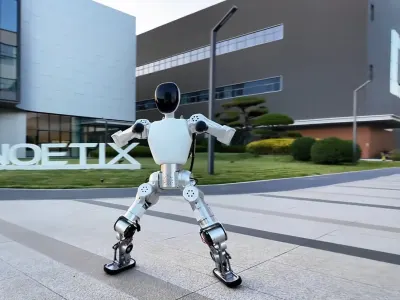
Bumi ranks second at 17 kg with its battery. It stands 98 cm tall and measures 98 x 35 x 20 cm. Noetix built it for families and schools, with teaching and dance modes run from a phone app. It has 21 degrees of freedom, with 4-DoF arms and no hands, and it carries up to 6 kg. The battery gives about 2 hours and is not swappable. Developers can program it with graphical tools, Python and an SDK, and a Jetson Orin Nano Super handles local AI work. Early launch coverage in 2025 quoted a lower weight, but the current spec lists 17 kg. The limit is the missing hands, so it dances and walks but does not handle objects. It suits families and classrooms that want a light, friendly walker.

K1 Humanoid
K1 Humanoid ranks third at 19.5 kg. Booster Robotics makes it for education, research and robot soccer, and it is the platform for the RoboCup Kid and Middle divisions. It stands 95 cm tall with 22 degrees of freedom: a 2-DoF head, 4-DoF arms without hands and 6-DoF legs. It walks at up to 2 m/s and has a stereo depth camera, a 9-axis motion sensor and a microphone. Built-in agents cover chat, soccer, dance and lion dance. The battery swaps out, with about 20 minutes on the 2 Ah pack and about 70 minutes of walking on the 5 Ah pack. The limit is runtime and the lack of hands. It suits schools, clubs and teams that want a light robot for competitions.

Flourish 1
Flourish 1 ranks fourth at 44 lb, or about 20 kg. It stands 3 ft 7 in (109 cm) and rolls on a six-wheel base under a humanoid upper body, so it is a semi-humanoid rather than a walker. It has two arms with two-finger grippers and wrist cameras, and the maker lists a 12 hour runtime. Chores include tidying shoes, clothes and toys, wiping tables, watering plants and loading a dishwasher. Owners teach tasks from a phone, using its motion sensor to guide the arms. Pre-orders opened for the first 50 numbered units, with deliveries planned for December 2026. The limit is that it handles light items only. It suits small homes that want a low-weight tidy-up helper.
Unitree R1
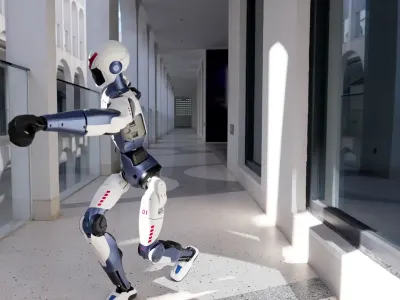
Unitree R1 ranks fifth at 27 kg for the R1 AIR and 29 kg for the standard and EDU models. It stands 123 cm tall and has 26 degrees of freedom on the standard model (20 on the R1 AIR), which lets it run at up to 2.5 m/s and perform cartwheels, handstands and spin kicks. It has binocular vision, a 4-microphone array and an 8-core processor. Its battery is hot-swappable with the robot powered off, and each pack gives about 1 hour of active use. The base model has fixed fists instead of working hands, so it carries nothing. The limit is that it is a mover, not a worker. It suits schools, STEM clubs and developers who want the lightest walking robot with athletic moves.
NEO Home Robot
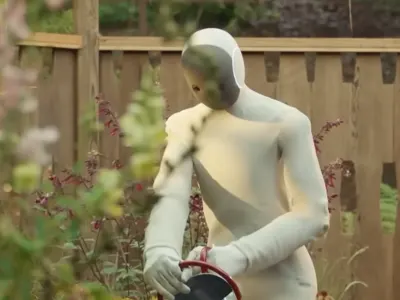
NEO Home Robot ranks sixth at 29.94 kg, the lightest of the near-adult-size humanoids. It stands 167.6 cm tall and measures 60 x 35 cm in width and depth. 1X designed it for homes with narrow doorways and clutter. It carries up to 25 kg, lifts up to 70 kg and holds 8 kg per arm. The battery runs about 4 hours and is internal. NEO works on its own with a remote override through its app, so a person can step in on tasks it cannot finish. Walking speed is 1.4 m/s. The limit is that the battery cannot be swapped and some jobs may need a remote helper. It suits households that want a light robot with real carrying strength.

AgiBot X2
AgiBot X2 ranks seventh at 35 kg with battery and end effector. The X2 Ultra version weighs about 39 kg. It stands 131 cm tall and is 46 cm wide at the shoulders. The legs run it at up to 1.8 m/s, and it walks for about 2 hours at 0.5 m/s on one pack, which swaps out for continuous work. The arms hold up to 3 kg in specific poses and about 1 kg across the full workspace. You can drive it by remote, the AGIBOT Go app or by voice, and it has more than 20 built-in actions. Listed uses are performances, exhibitions, reception, education and interactive service. It suits venues and schools that want a lively, mid-weight host robot.
Unitree G1
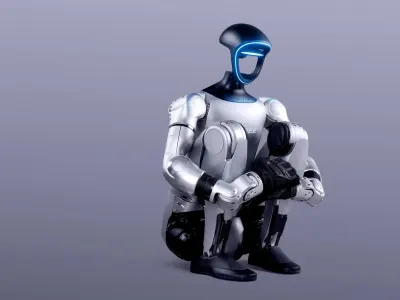
Unitree G1 ranks eighth at 35 kg, tied with the X2 on weight and 1 cm taller at 132 cm. It is 45 cm wide and 20 cm deep. The G1 walks at up to 2 m/s, runs about 2 hours on a battery that can be swapped, and can get up from the floor in a 360 degree ground recovery. The arms carry about 2 kg on the base model and about 3 kg on the EDU model. The base model has 23 degrees of freedom, and other versions go higher. Unitree lists high-speed running, dynamic balance, small tool handling, light pick-and-place and soldering demos as uses. The limit is the light payload. It suits research labs that need a proven, widely used humanoid.
How to Choose Between Them
Start with what you want the robot to do, not with the number on the scale. The three lightest walkers, Zeroth Bridge, Bumi and K1 Humanoid, are 88 to 98 cm machines for learning, research and showing off. They are fun to own and safe to handle, but none of them has working hands, so they will not load a dishwasher or fold laundry.
If you want chores at home, look at Flourish 1 and the NEO Home Robot. Flourish 1 is the lighter of the two and runs 12 hours on a charge, but it rolls on six wheels and handles only light items. NEO walks on two legs, is built for home use, and can carry 25 kg, yet it is more than half again as heavy as Flourish 1 and depends on remote human help for some jobs.
If you want to run code on a real walking robot, the Bumi, K1 Humanoid, Unitree R1, AgiBot X2 and Unitree G1 are the practical group. Check the arms before you commit: Bumi, K1 and the basic R1 have no working hands, while the X2 and G1 can move small items in the 1 to 3 kg range. Battery swapping differs too: R1, X2, G1 and K1 swap packs, while Bumi does not.
Check how the weight was measured. Bumi is listed at 17 kg with its battery, and the X2 weight includes its battery and end effector, with the X2 Ultra at about 39 kg. The R1 comes in two weights, 27 kg for the R1 AIR and 29 kg for the standard model. The G1 is listed at 35 kg with its battery. Always compare the same configuration.
Think about safety around children and pets. A 13 kg or 17 kg robot that falls is a minor event. A 35 kg robot that falls from a standing height of 130 cm can break a toe or a table leg, so keep clear space around it and follow the maker's guidance on safe distance.
If you need one pick by need: Zeroth Bridge for the lightest robot and open-source skill building, Bumi for a family or classroom robot with dance and teaching modes, K1 Humanoid for robot soccer and school competitions, Flourish 1 for light household tidying, Unitree R1 for the lightest walking robot with running moves, NEO Home Robot for the lightest near-adult-size home robot, and AgiBot X2 or Unitree G1 for a sturdier lab walker with a swappable battery.
How We Ranked These Robots
We ranked by the weight each maker publishes, lightest first. Only robots live on our site with a published weight were considered, and we used the newest version from each maker. Where a maker lists several weights, we used the base model weight and note the range in the card. We confirmed each weight against the maker's own spec or at least two independent outlets, and left out any robot whose weight sources disagreed.
We kept full-body humanoids at least 85 cm tall that walk or roll on a body with a head, torso and arms. Desktop robots under that height, torso-only products, desktop arms and robots with an inferred or missing weight were left out. Zeroth Bridge, Bumi, K1 Humanoid and Flourish 1 are small or semi-humanoid designs, so the table lists height next to weight to show the scale of each robot.
The limits are plain. Weights depend on configuration, battery and attachments, and makers do not all measure the same way. Bumi's launch coverage in 2025 quoted a lower weight than the 17 kg its current spec lists, so we used the current figure. A tie, such as the AgiBot X2 and Unitree G1 at 35 kg, is broken by listing the lower height first. Treat the order as a guide to weight, not as a ranking of quality.
Frequently Asked Questions
What is the lightest humanoid robot in 2026?
On our list the lightest is the Zeroth Bridge at 13 kg, an 88 cm open-source humanoid for developers. The Noetix Bumi follows at 17 kg and the Booster K1 Humanoid at 19.5 kg. Among robots near adult height, the NEO Home Robot is the lightest at 29.94 kg.
What is the lightest full-size humanoid robot?
The NEO Home Robot from 1X is the lightest near-adult-size humanoid we list, at 29.94 kg and 167.6 cm tall. It carries up to 25 kg and runs about 4 hours per charge. The Unitree R1 weighs less at 27 kg but is only 123 cm tall.
How much does the Unitree R1 weigh?
Unitree lists about 27 kg for the R1 AIR and about 29 kg for the standard R1 and the R1 EDU. It is 123 cm tall. The battery swaps out with the robot off and gives about 1 hour of active use.
Why does a humanoid robot's weight matter?
Weight decides how easy a robot is to move, lift after a fall and keep safe around people. Light robots are easier to carry and cause less damage when they tip. The trade is a smaller battery and weaker arms, which cuts runtime and payload.
Is a lighter humanoid robot safer for a home?
Usually yes, because less mass means less force in a fall or a bump. Even so, keep a clear space around any walking robot and follow the maker's safe-distance advice. A 13 kg robot is a minor risk, while a 35 kg robot can break a toe or a small table.
Can a 13 kg humanoid robot do real work?
Not heavy work. The Zeroth Bridge is built for research, teleoperated data collection and skill building, and its grippers hold up to 2 kg. For chores you need a body such as Flourish 1 for light items or the NEO Home Robot for loads up to 25 kg.
Do light humanoid robots run longer or shorter on a charge?
Usually shorter, because a light frame holds a small battery. The Unitree R1 gives about 1 hour, Bumi about 2 hours and the Unitree G1 about 2 hours. Flourish 1 is the exception at 12 hours on its wheeled base, and NEO runs about 4 hours.
Sources
- Zeroth Bridge Profile
- Bumi Profile
- K1 Humanoid Profile
- Flourish 1 Profile
- Unitree R1 Profile
- NEO Home Robot Profile
- AgiBot X2 Profile
- Unitree G1 Profile
- Unitree designs R1 humanoid robot to be agile and affordable
- Unitree Robotics unveils G1 humanoid for $16k
- Meet Flourish One, the Raspberry Pi-powered humanoid built for busy parents
- AGIBOT X2 Offers a Glimpse at the Future of Humanoid Robotics
- Zeroth Launches Bridge Humanoid Robot and Open-Source OpenBridge Developer Platform
- NEO Home Robot
- How China’s Noetix builds a humanoid robot cheaper than an iPhone
- K1 humanoid robot: a practical platform for higher education and research
Related Articles
The Cheapest Humanoid Robots You Can Order, Ranked by Listed Price (2026)
11/20/2026
Best Chinese Humanoid Robots in 2026: 10 Models Ranked by What You Can Actually Get
11/19/2026
Humanoid Robots That Teach Kids, Compared (2026)
11/18/2026
Which Humanoid Robots Can Do the Dishes? Six Compared for 2026
11/23/2026

Unitree G1 Alternatives in 2026: Humanoid Robots Compared by Price, Hands and Software
11/23/2026
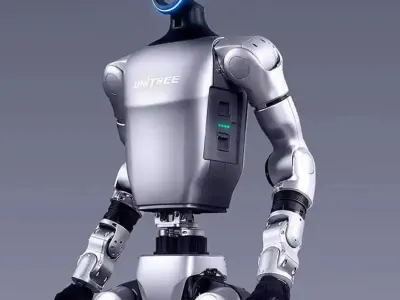
Figure 03 Alternatives in 2026: 6 Humanoid Robots and How to Actually Get One
11/21/2026