Figure 03 Alternatives in 2026: 6 Humanoid Robots and How to Actually Get One
The Short Answer: What to Get Instead of Figure 03
The closest Figure 03 alternatives you can actually order are the Unitree G1 and the AgiBot X2, both listed in the makers' online stores, plus the 1X NEO, which takes public pre-orders. The NEO is the only home robot of the three, and it needs a human expert to finish hard chores. Figure 03 itself is not on sale to the public, so every robot on this list ranks above it for one reason: there is a real way to get one.
Figure AI built the third-generation Figure 03 for the home, with tactile hands, soft washable covers and wireless charging through its feet. It looks like the robot many buyers want, but Figure has not opened public orders. We ranked six rivals by how real the route to owning or deploying each one is today, then compared their published specs. The Booster T2, UBTECH Walker S2 and Boston Dynamics Atlas follow, because they are sold on request, through a sales team, or already booked out.
Quick Overview
Here is how the six robots compare, in the order we rank them. The last column shows the real route to getting one.
| Rank | Robot | Manufacturer | Key Strength | Best For | How to Get It |
|---|---|---|---|---|---|
| #1 | 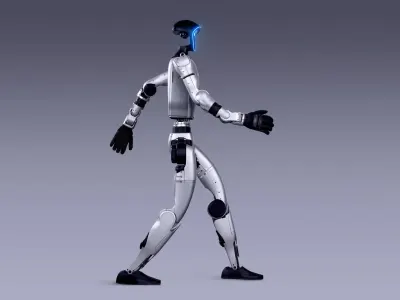 Unitree G1 | Unitree Robotics | 35 kg body with 23 to 43 joints and optional force-controlled hands | Learning robotics on a tight budget | Unitree store, $13,500 base |
| #2 |  AgiBot X2 | AgiBot | 31 body joints, 47 with hands, in a 1.31 m frame | Shows, reception and schools | AgiBot store, $25,600 for the Neo |
| #3 | 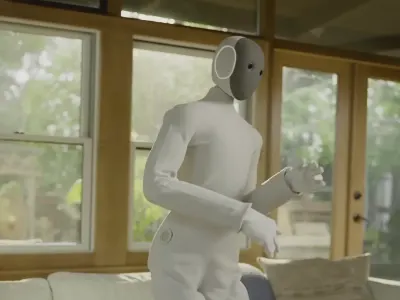 NEO Home Robot | 1X Technologies | Carries 24.9 kg and lifts 69.8 kg at 29.9 kg | A first home humanoid | Pre-order, $20,000 or $499 a month |
| #4 |  Booster T2 | Booster Robotics | NVIDIA Thor onboard computer in the Pro edition | Embodied AI research | Purchase inquiry or dealer |
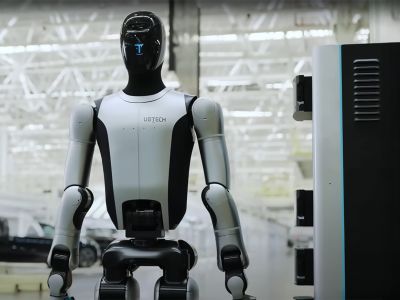
| #5 | 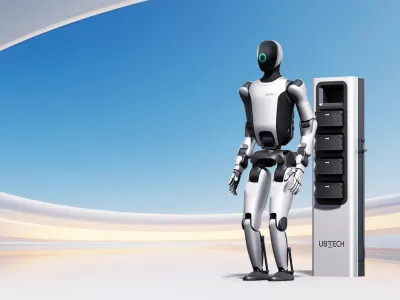 Walker S2 | UBTECH Robotics | Swaps its own battery in 3 minutes | Factory production lines | Quote request |
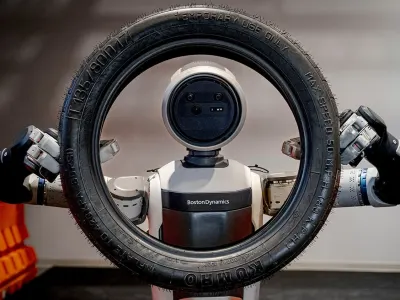
| #6 | 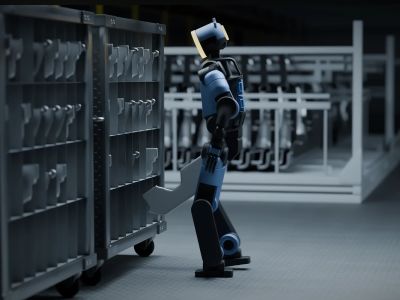 Atlas (Electric 2025) | Boston Dynamics | 56 joints and a 50 kg lift | Heavy factory handling | 2026 units committed |
Only the first three can be ordered or reserved by an individual today. The rest are sold on request, to companies, or are booked out for the year.
Explore the Robots
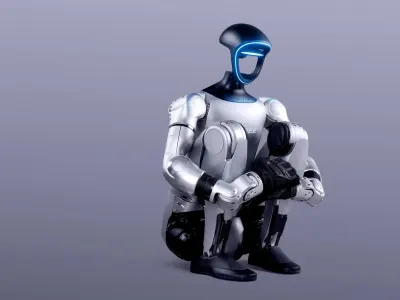
Unitree G1
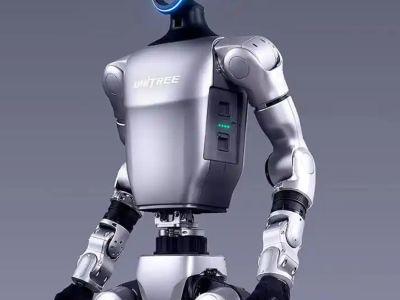
The Unitree G1 ranks first because it is the one Figure 03 alternative anyone can order from a public store today. It weighs 35 kg, offers 23 to 43 joints depending on the version, and runs about two hours per battery. Unitree sells force-controlled three-fingered hands as an option, and the EDU version adds an NVIDIA Orin computer for developers who want to train their own models. The G1 is small and light, so it moves fast but carries only about 2 kg per arm. Remember that Unitree lists the G1 as backordered, so check stock first. It suits students, labs and hobbyists who want a real humanoid to program, not a finished household helper.

AgiBot X2
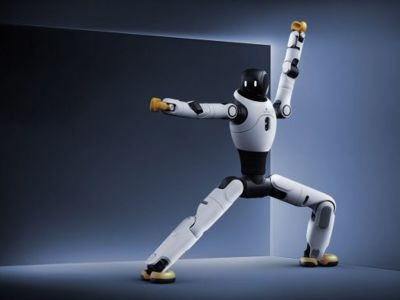
The AgiBot X2 ranks second because AgiBot's own store lists the X2 Neo with an add-to-cart button, so you can order it directly. It stands about 1.31 m tall and has 31 body joints, rising to 47 with its active and passive hand joints. AgiBot built it for performances, exhibitions, reception and education, and it runs the GO-1 foundation model with the AGIBOT Go phone app. The battery swaps out and lasts about two hours. The limits are real: it carries only about 1 kg across its full arm range, and the base X2 does not support developer software. It suits venues and schools that want a lively greeter, not a chore helper.

NEO Home Robot
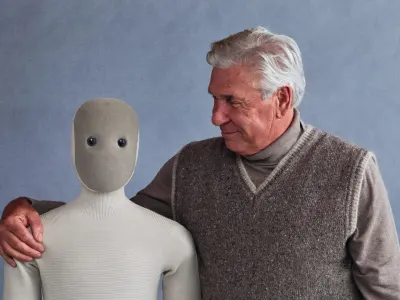
The NEO ranks third because it is the only robot here made for a house and open for public pre-order. 1X says first deliveries reach US homes in 2026. It weighs 29.9 kg, carries 24.9 kg, lifts 69.8 kg and runs about four hours before it plugs itself in. A soft lattice body is meant to keep it safe around people. The catch is autonomy: for chores it has not learned, a 1X expert can pilot it remotely at scheduled times. That shapes how much privacy you give up. It suits households that want a Figure 03 style helper now and are comfortable with remote help.

Booster T2
The Booster T2 ranks fourth because it is a 2026 launch that you can buy through a purchase inquiry or an authorised dealer, but there is no checkout page. Booster launched it on July 13, 2026 as a flagship development platform. The body weighs about 42 kg, walks at 3 m/s, runs about two hours and recharges in around an hour through a magnetic port. The Pro edition carries NVIDIA's Thor chip, which gives it the strongest onboard computer in this group. It runs ROS 2 with an open SDK, so researchers can write their own behaviour. It is built for labs and indoor test spaces. It suits AI teams that want a walking robot with serious compute.
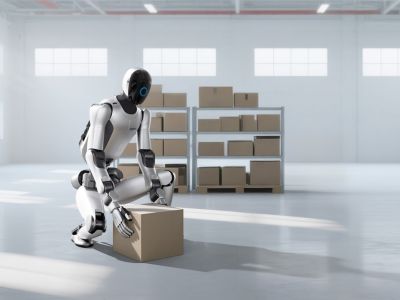
Walker S2
UBTECH's Walker S2 ranks fifth because the robot is in mass production and delivery, but UBTECH sells it only through a contact form or partner request. UBTECH began delivering the first batch of several hundred units in November 2025 for phased use on factory lines, and says orders passed 800 million yuan. It weighs 73 kg, walks at up to 2 m/s, lifts 15 kg per arm and swaps its own battery in about 3 minutes, which allows round-the-clock work. Each pack gives about two hours, so the swap does the heavy lifting. Fingertip tactile sensors and a Python and C++ SDK are listed. It suits manufacturers that can sign a fleet deal. Individuals cannot order it.
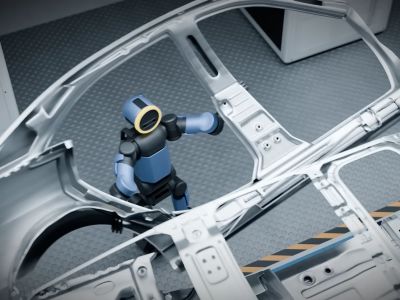
Atlas (Electric 2025)
Atlas ranks last because the robot is real and in production, but there is no unit left for a new customer this year. Boston Dynamics unveiled the product version in January 2026 and says every 2026 deployment is committed to Hyundai's Robotics Metaplant Application Center and Google DeepMind, with more customers following in 2027. It has 56 joints, a 2.3 m reach and a 50 kg lift. It swaps its own batteries and can be run autonomously, by remote control or from a tablet. Its range is the widest here, though it is a heavy 90 kg machine. It suits large manufacturers planning for 2027 deliveries.
How to Choose Between Them
Start with the job, not the brand. If you want a robot to learn on, program and take apart, the Unitree G1 and Booster T2 are the sensible picks. Both run developer software, both manage about two hours per charge, and both are built for labs rather than living rooms. If you want a robot to live in a house, the NEO is the only one designed for it, and you should read its remote-help terms before paying a deposit.
The AgiBot X2 is a different kind of robot. At about 1.31 m it is a compact performer built to greet visitors and run shows, and the base model does not support developer software. Buy it for a shop, school or exhibition, not for chores or research. Its bigger sibling, the X2 Ultra, adds a developer kit but is sold by quote.
If you run a factory or a warehouse, the questions change. Atlas has the heaviest lift and the strongest backing, but its 2026 units are already committed to Hyundai and Google DeepMind, so a new customer is looking at 2027. UBTECH's Walker S2 is already being delivered in batches to factory lines. It is sold through a sales team, so expect a project conversation rather than a checkout page.
Check how the robot recharges. Figure 03 charges by stepping onto a wireless stand. Among these six, Walker S2 and Atlas swap their own batteries, the NEO plugs itself in, and the Booster T2 charges through a magnetic port in about an hour. The G1 needs a person to handle the battery or the cable. For a robot that must work a full shift, that gap matters more than the headline runtime.
Ask who is allowed to touch the robot. The NEO can be piloted by a 1X expert from a distance when it gets stuck. That is how it learns, and it is also a camera inside your home. Developer robots like the G1 and T2 do only what you program them to do, which is safer for privacy but means the finished behaviour is your job.
A quick shortcut: pick the G1 to learn on a tight budget, the X2 for a greeter or show robot, the NEO for a home robot with remote help, the T2 for the strongest onboard computer, and the Walker S2 or Atlas for factory work.
How We Ranked These Robots
Figure 03 has no published order path, so we asked what a reader could do this month. Robots with a public buy or pre-order page ranked first, robots sold on request or through a sales team came next, and robots booked out for the year came last. Within each group we looked at the specs the makers publish: weight, runtime, charging, payload, software access and sensors.
We left out robots that nobody outside the maker can get. Tesla Optimus Gen 3 is the best known example: production has started, but outside customers are not expected before the end of 2027. Every number in this article comes from the maker, a launch announcement or a named trade outlet. Where a maker has not listed a value, we leave it out rather than fill the gap.
We used the newest version of each product on the site: Atlas is the 2025 electric model, not the older hydraulic robot. Availability changes quickly, so check the maker's page before you commit money. The Unitree store lists the G1 as backordered at the time of our check.
Frequently Asked Questions
What is the closest alternative to Figure 03 that I can order today?
The 1X NEO is the closest in purpose because it is a home humanoid with a public pre-order, with first deliveries to US homes planned for 2026. The Unitree G1 is the closest you can order outright, but it is a developer robot for programming, not for housework. Pick the NEO for a household helper and the G1 for learning.
Is Figure 03 for sale to the public?
No public order page exists for Figure 03. Figure AI announced the third-generation robot in October 2025 for homes and commercial work, and has built a high-volume factory called BotQ for it, but ordinary buyers cannot place an order. So this list ranks robots by what you can actually get.
Which Figure 03 alternative is best for a home?
The 1X NEO is the only one designed for a house. It has a soft body, a four-hour runtime and a chore-scheduling app. Its weak point is that a 1X expert may pilot it remotely for tasks it has not learned. The G1 and Booster T2 are lab robots and will not do chores on their own.
Which of these robots is best for a factory?
Walker S2 from UBTECH has the clearest record, with batches already delivered to factory lines. Atlas lifts the most at 50 kg, yet new buyers wait until 2027. Neither has a checkout page, so expect to talk to a sales team and sign a project agreement.
Why is Tesla Optimus not on the list?
Tesla does not sell Optimus Gen 3. It started early production at its Fremont factory in the third quarter of 2026, and Elon Musk said outside customers would start receiving robots around the end of 2027, industrial users first. A robot nobody outside Tesla can order does not answer the question of what to get instead.
How much does the cheapest Figure 03 alternative cost?
The Unitree G1 has the lowest listed starting amount at $13,500 for the base robot on Unitree's own store, which currently shows it as backordered. The EDU version for developers is sold through Unitree's sales team. The AgiBot X2 Neo is $25,600 and the NEO's Early Access ownership is $20,000, or $499 a month.
Do any of these robots charge wirelessly like Figure 03?
None is listed with wireless foot charging like Figure 03's 2 kW stand. The closest are Walker S2 and Atlas, which swap their own batteries, and the NEO, which plugs itself in. The Booster T2 uses a magnetic quick-connect port that charges in about an hour. The G1 and X2 use a cable and a swappable pack.
Sources
- Unitree G1 Profile
- AgiBot X2 Profile
- NEO Home Robot Profile
- Booster T2 Profile
- Walker S2 Profile
- Atlas (Electric 2025) Profile
- Figure AI designs Figure 03 humanoid for AI, home use, and scaling
- NEO humanoid designed for household use, available for preorder
- Unitree Robotics unveils G1 humanoid for $16k
- AGIBOT X2 Neo
- Boston Dynamics Unveils New Atlas Robot to Revolutionize Industry
- UBTECH Humanoid Robot Walker S2 Begins Mass Production and Delivery, with Orders Exceeding 800 Million Yuan
- Booster Robotics Unveils Booster T2, Its Flagship Humanoid Platform for Embodied AI Development
Related Articles
Best Humanoid Robots in 2026: Our Top 7 Picks, Ranked by Real Use
11/16/2026
Humanoid Robots With ROS 2 Support in 2026: Which Ones Really Work With It
11/16/2026
Which Humanoid Robots Are Built in Germany? 8 Models Compared for 2026
11/15/2026
The Cheapest Humanoid Robots You Can Order, Ranked by Listed Price (2026)
11/20/2026
Best Chinese Humanoid Robots in 2026: 10 Models Ranked by What You Can Actually Get
11/19/2026
Humanoid Robots That Teach Kids, Compared (2026)
11/18/2026