Unitree G1 Alternatives in 2026: Humanoid Robots Compared by Price, Hands and Software
The Short Answer: What to Buy Instead of a Unitree G1
The best Unitree G1 alternatives you can order today are the Booster T2, the AgiBot X2 and the EngineAI SE01. The T2 matches the G1's small research-robot size and adds an NVIDIA Jetson Thor computer, ROS 2 and an open SDK. The X2 is sold from AgiBot's own online store. The SE01 is a full 170 cm robot with 12 joints in its hands. All three cost more than the G1, which Unitree lists at $13,500 for the base model.
If price is the reason you are looking, the Unitree R1 is the cheaper step down, listed at $4,900, but its base model cannot grip anything. If hands matter most, the LimX Tron 2 and the Astribot T1 let you choose a gripper or a five-finger hand. We ranked all seven against the G1 on three things: listed price, hand options and how open the software is.
Quick Overview
Here are the seven robots side by side, ranked as G1 substitutes. The last column shows the listed price and what the maker offers for hands.
| Rank | Robot | Manufacturer | Key Strength | Best For | Price and Hands |
|---|---|---|---|---|---|
| #1 |  Booster T2 | Booster Robotics | Jetson Thor computer, ROS 2, open SDK | Labs and developers | $25,000 to $35,000; optional 12-joint hands |
| #2 |  AgiBot X2 | AgiBot | Sold in the maker's online store | Exhibitions and education | $25,600; hands not included |
| #3 |  EngineAI SE01 | EngineAI | 12 joints in the hands, 15 kg payload | Parts handling | USD 20,000 to 30,000; 12-joint hands |
| #4 |  Unitree H2 | Unitree Robotics | 182 cm tall, 3 hours of runtime | Service pilots and labs | $29,900; hands on EDU only |
| #5 | 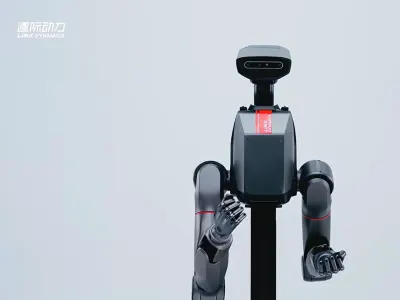 Tron 2 | LimX Dynamics | Gripper or dexterous hand, ROS 2 and SDK | Mobile manipulation research | $7,000 to $10,000; hand optional |
| #6 |  Astribot T1 | Stardust Intelligence | Five-finger option, 4 to 6 hours of runtime | Home tasks | About $13,165; 16-joint hand option |
| #7 | 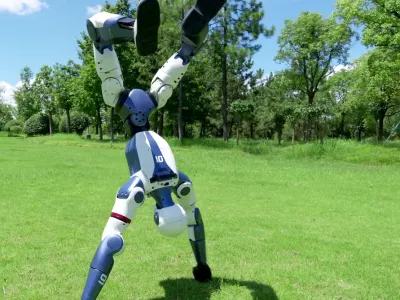 Unitree R1 | Unitree Robotics | Lowest listed price, 9 km/h top speed | Students and hobbyists | $4,900; fixed fists on base model |
The cheapest robots give up hands or software access, and the most open ones cost more than the G1. Read the last column before the first.
Explore the Robots

Booster T2
Booster T2 ranks first because it is the closest like-for-like swap for a G1 buyer who wants more room to build on. It stands 140 cm, weighs 42 to 43 kg and carries 31 degrees of freedom, with a 12-joint dexterous hand option on top. The software side is its edge: ROS 2 Humble, an open SDK and Isaac Gym simulation pipelines, driven by an NVIDIA Jetson Thor T5000 computer. Each arm carries 5 kg, the legs walk at 3 m/s, and a quick-release 480 Wh battery tray lets you swap packs in the field. The limit is runtime, about 2 hours of active walking, the same as the G1, and orders go through an inquiry form instead of a shopping cart. It suits labs and developers who want the G1's size with a stronger computer and open software.

AgiBot X2
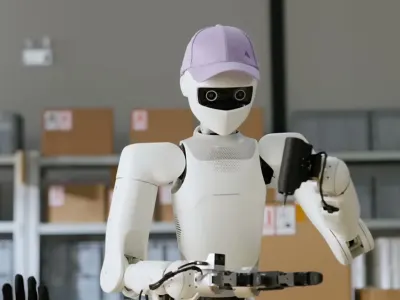
AgiBot X2 ranks second because it is the other full-size biped you can order from a maker's own online store. It stands 131 cm, weighs 35 kg and runs about 2 hours on a swappable battery of roughly 500 Wh. It reaches 1.8 m/s and handles up to 3 kg in specific arm poses, with about 1 kg across the full reach. Control comes from the AGIBOT Go app, a remote and voice commands, and the GO-1 foundation model. The catch is software: the base X2 does not support secondary development, and the X2 Ultra adds the AimDK SDK and an NVIDIA Orin NX computer. It suits buyers who want a polished showpiece for exhibitions, education or reception work, and developers who step up to the Ultra.

EngineAI SE01
EngineAI SE01 ranks third because it brings the most hand joints of any robot here and a full adult build. It stands 170 cm, weighs 55 kg and has 32 degrees of freedom: 12 in the hands, 8 in the arms and 12 in the legs and waist. A neural-network gait gives it a straight-knee, human-like walk at 2 m/s, and the arms handle 15 kg of total payload. A quick-swap 546 Wh battery gives about 2 hours of work, and the software offers a ROS-compatible API and SDK on Linux. It is much heavier than the G1, which matters for transport, safety and floor space. Purchases start with an enquiry to EngineAI's sales team. It suits teams testing parts handling and machine tending with a human-sized robot.
Unitree H2
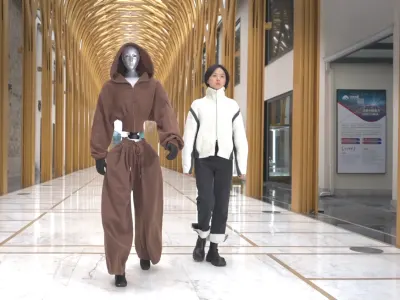
Unitree H2 ranks fourth because it is the step up inside the Unitree family, and buyers who like the G1's software ecosystem stay in it. It stands 182 cm, weighs 70 kg and has 31 degrees of freedom: 6 per leg, 7 per arm, 3 in the waist and 2 in the head. Arms are rated for about 7 kg, with a higher peak of about 15 kg, and a 0.972 kWh quick-release battery runs about 3 hours. Dexterous hands are offered only on the H2 EDU, which also adds the developer manual for secondary development. The base H2 lists no hands. It suits well-funded labs and service pilots that outgrew the G1 and want a human-height robot with longer runtime.
Tron 2
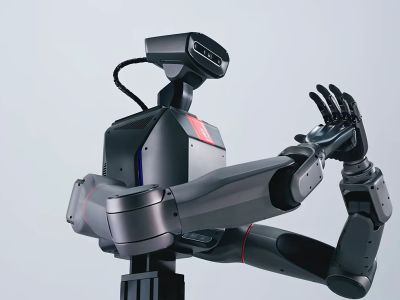
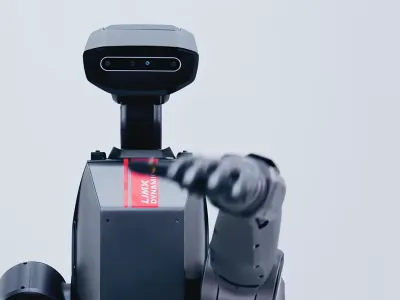
Tron 2 ranks fifth because it asks the least of a buyer who wants hands and a broad software stack at once. LimX lists 26 degrees of freedom, with 7 per arm, 5 per leg and 2 in the head, and each arm carries 5 kg. You choose a gripper or a dexterous hand, and optional kits add perception, autonomous mobile manipulation and an auto-recharge base. Software covers Python, C++, ROS 1, ROS 2, an SDK and the LimX Studio management platform. It runs 4 hours on a 46.8 V, 9 Ah swappable pack and can switch to a wheeled-leg mode at 3 to 5 m/s. It is sold through an order and inquiry form. It suits researchers working on vision-language-action models and mobile manipulation.

Astribot T1
Astribot T1 ranks sixth because it trades the G1's running ability for two capable hands and autonomy. It stands 155 cm, weighs 66 kg and has 23 degrees of freedom before the end effectors, with a five-finger hand option adding 16. Each arm carries 5 kg, and a cable-driven design keeps motion smooth and gentle. It learns tasks from human demonstrations, runs vision-language-action policies and docks itself to recharge, for 4 to 6 hours per charge. The battery is built in, so there is no swapping packs. Astribot shows cooking, bartending, laundry and lab work. It suits home-service and light-industry buyers who care more about two capable arms than a biped that runs.
Unitree R1
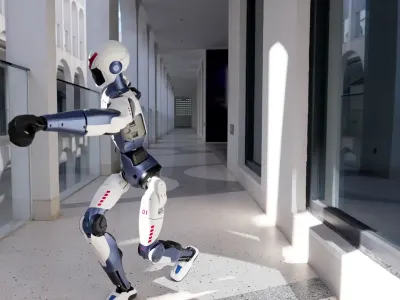
Unitree R1 ranks seventh because it is the lightest and smallest step away from the G1, and it gives up the most. It stands 123 cm and weighs 27 to 29 kg, with 26 degrees of freedom and a top speed of 9 km/h. The base model has fixed spherical fists and carries 0 kg, so it cannot pick anything up. A dexterous hand and an NVIDIA Orin module are offered only on the R1 EDU, and a Python and C++ SDK covers development. Battery life is about 1 hour, and the pack is hot-swappable with the robot powered off. It suits students, schools and hobbyists who want a running, flipping robot to learn control on, not a worker.
How to Choose Between Them
Start with what the G1 gave you and decide what you want to keep. The G1 is 132 cm tall, weighs 35 kg, runs about 2 hours, offers optional three-fingered Dex3-1 hands on the EDU version and has an SDK for developers. Most of the robots here beat it on one point and lose on another, so the right pick depends on which point hurts you.
If software is the priority, look at the Booster T2, the LimX Tron 2 and the EngineAI SE01. Each lists ROS-based tools or an SDK. Ask which version you are buying: on the AgiBot X2 the base model does not support secondary development, and on the Unitree H2 and R1 the developer manual and dexterous hands come with the EDU version only.
If hands are the priority, count the joints and ask what arrives in the box. The EngineAI SE01 lists 12 degrees of freedom in its hands. The Booster T2 adds 12 degrees of freedom of dexterous hands as an option. The Tron 2 and the Astribot T1 let you pick between a gripper and a fingered hand. A robot with fixed fists, like the base Unitree R1, is for locomotion work only.
Check the battery and the size. The T2, X2, SE01, H2 and Tron 2 use swappable packs, so a second battery doubles your working day. The Astribot T1 has a built-in battery and recharges itself on a dock. A 182 cm robot like the Unitree H2 needs far more floor space, handling care and safety distance than a 131 to 140 cm one.
Before you commit, ask for the exact configuration in writing. Several makers sell by inquiry form, and a model name can cover a base version and a developer version at different prices. Confirm what is included, who ships it and what warranty applies where you live.
A quick pick by need: choose the Booster T2 for open software and a strong computer, the AgiBot X2 for a store-bought showpiece, the EngineAI SE01 for a human-sized worker with real hands, the Unitree H2 to stay in the Unitree world at full height, the LimX Tron 2 for flexible hands and wheels, the Astribot T1 for two-arm home tasks and the Unitree R1 for the lowest cost.
How We Ranked These Robots
We took the Unitree G1 as the reference and looked for humanoid robots on Origin of Bots that a buyer could weigh against it. A robot had to be live in our catalog, a current model and listed with a price or a way to order it. Retired and research-only prototypes were left out.
Ranking weighed three things in order: how closely the robot fits what G1 buyers want (a developer-friendly humanoid at a reachable price), what hand options it offers, and how open its software is. Only values published by the maker or confirmed by at least one outlet went into the table.
Prices are the listed figures on our robot pages and change often, and several makers quote by request. A higher rank means a better fit as a G1 substitute, not a better robot overall. Where a spec was not stated for a model, we left it out instead of guessing.
Frequently Asked Questions
What is the best alternative to the Unitree G1?
The Booster T2 is the closest like-for-like swap. It is a small research humanoid, 140 cm tall, with ROS 2, an open SDK, an NVIDIA Jetson Thor computer and a 12-joint dexterous hand option. It costs more than the G1. The AgiBot X2 is the pick if you want to buy from a maker's online store.
Is there a cheaper humanoid robot than the Unitree G1?
Yes. Unitree's own R1 is listed at $4,900 against $13,500 for the G1, and the LimX Tron 2 is listed from $7,000 to $10,000. The price drop comes with limits: the base R1 has fixed fists and carries nothing, and the Tron 2 is sold through an inquiry form.
Which G1 alternative has the best hands?
The EngineAI SE01 lists 12 degrees of freedom in its hands, and the Booster T2 offers 12 degrees of freedom of dexterous hands as an option. The Astribot T1 adds a five-finger hand with 16 degrees of freedom. The G1 EDU offers three-fingered Dex3-1 hands with 7 degrees of freedom each.
Can I program these robots myself?
Mostly yes, with version caveats. The Booster T2 uses ROS 2 and an open SDK, the LimX Tron 2 supports Python, C++ and ROS, and the EngineAI SE01 lists a ROS-compatible API and SDK. The base AgiBot X2 does not support secondary development, and the Unitree H2 and R1 add developer manuals on the EDU versions.
How long do these humanoid robots run on one charge?
The AgiBot X2, EngineAI SE01 and Booster T2 run about 2 hours, the same as the G1. The Unitree H2 runs about 3 hours, the LimX Tron 2 about 4 hours and the Astribot T1 4 to 6 hours. The Unitree R1 runs about 1 hour. Most of these packs can be swapped.
Where can I buy a Unitree G1 alternative?
The Unitree R1 and AgiBot X2 are sold through the makers' online stores. The Booster T2, EngineAI SE01 and LimX Tron 2 are bought through inquiry or order forms. Ask for the exact version, delivery time and warranty before you pay.
Sources
- Booster T2 Profile
- AgiBot X2 Profile
- EngineAI SE01 Profile
- Unitree H2 Profile
- Tron 2 Profile
- Astribot T1 Profile
- Unitree R1 Profile
- Unitree's $16,000 G1 could become the first mainstream humanoid robot
- Unitree designs R1 humanoid robot to be agile and affordable
- Humanoid Robot Price Break Unitree and EngineAI showcase affordable humanoid robots
- Video: China’s new humanoid robot combines whole-body control and Nvidia Thor compute
- Booster T2
- ENGINEAI SE01
Related Articles
Best Chinese Humanoid Robots in 2026: 10 Models Ranked by What You Can Actually Get
11/19/2026
Humanoid Robots That Teach Kids, Compared (2026)
11/18/2026
Best Humanoid Robots in 2026: Our Top 7 Picks, Ranked by Real Use
11/16/2026
Which Humanoid Robots Can Do the Dishes? Six Compared for 2026
11/23/2026
Figure 03 Alternatives in 2026: 6 Humanoid Robots and How to Actually Get One
11/21/2026
The Cheapest Humanoid Robots You Can Order, Ranked by Listed Price (2026)
11/20/2026