Best Humanoid Robots for Trade Shows, Events and Exhibitions in 2026, Ranked



The Short Answer: Best Humanoid Robot for Events
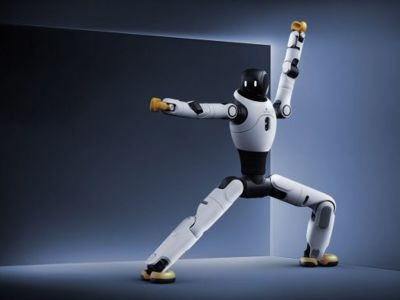
For most booths, the AgiBot X2 is the best humanoid robot to put on a stand in 2026. It stands 131 cm tall, weighs 35 kg, runs about 2 hours on a battery you can swap, and AgiBot lists exhibitions and reception as one of its uses. The Unitree G1+ comes second: it is the same size class, folds down for transport, and has a head touch sensor that lets a visitor start a chat or a move with one tap. The AgiBot A3 is the pick if you need a full-size 173 cm robot that draws a crowd from across the hall.
The right robot depends on what the booth must do. Walking robots such as the X2, G1+ and A3 get attention because they move and wave, but they run for hours rather than days and need a person nearby. Wheeled robots such as the JingChu Elf, Robbyant R1 and KEENON XMAN-R1 greet people and lead them to a stand, and they are steadier on a polished floor. Ameca is the one for talk: it cannot walk, but it holds a face-to-face conversation and plugs into the wall. Pepper is the older, proven option with the longest battery life of the group.
Quick Overview
Here is how the eight robots compare on the points that matter at a stand: size, runtime and how they move around.
| Rank | Robot | Manufacturer | Key Strength | Best For | How It Moves |
|---|---|---|---|---|---|
| #1 |  AgiBot X2 | AgiBot | 131 cm, 35 kg, swappable battery, 20+ built-in actions | Compact crowd puller | Walks on two legs |
| #2 |  Unitree G1+ | Unitree Robotics | Folds for transport, head touch starts a chat | Demos and programming | Walks on two legs |
| #3 |  AgiBot A3 | AgiBot | 173 cm, hot-swap batteries, 4+ hours walking | Full-size stage presence | Walks on two legs |
| #4 |  Ameca | Engineered Arts | Realistic face, mains powered, 187 cm | Face-to-face conversation | Fixed upper body |
| #5 |  JingChu Elf | JCBOT | About 8 hours runtime, guided leading | Reception and tours | Wheeled base |
| #6 |  Robbyant R1 | Robbyant | Showroom tours and front-desk reception | Showrooms and lobbies | Wheeled base |
| #7 |  KEENON XMAN-R1 | KEENON Robotics | Working at a hotel reception desk since 2025 | Greeting guests | Wheeled base |
| #8 |  Pepper | SoftBank Robotics | 12 hours runtime, touch tablet on chest | Long, low-key show days | Wheeled base |
Walking robots draw the biggest crowds, wheeled robots last the longest, and Ameca is the one visitors talk to. Use the cards below to see why each one ranks where it does.
Explore the Robots

AgiBot X2
The AgiBot X2 ranks first because AgiBot names exhibitions and reception as a use, and it fits a normal booth. It is 131 cm tall and weighs 35 kg, with a battery that swaps in minutes and gives about 2 hours of walking. It comes with more than 20 built-in actions, and you control it by app, remote or voice. AgiBot sells it in its own store, and the maker also runs a rental service for events. The base X2 has no LiDAR and cannot be programmed further, so it works as a ready-made performer rather than a development platform. It also needs a clear, hard floor. It suits exhibitors who want a compact, moving robot that visitors stop to film.

Unitree G1+
The Unitree G1+ ranks second because Unitree lists demonstrations and exhibitions as a use and the robot is easy to move. It stands 134 cm tall, weighs about 35 kg, and folds to 69 by 45 by 30 cm for transport. It has a six-microphone array, two 10 watt speakers and a touch sensor in the head that starts a chat or a motion. The battery releases quickly, and an external power supply runs it for long sessions. It walks about 2 hours per battery, and the standard version is not open to custom programming, which the EDU version adds. It suits teams who want a compact robot now and the option to build on it later.

AgiBot A3
The AgiBot A3 ranks third because it brings full-size presence to a stage while AgiBot names interactive exhibition hosting as a use. It is 173 cm tall and weighs 55 kg, so it matches a human host in height. Two batteries hot swap without switching it off, giving 4 hours or more of walking and 6 hours of standing. It walks at 1.5 metres per second and has a curved status display on its head and touch sensors on its shoulders. It is larger and heavier than the X2, so it needs more floor and more handling. The store lists it by quote only. It suits main-stage slots and large product launches.

Ameca
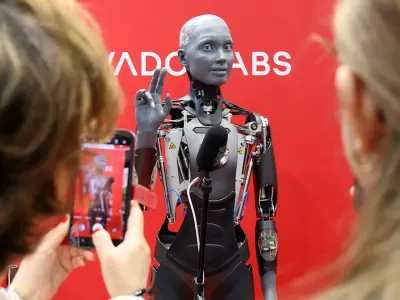
Ameca ranks fourth because Engineered Arts built it for public demonstration, and its face is the most lifelike on this list. It stands 187 cm tall, weighs 62 kg and has a fixed upper body with no legs, so it stays where you put it. It runs from mains power with no battery, which means it never goes flat during a show. It has two 8 megapixel cameras in its eyes, a 10 inch touchscreen on the chest, and voice-based conversation. It works indoors only, between 10 and 30 degrees Celsius. Engineered Arts offers it for rent or by quote. It suits exhibitions where long, face-to-face conversations matter more than movement.

JingChu Elf
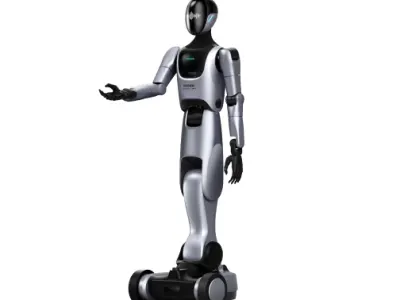
The JingChu Elf ranks fifth because JCBOT builds it for reception and guided tours, and it runs about 8 hours, the second-longest of the eight. It is 165 cm tall, weighs about 70 kg and rolls on a two-wheel drive base with SLAM navigation, so it can greet a visitor and lead them to a stand. It has voice conversation and face recognition, and a Python and C++ kit opens its motors to developers. JCBOT supplies a flight case, a safety rope and a display stand with the robot. It does not walk, so it draws less attention in a crowded hall. The maker quotes on request. It suits lobbies, exhibition halls and visitor centres.

Robbyant R1
The Robbyant R1 ranks sixth because Robbyant lists showroom guided tours and front-desk reception among its jobs, but it is a large, quote-only robot with no published runtime. It is 160 to 175 cm tall, weighs 110 kg and moves on a wheeled base at up to 1.5 metres per second. It has a touchscreen and voice control, plus LiDAR, depth cameras and force sensors in the wrists for carrying trays and serving drinks. It works indoors at 15 to 30 degrees Celsius. Ant Group's robotics arm Robbyant unveiled it at IFA in Berlin in 2025. It suits showrooms and lobbies where a robot guides visitors and carries light items.
KEENON XMAN-R1
The KEENON XMAN-R1 ranks seventh because its proof of work is a hotel desk rather than a trade show floor. It has greeted guests at the Shangri-La Traders Hotel at Shanghai Hongqiao Airport since October 2025, and KEENON took it to CES 2026. It is 174 cm tall, weighs 110 kg and runs about 3 hours on a wheeled base. A curved face display and a microphone array handle conversation, and it works with KEENON's delivery and cleaning robots. It is heavy for a stand and sold only through an enterprise quote. It suits venues that need a steady greeter who can also hand over small items.

Pepper
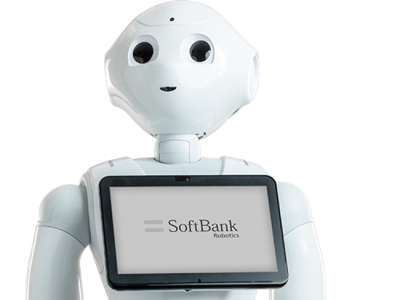
Pepper ranks eighth because it is the oldest design here, launched in 2014, yet it still lists events among its uses. It is 121 cm tall, weighs 28 kg and runs 12 hours on a wheeled base, the longest runtime of the eight. A touch tablet on its chest lets visitors browse, and it is built to recognise emotions. Its programming kit runs in Python, Java and other languages. SoftBank paused production in 2021 after about 27,000 units, so supply comes through resellers on quote. It cannot walk or lift anything heavy. It suits long, low-key show days where a friendly greeter and a quiz on a tablet are enough.
How to Choose Between Them
Start with the job, not the robot. If you want people to stop and film, pick a walking humanoid. The AgiBot X2 and Unitree G1+ both fit in a normal stand and can be moved in a car boot once the robot is folded or crated. If you want a robot that talks to visitors for hours, pick a screen or face based robot: Ameca for realistic conversation, or the wheeled service robots for greeting and guiding.
Check the runtime against your show day. A walking robot such as the X2 or G1+ gives about 2 hours, so plan a battery swap or a charge during breaks. The AgiBot A3 hot swaps its two batteries and offers 4 hours or more of walking, which suits a long stage slot. The JingChu Elf runs about 8 hours and Pepper 12 hours, so a wheeled robot can cover a full exhibition day on one charge. Ameca has no battery and runs from mains power, so it never goes flat but never leaves its spot either.
Look at the floor and the space. A walking humanoid needs a clear patch of hard, flat floor. Soft carpet tiles and loose cables are a real risk for a two-legged robot, and a safety rope or a stand helps. Wheeled robots need smooth floors and space to turn, but they do not fall over. Ameca needs an indoor spot between 10 and 30 degrees Celsius with moderate humidity, so it suits a hall rather than an outdoor stage.
Decide how you will get the robot. The AgiBot X2 and Unitree G1+ have a listed price in the maker's own store, so you can order them directly. AgiBot also runs a rental service for events, and Engineered Arts offers Ameca for rent as well as for sale. The A3, JingChu Elf, Robbyant R1, KEENON XMAN-R1 and Pepper are sold through a quote or a contact request, so allow weeks for the answer and for delivery before your show date.
Plan the content as well as the hardware. A robot that only stands still is forgotten after a minute. The X2 comes with more than 20 built-in actions, the G1+ answers to voice and head touch, and the wheeled robots lead visitors from one stand to another. Write a short loop of greetings, one demo every few minutes and a clear sign explaining what the robot is doing, and keep a trained staff member beside it.
A simple pick-by-need shortcut: choose the AgiBot X2 for a compact crowd puller, the Unitree G1+ if you also want a robot you can program later, the AgiBot A3 for a full-size stage presence, Ameca for conversations, and one of the wheeled robots for a reception desk or a guided tour.
How We Ranked These Robots
We started with every live humanoid on our catalog and kept the ones whose maker lists exhibitions, events, reception, guided tours or public demonstrations as an intended use. We then used only values the maker or a named outlet has published: height, weight, runtime, how the robot moves, and how a buyer can get one.
Robots were ranked on four points. First, how directly the maker names events or exhibitions as a use. Second, the booth footprint, meaning a robot that fits a normal stand without special handling. Third, runtime against a show day, with a swappable battery counting in a robot's favour. Fourth, how easy it is to actually obtain one, whether through a store listing, a rental or a quote.
Where a robot has several versions we used the newest generation on our catalog. We left out robots with no published use in front of visitors, and we did not rank robots whose maker gives no height or weight. Prices change often, so we mention a figure only where the maker's own store lists it, and you should confirm it before ordering.
Frequently Asked Questions
What is the best humanoid robot for a trade show booth?
The AgiBot X2 is the best all-round choice in 2026. It is 131 cm tall, weighs 35 kg, runs about 2 hours on a swappable battery and has exhibitions and reception listed as a use. The Unitree G1+ is a close second, and the AgiBot A3 is better if you need a full-size 173 cm robot on a stage.
Can you rent a humanoid robot for an event?
Yes. AgiBot runs a rental and subscription service called AGIRAAS for events and short projects, and Engineered Arts offers Ameca for rent. Renting avoids the purchase cost and often includes setup and support, but lead times vary, so book weeks before your show date.
How long does a humanoid robot last on one charge at an event?
It depends on how the robot moves. Walking robots such as the AgiBot X2 and Unitree G1+ run about 2 hours, the AgiBot A3 walks 4 hours or more with hot-swap batteries, the JingChu Elf runs about 8 hours, and Pepper runs 12 hours. Ameca is powered from the wall, so it has no battery limit.
Do walking humanoid robots work on carpet or uneven floors?
They work best on clear, hard, flat floors. Soft carpet tiles, cables and slopes raise the risk of a fall for a two-legged robot. Use a safety rope or stand, keep the demo area clear of cables, and test the robot on your actual floor before the doors open. Wheeled robots handle smooth floors with less risk.
Which humanoid robot can hold a real conversation with visitors?
Ameca from Engineered Arts is built for face-to-face conversation, with cameras in its eyes, microphones and a realistic face. The JingChu Elf, Robbyant R1 and KEENON XMAN-R1 also talk with visitors and recognise faces or voices, while the Unitree G1+ starts a chat when a visitor touches its head.
Do I need a trained operator to run a humanoid robot at a show?
Yes, plan on one. Even the simplest robot needs someone to start it, swap or charge the battery, watch the floor and stop it quickly in an emergency. The AgiBot X2 and Unitree G1+ come with app or handheld control, so one trained staff member beside the robot is usually enough.
Sources
- AgiBot X2 Profile
- Unitree G1+ Profile
- AgiBot A3 Profile
- Ameca Profile
- JingChu Elf Profile
- Robbyant R1 Profile
- KEENON XMAN-R1 Profile
- Pepper Profile
- AGIBOT X2 Neo
- AGIBOT A3
- Unitree launches upgraded G1+ humanoid robot with six major upgrades
- Video: ‘World’s first’ humanoid robot butler for hotels debuts at Shanghai airport
- Ant Group’s Robotics Arm Robbyant Debuts R1, a Multi-Purpose Humanoid Powered by AI
- Ameca (robot)
- Pepper (robot)
Related Articles
Figure 03 Alternatives in 2026: 6 Humanoid Robots and How to Actually Get One
11/21/2026
The Cheapest Humanoid Robots You Can Order, Ranked by Listed Price (2026)
11/20/2026
Best Chinese Humanoid Robots in 2026: 10 Models Ranked by What You Can Actually Get
11/19/2026

Lightest Humanoid Robots, Ranked by Weight (2026)
11/24/2026
Which Humanoid Robots Can Do the Dishes? Six Compared for 2026
11/23/2026

Unitree G1 Alternatives in 2026: Humanoid Robots Compared by Price, Hands and Software
11/23/2026