Which Unitree Humanoid Should You Buy? R1, G1, G1+, H2, H2-X and H1-2 Compared (2026)


The Short Answer: Pick the Unitree by Your Job
For most first-time buyers the Unitree R1 is the right start: it walks, talks and starts at $4,900. For a robot you can program for research, the G1 starts at $13,500 and its upgraded version, the G1+, at $15,000. For a full-size robot, the H2-X starts at $25,400 and the H2 at $29,900, and both lift a rated 7 kg per arm.
Unitree sells several humanoid families, and six robots matter to a buyer. The R1 is the small, low-priced walker. The G1 and G1+ are the mid-size research and demonstration robots. The H2-X and H2 are the current full-size robots. The H1-2 is the older full-size robot, sold through Unitree's sales team. Every price on Unitree's own pages leaves out tax and shipping, so your final bill will be higher.
Quick Overview
Six Unitree humanoids in rank order, lowest starting price first. Read the last column together with the strength: the price tells you the tier, and the strength tells you what the extra money buys.
| Rank | Robot | Manufacturer | Key Strength | Best For | Starts At |
|---|---|---|---|---|---|
| #1 | 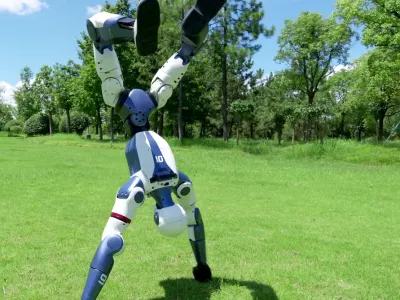 Unitree R1 | Unitree Robotics | 123 cm walker with 20 to 26 joints | First humanoid and classrooms | $4,900 |
| #2 | 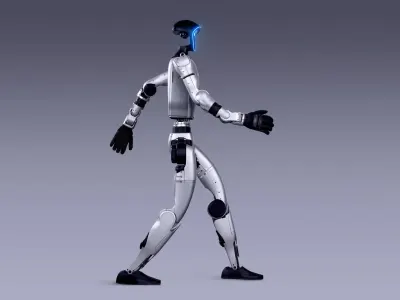 Unitree G1 | Unitree Robotics | 23 joints, 3D LiDAR, folds to 690 mm | Research and live demos | $13,500 |
| #3 |  Unitree G1+ | Unitree Robotics | 25 joints, 2 neck joints, 6 microphones | Research and live demos | $15,000 |
| #4 |  Unitree H2-X | Unitree Robotics | 170 cm, 31 joints, two hot-swap batteries | Security and patrol work | $25,400 |
| #5 |  Unitree H2 | Unitree Robotics | 182 cm tall, 31 joints, 15 kg peak per arm | Full-size work and development | $29,900 |
| #6 | 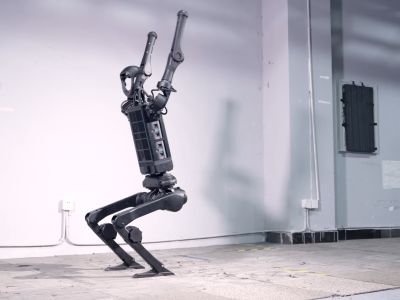 Unitree H1-2 | Unitree Robotics | 7-joint arms, 360 N·m knee torque | Labs running full-size robots | Contact sales |
The table splits into three tiers. The R1 family is the small, low-priced start. The G1 and G1+ are the middle step for research and demonstrations. The H2-X, H2 and H1-2 are the full-size robots for real tasks.
Explore the Robots
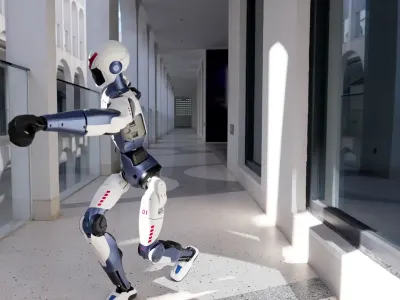
Unitree R1
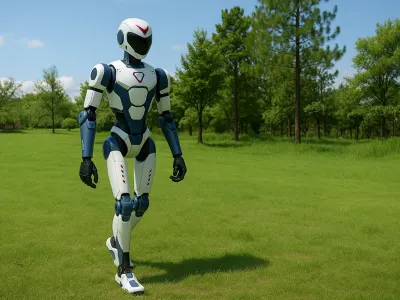
Unitree R1 ranks first because it is the first Unitree humanoid that actually walks. It stands 123 cm tall and weighs about 27 to 29 kg. The AIR version has 20 joints and a single camera, while the standard R1 has 26 joints, a two-joint head and two cameras. A 4-microphone array, speaker and Wi-Fi 6 handle voice. It runs about 1 hour per charge on a quick-release battery. The AIR and standard R1 are closed to your own software, while the R1 EDU supports secondary development and has 26 to 40 joints, with optional dexterous hands. The base fists carry nothing. It suits first-time owners, schools and teachers who want a walking humanoid in the room.

Unitree G1
Unitree G1 ranks second because it is the robot that made Unitree famous and the first one built for research. At 132 cm and about 35 kg, it folds down to 690 mm so it fits in a car. It has 23 joints, with six per leg and five per arm, and the EDU version reaches 43 joints with optional three-finger hands. A depth camera and a 3D LiDAR give it vision, a 4-microphone array handles voice, and a 9,000 mAh quick-release battery gives about 2 hours. The base arms carry about 2 kg and the EDU arms about 3 kg. Only the EDU version supports secondary development. It suits labs, schools and demonstration teams that want a proven walking robot.

Unitree G1+
Unitree G1+ ranks third because it is the step where a Unitree becomes a serious research robot. It stands 134 cm tall, weighs about 35 kg and folds to 690 mm for transport. It has 25 joints, including two new neck joints, and Unitree lists 110 percent more peak torque in the shoulder and waist and 43 percent more in the arms than the original G1. A binocular camera, a wide-angle camera and a 3D LiDAR give it wide vision, and a 6-microphone array and two 10 W speakers handle voice. It runs about 2 hours on its battery, or longer on an external power supply. The EDU version opens the software and adds hands, wrists and a 3-joint waist. It suits university labs, robotics teams and exhibitions.

Unitree H2-X
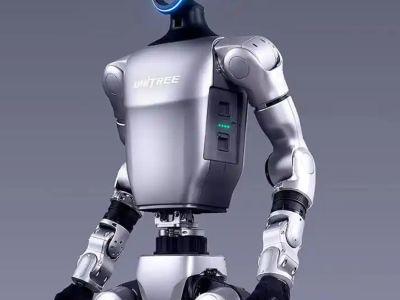
Unitree H2-X ranks fourth because it is the entry point to Unitree's full-size line. It stands about 170 cm tall, weighs 65 kg or more and has 31 joints, with an LED display on the head and built-in stereo speakers. Arm joints reach 150 N·m and leg joints 300 N·m, and each arm carries a rated 7 kg and a peak of about 15 kg. A binocular depth camera and a wide-angle camera handle vision. Two hot-swappable batteries add up to 1.152 kWh and give about 8 hours standing or about 4 hours of continuous walking, and charging is magnetic. Unitree aims it at patrol, alert and protection work, and also lists industrial, commercial and home uses. The EDU version adds secondary development and optional compute up to NVIDIA Thor. It suits security teams and labs that need a full-size body.

Unitree H2
Unitree H2 ranks fifth because it is the full-size Unitree with the most complete body and the strongest arms. It stands 182 cm tall and weighs about 70 kg, with 31 joints and a bionic head with facial features. Leg joints reach 360 N·m and arm joints 120 N·m. Each arm carries a rated 7 kg and a peak of about 15 kg. A 0.972 kWh quick-release battery lasts about 3 hours, and the maximum speed is 2 m/s or more. The frame uses aircraft-grade aluminum and titanium alloy. The EDU version adds secondary development and dexterous hand options, and a high-power module such as NVIDIA Thor can be added. It suits companies and labs building real humanoid applications.
Unitree H1-2
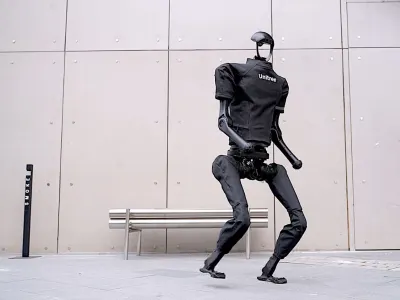
Unitree H1-2 ranks last because Unitree sells it through its sales team and it is the older full-size robot. It stands about 178 cm tall and weighs about 70 kg. Each leg has six joints with a two-joint ankle, and each arm has seven joints driven by Unitree M107 motors. The knees reach about 360 N·m. Each arm carries a rated 7 kg and a peak of about 21 kg. A 0.864 kWh battery powers it, a 3D LiDAR and a depth camera give it 360 degree sensing, and the standard computer is an Intel Core i5 with an i7 for your own work. Up to three NVIDIA Orin NX modules and Dex5-1 hands are optional. Its speed is under 2 m/s. It suits labs that already run Unitree full-size robots.
How to Choose Between Them
Start with one ground rule: the base version of each robot is built to be used, and the EDU version is built to be programmed. The R1 AIR and the standard R1 do not support secondary development, which means writing your own control software. The R1 EDU does, and so do the G1 EDU, G1+ EDU and H2 EDU. If you plan to train your own walking or arm skills, ask Unitree's sales team for the EDU price from the start, because the base model will not let you in.
Check the height against the places the robot will work. The R1 stands 123 cm tall, the G1 132 cm, the G1+ 134 cm and the H2 182 cm. The H2-X is about 170 cm and the H1-2 about 178 cm. A short robot fits a classroom or a living room, but it cannot reach a normal shelf or door handle. A full-size robot reaches things made for people, but it weighs 65 to 70 kg, so moving and handling it takes more effort.
Ask how long it runs. The R1 lists about 1 hour per charge. The G1 and G1+ list about 2 hours, and the G1+ also accepts an external power supply for long sessions. The H2 lists about 3 hours. The H2-X carries two hot-swappable batteries, so you can swap one while the other keeps the robot running, and it lists about 8 hours standing or about 4 hours of continuous walking. A demo that must run all day needs spare packs or the external supply.
Look at what you need the hands to do. The R1 base model has simple fists and cannot carry anything. The G1 lifts about 2 kg per arm, or about 3 kg on the EDU, and the G1+ about 3 kg, or about 4 kg on the EDU. The H2-X and H2 lift a rated 7 kg and a peak of about 15 kg per arm. If your job is to move objects, only the full-size robots are in the right class. If your job is to wave, talk and walk, the smaller robots are enough.
Pick between the G1 and the G1+ by what you want to add. The G1+ keeps the same size and shape, and adds two neck joints, stronger shoulder and waist motors, a second wide-angle camera, a 6-microphone array and external power input. The extra $1,500 buys a better robot, but the G1 still does the job for walking and balance work. In the full-size range, the H2-X has an LED head display and a security focus, while the H2 has a bionic head with facial features. The H1-2 is the older full-size robot, so choose it only if your lab already runs Unitree full-size software.
A quick pick by need: the lowest-priced walking humanoid, the R1. A first research robot, the G1. The same robot with better senses and motors, the G1+. A full-size robot at the lowest listed price, the H2-X. A full-size robot with a talking head, the H2. A full-size robot for a lab with older Unitree software, the H1-2.
How We Ranked These Robots
We ranked by starting price on Unitree's own pages, lowest first. Unitree sells the G1 and G1+ side by side, so we list both generations of that pair. The R1 comes first because it is the lowest-priced Unitree that walks. The H1-2 comes last because Unitree sells it through its sales team instead of a store.
Every value in this article comes from Unitree's own product pages or from our robot records. Prices are the entry price for the base model, before tax and shipping. EDU prices come from the sales team, so we compare base models and name the EDU only where it changes what you can do. If a figure is missing for a robot, we leave it out of the comparison instead of filling the gap.
Frequently Asked Questions
Which Unitree humanoid is best for beginners?
The Unitree R1 is the best start. It stands 123 cm tall, walks, talks through a 4-microphone array and starts at $4,900 for the AIR version, or $5,900 for the standard R1. It does not run your own software, so it suits learning and demonstrations. If you want to program it, ask Unitree about the R1 EDU.
What is the difference between Unitree G1 and G1+?
The G1+ is the upgraded G1, launched in September 2026. It keeps the same 1.3 m size and 35 kg weight but adds two neck joints, stronger shoulder, waist and arm motors, a wide-angle camera next to the stereo camera, head touch sensors, a 6-microphone array and external power input. Unitree lists the G1+ from $15,000 and the G1 from $13,500.
What is the difference between a Unitree base model and an EDU model?
The EDU model is built for programming. The base R1, G1+ and H2 are ready to use, but only the EDU versions support secondary development, which means writing your own control software. EDU versions also add options such as dexterous hands, extra waist joints and extra compute. Unitree gives EDU prices through its sales team.
How tall is the Unitree H2, and what can it carry?
The H2 stands 182 cm tall and weighs about 70 kg. Its arms carry a rated 7 kg each, with a peak of about 15 kg. It has 31 joints, a quick-release 0.972 kWh battery and runs about 3 hours. The H2 starts at $29,900 before tax and shipping.
How long does a Unitree humanoid run on one charge?
Unitree lists about 1 hour for the R1, 2 hours for the G1+ and 3 hours for the H2. The G1+ also accepts an external power supply. A spare quick-release pack lets you keep going while the first one charges.
Can the Unitree R1 or G1+ carry things?
Only a little. The base R1 has fixed fists and carries nothing. The G1+ lifts about 3 kg per arm, and its EDU version about 4 kg. For heavier work, look at the H2 with a rated 7 kg per arm, or the H1-2 with a rated 7 kg and a peak of about 21 kg.
Which Unitree full-size humanoid is the lowest priced?
The Unitree H2-X starts at $25,400, below the H2 at $29,900. The H2-X stands about 170 cm, weighs 65 kg or more and has 31 joints, two hot-swappable batteries and an LED head display. The H2 is taller at 182 cm and has a bionic head with facial features. Both carry a rated 7 kg per arm.
Sources
- Unitree R1 Profile
- Unitree G1 Profile
- Unitree G1+ Profile
- Unitree H2-X Profile
- Unitree H2 Profile
- Unitree H1-2 Profile
- Unitree Humanoid Robot Buying Guide (2026): Which Model Should You Choose?
- Unitree R1
- G1+ Fully Upgraded
- Unitree H2 Destiny Awakening
- Unitree H1 / H1-2
- Unitree H2-X Next-Generation Full-Size Humanoid Robot
- Humanoid robot G1_Humanoid Robot Functions_Humanoid Robot Price
Related Articles
Which Humanoid Robots Can Do the Dishes? Six Compared for 2026
11/23/2026

Unitree G1 Alternatives in 2026: Humanoid Robots Compared by Price, Hands and Software
11/23/2026
Figure 03 Alternatives in 2026: 6 Humanoid Robots and How to Actually Get One
11/21/2026
Which AgiBot Humanoid Fits Which Job? AgiBot Robots Compared (2026)
11/26/2026
Best Humanoid Robots for Trade Shows, Events and Exhibitions in 2026, Ranked
11/25/2026

Lightest Humanoid Robots, Ranked by Weight (2026)
11/24/2026