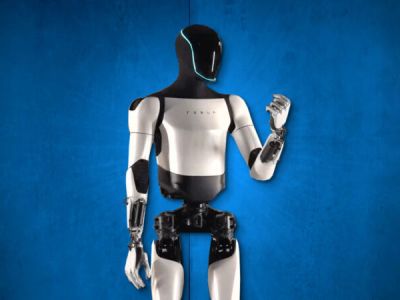
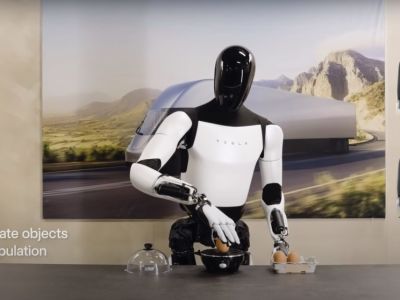
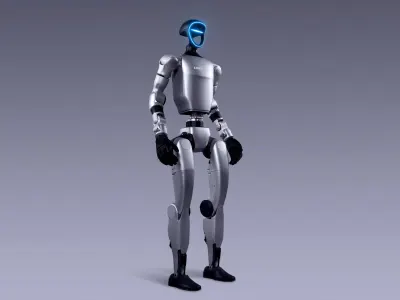
Optimus by Tesla is positioned as a general-purpose humanoid robot aimed at manufacturing, logistics, research, and remote operations, making it a strong benchmark for enterprise automation. Its comparison value comes from its larger carrying and deadlift capacity, longer operational runtime, and semi-autonomous to fully autonomous positioning. Optimus also stands out for its Tesla custom OS and AI/FSD integration, which suggests a software-first approach to robotic control. Compared with smaller humanoids, it is designed to prioritize task utility, reach, and workplace deployment over compactness.
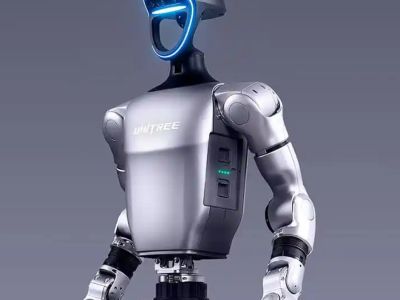
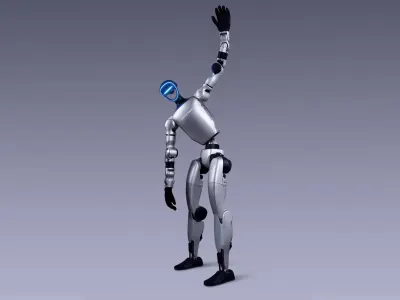
Unitree G1 by Unitree Robotics is a compact humanoid built around dynamic mobility, balancing, and light manipulation, which makes it a relevant counterpoint to heavier enterprise-focused robots. It is priced much lower than Optimus and includes an onboard compute stack with 8-core CPU and AI acceleration, plus SDK and OTA support for developers. Unitree G1 differentiates itself through its smaller size, lighter weight, and emphasis on high-speed bipedal running and recovery behaviors. Compared with Optimus, it is more oriented toward agile research, demos, and light-duty manipulation than heavy payload work.
Detailed Analysis
Which humanoid robot moves better on two legs?
Optimus is specified with a max speed of 8 km/h, while Unitree G1 is listed at 2 m/s, or 7.2 km/h, so their top walking speeds are close. The larger Tesla platform is heavier at 57 kg, which can support stable whole-body task execution but may reduce nimbleness in tight spaces. Unitree G1 is lighter at 35 kg and is explicitly described for high-speed bipedal running and 360° ground recovery, which points to stronger dynamic mobility focus. For controlled industrial walking, Optimus appears more task-oriented, while Unitree G1 is more specialized in agile balance and recovery behaviors.
Which robot is more capable for complex manipulation tasks?
Optimus has 40+ degrees of freedom and full-body dexterity including hands, which suggests broader manipulation potential for whole-body tasks. Unitree G1 offers 23–43 degrees of freedom depending on hand and waist options, but its payload and deadlift limits are much lower. The Tesla robot is built to carry 20 kg and deadlift 68 kg, making it better suited to heavier object handling and industrial workflows. Unitree G1 is more appropriate for small tool handling, light pick-and-place, and task demos rather than physically demanding manipulation.
Which robot offers better autonomous learning capabilities?
Optimus is described as semi-autonomous to fully autonomous and tied to Tesla custom OS with AI and FSD integration, indicating a broader autonomy ambition. Unitree G1 is semi-autonomous and uses UnifoLM and VLA training, plus onboard AI acceleration, which supports developer experimentation and learning-based control. Tesla's platform appears more aligned with long-term autonomous labor deployment, while Unitree G1 emphasizes accessible research and model training support. For enterprise autonomy maturity, Optimus is the stronger candidate, while G1 is more development-friendly for iterative robotics research.
Which humanoid robot is better for industrial manufacturing?
Optimus is better aligned with industrial manufacturing because it combines higher payload capacity, higher deadlift capacity, and longer operational runtime in a larger humanoid form. Unitree G1 can support light pick-and-place and soldering demos, but its 2 kg per hand/arm carrying capacity limits heavier factory work. Optimus is also explicitly positioned for manufacturing, logistics, and infrastructure inspection, which matches plant-level deployment needs more closely. Unitree G1 is better for prototyping and light-duty manufacturing tasks, but Optimus is the stronger fit for industrial operations.
How do battery runtime and power efficiency compare?
Optimus is specified for approximately 8 hours of operational use, which is a practical target for work-shift robotics. Unitree G1 does not list a comparable runtime in the provided data, instead noting a standard smart lithium-ion lifecycle of 5 years, which describes battery lifespan rather than per-charge runtime. That makes Optimus easier to evaluate for daily work planning and deployment scheduling. For runtime-based operations, Optimus has the clearer and more enterprise-relevant power specification.
Which humanoid robot fits real-world deployment best?
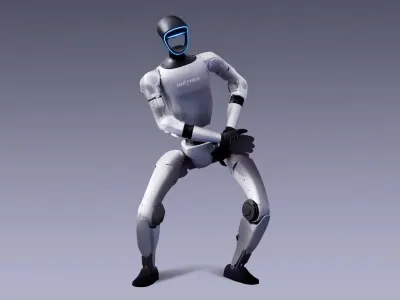
Optimus is built for higher-load enterprise scenarios such as manufacturing, logistics, infrastructure inspection, and remote operations. Unitree G1 is better matched to research, demos, light manipulation, and agile motion tasks, with lower mass and smaller physical dimensions. The Tesla robot is more deployment-oriented for repeated workplace tasks, while the Unitree platform is more versatile for labs and development environments. For production use, Optimus is the more capable long-term deployment candidate.
Which robot is safer around human workers?
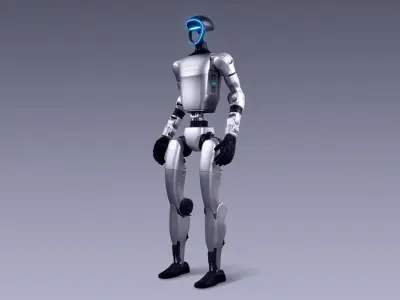
Optimus includes emergency stop, obstacle detection, and compliant actuators, which are important features for shared human workspaces. Unitree G1 includes obstacle detection, collision avoidance, and system alerts, offering a safety stack oriented toward movement supervision and interaction warnings. Both platforms include basic safety mechanisms, but Optimus adds compliant actuators, which can improve physical interaction behavior. For structured industrial environments, Optimus presents the more complete human-facing safety package.
Analysis Score Summary
Total Score
7
Optimus
VS
Based on Detailed Analysis
Total Score
7
Unitree G1
📊 Win: 2 points | Trade-off: 1 point each
Scores are summed across every insight: a clear winner earns 2 points, while balanced trade-offs give each robot 1 point. The total reflects how often each robot outperforms the other (or shares the spotlight) throughout the detailed analysis sections.
Capabilities & Operational Tasks
Head-to-head comparison of what Optimus and Unitree G1 can do, their applications, and capabilities.
What Can Optimus & Unitree G1 Do?
16Core operational tasks, activities, and physical manipulation duties evaluated side-by-side.
| Task & Description | Model AOptimus8 supported | Model BUnitree G114 supported |
|---|---|---|
| Assembly | High | — |
| Autonomous task execution | High | High |
| Carrying and transport | — | High |
| Collaborative work | — | High |
| Human interaction | — | High |
| Inspection | High | — |
| Loading and unloading | High | High |
| Machine operation | — | High |
| Material handling | High | High |
| Move objects | High | High |
| Navigation | — | High |
| Obstacle traversal | — | High |
| Pick and place | High | High |
| Repetitive physical tasks | High | High |
| Sorting | — | High |
| Tool use | — | High |
Technical Specifications
Head-to-head performance data and metrics
| Specification | Model AOptimus | Model BUnitree G1 |
|---|---|---|
Functional Utility & Use Cases4 Comparative Metrics | ||
Control Method | Fully autonomous with optional remote supervision | Remote control, AI automation |
Use Cases | Manufacturing, research, logistics, infrastructure inspection, remote operations | High-speed bipedal running, 360° ground recovery, dynamic balancing, small tool handling, light pick-and-place, soldering demos |
Multi Robot Coord | Multi-robot coordination via network | Yes (via network) |
Pet Friendly | designed to operate safely around humans | Not Applicable / No |
Manipulation & Load Capacity4 Comparative Metrics | ||
Carrying Capacity | 20 kg | 2 kg per hand/arm |
Deadlift Capacity | 68 kg (150 lbs) | 3 kg |
Payload Type | Goods and tools; not designed for human transport | 2 kg payload per hand/arm (Height: 132 cm, Weight: ~35 kg, 23–43 DoF) |
Modular Attachments | Hands with 11 degrees of freedom; other attachments not specified | Supports optional dexterous hands and payload extensions |
Kinematic Architecture & Dexterity4 Comparative Metrics | ||
Degrees of Freedom | 40+ DOF (full-body dexterity including hands) | 23–43 DoF (depending on hand and waist options) |
Material | Aluminum frame, composite joints, polymer covers | Aluminum, composite, plastic |
Mobility Type | Bipedal (legged) | Legged (Dynamic bipedal locomotion >2.0 m/s, 360° leg flexibility, ground recovery) |
Hardware Interface | - | USB-C, GPIO (assumed), Ethernet port |
Functional Utility & Use Cases
4 Comparative Metrics
Manipulation & Load Capacity
4 Comparative Metrics
Kinematic Architecture & Dexterity
4 Comparative Metrics
Frequently Asked Questions
Which humanoid robot has the higher payload and lifting capacity for enterprise tasks?
Optimus by Tesla has the higher payload and lifting capacity, with 20 kg carrying capacity and 68 kg deadlift capacity. Unitree G1 by Unitree Robotics is limited to 2 kg per hand/arm and 3 kg deadlift.
Which humanoid robot is more autonomous or better suited to teleoperation workflows?
Optimus by Tesla is more advanced in autonomy, listed as semi-autonomous to fully autonomous. Unitree G1 by Unitree Robotics is semi-autonomous and better suited to SDK-driven development and supervised control.
Which humanoid robot has better walking speed and stability for bipedal movement?
Unitree G1 by Unitree Robotics is slightly slower at 7.2 km/h but emphasizes dynamic balancing and 360° ground recovery. Optimus by Tesla is rated at 8 km/h and is designed for stable task-oriented movement.
Which humanoid robot offers better hand and arm dexterity for manipulation tasks?
Optimus by Tesla offers broader dexterity with 40+ DOF and full-body hand capability. Unitree G1 by Unitree Robotics can reach 23–43 DOF, but it is optimized for lighter manipulation.
Which humanoid robot is more deployment-ready for manufacturing and logistics?
Optimus by Tesla is more deployment-ready for manufacturing and logistics because it supports heavier payloads, longer runtime, and enterprise use cases. Unitree G1 by Unitree Robotics is better suited to labs and light-duty demonstrations.
Which humanoid robot is better for research and development prototyping?
Unitree G1 by Unitree Robotics is better for research and development prototyping because it includes SDK support, OTA updates, and onboard AI acceleration. Optimus by Tesla is more focused on enterprise automation and operational deployment.
Related Comparisons
Discover similar robot matchups to expand your knowledge and find the perfect solution
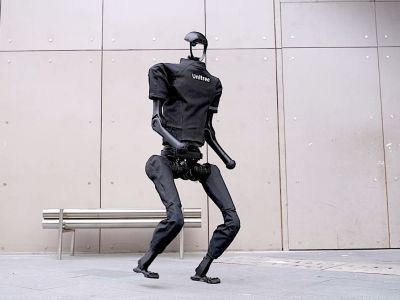
Unitree G1 vs Unitree H1
Head-to-head: Unitree G1 vs Unitree H1 compared on bipedal balance, AI learning, and real-world deployment.
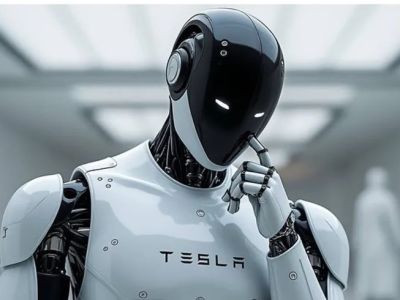
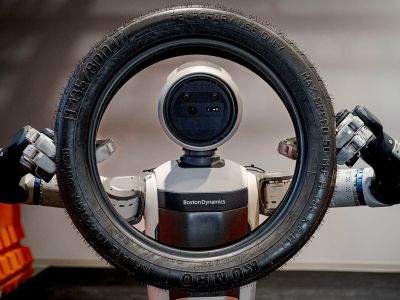
Optimus vs Atlas (Electric Atlas, 2025)
In-depth comparison of Optimus and Atlas (Electric Atlas, 2025), covering hardware capabilities, teleoperation, and enterprise readiness.
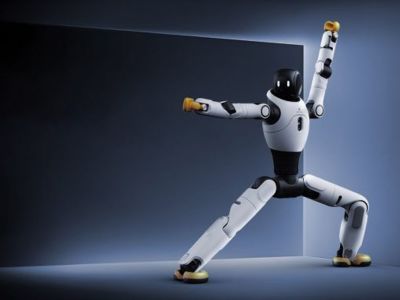
Unitree G1 vs AgiBot X2-N
Compare Unitree G1 vs AgiBot X2 for humanoid mobility, dexterity, autonomy, and payload capacity.
Unitree G1 vs Unitree H2
In-depth comparison of Unitree G1 and Unitree H2, covering hardware capabilities, teleoperation, and enterprise readiness.
Disclaimer
All content, comparisons, and verdicts on this website are based on our research, testing, and opinion. While we strive for accuracy, we do not guarantee the completeness, reliability, or suitability of any information. Performance, specifications, and results may vary depending on usage and conditions. This website and its authors are not responsible for any decisions, actions, or outcomes based on the information provided. Always verify product details with the manufacturer before making purchase or operational decisions.