NAO
AI ChatLast updated:
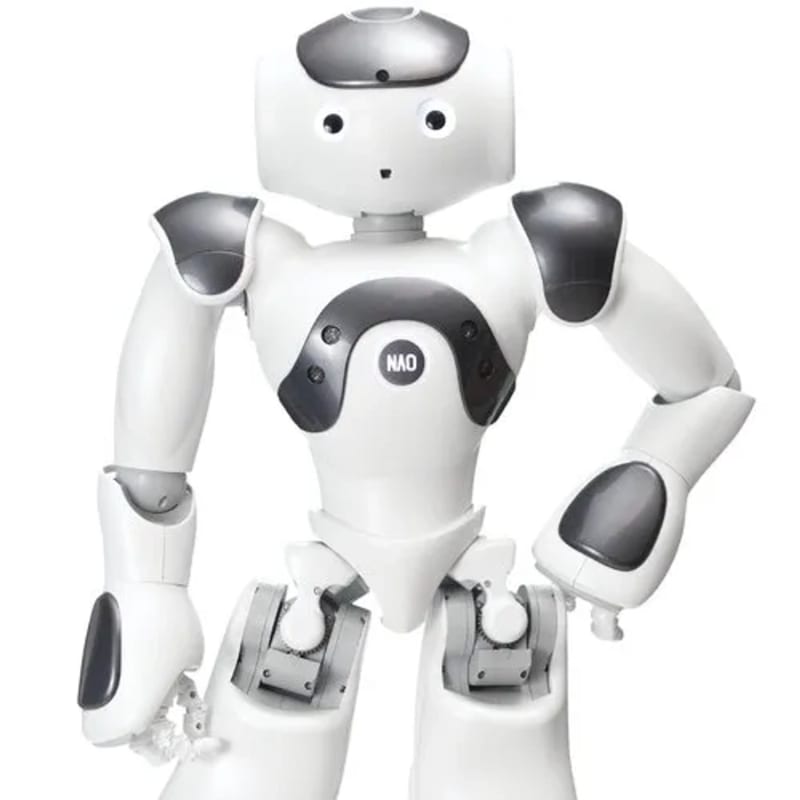
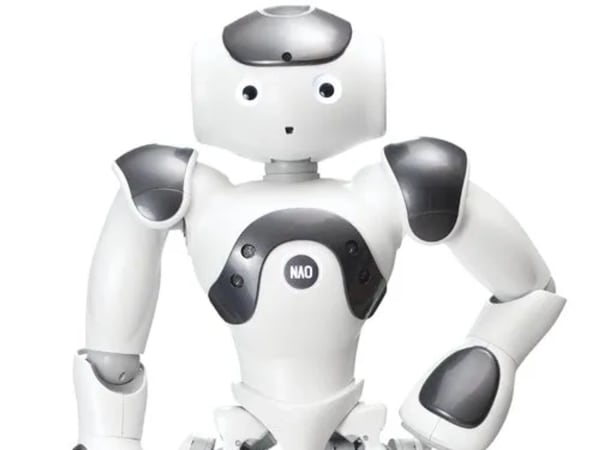
NAO is a compact bipedal humanoid robot renowned for its interactive capabilities in education, research, and healthcare. Standing at 58 cm with 25 degrees of freedom, it features human-like proportions enabling fluid walking, waving, dancing, and sitting motions. Equipped with dual HD cameras for face and object recognition, four directional microphones for speech interaction in 20+ languages, and an array of sensors including sonars, inertial units, force-sensitive resistors, and tactile sensors, NAO perceives its environment intuitively. Powered by NAOqi OS on an Intel Atom processor, it supports programmable behaviors via Choregraphe suite, including fall detection/recovery and balancing. Its LED eyes and expressive gestures foster engaging human-robot interaction, making it ideal for STEM teaching, autism therapy, RoboCup competitions, and social robotics studies. Robust polycarbonate construction ensures durability for repeated use in dynamic settings.
Quick Overview & Key Facts
NAO is a humanoid robot made by SoftBank Robotics in Japan, launched in 2008 and built for STEM education, autism therapy, and RoboCup competitions. Its estimated price is USD 7,000 - 15,000. Featured in “10 Best Humanoid Robots for Education & Research Labs ” and “8 Most Compact Humanoid Robots in 2026”.
- Dimensions
- 57.4 x 31.1 x 27.5 (cm)
- Weight
- 5.48 kg (12.08 lbs)
- Mobility
- Legged (bipedal walking)
- Top speed
- 1.08 km/h (0.3 m/s)
- Handles
- People interaction, light tools
- Battery runtime
- 1.5 hours on full charge
- Charging time
- 2 hours
- Operating environment
- Indoor
What Can NAO Do?
Core operational tasks and activities demonstrated or performed by NAO.
Real-World Applications of NAO
Industries, working environments, and deployment suitability for NAO.
NAO Capabilities
Inherent physical, perceptual, and cognitive abilities built into NAO.
Download Media Cards
Story CardExport high-resolution story cards summarizing NAO's operational tasks, real-world applications, and capabilities.
Image Gallery
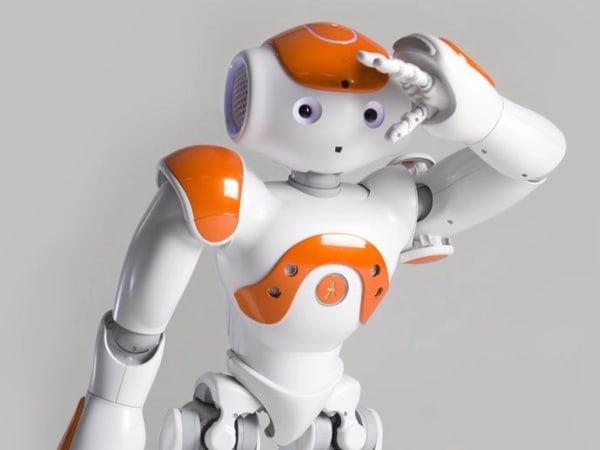
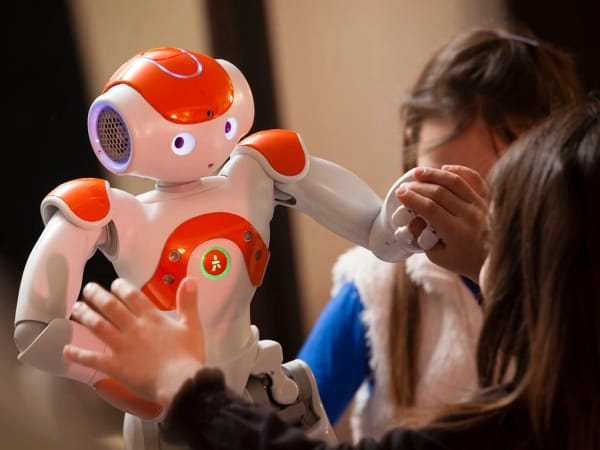
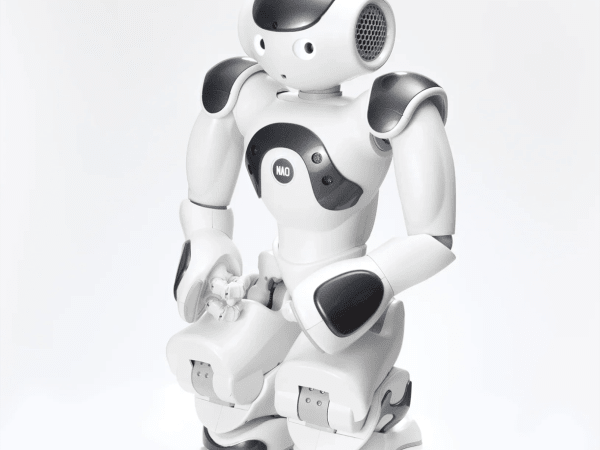
Below images are from SoftBank Robotics's official sources
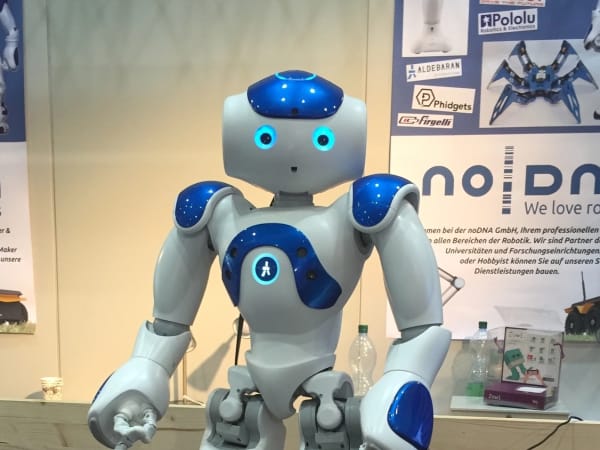
Review Videos
Watch expert reviews and demonstrations of this robot

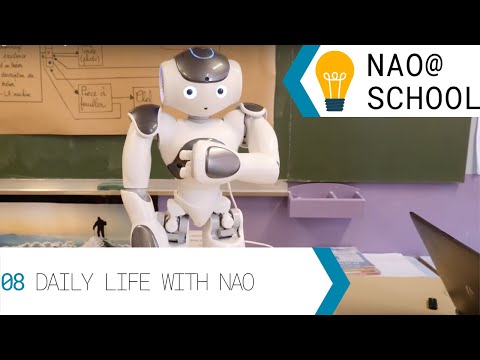
Robot Specifications
ConfirmedValues marked Confirmed were checked against the manufacturer's official data; select the badge to open the source. Values without a Confirmed badge are compiled from public sources and may not be manufacturer-verified.
Not yet published by SoftBank Robotics: warranty terms, IP rating, noise level, expected lifespan, maintenance schedule, color options, pet safety, cloud integration and 2 more.
Robot Timeline
Key milestones in this robot's development and rollout
NAO is selected to replace Sony's AIBO as the standard robot of the RoboCup Standard Platform League.
Source: Wikipedia ↗
The first production NAO robots launch for RoboCup competition, followed by a NAO Academics Edition for universities.
Source: Wikipedia ↗
NAO's maker enters receivership and is later bought by Maxvision Technologies, whose successor Maxtronics plans to keep supporting NAO6 and develop a NAO7.
Source: Wikipedia ↗
Latest News About NAO
Stay updated with the latest articles and developments
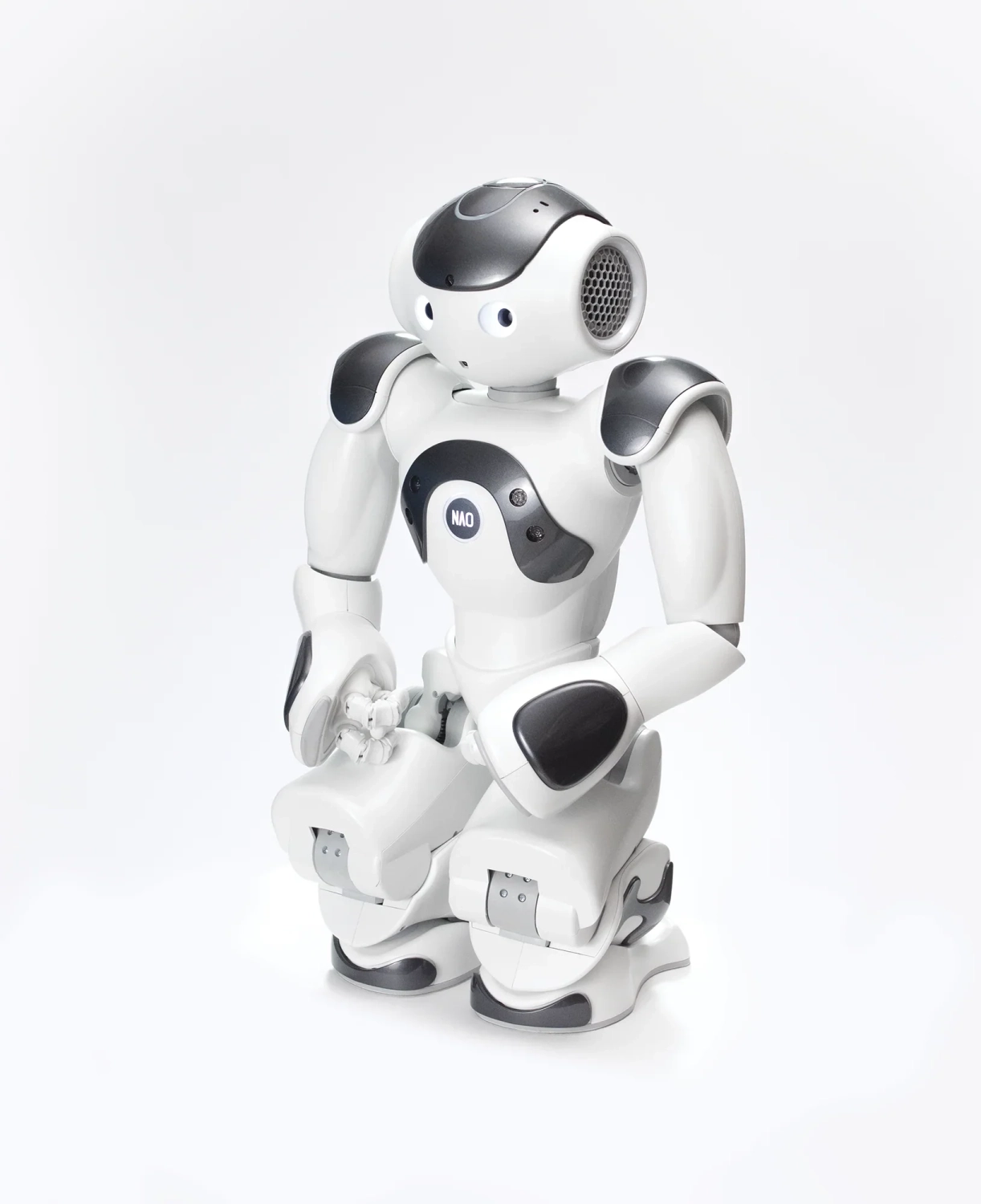
NAO Also Mentioned in Below Articles
Find out how this model stacks up against the world's best robots
More Robots from SoftBank Robotics
Explore other robots from this manufacturer
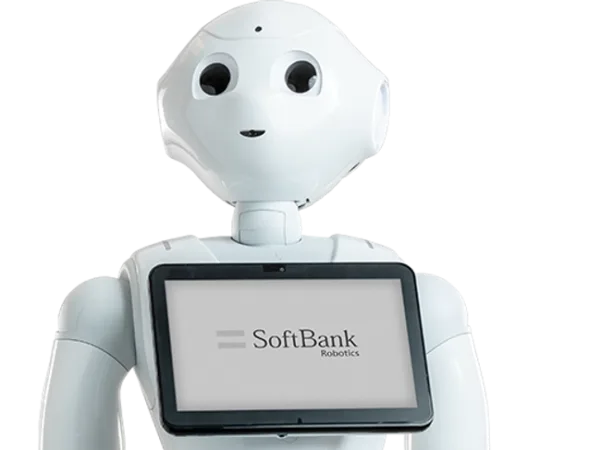
Pepper
Manufactured by SoftBank Robotics
Pepper is a humanoid social robot engineered for human interaction, featuring expressive facial animations via LED eyes and gestures powered by 20 DC motors. Standing at 120 cm with omnidirectional wheeled mobility reaching 3 km/h, it navigates indoor spaces using laser scanners, sonars, and cameras for obstacle avoidance and people detection. Equipped with dual 5MP HD cameras, a 3D depth sensor, four microphones, and touch sensors, Pepper recognizes faces, emotions, and voices in over 20 languages. Its chest-mounted 10.1-inch tablet enables touch interactions, while NAOqi OS supports Python, C++, Java, and Choregraphe for custom behaviors. Ideal for retail, education, healthcare, and hospitality, Pepper engages users through speech synthesis, dialogue engines, and emotional responses, fostering natural collaboration without true bipedal walking but mimicking humanoid proportions for approachability.
More Humanoid Robots
Discover more robots in the same category


Robots From Other Categories
Discover complementary robots from different categories that work well together
Frequently Asked Questions
Get answers to common questions about this robot
Q1. What is NAO, and what problem is it designed to solve?
NAO is a compact humanoid robot developed by SoftBank Robotics (formerly Aldebaran Robotics). According to the manufacturer, it is designed for research in human-robot interaction and education in STEM fields.
Q2. What are the main capabilities and key features of NAO?
NAO features speech recognition in multiple languages, face and object recognition, and autonomous walking with fall recovery. It runs on NAOqi OS, supporting programming in languages like Python and C++.
Q3. Who is NAO built for, and which industries can benefit from it?
NAO targets educational institutions, researchers, and healthcare providers. It is used in STEM teaching, human-robot interaction studies, and clinical applications such as autism therapy.
Q4. Is NAO a commercial product or still a research prototype?
NAO is a commercial product available since 2008, with successive hardware versions up to NAO6 released in 2018. It serves as a programmable platform for both research and education.
Q5. Is NAO currently available for purchase, and when is it expected to ship?
As of 2026, NAO remains available for purchase through distributors like RobotLAB. Shipping follows standard distributor fulfillment timelines after orders.
Q6. How does NAO actually work in real-world environments?
NAO operates using sensors for environmental perception, including cameras, microphones, and inertial units, combined with NAOqi software for motion and interaction. It navigates via sonar and pressure sensors in controlled settings.
Q7. When was NAO announced or officially launched?
NAO was first introduced in 2008 by Aldebaran Robotics. Hardware updates continued, with NAO6 launched in June 2018 by SoftBank Robotics.
Q8. How is NAO different from other robots in the same category?
NAO distinguishes itself through its compact size, 25 degrees of freedom for natural movement, and integration with Choregraphe software for accessible programming. It emphasizes social interaction over industrial tasks.
Q9. Does NAO require additional development or customization after purchase?
Yes, NAO is a programmable platform requiring user development for specific applications. It supports tools like Choregraphe and languages including Python for customization in education and research.
Q10. What is the future roadmap or planned upgrades for NAO?
SoftBank Robotics has not announced specific new hardware upgrades beyond NAO6 as of 2026. The company focuses on software enhancements for NAOqi to support ongoing research and educational uses.
Rating and Reviews
Share your experience and help others decide!
Loading...
User Reviews
No user reviews. Be the first one to review!
User Comments (No Login needed)
Share your thoughts, experiences, or questions about this robot.
Comments appear after moderator review.