Daimon One Pushes Humanoid Teleoperation Toward Human-Centric Workspaces
Robot Details
Daimon One • Daimon RoboticsPublished
August 10, 2026
Reading Time
3 min read
Author
Origin Of Bots Editorial Team
A New Control Layer
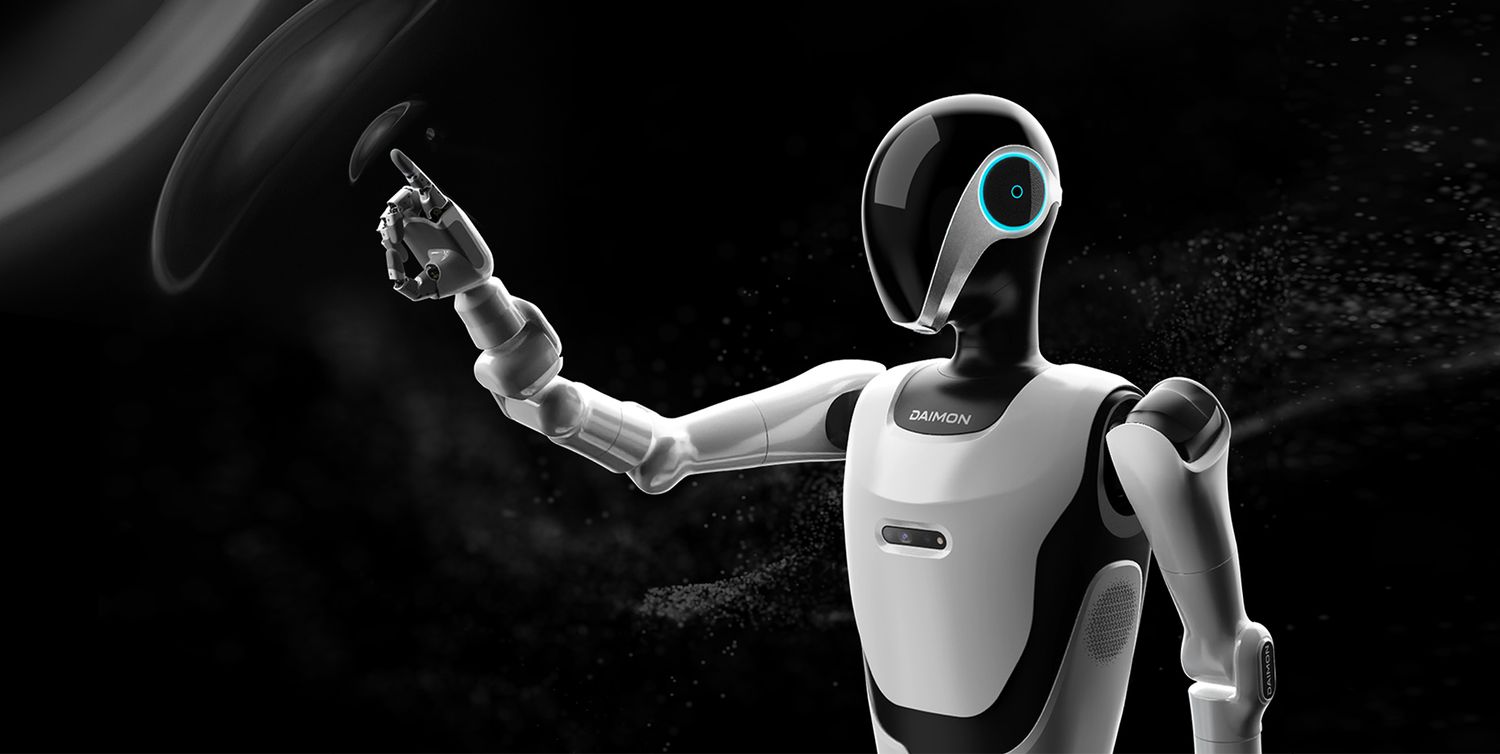
Daimon Robotics has presented Daimon One, a humanoid built around teleoperation, precision manipulation, and balance in human-facing spaces. The robot is reported to pair legged bipedal locomotion with tactile-rich sensing and remote-control workflows, positioning it as part of a broader shift toward humanoids that extend human motion rather than replace it outright.
Why It Matters
For humanoids, the hard problem is not simply walking upright, but coordinating full-body motion while keeping hands, torso, and balance aligned under changing conditions. Daimon One is notable because its reported sensor stack is designed to support that loop with vision-based tactile sensing, depth perception, and force feedback, which are the ingredients teleoperation systems need to feel usable in the real world. Its emphasis on remote operation also reflects a practical industry direction: robots that can work where people already do, without waiting for full autonomy to mature. Daimon One matters because it treats humanoid intelligence as a human-in-the-loop system, not a standalone promise.
Input To Action
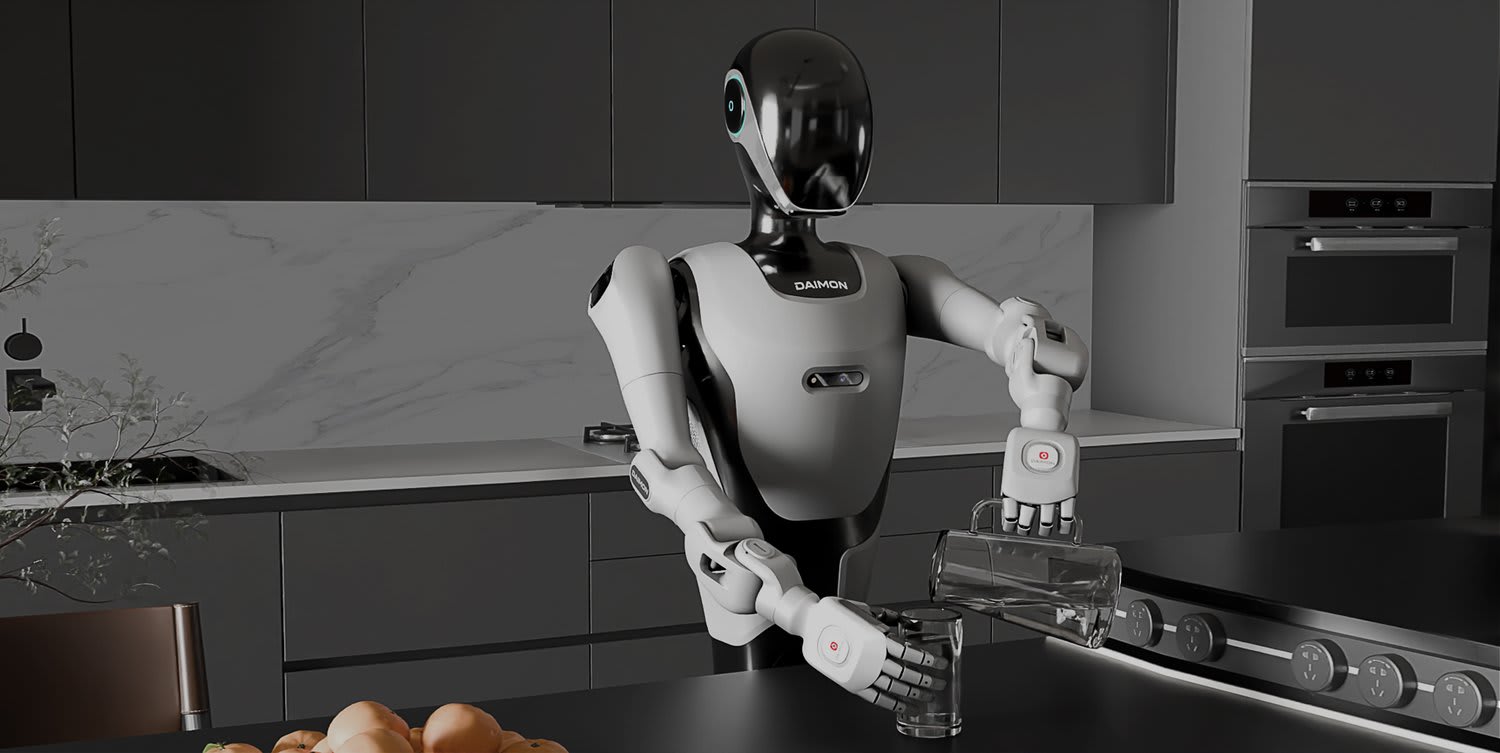
In the category’s simplest technical flow, human motion input goes into an AI model, the model interprets intent and body movement, and the robot converts that into joint actuation with balance correction. For Daimon One, the reported combination of ROS 2, a Linux-based operating system, and C++/Python APIs suggests a control stack meant to let operators and developers build custom teleoperation and manipulation routines. The practical goal is not just movement, but synchronized motion, so the robot can mirror complex gestures while correcting posture and foot placement in real time.
Precision In Place
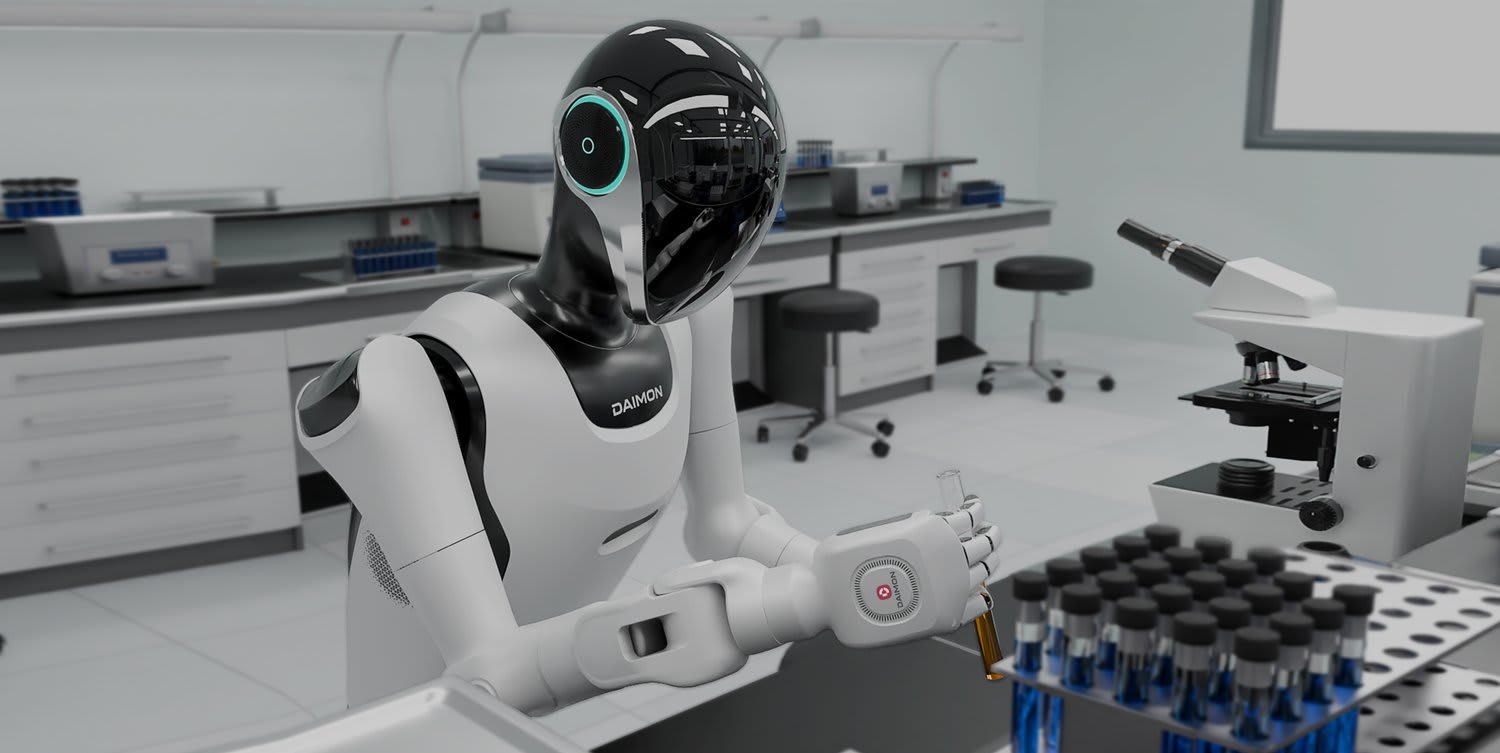
A realistic deployment for Daimon One is precision assembly in a human-centric factory cell, where an operator can guide the robot through delicate steps that are hard to automate with fixed fixtures. In that setting, tactile sensing, force sensing, and collision safeguards matter more than raw speed, because the task depends on repeatable contact with small components and tools. The robot’s reported teleoperation focus fits that environment better than a fully autonomous promise would.
Reported Build Profile
Daimon One is reported to measure 60 cm x 40 cm x 180 cm, a form factor that supports upright movement through narrow industrial or service corridors. It is also reported to weigh 75 kg and move at 1.5 km/h, suggesting a machine designed for careful interaction rather than fast transit. Other reported capabilities include a four-year battery life, SLAM, GPS, LiDAR navigation, and payload handling for tools, small packages, and delicate objects, all of which point to a platform built for extended supervised work rather than short, highly dynamic bursts.
Rivals Edge Check
| Robot | Key Advantage | Where Daimon One Wins | Target Use |
|---|---|---|---|
| GR-3 | Strong industrial humanoid positioning | More explicit teleoperation and tactile-first manipulation focus | Industrial manipulation and service tasks |
| Agile ONE | Broader autonomy and mobility emphasis | More clearly centered on human-in-the-loop control | Human-centric teleoperation |
| Dex | Compact service-oriented design | Taller humanoid body for full-body coordination and reach | Precision assembly and remote tasks |
| AgiBot A2 Ultra | Advanced humanoid platform emphasis | Reported tactile and force-sensing stack tailored to delicate interaction | Assisted service and dexterous handling |
Industry Direction
The broader signal is that humanoid robotics is moving toward teleoperation-first systems that can be deployed before autonomy is perfect. That matters because human operators can bridge the reliability gap in inspection, service, and assembly while developers continue improving perception and control. Daimon One fits that transition by making remote dexterity and full-body coordination the product, rather than treating them as intermediate steps.
Explore Humanoids
Sources
Related Articles

UBTECH’s UWORLD U1 Pro arrives as a full-size humanoid built for teleoperation and human-centered service

UBTECH’s UWORLD U1 Ultra marks a mass-production push into full-size humanoid companionship
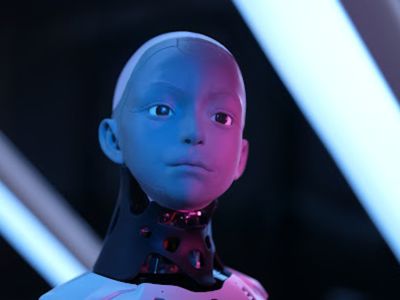
AnyWit’s Annie puts the spotlight on expressive humanoid heads, not full-body autonomy
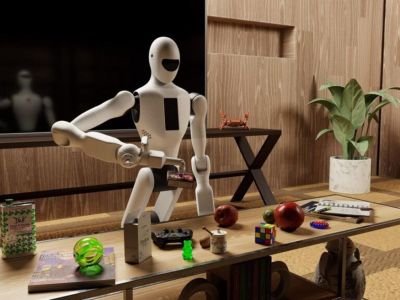
Galbot G1 pushes teleoperation-first humanoids toward retail, pharmacy, and warehouse work
Related Comparisons
Compare Daimon One with similar robots
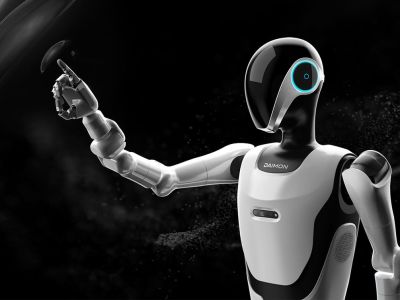
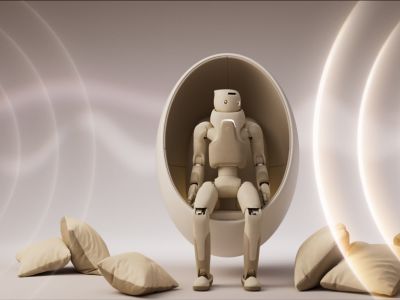
Daimon One vs GR-3
Head-to-head: Daimon One vs GR-3. Explore differences in navigation, sensors, battery, mobility, AI, and software.
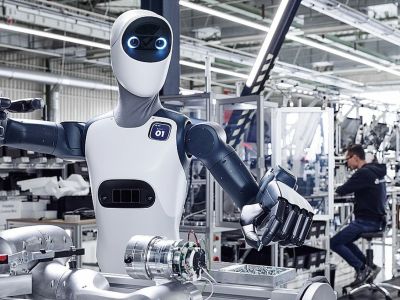
Daimon One vs Agile ONE
Compare Daimon One and Agile ONE. Detailed analysis of navigation, battery, and sensors.

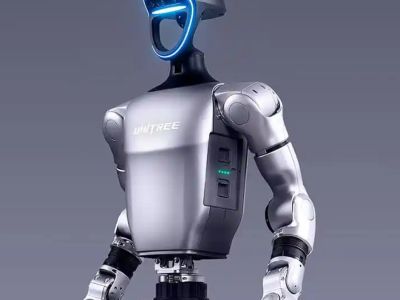
Optimus vs Unitree G1
Compare Optimus vs Unitree G1 for humanoid mobility, dexterity, autonomy, and payload capacity.
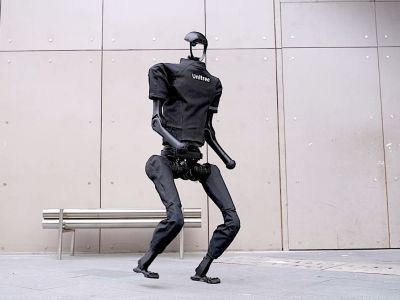
Unitree G1 vs Unitree H1
Head-to-head: Unitree G1 vs Unitree H1 compared on bipedal balance, AI learning, and real-world deployment.
Learn More About This Robot
Discover detailed specifications, reviews, and comparisons for Daimon One.
View Robot Details →