Atlas
Last updated:
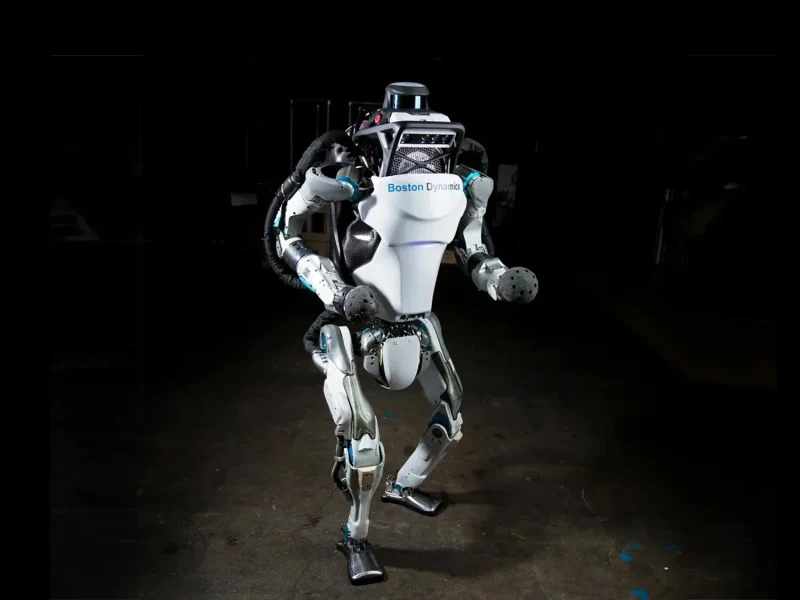
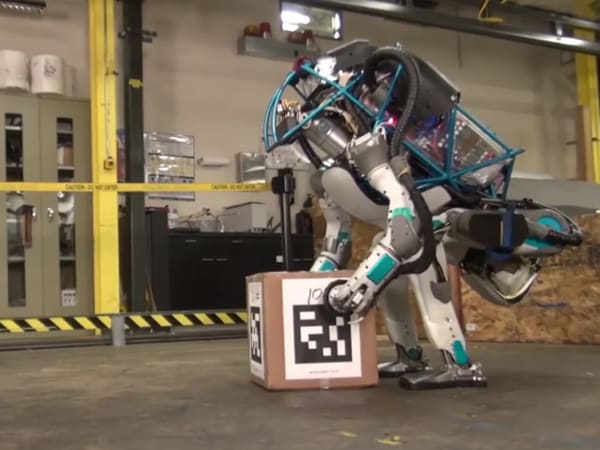
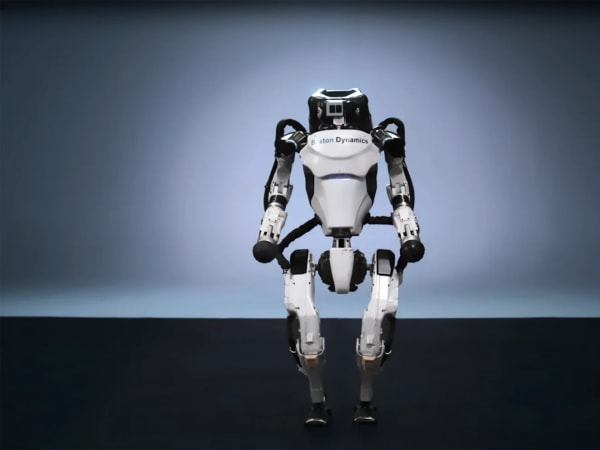
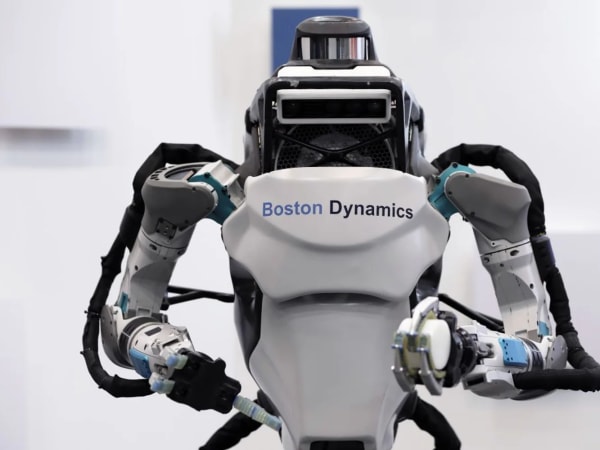
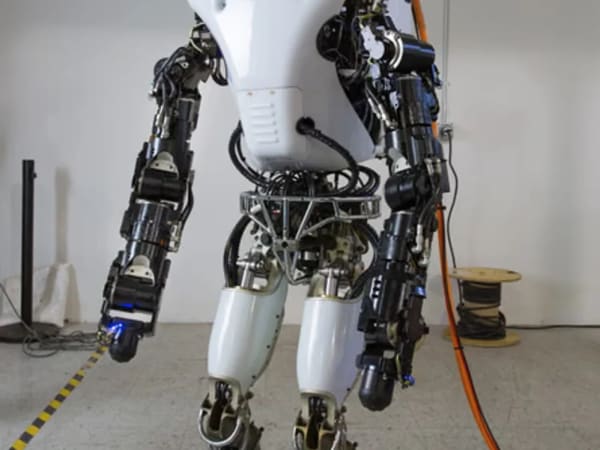
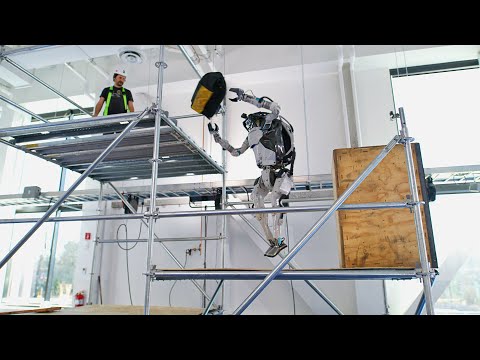
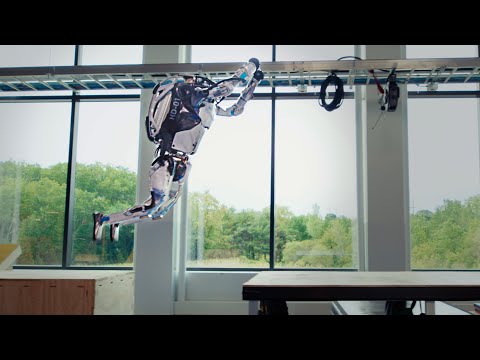
Atlas (Hydraulic) was Boston Dynamics’ flagship hydraulic humanoid research robot, first unveiled in 2013. Renowned for dynamic parkour, backflips, and gymnastics, the hydraulic Atlas served as a world-leading benchmark for dynamic whole-body control before being officially retired in April 2024 in favor of the commercial All-Electric Atlas.
Quick Overview & Key Facts
Atlas is a humanoid robot made by Boston Dynamics in United States, launched in 2013 and built for dynamic parkour, 360° backflips, and gymnastics. Featured in “Top 10 Humanoid Robots with the Best Learning Capabilities (AI Training) 2026”.
- Dimensions
- 188 cm (H) x 76 cm (W) x 50 cm (D)
- Weight
- 150 kg (330 lbs)
- Mobility
- Legged (High-dynamic bipedal locomotion, jumping, parkour, gymnastics)
- Top speed
- 1.5 m/s (5.4 km/h)
- Payload capacity
- 11 kg per arm manipulation payload (hydraulic servo-actuation)
- Operating environment
- Indoor/outdoor lab environments; 0–40°C; 0–95% non-condensing humidity
What Can Atlas Do?
Core operational tasks and activities demonstrated or performed by Atlas.
Real-World Applications of Atlas
Industries, working environments, and deployment suitability for Atlas.
Atlas Capabilities
Inherent physical, perceptual, and cognitive abilities built into Atlas.
Download Media Cards
Story CardExport high-resolution story cards summarizing Atlas's operational tasks, real-world applications, and capabilities.
Image Gallery
Below images are from Boston Dynamics's official sources
Review Videos
Watch expert reviews and demonstrations of this robot


Robot Specifications
Values without a Confirmed badge are compiled from public sources and may not be manufacturer-verified.
Not yet published by Boston Dynamics: warranty terms and EMC compliance.
Robot Timeline
Key milestones in this robot's development and rollout
Boston Dynamics publicly unveils the first Atlas, a DARPA-funded bipedal humanoid for disaster response.
Source: Wikipedia ↗
Boston Dynamics releases video of a redesigned, lighter Atlas built for indoor and outdoor mobility.
Source: Wikipedia ↗
Boston Dynamics retires the hydraulic Atlas and reveals an all-electric Atlas built for real-world applications, starting with Hyundai.
Source: Boston Dynamics ↗
At CES 2026 Boston Dynamics shows the production version of the electric Atlas and announces a Google DeepMind AI partnership.
Source: Boston Dynamics ↗
Latest News About Atlas
Stay updated with the latest articles and developments
Atlas Also Mentioned in Below Articles
Find out how this model stacks up against the world's best robots

More Robots from Boston Dynamics
Explore other robots from this manufacturer
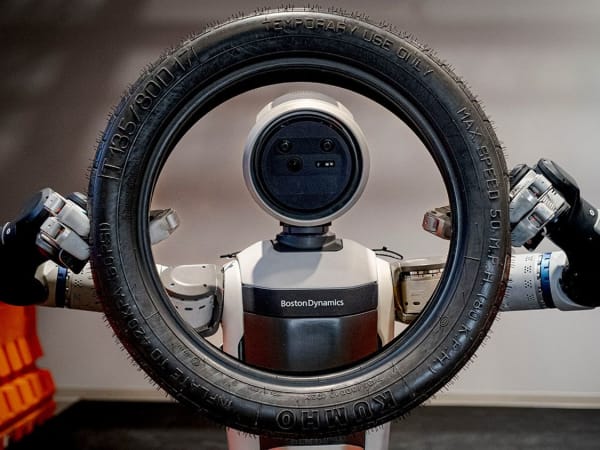
Atlas (Electric 2025)
Manufactured by Boston Dynamics
Atlas (Electric Atlas, 2025) is Boston Dynamics' fifth-generation humanoid robot, fully electric and designed for real-world industrial and research applications. It features advanced all-electric actuators that provide superior strength and a broader range of motion than previous models, including 360-degree rotation at key joints. Atlas integrates sophisticated sensor arrays such as LiDAR, stereo and RGB cameras, and depth sensors, enabling real-time perception and environmental awareness. Its software leverages AI, machine learning, and large behavior models for autonomous whole-body manipulation and locomotion, allowing it to perform complex tasks like packing, sorting, and adapting dynamically to unexpected physical challenges. The robot is built with lightweight titanium and aluminum 3D printed parts for optimal strength-to-weight ratio and supports integration with Boston Dynamics’ fleet management software, Orbit.
More Humanoid Robots
Discover more robots in the same category


Robots From Other Categories
Discover complementary robots from different categories that work well together
Frequently Asked Questions
Get answers to common questions about this robot
Q1. What is the hydraulic Atlas, and what problem was it designed to solve?
The hydraulic Atlas was Boston Dynamics' flagship humanoid research platform, first unveiled in 2013 for the DARPA Robotics Challenge. It was built to push the limits of dynamic balance, whole-body control, and disaster-response mobility rather than to serve as a commercial product.
Q2. What were the main capabilities and key features of the hydraulic Atlas?
Hydraulic Atlas was known for dynamic, athletic behaviors like parkour, backflips, and running jumps, powered by a hydraulic actuation system that gave it high power density and rapid, forceful movement compared to purely electric designs of its era.
Q3. Who was the hydraulic Atlas built for, and which industries could benefit from it?
Hydraulic Atlas was a research and development platform, not a commercial product. It was used internally by Boston Dynamics and DARPA-affiliated teams to advance disaster-response robotics, search-and-rescue concepts, and dynamic locomotion research rather than for industrial deployment.
Q4. Was the hydraulic Atlas a commercial product or a research prototype?
It was strictly a research prototype. Across its roughly decade-long development, hydraulic Atlas was never sold or leased commercially; it was retired in April 2024 in favor of the all-electric commercial Atlas.
Q5. Is the hydraulic Atlas still available today?
No. Boston Dynamics officially and permanently retired the hydraulic Atlas platform in April 2024 after roughly a decade of research use. It has been fully superseded by the all-electric commercial Atlas.
Q6. How did the hydraulic Atlas actually work?
Hydraulic Atlas used a Hydraulic Power Unit (HPU) to drive its actuators, giving it roughly 60 minutes of onboard-battery runtime for untethered demos, alongside tethered operation for extended lab research and testing.
Q7. When was the hydraulic Atlas announced or officially launched?
The hydraulic Atlas was first unveiled in July 2013 for the DARPA Robotics Challenge, with Boston Dynamics continuing to develop and showcase new hydraulic Atlas capabilities through the following decade until its retirement in April 2024.
Q8. How was the hydraulic Atlas different from the current all-electric Atlas?
Hydraulic Atlas relied on a heavier, leak-prone, noisier hydraulic power system, weighing about 150 kg (330 lbs) and standing roughly 188 cm tall. The current Atlas that replaced it is fully electric, lighter, quieter, and engineered for commercial manufacturing use rather than research demonstrations.
Q9. Did the hydraulic Atlas require customization for customers?
Not applicable in the commercial sense. As an internal research platform, the hydraulic Atlas was never configured or customized for customer purchase; all development and tuning was performed by Boston Dynamics' own engineering teams.
Q10. What happened to the hydraulic Atlas platform after retirement?
Boston Dynamics retired the hydraulic Atlas in April 2024, closing out roughly a decade of parkour, backflip, and biomechanical manipulation research, and shifted all forward development to the all-electric commercial Atlas platform.
Rating and Reviews
Share your experience and help others decide!
Loading...
User Reviews
No user reviews. Be the first one to review!
User Comments (No Login needed)
Share your thoughts, experiences, or questions about this robot.
Comments appear after moderator review.