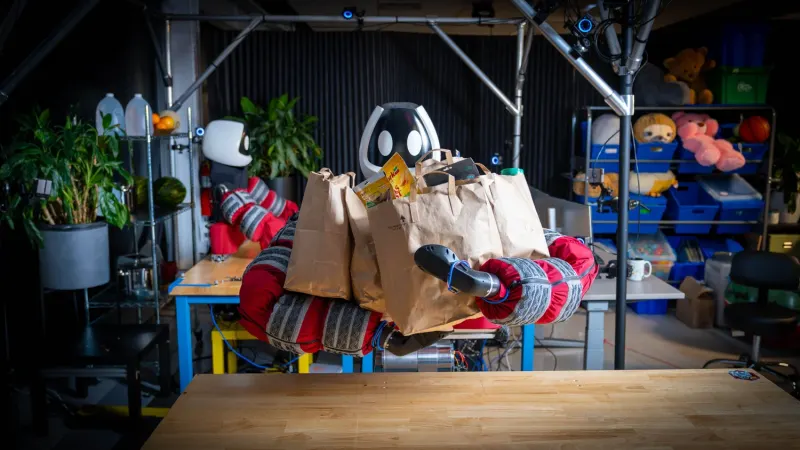
Punyo
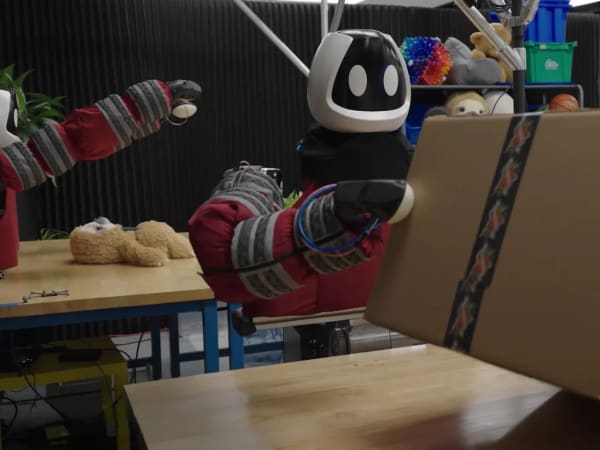
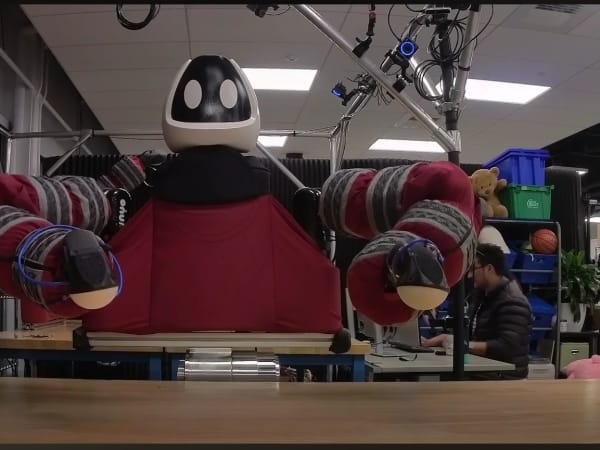
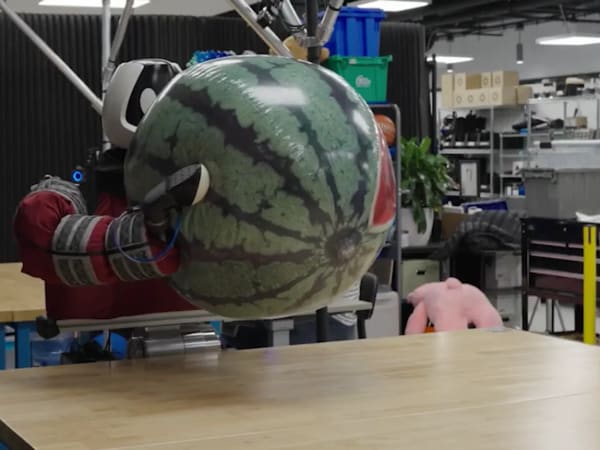
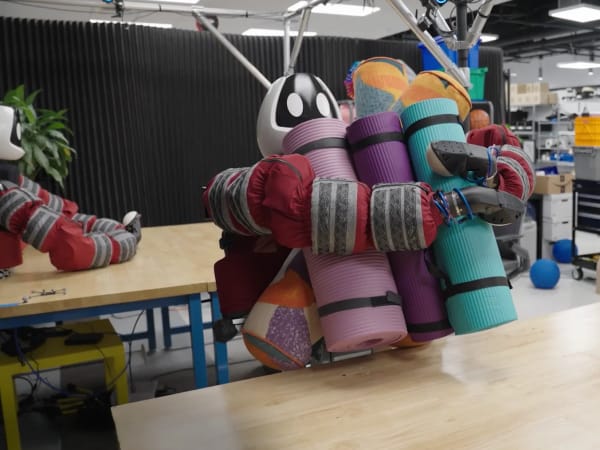
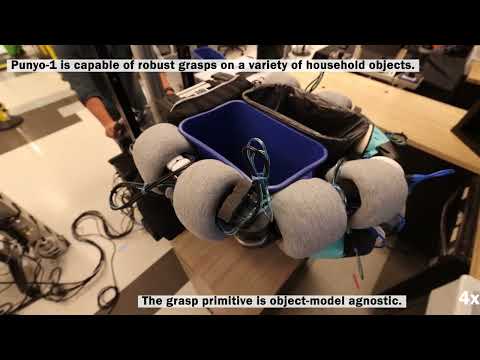
Punyo is a soft humanoid robot developed by Toyota Research Institute for whole-body manipulation research, emphasizing safe human-robot interaction in assistive scenarios like aging in place. Its upper body features compliant materials covering hands, arms, and chest, integrated with tactile sensors and air-filled bladders for adaptive stiffness and force sensing during contact-rich tasks. Underneath lies a rigid structure with two precise robot arms, torso frame, and waist actuator, enabling hybrid precision and compliance. Punyo's "paws"—inflatable latex bubbles with internal cameras detecting dot pattern deformations—facilitate gripperless grasping of bulky objects by hugging to the torso or slinging onto shoulders. Trained via teleoperation, diffusion policy learning from demonstrations, and example-guided reinforcement learning, it handles groceries, furniture, dishwashers, and doors. With a wheeled base for mobility, ROS2 support, and focus on household chores, Punyo prioritizes safety, dexterity, and natural movements over rigid manipulation.
Quick Overview & Key Facts
Punyo is a humanoid system developed by Toyota in Japan and launched in 2024. Starting price is estimated at Request Quote (Currently a Research Platform; not for commercial retail). It is currently ranked #213 in most-viewed humanoid robots on Origin of Bots. It supports Bulky objects, packages, household items. Operating battery runtime is rated at 4 hours on full charge-Under active manipulation/research load. Primary applications include Whole-body manipulation of bulky objects, household chores, elderly assistance, grocery handling, furniture moving. Featured in editorial articles including “Toyota's Punyo Masters Whole-Body Hugs for Heavy Lifts”.
What Can Punyo Do?
Core operational tasks and activities demonstrated or performed by Punyo.
Real-World Applications of Punyo
Industries, working environments, and deployment suitability for Punyo.
Punyo Capabilities
Inherent physical, perceptual, and cognitive abilities built into Punyo.
Download Media Cards
Story CardExport high-resolution story cards summarizing Punyo's operational tasks, real-world applications, and capabilities.
Image Gallery
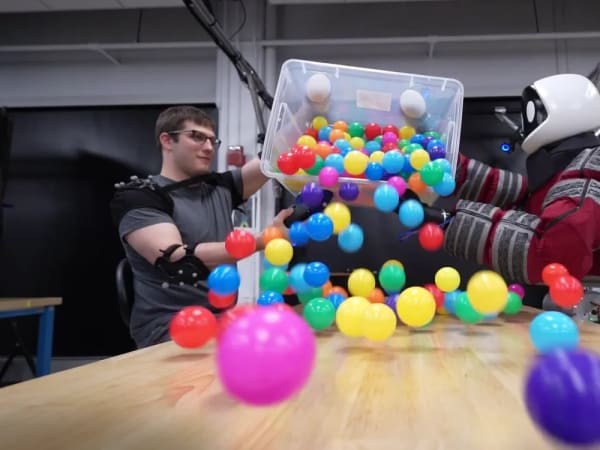
Below images are from Toyota's official sources
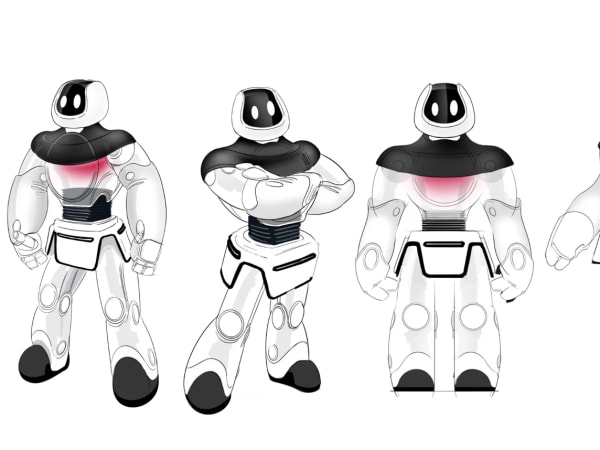
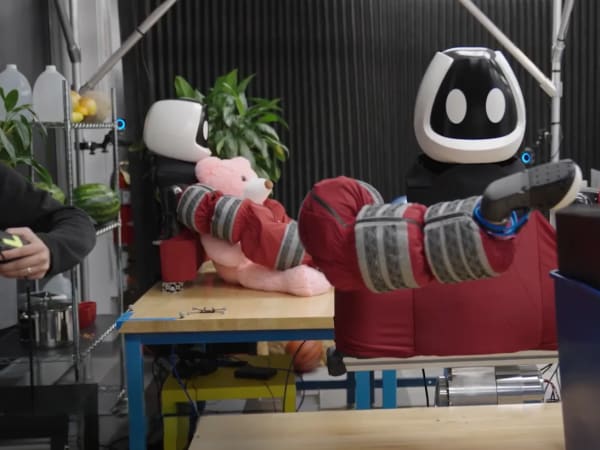
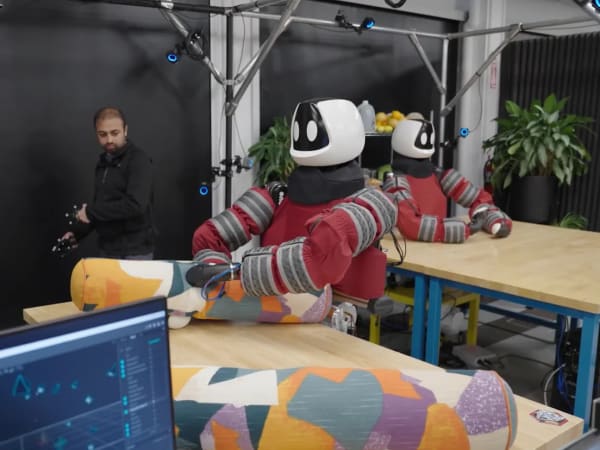
Review Videos
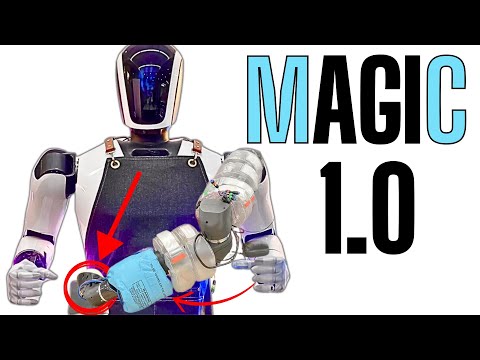
Watch expert reviews and demonstrations of this robot


Robot Specifications
Latest News About Punyo
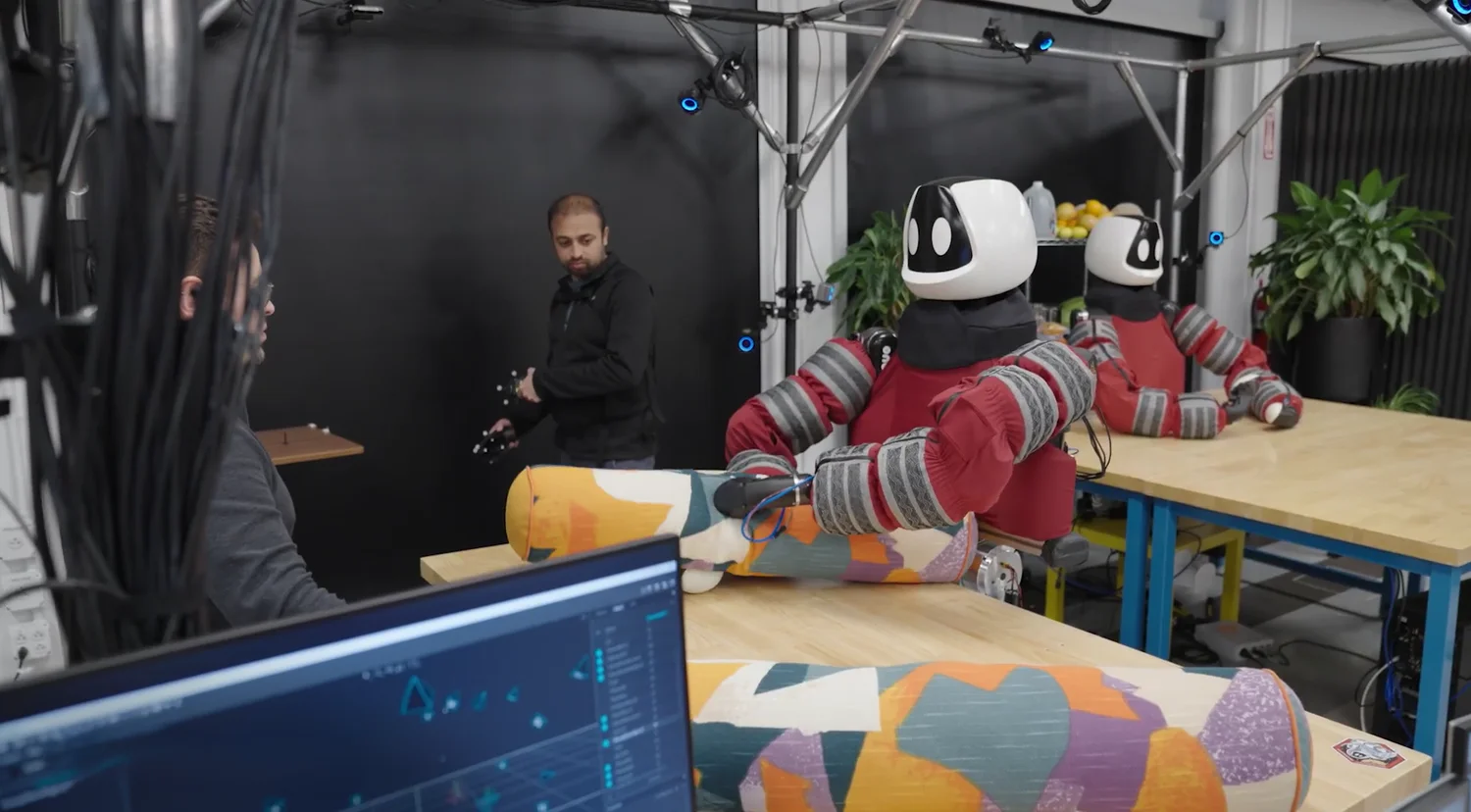
Stay updated with the latest articles and developments
More Robots from Toyota
Explore other robots from this manufacturer


More Humanoid Robots
Discover more robots in the same category


Frequently Asked Questions
Get answers to common questions about this robot
Q1. What is Punyo, and what problem is it designed to solve?
Punyo is a soft humanoid robot developed by Toyota Research Institute. According to TRI, it addresses challenges in whole-body manipulation of large, unwieldy objects through compliant materials and tactile sensing for safe interaction.
Q2. What are the main capabilities and key features of Punyo?
Punyo features soft arms, chest, and paws covered in air-filled bladders and sensors for contact detection. TRI states it enables hugging, carrying, and stabilizing bulky items using full-body contact rather than grippers alone.
Q3. Who is Punyo built for, and which industries can benefit from it?
Punyo targets assistive applications, particularly for aging in place and household tasks. TRI positions it for environments requiring safe human-robot collaboration, such as homes and light industrial settings.
Q4. Is Punyo a commercial product or still a research prototype?
Punyo remains a research platform developed by Toyota Research Institute. It supports experimentation in soft robotics and manipulation, with no commercial product release announced as of 2025.
Q5. Is Punyo currently available for purchase, and when is it expected to ship?
Punyo is not available for general purchase. TRI offers it as a research platform upon request, with no public shipping timelines disclosed.
Q6. How does Punyo actually work in real-world environments?
Punyo uses teleoperation and AI learning methods like diffusion policy and reinforcement learning from demonstrations. Its soft surfaces conform to objects, distributing forces across arms and torso for stable handling.
Q7. When was Punyo announced or officially launched?
Toyota Research Institute unveiled Punyo in early 2024. It has been presented through videos and research publications as a platform for whole-body manipulation studies.
Q8. How is Punyo different from other robots in the same category?
Unlike rigid humanoids relying on hand grippers, Punyo employs compliant bladders and full-body tactile sensing. TRI designed this hybrid approach to combine precision with impact resistance for contact-rich tasks.
Q9. Does Punyo require additional development or customization after purchase?
As a research platform, Punyo requires integration with custom software stacks like ROS2 and manipulation AI. TRI provides interfaces for users to adapt it to specific research or assistive applications.
Q10. What is the future roadmap or planned upgrades for Punyo?
TRI aims to advance Punyo's skills for everyday chores and human amplification. Plans include enhancing learning for complex tasks and expanding safe interaction in household and collaborative settings.
User Comments (No Login needed)
Share your thoughts, experiences, or questions about this robot.
Comments are reviewed before posting.